Appliances · Buying Guide
Best 1 2 Sheet Cookie Sheet Choices for Every Kitchen
Finding the right 1 2 sheet cookie sheet can completely transform how you handle daily kitchen tasks, ranging from roasting savory garden vegetables to baking large batches of sweet holiday treats. Choosing the correct pan dimensions ensures proper heat distribution and prevents frustrating overcrowding inside your home oven during busy meal preparation times.
Different manufacturing materials offer distinct cooking advantages, whether you prefer traditional uncoated aluminum, reinforced carbon steel, or rust-resistant stainless steel variants. Exploring these available options helps match your specific cooking style and favorite recipes with durable bakeware that delivers dependable daily performance while simplifying your routine cleanup.
As an Amazon Associate, StacyLaughs earns from qualifying purchases.
Buying guide
Material Composition and Heat Conduction
Selecting the right material for your baking sheet profoundly influences how your food cooks. Aluminum stands out for rapid, even heat distribution, helping cookies brown nicely. Stainless steel offers rust resistance and durability without chemical coatings. Carbon steel provides sturdy support with added nonstick benefits. Understanding these material properties lets you match your bakeware to your specific cooking habits.
Each material responds differently to maintenance and temperature shifts. Uncoated aluminum requires careful hand washing and avoids thermal shocks. Stainless steel handles dishwasher cycles easily and maintains a polished look. Carbon steel rewards gentle care with reliable nonstick food release. Evaluating your upkeep preferences ensures you choose a baking sheet that stays dependable throughout years of frequent kitchen use.
Sizing and Oven Compatibility
Ensuring your baking sheet fits inside your oven is a fundamental step before making a purchase. Standard half sheets offer large surface areas for generous baking batches, while slightly smaller options fit compact toaster ovens comfortably. Measuring your interior oven space prevents frustrating moments where oversized trays refuse to slide onto the oven racks.
Consideration must also be given to how pan dimensions affect storage space in your kitchen cabinets. Larger pans require wide cabinet slots or designated vertical storage areas. Smaller toaster oven trays tuck away easily into tighter pantry gaps. Matching your kitchen storage capacity with the physical footprint of your bakeware guarantees a practical addition to your culinary tools without creating clutter.
Surface Coatings and Food Release
Surface treatments dictate how easily baked goods release from the metal after coming out of the hot oven. Nonstick carbon steel coatings allow cookies and roasted vegetables to slide right off without leaving sticky residues behind. Pure uncoated aluminum and stainless steel rely on natural patinas or parchment paper to prevent sticking.
Deciding between coated and uncoated options depends heavily on your preferred cleaning and tool usage habits. Coated pans eliminate scrubbing but demand non-metal utensils to protect the delicate finish from unsightly scratches. Uncoated metal sheets tolerate metal spatulas and vigorous scrubbing but might require soaking or greasing. Assessing these factors helps you select a tray that aligns with your daily baking routine.
Edge Design and Spill Prevention
Rimmed edges play a critical role in keeping your oven clean and handling pans safely. Trays featuring one-inch raised edges successfully contain escaping food juices, liquid batters, and roasting oils, preventing messy spills onto the bottom of your oven. These deep barriers give you confidence when roasting juicy meats or baking messy fruit desserts.
Reinforced rolled rims provide additional structural rigidity that resists twisting during high-heat baking sessions. They also offer smooth, rounded surfaces that give your fingers a secure and comfortable grip when pulling heavy trays from hot environments. Prioritizing robust edge designs ensures both enhanced safety during transport and long-lasting durability against thermal warping over years of regular use.
Durability and Warp Resistance
Heavy-duty gauge construction protects your baking sheets from warping when exposed to sudden high-heat transitions inside the oven environment. Thick aluminum and robust stainless steel options maintain a flat bottom surface, ensuring that your cookie dough spreads evenly across the pan without pooling in unintended corners or baking inconsistently.
Selecting sturdy bakeware prevents frustrating metal popping noises and uneven cooking caused by cheap, thin sheets flexing under high temperatures. Encapsulated solid core rims and thick walls add structural integrity that withstands years of frequent roasting and baking sessions. Investing in durable construction guarantees reliable performance batch after batch in busy home kitchens.
Maintenance and Cleanup Routines
Keeping your baking sheets clean depends heavily on the chosen material and surface coating type. Many stainless steel and carbon steel pans offer dishwasher-safe convenience for effortless cleanup after heavy family dinners. However, manufacturers frequently recommend gentle hand washing to preserve nonstick coatings and prevent cosmetic discoloration on raw aluminum surfaces over time.
Handling stubborn baked-on food residues safely involves using simple kitchen staples like baking soda pastes or warm water soaking rather than harsh abrasive scouring pads. Following manufacturer maintenance guidelines protects your bakeware investment and keeps your kitchen tools functioning smoothly. Balancing your desire for quick cleanup with proper care instructions ensures your cookie sheets remain dependable cooking companions for years.
Frequently asked questions
What is the difference between aluminum and stainless steel cookie sheets?
Aluminum and stainless steel offer distinctly different cooking characteristics for home bakers. Pure uncoated aluminum conducts heat up to thirty percent faster than steel, making it exceptional for achieving evenly baked cookies and crispy roasted vegetables. However, it typically requires hand washing to avoid oxidation. Stainless steel provides superior rust resistance, durable mirror finishes, and often dishwasher-safe convenience without chemical coatings, though it distributes heat slightly differently than aluminum. Choosing between them depends on whether you prioritize lightning-fast thermal conductivity or robust, low-maintenance dishwasher safety.
Can I put my baking sheets in the dishwasher?
Dishwasher safety varies depending on the specific material and manufacturing construction of your baking sheet. Many stainless steel and carbon steel models are explicitly rated as dishwasher safe for easy cleanup. Conversely, raw uncoated aluminum pans are generally recommended for hand washing because harsh automatic dishwasher detergents can cause harmless surface oxidation or discoloration. Always check the specific manufacturer guidelines provided with your bakeware before running trays through a dishwasher cycle to maintain their appearance and structural integrity over time.
How do I prevent food from sticking to my baking sheet?
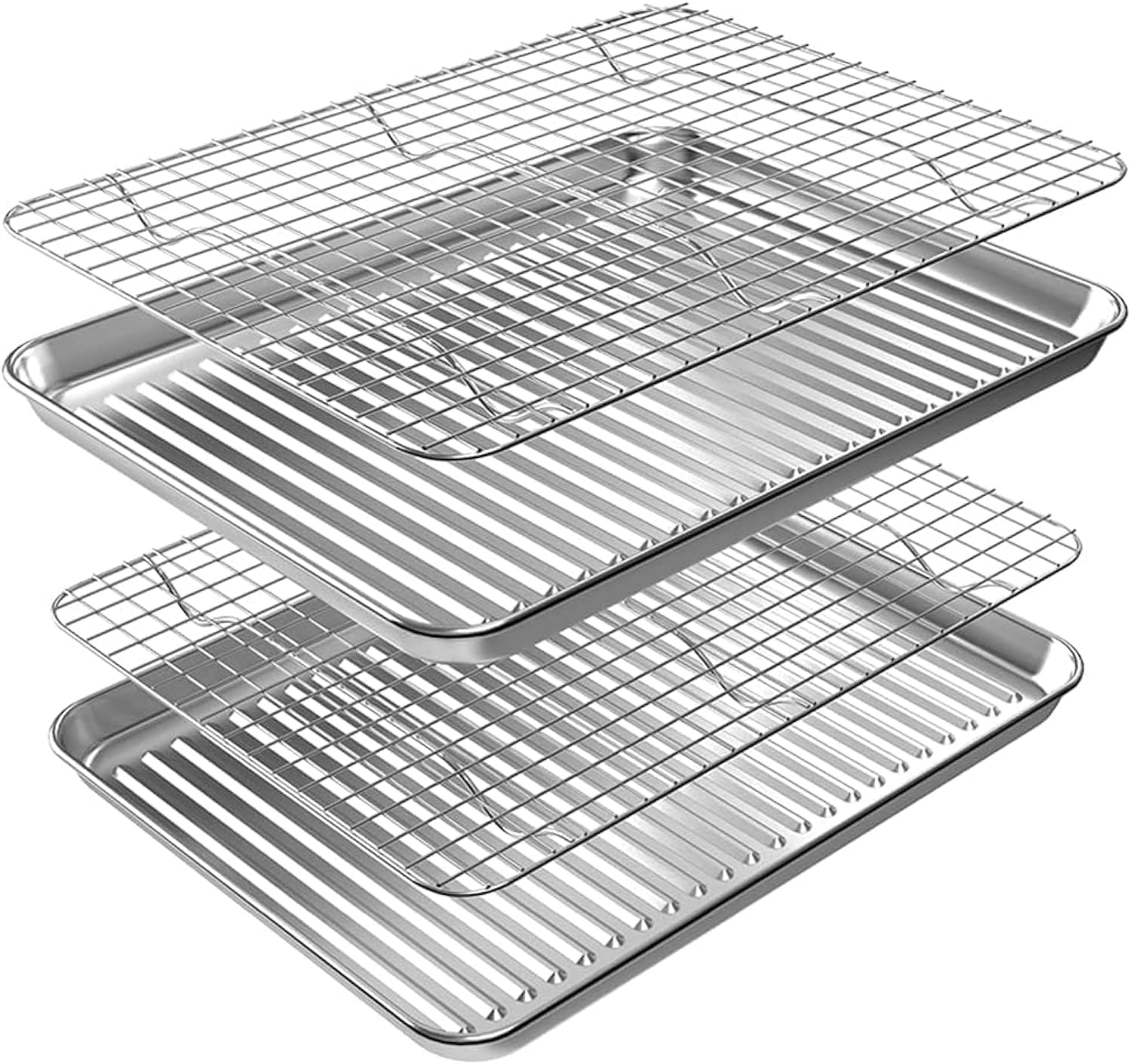
Preventing food from sticking depends largely on your pan's surface properties. Carbon steel pans feature built-in nonstick coatings that allow foods to release easily without extra greasing. For uncoated aluminum or stainless steel sheets, you can apply parchment paper, silicone baking mats, or a light layer of cooking oil before adding your ingredients. Additionally, some stainless steel sheets incorporate corrugated bottom surfaces that improve airflow and reduce direct contact area, naturally minimizing the risk of baked goods sticking during cooking.
Why do baking sheets warp in the oven?
Baking sheets warp when uneven temperatures cause different areas of the metal to expand at varying rates. Thin, low-gauge metal pans are especially prone to this flexing, often producing popping sounds in high heat. To prevent warping, look for heavy-gauge construction, reinforced rolled edges, or encapsulated solid core rims that add structural strength. Additionally, avoiding thermal shock—such as placing a scorching hot pan directly into cold sink water—protects the metal structure and preserves a flat cooking surface.
Are rimmed edges necessary on a cookie sheet?
Rimmed edges serve an essential safety and functional purpose during everyday baking and roasting tasks. A standard one-inch rimmed border contains food juices, melting cheese, and roasting oils, preventing messy spills from dripping onto your oven floor. Furthermore, these folded rims provide structural rigidity that resists warping and offers a secure, comfortable gripping surface when you lift heavy trays out of a hot oven. Flat cookie sheets lack this containment barrier, making rimmed pans much more versatile for general cooking.