Appliances · Buying Guide
Best Airtight Container for Sourdough Starter Selections
Maintaining a healthy sourdough starter requires selecting the right container to monitor fermentation, feed consistently, and store safely between baking sessions. Choosing a dedicated vessel helps home bakers manage active cultures without unnecessary messes, letting you focus entirely on crafting exceptional homemade bread every single week.
Various kits and standalone jars offer specialized features like measurement markings, temperature strips, and versatile lids to support both beginners and experienced artisans. Reviewing these practical options helps you find a dependable setup that matches your exact baking routine, counter space, and flour preferences.
As an Amazon Associate, StacyLaughs earns from qualifying purchases.
Buying guide
Material Composition Options
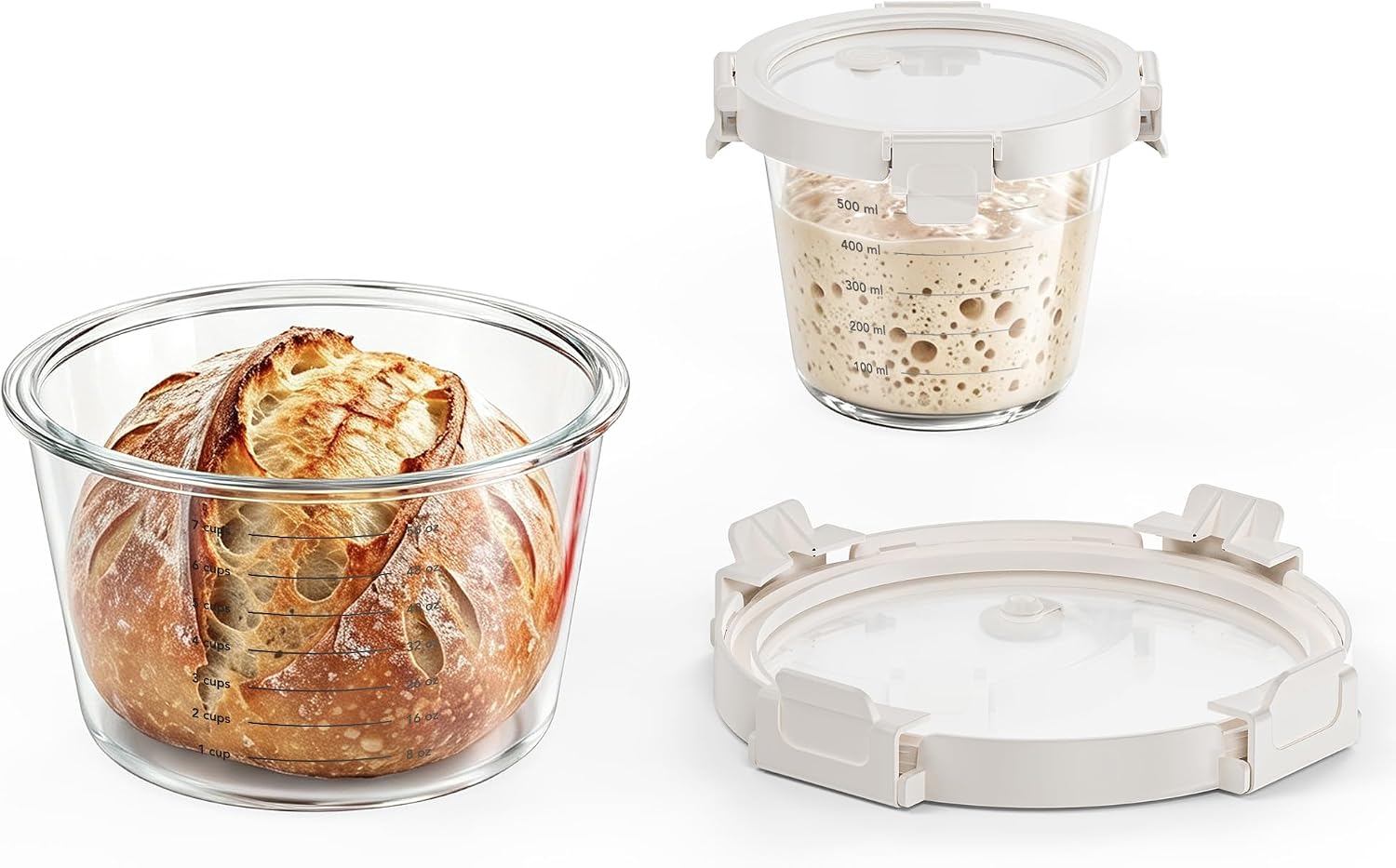
Selecting the right material influences how well your container handles daily cleaning, temperature changes, and visual monitoring. Glass remains the standard choice for sourdough starters because its clear walls let you observe bubble formation and yeast activity directly.
Some kits use soda-lime glass while others utilize advanced borosilicate glass designed to withstand thermal fluctuations safely. Reviewing material specifications helps ensure your vessel transitions smoothly between refrigerator storage and warm kitchen counters without unexpected cracking.
Capacity and Expansion Room
Sourdough starters double or triple in volume during peak fermentation phases. Choosing an appropriate capacity prevents messy overflows and ensures your culture has enough room to breathe after every feeding session.
Smaller 24-ounce to 34-ounce jars suit minimal weekly baking routines, whereas larger 40-ounce to 71-ounce containers provide generous headspace. Matching the container volume to your flour and water ratios keeps your kitchen workspace clean and organized.
Lid Design and Sealing Mechanisms
Airtight seals help preserve starter freshness during refrigeration, while breathable cloth covers support active counter fermentation. Many modern kits supply interchangeable lids, allowing you to swap between silicone seals and fabric tops easily.
Consider whether you prefer traditional glass lids secured with stainless-steel clips, flexible silicone caps, or threaded bamboo closures. Each lid type affects how quickly you can access the jar during rushed morning feeding routines.
Monitoring Tools and Tracking Features
Tracking when you last fed your culture is essential for consistent bread baking results. Several starter kits include elastic bands marked with days of the week or measurement lines to indicate feeding levels visually.
Precision thermometers attached to the exterior walls also help you gauge ambient fermentation temperatures. These integrated tracking accessories eliminate guesswork and support a structured, repeatable sourdough maintenance routine.
Cleaning and Maintenance Convenience
Regular cleaning prevents dried flour buildup around the container rim. Wide-mouth designs with straight interior walls significantly simplify reaching the bottom with a spatula during daily maintenance.
Check manufacturer care instructions regarding dishwasher compatibility versus hand-washing requirements. Selecting a jar with an accessible opening and suitable cleaning profile ensures effortless upkeep over months of regular baking.
Accessory Bundles and Value Kits
Complete starter kits often bundle spatulas, feeding bands, cloth covers, and alternative lids into a single package. Buying a bundled set provides all necessary accessories immediately without requiring separate purchases.
Evaluate whether a single-jar kit or a multi-pack bundle best fits your baking style. Having backup jars allows you to maintain multiple starter types or rotate clean containers seamlessly between uses.
Frequently asked questions
Why is borosilicate glass recommended for sourdough starter containers?
Borosilicate glass handles rapid temperature changes better than standard glass, making it durable when moving containers between cold refrigerators and warm microwave or oven environments during baking prep.
What is the benefit of a wide-mouth sourdough starter jar?
A wide-mouth opening provides easier access for stirring flour and water, scraping down interior walls with a spatula, and cleaning residue from the bottom compared to traditional narrow-neck bottles.
How do feeding bands help maintain a sourdough starter?
Feeding bands wrap around the exterior of the glass container and feature printed day markers or adjustable indicators to help you track your starter's rise height and last feeding time accurately.
Should I use an airtight lid or a cloth cover during fermentation?
Breathable cloth covers allow carbon dioxide to escape during active fermentation on the counter, while airtight silicone or bamboo lids are best suited for sealing and storing your starter inside the refrigerator.
Why choose a multi-jar starter kit over a single container?
A multi-jar kit lets you maintain different flour types, such as rye and wheat, simultaneously or keep a backup starter ready, ensuring an uninterrupted baking workflow without downtime between batches.