Appliances · Buying Guide
Best Aluminum Baking Pans Disposable Choices for Quick Cleanup and Roasting
Navigating busy kitchens, holiday dinners, and large gatherings often calls for practical bakeware that simplifies post-meal cleanup. Aluminum baking pans disposable choices offer a lightweight yet durable solution for baking, roasting, and transporting various dishes without the daily hassle of scrubbing traditional metal cookware or glass dishes. These versatile trays handle everyday meal prep and festive celebrations alike.
Whether you need standard loaf tins, square pans for brownies, or deep half-size trays for catering events, these aluminum containers deliver reliable heat conductivity for even results. Exploring the right pack size, depth, and design features ensures you find a suitable option for your specific cooking routines, meal prep habits, and food storage needs across multiple scenarios.
As an Amazon Associate, StacyLaughs earns from qualifying purchases.
Buying guide
Determining the Right Pan Size
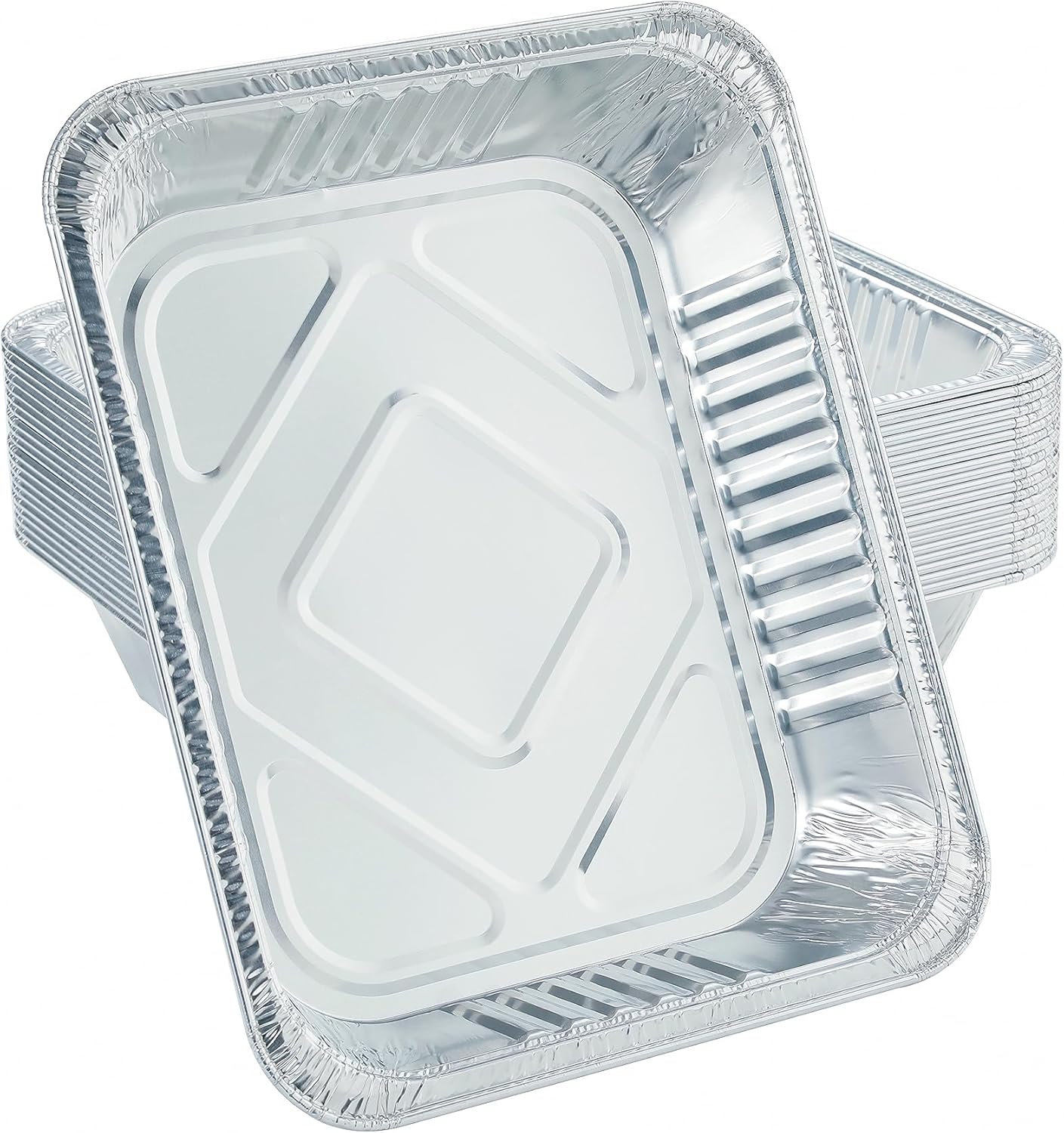
Choosing correct dimensions for aluminum baking pans disposable options ensures your recipes fit without overflows. Standard half-size trays measure around twelve by ten inches, ideal for large casseroles and roasting meats. Smaller square options or narrow loaf tins suit specific tasks like baking brownies or breads. Always check both top rim and internal cooking surface dimensions to avoid surprises when transferring recipes into the oven.
Depth also plays a vital role. Deeper pans prevent splashing when preparing runny batters or layered dishes, while shallower versions work well for roasting vegetables. Matching the physical footprint of the container to your oven racks or air fryers prevents fitting issues. Reviewing these spatial requirements guarantees that your chosen bakeware integrates smoothly into your kitchen routine.
Evaluating Material Thickness and Durability
Material thickness directly impacts how well a disposable pan holds its shape under heavy loads. Heavy-duty aluminum foils feature reinforced rib walls that resist bending when you transport dense foods like baked ziti or roasted turkeys. Lightweight options reduce costs but may require extra support underneath when moving filled containers from counter to oven. Inspecting the gauge and structural rigidity helps prevent accidental spills and structural collapses during busy cooking sessions.
Durability also affects heat distribution across the cooking surface. Quality aluminum conducts heat evenly, promoting consistent baking results for cakes and casseroles without hot spots. While these containers are designed for easy disposal, robust wall construction allows some users to wash and reuse them multiple times if desired. Prioritizing sturdy builds ensures your bakeware remains reliable whether you are grilling outdoors or baking indoors.
Understanding Lid Compatibility and Storage
Storage and transport often depend heavily on whether your chosen aluminum pans include matching covers. Lids protect prepared dishes from dust during outdoor picnics and help lock in moisture while food rests. Some packages feature snap-on transparent covers that let you view contents instantly, while other multi-packs omit lids entirely. If your selection lacks covers, consider whether you have alternative wrapping materials available for refrigerator stacking and safe transit.
Proper lid design also prevents leaks and spills when moving food between locations. Rigid edges on snap-on covers secure the rim tightly, whereas foil covers require careful manual crimping. Evaluating your need for transport versus stationary home baking helps determine if purchasing a bundled set with lids is worthwhile. Planning for storage ahead of time keeps your kitchen organized and your prepared meals protected until serving time.
Assessing Heat Conductivity and Oven Safety
Aluminum is renowned for its excellent thermal conductivity, making these pans efficient tools for baking, roasting, and broiling. High conductivity allows the container to reach cooking temperatures quickly, promoting even browning for crusts and roasted vegetables. Always verify maximum temperature ratings and manufacturer instructions to ensure safe operation within your specific oven, grill, or broiler environment. Proper heat transfer prevents unevenly cooked centers and guarantees reliable culinary outcomes.
Safety considerations extend beyond the oven interior. Because aluminum pans are lightweight, they require careful handling when filled with hot liquids or heavy meals. Using sturdy oven mitts and supporting the base with a metal cookie sheet provides extra stability during transfer. Understanding how your chosen bakeware reacts to high heat ensures a secure cooking process from start to finish, minimizing accidents in a bustling kitchen.
Selecting Pack Quantities for Your Needs
Buying in bulk offers distinct advantages depending on your frequency of cooking and entertaining habits. Smaller packs of ten are convenient for occasional holiday hosts or those with limited pantry storage space. Larger bundles containing twenty or twenty-five units ensure you always have spare bakeware ready for weekly meal prep, community gatherings, or catering ventures. Assessing your typical usage prevents clutter while keeping your kitchen well-stocked.
Bulk purchasing can also offer better value per unit for frequent bakers and small food businesses. However, storing large quantities of bulky half-size trays requires adequate cabinet or closet room. Balancing your available storage capacity against your cooking frequency helps determine the ideal pack size. Making an informed choice prevents overstocking while ensuring you never run short during critical meal preparation moments.
Managing Cleanup and Environmental Impact
One of the primary benefits of using aluminum baking pans disposable varieties is the elimination of time-consuming cleanup chores. Tossing used trays into a recycling bin after a tiring party saves hours of scrubbing baked-on grease from traditional metal cookware. Most aluminum foil containers are fully recyclable, offering an eco-friendly alternative that helps reduce environmental impact compared to non-recyclable plastics. Proper disposal ensures convenient post-meal maintenance without extra effort.
For individuals who prefer sustainability without single-use waste, many heavy-duty aluminum pans can be hand-washed or placed in a dishwasher for reuse. Evaluating your personal preference between absolute convenience and multi-use economy guides your purchasing decision. Whether you choose to recycle immediately or extend the lifespan of sturdy trays through careful washing, aluminum bakeware adapts to diverse household cleanup routines and environmental priorities.
Frequently asked questions
Can disposable aluminum baking pans be used in air fryers?
Yes, many smaller square or rectangular disposable aluminum pans fit inside standard air fryers, provided the dimensions match your appliance basket. They are convenient for baking small cakes, reheating leftovers, or roasting vegetables without dirtying your basket directly. Always check the outer measurements of the pan against your air fryer interior before cooking to ensure proper airflow and prevent jamming. Using these pans in an air fryer simplifies cleanup significantly, though you must handle them carefully when hot.
Are aluminum baking pans safe for freezer storage?
Most aluminum baking pans are fully freezer safe, allowing you to prepare meals in advance, freeze them, and transfer them directly to the oven when ready to cook. This dual capability makes them excellent for meal prepping, batch cooking, and storing holiday leftovers. However, if your pans do not include matching lids, you should wrap the top securely with plastic wrap or foil to prevent freezer burn and protect the stored food from absorbing ambient refrigerator odors.
Do I need to grease aluminum pans before baking?
Whether you need to grease aluminum baking pans depends largely on the specific recipe you are preparing. Sticky batters like cakes, brownies, or breads often benefit from a light application of butter, oil, or cooking spray to ensure easy release after baking. For high-fat recipes like roasted meats or casseroles, greasing is usually unnecessary because natural fats prevent sticking. Reviewing your recipe requirements helps determine whether a preliminary coating of oil or flour is recommended.
Can disposable aluminum foil pans be reused?
Heavy-duty aluminum foil pans can often be washed and reused multiple times if they remain structurally sound and free from punctures or heavy wear. Lightweight versions are typically designed for single-use convenience and may bend or warp during cleaning. If you choose to reuse your pans, wash them gently by hand or place them in the dishwasher according to manufacturer guidance. Always inspect the container for structural integrity before filling it with food again.
Are lids included with all aluminum baking pan packs?
Lids are not included with all aluminum baking pan packs, as many manufacturer bundles focus solely on the foil containers themselves. Some specific product configurations come packaged with clear plastic snap-on lids or foil covers, while others require you to purchase covers separately or use household foil for wrapping. Checking the product listing details carefully before purchasing ensures you select a package that matches your specific storage, transport, and covering requirements.