Appliances · Buying Guide
Best Aluminum Cookie Sheets for Even Baking and Roasting
Finding reliable bakeware involves understanding material performance, heat conduction, and how heavy-gauge aluminum interacts with high oven temperatures. Bare aluminum pans distribute heat rapidly, helping you achieve consistent browning without hot spots, preventing burnt bottoms on delicate cookies and savory roasted vegetables during everyday baking sessions in modern home kitchens today.
When selecting the right baking trays for daily meal prep or batch baking, evaluating exact physical dimensions, rim construction, and pack configurations ensures you choose a setup that fits your oven and cooking style efficiently. Choosing uncoated metal allows a natural dark patina to develop over time for seasoned kitchen performance across various demanding roasting tasks.
As an Amazon Associate, StacyLaughs earns from qualifying purchases.
Buying guide
Material Composition and Heat Conduction
Choosing bare aluminum for baking sheets offers distinct thermal advantages over other kitchen metals. Pure aluminum transfers heat rapidly compared to traditional steel, ensuring your cookies, pastries, and roasted vegetables receive uniform warmth across the entire surface area. This fast thermal response helps eliminate frustrating cold spots that cause uneven baking results across multiple baking batches.
When evaluating bakeware options, carefully consider how metal thickness influences long-term durability and daily performance in your kitchen. Heavy-gauge aluminum provides better structural stability under high oven temperatures while maintaining optimal thermal conductivity. This balanced performance allows home cooks to achieve professionally browned crusts without worrying about sudden deformation during demanding roasting tasks.
Rim Construction and Warp Resistance
Oven warping remains a common frustration for home bakers using thin metal trays. To combat this issue, look for baking sheets featuring reinforced encapsulated steel rims. These embedded core rims provide rigid structural support, preventing the metal from twisting or bowing when exposed to high baking temperatures reaching up to five hundred degrees Fahrenheit consistently.
Solid rim construction also improves safety and handling during busy kitchen tasks. When pulling heavy trays loaded with roasted meats or large cookie batches from a hot oven, a sturdy rim gives you a secure grip. This design feature protects the pan's structural shape over years of frequent domestic use.
Sizing and Oven Compatibility
Selecting the correct physical dimensions for your baking sheets requires careful measurement of your home oven interior cavity. Standard half-sheet pans typically measure around eighteen by thirteen inches, while extra-large options extend past twenty inches in length. Verifying these measurements beforehand ensures the pan slides onto oven racks smoothly without jamming against inner walls.
Counter space and storage availability also dictate optimal sizing choices for your specific kitchen layout. Larger trays maximize batch output but require wide cabinets or vertical slots for neat organization. Balancing your recipe requirements with available storage space prevents clutter and guarantees hassle-free baking sessions every single time you prepare family meals.
Pack Configurations and Batch Baking
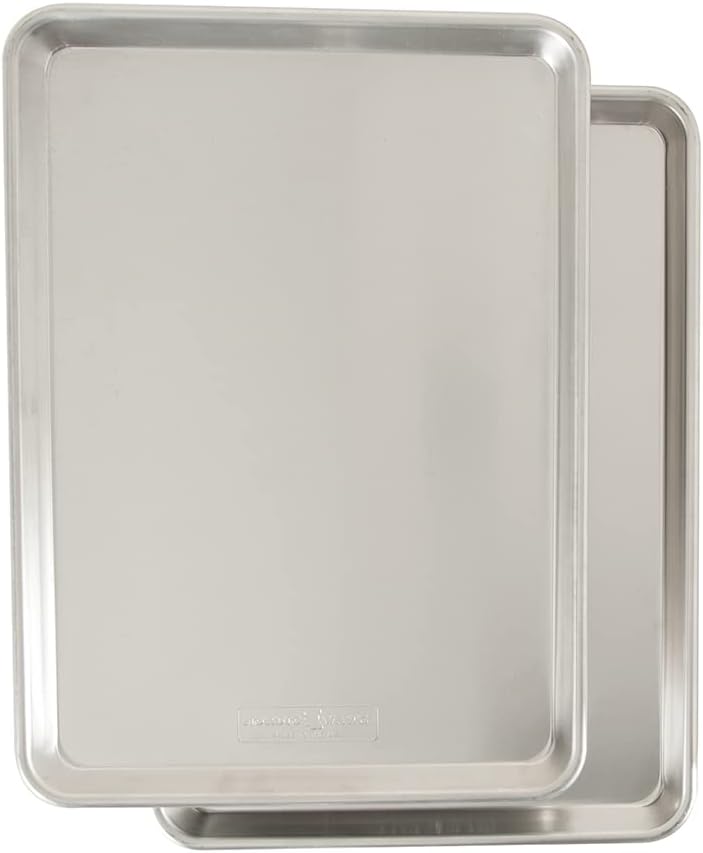
Purchasing baking sheets in multi-pack configurations provides excellent value and convenience for households that bake frequently. Two-pack half-sheet sets allow you to rotate batches seamlessly, letting one set cool while another bakes in the oven. This continuous workflow saves significant time during holiday meal preparation or large cookie baking sessions.
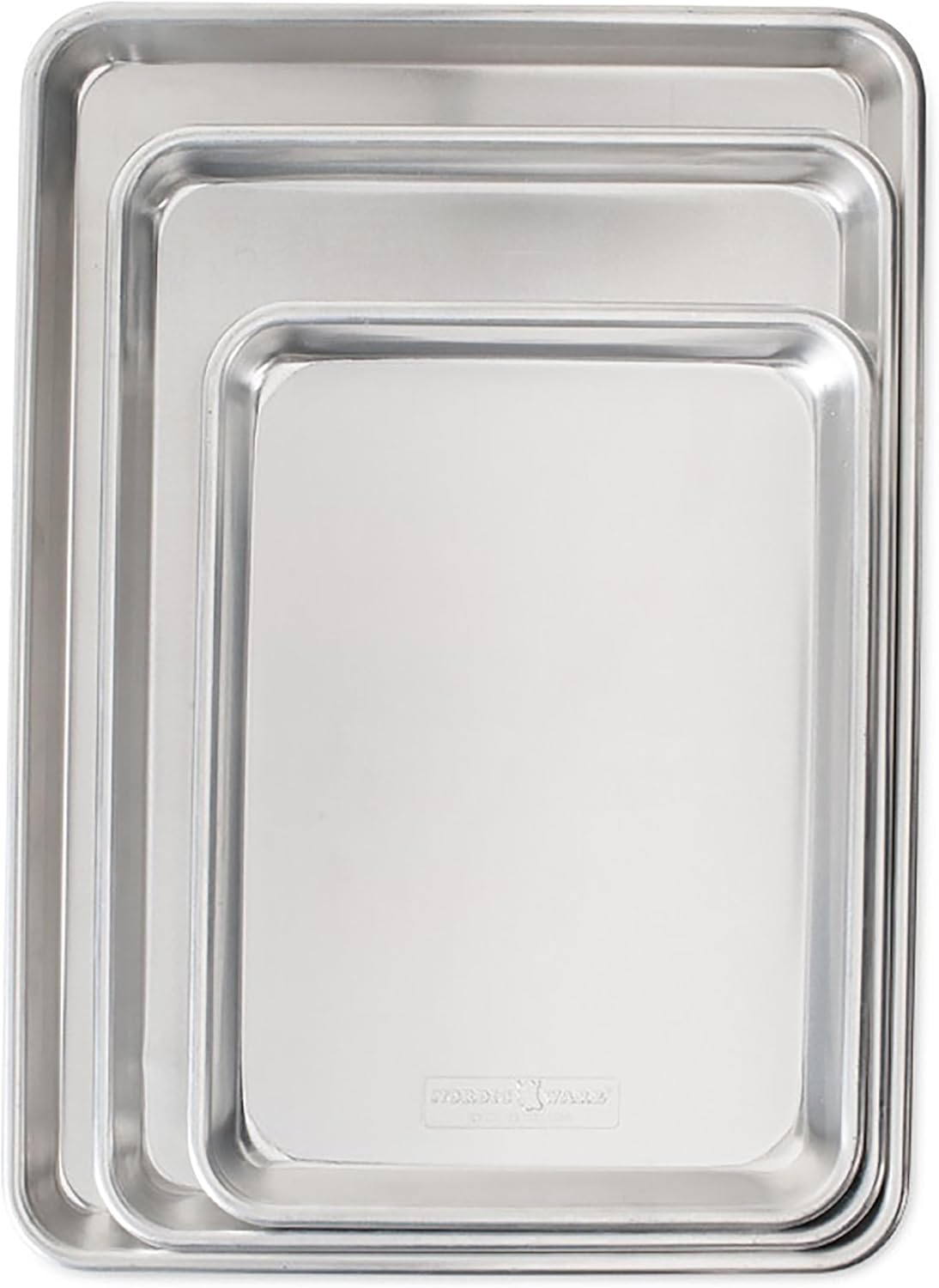
Assorted sets containing quarter sheets, jelly roll pans, and half sheets offer specialized sizing for different ingredients. Smaller pans fit easily into toaster ovens or handle side dishes, while larger trays accommodate main courses. Assessing your household baking volume helps determine whether a single large pan or a multi-size set best fits your daily routine.
Maintenance and Natural Patina Development
Proper maintenance ensures your aluminum baking sheets retain structural integrity over many years of home use. Unlike dishwasher-safe coated pans, pure bare aluminum typically requires hand washing to prevent harmless surface oxidation or discoloration caused by harsh dishwasher detergent chemicals. Simple cleaning agents like baking soda or lemon juice easily tackle stubborn baked residues without damaging the metal.
Over time, uncoated aluminum pans develop a natural dark patina from regular roasting and baking activities. Similar to seasoned cast iron, this patina enhances baking performance by creating a slightly more forgiving cooking surface while preserving the sheet's overall durability. Embracing this gradual color change is a normal part of owning professional-grade aluminum bakeware.
Surface Coatings and Food Safety
Choosing uncoated aluminum bakeware eliminates concerns regarding artificial chemical coatings flaking off into your food during high-heat cooking. Bare aluminum surfaces provide a toxin-free cooking environment, ensuring that nothing alters the natural flavor of your baked goods or roasted meats. This pure metal construction strongly appeals to home cooks prioritizing minimalist kitchen tools.
While some consumers prefer nonstick surfaces for effortless food release, pairing bare aluminum sheets with parchment paper or silicone baking mats delivers similar convenience. This flexible approach allows you to benefit from aluminum's superior heat conduction while maintaining easy cleanup without relying on artificial nonstick layers that might degrade over extended periods of active use.
Frequently asked questions
Why choose bare aluminum over stainless steel for cookie sheets?
Bare aluminum offers significantly superior heat conduction compared to ordinary stainless steel, transferring heat much faster across the cooking surface. This rapid and uniform thermal distribution ensures your cookies bake evenly across the entire tray, preventing burnt bottoms and undercooked centers. Additionally, heavy-gauge aluminum provides excellent warp resistance at high oven temperatures without relying on heavy composite layers, making it a preferred material for professional bakers and home kitchens alike.
Do aluminum baking sheets warp in high-heat ovens?
High-quality commercial-grade aluminum baking sheets featuring reinforced encapsulated steel rims are specifically engineered to resist warping at temperatures up to five hundred degrees Fahrenheit. The embedded steel core adds structural rigidity, preventing the metal from bowing or twisting under intense heat. However, avoiding thermal shock, such as plunging a hot pan directly into cold water, remains essential to preserve the structural integrity of your bakeware over years of regular use.
How should I clean uncoated aluminum baking sheets?
Hand washing is strongly recommended for uncoated aluminum baking sheets because running them through a dishwasher can cause harmless surface oxidation or discoloration due to harsh detergent chemicals. For stubborn residue or baked-on stains, applying a simple paste made from baking soda and water or using fresh lemon juice effectively lifts the mess without scratching the metal surface. Proper hand cleaning preserves the natural patina that develops over time.
What is a natural patina on aluminum bakeware?
A natural patina is a dark discoloration that gradually develops on uncoated aluminum baking sheets from regular exposure to heat, oils, and roasting juices over months of use. Similar to seasoned cast iron, this darkened surface does not affect safety or performance; instead, it enhances the baking experience by creating a slightly more seasoned cooking surface. Embracing this harmless aesthetic change is a normal part of maintaining professional-grade aluminum kitchenware.
Can I use parchment paper or silicone mats on aluminum sheets?
Yes, parchment paper and silicone baking mats are fully compatible with aluminum baking sheets. Using these helpful liners provides effortless food release for sticky cookies, delicate pastries, and roasted vegetables without interfering with aluminum's superior heat conduction properties. This flexible combination allows you to enjoy quick cleanup while protecting your pans from excessive residue buildup, making daily baking tasks much more convenient in busy home kitchens.