Appliances · Buying Guide
Best Angel Food Bundt Cake Pans for Fluffy Bakes
Baking a tall, airy angel food or bundt cake requires specialized bakeware designed to support delicate batters as they rise. Unlike standard cake pans, these tube pans feature a central core that ensures even heat distribution, allowing light sponge mixtures to climb smoothly without collapsing. Selecting the right pan involves balancing material types, such as carbon steel, aluminum, or stainless steel, with your preferred cleaning routine and recipe requirements.
Whether you prefer a classic two-piece design for easy unmolding or an integrated cooling feature like built-in feet, understanding the construction helps achieve professional results at home. Different models offer unique thermal properties and release mechanisms to keep delicate crusts intact. Reviewing these options allows you to find a reliable baking tool that matches your favorite dessert traditions.
As an Amazon Associate, StacyLaughs earns from qualifying purchases.
Buying guide
Material Composition and Heat Distribution
Choosing the right material for your tube pan directly affects how evenly your desserts bake and brown. Carbon steel provides heavy-duty thermal stability, absorbing oven heat steadily to promote a uniform rise in delicate sponge mixtures. Aluminum alternatives heat up quickly and cool down fast, giving you precise temperature control during the baking cycle. Stainless steel offers exceptional rust resistance and durability for long-term kitchen use.
Evaluating these material properties helps match your pan to your preferred recipes. Heavy carbon steel holds heat longer, which benefits denser pound cakes, while lighter metals support the airy texture of traditional angel food cakes. Consider how each metal interacts with your oven's heating elements to achieve the desired crust color and internal crumb structure.
Removable Bottoms Versus One-Piece Design
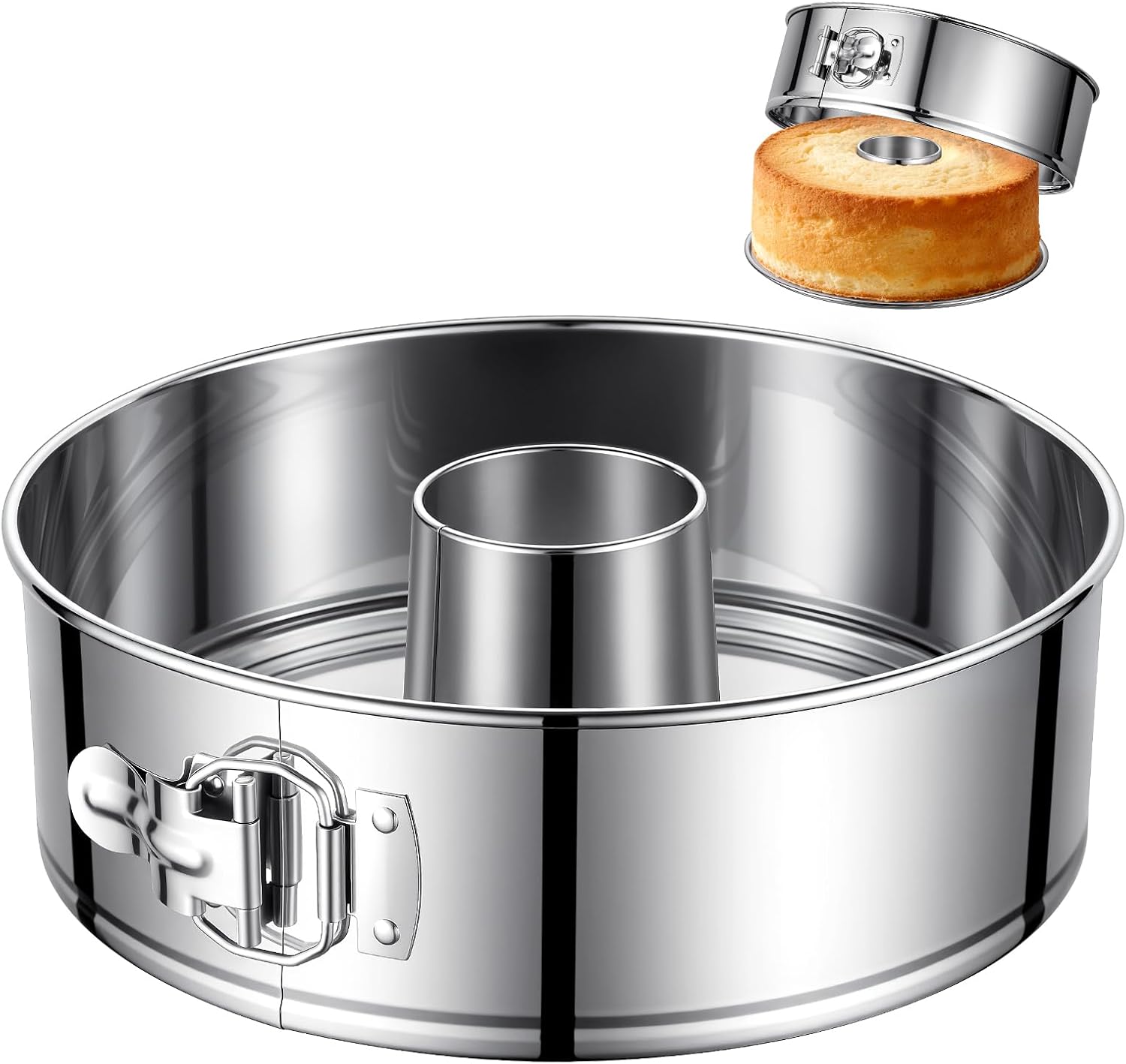
The structure of your tube pan dictates how easily you can release baked goods without damaging their delicate shape. Pans featuring removable bottoms allow you to push the center core upward, freeing the cake cleanly from the outer wall. This mechanical separation prevents delicate sponge cakes from tearing, sticking, or crumbling during the unmolding process.
Conversely, one-piece designs offer completely leak-proof performance for fluid batter mixtures that might otherwise seep through a standard base seam. Deciding between these two styles depends on whether your primary goal is effortless demolding or absolute liquid containment. Reviewing your typical batter consistency helps guide you toward the most reliable pan configuration for your specific baking needs.
Cooling Feet and Inverted Support Features
Angel food and chiffon cakes require immediate inverted cooling to prevent their delicate, airy structures from collapsing before the crumb fully sets. Traditional baking methods often require balancing the center tube over the narrow neck of a glass bottle. Modern pan designs frequently incorporate built-in feet directly on the rim to elevate the upside-down pan automatically and safely.
These integrated support feet provide stable, unobstructed airflow beneath the cooling dessert without requiring you to hunt for extra kitchen accessories or bottles. When evaluating pans with this feature, check the height and placement of the feet to ensure steady balance on your kitchen countertop or workspace. Selecting a model with built-in cooling supports streamlines your post-baking routine significantly.
Nonstick Coatings and Surface Maintenance
A reliable nonstick coating ensures that delicate cakes slide out smoothly without leaving behind crust fragments or sticky batter residue. Manufacturers apply various specialized treatments, such as silicone-based layers or multi-tier nonstick surfaces designed to minimize sticking. These smooth finishes reduce the need for heavy greasing, allowing light batter mixtures to climb the interior tube walls effectively.
Maintaining these treated surfaces properly requires following specific care guidelines provided with your bakeware. While several modern pans are fully dishwasher safe, others recommend gentle hand washing with a soft sponge to preserve the coating's release performance over time. Proper cleaning habits protect the nonstick layer from scratching or staining, ensuring consistent food release across years of regular baking projects.
Capacity and Dimension Considerations
Selecting the correct pan capacity ensures your batter fits comfortably without overflowing during the rising process. Standard angel food cake pans typically accommodate around sixteen cups of volume or feature a ten-inch diameter footprint. Matching these specific pan dimensions to your favorite recipes prevents underfilled molds or dangerous batter spills inside your hot oven.
You should also carefully measure your oven cavity and storage cabinets before purchasing a large tube pan. Taller walls and wider outer diameters require adequate vertical clearance on oven racks and flat shelf space for convenient storage. Assessing these physical dimensions guarantees that your bakeware fits your kitchen layout seamlessly from initial storage to final baking.
Temperature Ratings and Oven Safety
Bakeware materials react differently to high oven temperatures, making it essential to check the maximum heat rating of your chosen pan. Most quality carbon steel, aluminum, and stainless steel tube pans safely withstand sustained temperatures ranging from four hundred to five hundred degrees Fahrenheit. This thermal resilience allows you to bake various pastry recipes without warping the metal frame.
Verifying the upper temperature rating ensures your pan remains structurally sound during extended baking cycles. Exceeding recommended heat thresholds can damage specialized nonstick coatings or warp lighter metal structures over time. Checking these specifications helps you select a durable baking tool that handles your preferred baking temperatures safely and dependably across different recipes.
Frequently asked questions
Why do angel food cake pans have a center tube?
The center tube in an angel food cake pan serves a vital functional purpose during the baking process. Because angel food and sponge cakes rely on whipped egg whites for their height rather than chemical leaveners, the batter needs extra surface area to cling to as it climbs. The inner tube conducts heat directly into the center of the batter, ensuring the thick mixture bakes evenly from the inside out and prevents a dense, unbaked core.
Should I grease an angel food cake pan before adding batter?
You should generally avoid greasing an angel food cake pan unless the specific manufacturer instructions explicitly recommend it. Angel food and chiffon cakes require an ungreased surface so the delicate batter can grip the sides of the pan as it rises. Greasing the metal can cause the batter to slip down, resulting in a dense, low-rising cake. Nonstick coatings already assist with release, making traditional greasing unnecessary for these specific airy dessert recipes.
Why must angel food cakes cool upside down?
Angel food cakes must cool upside down to prevent them from collapsing under their own weight. Because these cakes contain very little fat and rely on a delicate, aerated structure, gravity can pull the center downward as the cake cools if it sits upright. Hanging the pan upside down allows the crumb structure to set fully in its expanded state. Pans with built-in feet or those balanced over bottles make this upside-down cooling process simple.
What is the difference between a bundt pan and an angel food cake pan?
While both pans feature a central tube, their shapes and intended uses differ significantly. Traditional bundt pans feature decorative fluting, slanted sides, and heavier designs meant for richer pound cakes that require greasing for easy release. In contrast, angel food cake pans feature straight or gently tapered smooth sides with a flat bottom, and they are designed to be used ungreased so light batters can climb the walls effectively during baking.
Can I use a tube pan for regular pound cakes and sponge cakes?
Yes, most tube pans designed for angel food cakes are versatile enough to accommodate pound cakes, chiffon cakes, and coffee cakes. The central tube helps conduct heat evenly through denser batters just as it does for lighter sponge mixtures. However, when baking richer pound cakes, you may need to grease and flour the pan to prevent sticking, unlike the ungreased method required for classic fat-free angel food dessert recipes.