Appliances · Buying Guide
Best Angel Food Bundt Pans for Fluffy Cakes and Easy Release
Baking a light and airy angel food or bundt cake requires specialized bakeware that supports proper heat conduction and effortless cake release. Choosing the right angel food bundt pan ensures your delicate batters rise evenly without sticking to the interior surface, preserving the structural integrity and fluffy texture of your favorite dessert recipes.
Whether you prefer heavy-duty carbon steel, rust-resistant stainless steel, or classic formed aluminum designs, various construction styles offer distinct benefits for home bakers. Exploring these available options helps you find a dependable pan that securely matches your preferred baking recipes, cleanup preferences, and kitchen storage capabilities. Proper cooling features also play a vital role in preventing collapsed cakes.
As an Amazon Associate, StacyLaughs earns from qualifying purchases.
Buying guide
Material Composition and Heat Conduction
Bakeware materials significantly influence how heat travels through your batter during baking. Aluminum pans offer rapid and even heat distribution, helping cakes rise uniformly. Carbon steel provides similar thermal stability with added sturdiness, while stainless steel brings rust resistance to the table. Selecting the right material ensures your desserts achieve the desired texture, golden crust, and proper interior crumb structure without developing hot spots.
Evaluating your routine maintenance habits also connects directly to material choice. Some metals withstand dishwasher cycles, whereas others demand gentle hand washing to preserve protective nonstick coatings. Understanding these material characteristics helps you invest in durable bakeware that matches your kitchen workflow, ensuring reliable performance across countless baking sessions.
Capacity and Pan Dimensions
Choosing the correct capacity ensures your batter fits comfortably without overflowing into the hot oven cavity. Many standard angel food pans hold up to sixteen cups of batter or provide generous four-quart volumes. Measuring your oven interior and kitchen storage space prevents fitting issues before you begin baking large family-sized desserts for holidays and gatherings.
Center tube height and overall interior diameter also impact how evenly heat penetrates the center of dense or airy batter mixtures. Taller tubes support proper rising in deep baking molds. Matching pan dimensions to your favorite recipes guarantees consistent results, preventing underbaked centers or crowded oven racks during holiday preparations.
Nonstick Coatings and Food Release
Nonstick interior surfaces simplify the crucial process of cleanly releasing delicate cakes from metal molds. Modern silicone-based or Whitford-reinforced coatings prevent sticky batter residues from adhering to the interior metal walls. This helpful feature reduces the need for heavy greasing, keeping your traditional angel food cakes light and airy without altering their delicate texture.
Maintaining these nonstick layers requires closely adhering to manufacturer care instructions, such as avoiding abrasive scrubbers or metal utensils. Opting for PFAS-free or PTFE-free surface coatings adds extra peace of mind for health-conscious home bakers. Proper cleaning preserves smooth release performance, ensuring your baked goods slide out cleanly every single time.
Cooling Design and Air Circulation
Cooling angel food cakes upside down prevents the delicate structure from collapsing as it cools. Pans featuring built-in cooling feet elevate the metal base above the countertop, ensuring proper air circulation without requiring a separate glass bottle. This integrated design simplifies the cooling process immediately after removing the pan from the hot oven.
If your chosen pan lacks built-in cooling feet, you must rely on alternative props to support the inverted rim safely during the cooling window. Evaluating how a pan handles this crucial cooling phase helps you avoid flattened cakes and maintains the airy crumb structure that defines exceptional angel food and chiffon baked goods.
Removable Bottoms and Tube Mechanics
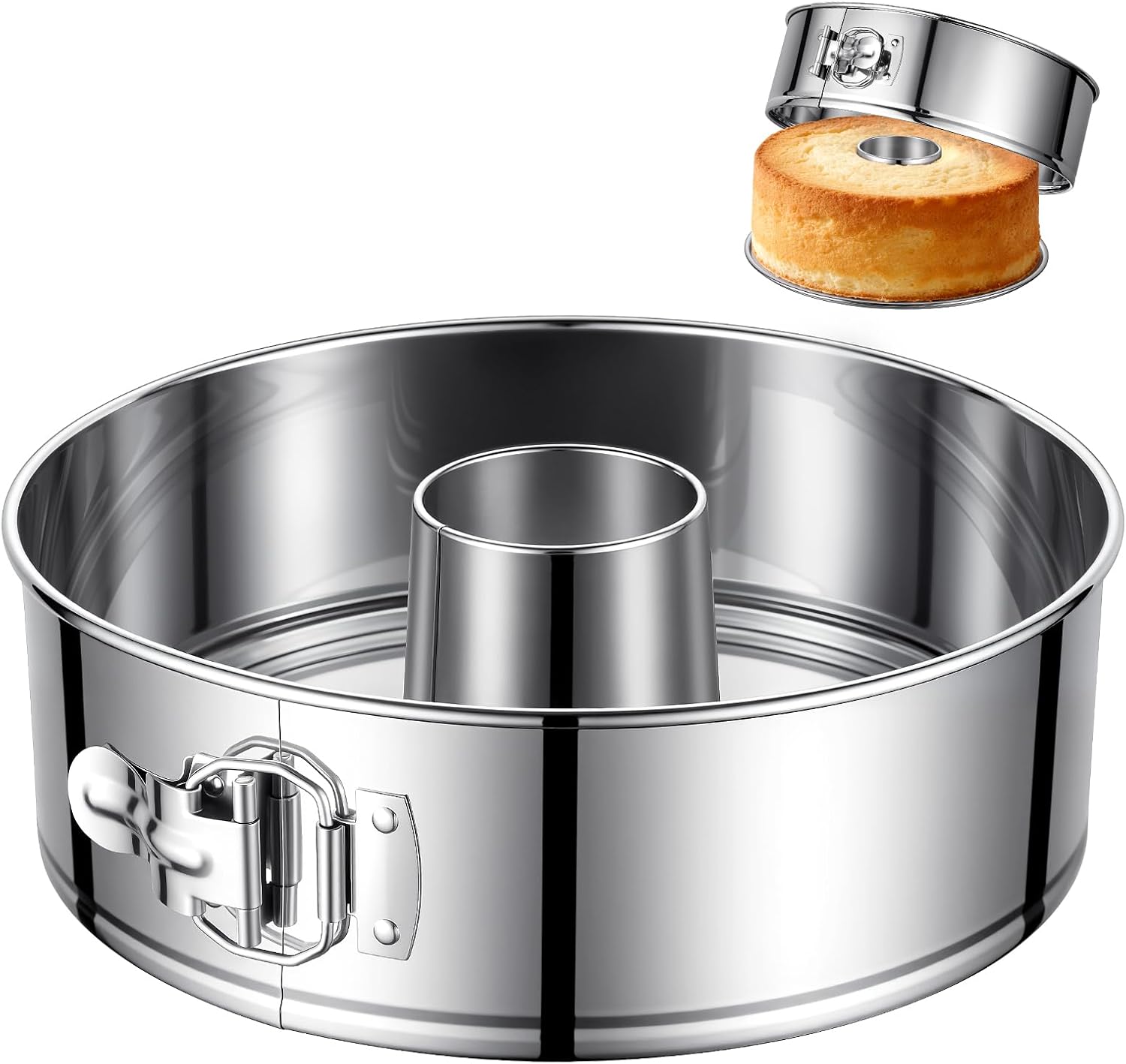
Two-piece tube designs and removable bottom mechanisms transform how you demould fragile cakes from deep baking pans. A springform latch or lift-out center tube lets you separate the metal base smoothly from the baked exterior walls. This mechanical advantage keeps cakes completely intact, preventing crumbs or structural damage during serving preparation.
While removable parts offer exceptional convenience during demoulding, they require precise assembly to prevent liquid batter leaks during the baking cycle. Inspecting the precision-fit base and side walls ensures a secure seal for thinner batter recipes. Balancing release ease with secure construction is essential for consistently successful baking results.
Cleaning and Maintenance Guidelines
Proper cleaning routines extend the operational lifespan of your bakeware and preserve specialized nonstick surface coatings. While some stainless steel or heavy carbon steel pans tolerate dishwasher cycles, many aluminum and nonstick models require careful hand washing with a soft sponge. Following manufacturer guidelines prevents premature wear, scratching, or corrosion on your kitchen investment.
Allowing pans to dry completely before long-term storage prevents moisture accumulation and potential rust formation, particularly on carbon steel or metal surfaces. Matching your personal cleaning preferences to the required maintenance ensures your baking equipment remains in pristine condition for years of ongoing kitchen creativity and dessert preparation.
Frequently asked questions
What is the main benefit of an angel food bundt pan with a removable bottom?
A removable bottom or two-piece tube design significantly simplifies the demoulding process for delicate cakes like angel food, chiffon, and sponge cakes. Traditional pans can trap baked sponges against the interior walls, requiring risky knife-scraping. With a removable center or springform base, you can gently lift the cake away from the outer wall while keeping its fragile crumb structure fully intact. This design minimizes crumbs and presentation flaws, ensuring your homemade desserts look professionally baked every time.
Do I need a glass bottle to cool an angel food cake upside down?
Whether you need a glass bottle depends entirely on whether your chosen pan features built-in cooling feet. Modern angel food cake pans often integrate three sturdy feet along the rim, elevating the inverted pan above your countertop automatically. If your pan lacks these integrated feet, you will need to invert the center tube over the neck of a glass bottle or funnel to achieve proper air circulation. Proper cooling prevents the cake from shrinking or collapsing as it sets.
Can I put my angel food cake pan in the dishwasher?
Dishwasher safety varies widely depending on the specific materials and coatings used in your pan's construction. Some stainless steel models explicitly support dishwasher cleaning, while aluminum and coated carbon steel pans generally require gentle hand washing with a soft sponge. Putting nonstick or coated pans into a dishwasher can damage the surface finish and degrade nonstick performance over time. Always check and follow the manufacturer care instructions to maintain your bakeware properly.
Why is aluminum commonly used for angel food cake pans?
Aluminum is a popular material for baking pans because it offers exceptional heat conductivity, ensuring heat spreads rapidly and evenly across the entire baking surface. This thermal property promotes a uniform rise, even browning, and a light, airy texture that is essential for angel food cakes. Additionally, quality aluminum pans resist rust and warping inside the oven environment, providing dependable durability and long-lasting performance for home bakers tackling classic dessert recipes.
What capacity should I look for in an angel food bundt pan?
Most standard angel food bundt pans offer a sixteen-cup capacity or a four-quart volume, which comfortably accommodates standard cake mixes and large family recipes. A sixteen-cup capacity provides sufficient headroom for batters to rise fully without spilling over the edges during baking. When selecting a pan, consider the size of your typical recipes as well as your oven dimensions to ensure the pan fits comfortably on your oven racks without crowding other dishes.