Appliances · Buying Guide
Best Antique Ceramic Mixing Bowls for Classic Kitchen Styling
Selecting the right antique ceramic mixing bowls transforms everyday meal preparation into a charming culinary routine. These durable stoneware and porcelain vessels offer reliable utility for mixing thick batters, kneading heavy bread dough, and presenting fresh garden salads directly at the family dining table. Their classic designs bring warmth to any workspace.
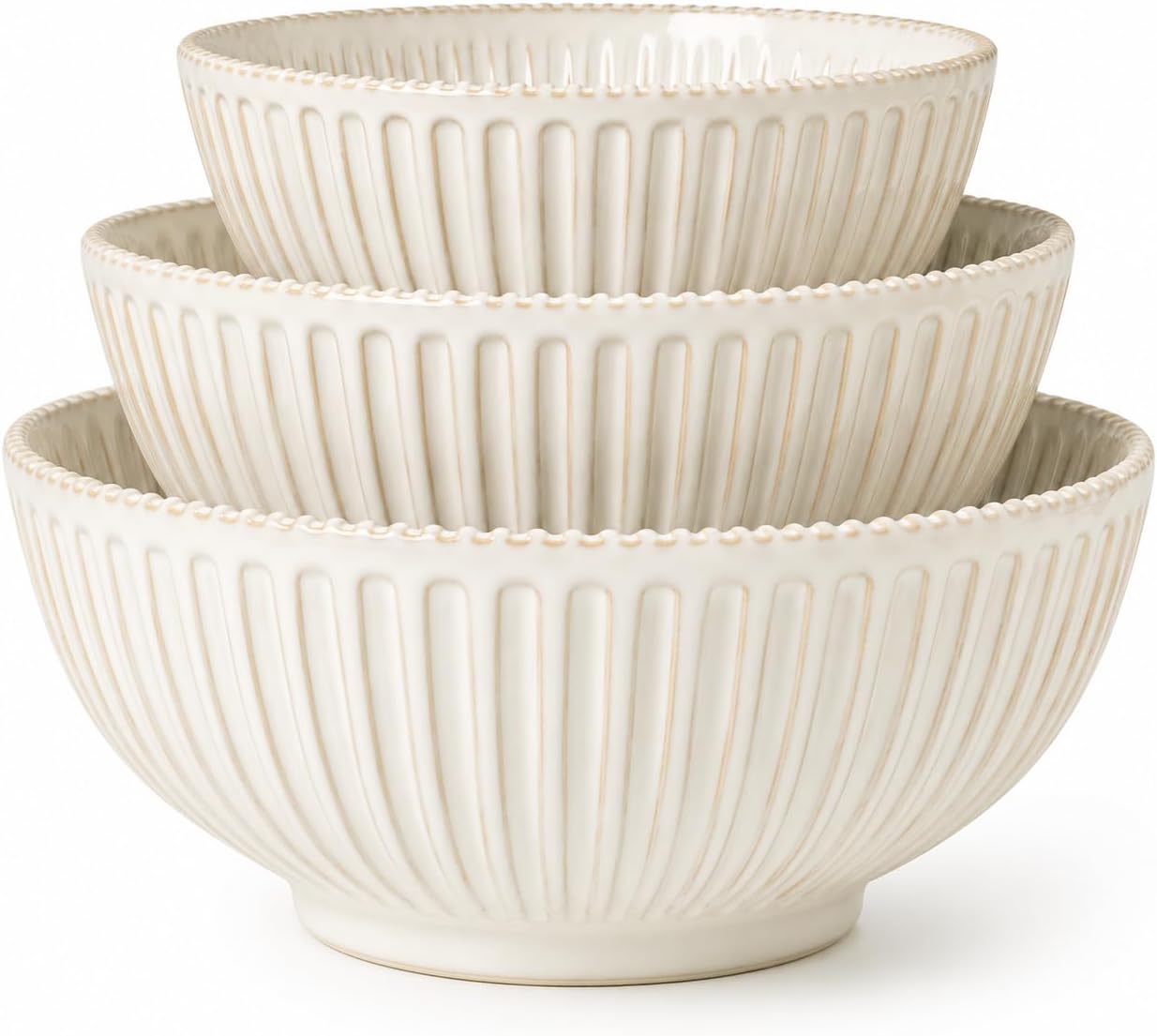
Featuring various nesting configurations and decorative finishes ranging from cobalt blue patterns to embossed leaf motifs, finding a set that matches your decor style enhances both cabinet organization and countertop display aesthetics during busy baking projects. Choosing the ideal collection depends on your specific capacity requirements and storage space availability.
As an Amazon Associate, StacyLaughs earns from qualifying purchases.
Buying guide
Capacity and Volume Options
Choosing the correct volume range ensures your antique ceramic mixing bowls handle everything from small morning cereal portions to massive bread dough batches. Smaller one-quart vessels excel at holding whipped egg whites, whisked dressings, or measured dry spices during ingredient staging phases. Assessing your standard meal portions helps determine whether a compact three-piece collection or an expansive four-piece set best fits your daily cooking habits.
Larger bowls exceeding three or four quarts provide the necessary vertical clearance for tossing family-sized salads and kneading heavy flour mixtures without accidental spillage over the rims. Evaluating your typical recipe batch sizes prevents storage clutter while ensuring you never lack adequate mixing space during weekend baking projects or holiday entertaining tasks.
Material Composition and Durability
Ceramic and stoneware construction delivers exceptional weight and stability, keeping mixing vessels firmly anchored on countertops during vigorous whisking and beating tasks. High-firing manufacturing processes enhance structural strength and chip resistance, ensuring the bowls withstand daily wear from kitchen utensils. Selecting dense stoneware guarantees a reliable foundation for heavy-duty culinary work across years of frequent baking.
Unlike lightweight plastic or metal alternatives, quality porcelain and stoneware resist absorbing food odors, oils, or vibrant tomato stains over time. This robust material longevity makes traditional ceramic mixing bowls a dependable investment for passionate home bakers who value both physical durability and timeless kitchen presentation standards.
Nesting and Storage Efficiency
Kitchen cabinet space is often at a premium, making a smart nesting design an essential feature when selecting your ceramic bowl collection. Stacking smaller bowls directly inside the largest container minimizes the physical footprint required for storage inside crowded cupboards. This space-saving engineering allows home cooks to maintain an organized cooking environment without sacrificing bowl size variety.
This compact configuration keeps your culinary workspace orderly, allowing you to house multiple sizing options without overwhelming your shelves or drawers. Prioritizing stackable models ensures effortless retrieval whenever inspiration strikes for your next baking endeavor, keeping counters clear of unnecessary clutter during complex multi-step recipe preparations.
Thermal Compatibility and Versatility
Modern ceramic mixing bowls frequently offer broad thermal compatibility, allowing them to transition seamlessly from refrigerator storage to microwave reheating or traditional oven baking. This multi-tasking capability reduces the total number of dishes required during complex baking recipes and meal preparation workflows. Being able to melt butter or warm liquids directly in the mixing vessel simplifies your daily routine.
Verifying specific manufacturer guidelines regarding maximum oven heat limits helps maintain the structural integrity of the stoneware body and protects decorative exterior glazes over years of use. Choosing thermally adaptable bowls expands your cooking possibilities far beyond simple mixing tasks into roasting and warming applications.
Maintenance and Cleaning Convenience
Smooth interior and exterior glazes play a crucial role in determining how easily ceramic mixing bowls release stubborn batters and dried dough residues. Non-porous glazed surfaces prevent food particles from clinging tightly, making routine hand washing fast and straightforward after messy cooking projects. This slick finish prevents staining from dark berries, spices, or vibrant sauces.
Additionally, dishwasher-safe ratings provide the ultimate convenience for busy households seeking effortless cleanup after large family gatherings or extensive baking marathons. Selecting smooth, glazed stoneware ensures your collection retains its polished aesthetic appeal over years of regular washing without requiring intensive manual scrubbing routines in the sink.
Aesthetic Style and Display Value
Antique-inspired ceramic bowls do more than handle basic food preparation tasks; their decorative patterns, embossed motifs, and vibrant colors offer genuine visual appeal in any kitchen. Many home cooks proudly display these charming vessels on open kitchen shelving or glass cabinets when not actively in use. This dual purpose bridges practical utility with classic home decor.
Whether you prefer vintage blue-and-white art designs, French farmhouse embossed leaf details, or rustic terracotta accents, selecting a visually striking set enhances your overall interior kitchen decor theme. Investing in attractive bowls ensures they remain beautiful display centerpieces while serving as reliable workhorses for everyday meals and holiday celebrations.
Frequently asked questions
Are antique ceramic mixing bowls safe to use in the microwave and oven?
Most quality ceramic and stoneware mixing bowls are designed to be microwave and oven safe, allowing you to melt butter, warm liquids, or bake directly inside the vessel. However, thermal shock can damage ceramicware if transferred instantly from extreme cold to high heat. Always check the specific manufacturer guidelines provided with your bowl set before exposing them to high oven temperatures. Ensuring proper thermal handling prevents cracking and preserves the integrity of the smooth decorative glaze over years of regular kitchen use.
How do I clean stubborn dried dough or baked-on residue from ceramic bowls?
Cleaning stubborn dried dough or baked-on residue from ceramic bowls is simple thanks to their smooth, non-porous glazed interiors. For stuck-on food, fill the bowl with warm soapy water and allow it to soak for a short period to loosen the material naturally. Avoid using harsh metal scouring pads or abrasive chemical cleaners that can scratch the decorative exterior or dull the glossy finish. Most glazed ceramic bowls are fully dishwasher safe, offering an effortless cleaning alternative after messy baking sessions.
Do nesting ceramic mixing bowls save significant space in small kitchens?
Yes, nesting ceramic mixing bowls are specifically engineered to maximize cabinet storage in small kitchens and compact apartments. By allowing smaller bowls to fit entirely inside the largest container, they occupy the footprint of a single large bowl rather than scattering multiple bulky items across your shelves. This efficient stackable design keeps your cupboards orderly and your countertops clear during food preparation. It provides multiple size options for diverse recipes without creating unnecessary clutter in your cooking workspace.
Are heavy ceramic mixing bowls difficult to handle during baking tasks?
The substantial weight of ceramic and stoneware mixing bowls is a deliberate design feature that provides exceptional stability, preventing the bowl from sliding across your countertop during vigorous whisking or dough kneading. While this heavy build anchors the bowl securely during active mixing, it does mean that the largest capacity bowls require two hands to lift safely when fully loaded. Cooks who prefer lightweight mixing alternatives might find large stoneware vessels somewhat substantial, but the stability benefit outweighs the extra weight for most baking projects.
Can antique-style ceramic bowls double as serving dishes at the dining table?
Antique-style ceramic mixing bowls are exceptionally well-suited for transitioning directly from kitchen food preparation to dining table service. Featuring decorative elements such as vintage blue patterns, embossed leaf motifs, or rustic terracotta accents, these bowls add classic charm and warmth to any meal presentation. You can easily use them to serve family-style salads, side dishes, pasta, or fresh fruit during dinners and holiday gatherings. This dual functionality reduces dishwashing loads while enhancing your table decor aesthetics.