Appliances · Buying Guide
Best Cast Iron Dutch Ovens for Baking Bread at Home
Baking bread with cast iron transforms standard kitchen routines into a reliable method for achieving professional, bakery-style crusts at home. Cast iron naturally excels at retaining and distributing heat evenly, creating an ideal baking environment inside standard kitchen ovens. Whether you prefer a pre-seasoned raw iron surface or a protective enameled finish, these specialized vessels trap steam effectively to yield golden, crusty boules and tender interiors.
Selecting the right piece depends on your preferred maintenance routine, desired capacity, and whether you want a versatile lid that doubles as a skillet. Exploring the available options helps home bakers match their specific baking style, stovetop compatibility, and accessory needs, ensuring every loaf emerges with an impressive oven spring and a delightful texture for family and friends.
As an Amazon Associate, StacyLaughs earns from qualifying purchases.
Buying guide
Material Construction and Finish Types
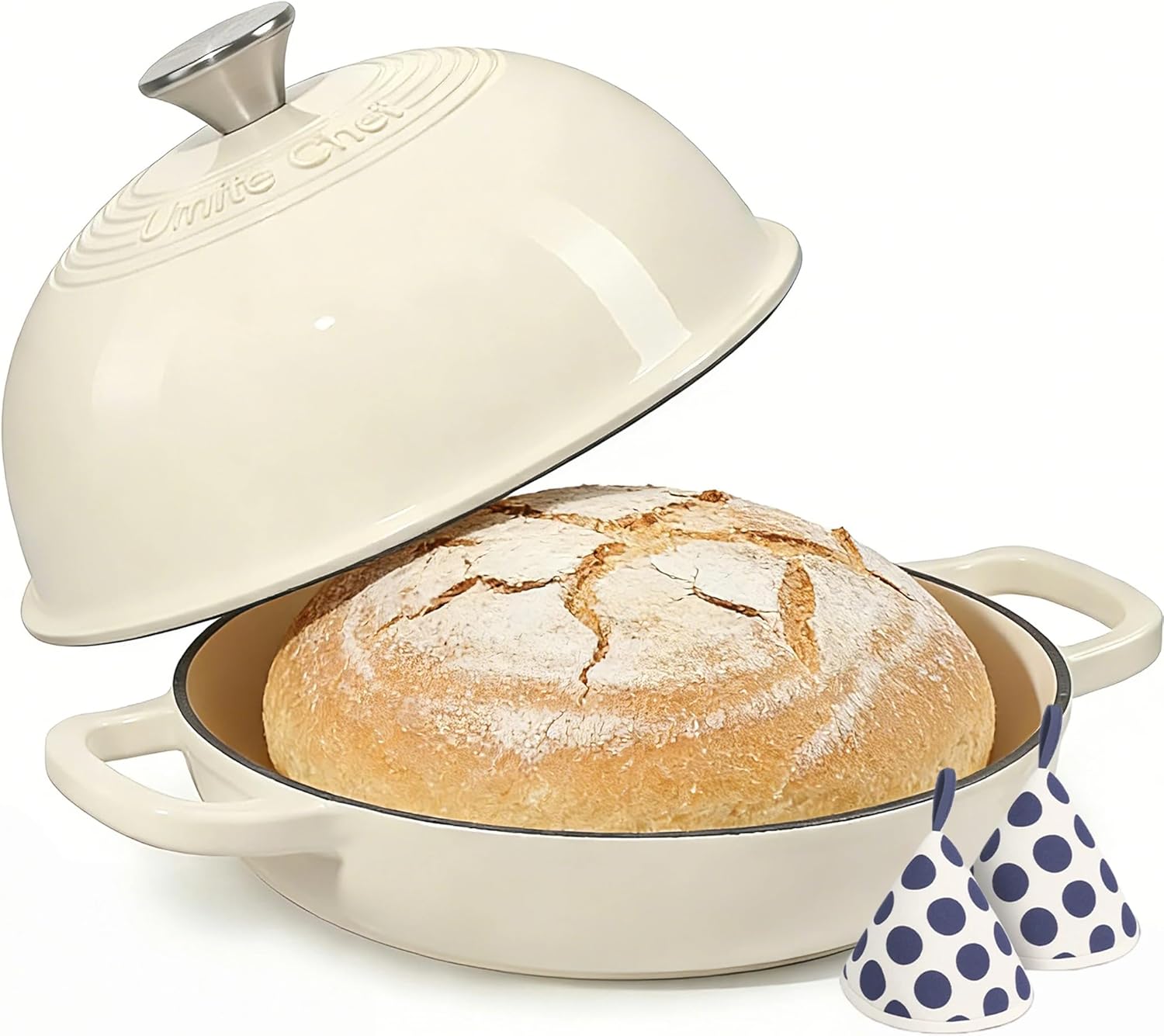
Choosing between enameled and traditional pre-seasoned cast iron represents a fundamental decision for home bakers. Enameled surfaces offer a protective glass-like coating that resists sticking, neutralizes seasoning residues, and eliminates the need for manual oil seasoning. They clean up easily with warm soapy water and maintain a vibrant appearance on dining tables.
On the other hand, traditional raw cast iron relies on a baked-on oil patina that develops natural non-progressive non-stick qualities over time. This un-coated approach avoids synthetic chemicals entirely, making it popular among traditionalists. While raw iron demands more attentive drying and occasional oiling to prevent rust, it rewards regular use with exceptional durability and dependable thermal performance.
Capacity and Sizing Considerations
Selecting the correct capacity ensures your cast iron vessel accommodates your favorite bread recipes comfortably. Most standard bread baking pots range from five to six quarts, providing ample interior room for a typical boule or bâtard to rise and expand during baking. A larger six-quart size provides generous vertical clearance, reducing the risk of dough touching the lid during the initial oven spring phase.
However, larger capacities also add physical weight and require more storage space inside kitchen cabinets or pantry shelves. Bakers working with smaller dough batches may find a compact four to five-quart pot easier to maneuver and lift when loaded with heavy, hot ingredients. Evaluating your typical loaf size helps determine the optimal balance between interior baking space and overall handling convenience.
Lid Design and Steam Management
Trapping steam during the initial phase of bread baking is essential for achieving a crispy crust and a tender crumb. Domed lids are specifically engineered to capture escaping moisture and channel condensation back down the walls without making the top of the loaf soggy. This enclosed steam environment mimics commercial artisan ovens, encouraging optimal dough expansion and a shiny crust.
Alternatively, some versatile models feature a flat skillet lid that doubles as a secondary cooking surface. While these combination designs maximize everyday utility for frying and searing, they may offer less vertical headspace than a dedicated high dome. Buyers should weigh the advantages of moisture-directing dome shapes against the multi-tasking benefits of a flat skillet cover when planning their baking routines.
Versatility Across Heat Sources
Cast iron is celebrated for its ability to transition seamlessly between multiple cooking environments. Most bread ovens are rated for high oven temperatures reaching up to 500 degrees Fahrenheit or higher, allowing them to withstand the intense heat required for artisanal baking. This robust thermal tolerance also makes them suitable for traditional stovetops, including gas, electric, and induction cooktops.
Beyond indoor oven baking, many pre-seasoned cast iron options extend their utility to outdoor grills and campfires. Enameled pots offer similar high-temperature oven performance but generally require more careful handling over direct open flames to prevent exterior discoloration. Assessing where you plan to cook helps identify whether you need a rugged outdoor-ready raw iron skillet combo or an indoor-focused enameled display piece.
Included Accessories and Value Sets
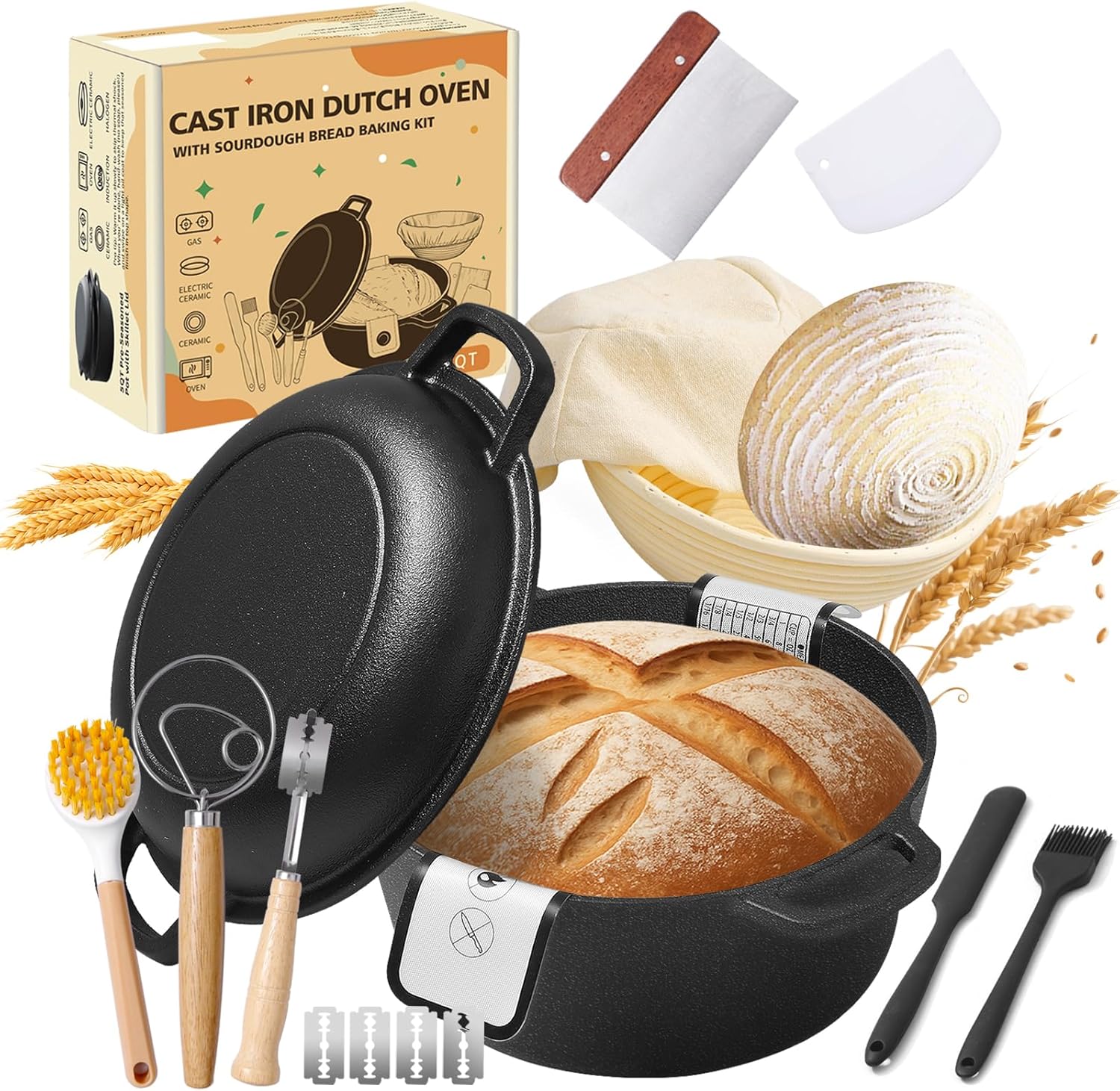
Many modern cast iron bread baking packages include a variety of helpful accessories designed to streamline the sourdough-making process. Bundles frequently feature banneton proofing baskets with fabric liners, silicone bread slings for safe transfer, and specialized scoring lames. These extra tools eliminate the need for separate purchases, providing a cohesive kit ready for immediate use out of the box.
When evaluating kits with accessories, consider which tools align with your current baking workflow. Beginners often benefit greatly from comprehensive sets that supply scrapers, whisks, and brushes, while experienced bakers may already own preferred tools. Focusing on packages that include high-utility items like heat-resistant slings and proofing baskets can significantly enhance safety and convenience during frequent baking sessions.
Maintenance and Long-Term Care
Proper maintenance practices ensure your cast iron cookware remains functional and attractive for years of baking. Enameled vessels generally require hand washing with mild soap and soft sponges, avoiding abrasive pads that can scratch the smooth glass-like finish. They do not require seasoning but benefit from prompt drying to prevent mineral water spots from accumulating on the surface.
Raw cast iron demands a different upkeep routine focused on preserving its protective oil patina. After washing with warm water, users must dry the iron thoroughly over gentle heat and apply a thin layer of cooking oil to prevent oxidation. Adhering to manufacturer guidelines keeps the metal sealed against moisture, ensuring your bread pot maintains its non-stick qualities through countless baking cycles.
Frequently asked questions
Do I need to preheat my cast iron pot before baking bread?
Yes, preheating your cast iron pot inside the oven is a standard and highly recommended practice for baking artisan bread. Placing the empty pot into a hot oven for thirty to forty-five minutes ensures the heavy iron absorbs maximum thermal energy. When you drop your shaped dough into the preheated vessel, the intense bottom heat generates an immediate oven spring and helps form a wonderfully crisp crust. Always use heavy-duty mitts when handling a preheated pot.
What is the purpose of using a silicone bread sling with a Dutch oven?
A silicone bread sling acts as a flexible transfer sheet that simplifies lowering sticky sourdough boules into a scorching hot cast iron pot. Without a sling, transferring proofed dough directly into a 500-degree pot carries a high risk of accidental burns or misshaping the loaf. The sling supports the dough throughout baking and can often remain inside the pot, providing a safe lifting aid to pull the finished, steaming loaf back out.
Can I use a cast iron bread oven on a glass cooktop?
Yes, most cast iron cookware is compatible with glass and induction cooktops, but you must exercise caution during use. Because cast iron is exceptionally heavy and features a rigid metallic base, sliding the pot across a glass surface can cause scratches or cracks. Always lift the vessel completely when moving it rather than dragging it across the burner. Additionally, matching the burner size to the pot base helps distribute heat evenly and prevents localized overheating.
How do I clean my cast iron bread pot after baking?
Cleaning methods depend entirely on whether your cast iron pot features an enameled finish or raw pre-seasoned iron. For enameled pots, let the vessel cool down before washing it by hand with warm soapy water and a non-abrasive sponge. For raw cast iron pots, avoid harsh dish soaps and prolonged soaking. Instead, scrub away stuck-on crumbs with warm water and a soft brush, dry the pot completely over gentle heat, and rub a thin layer of oil onto the surface.
Why is my pre-seasoned cast iron bread pan developing brown spots?
Developing brown spots on a pre-seasoned cast iron bread pan is a normal occurrence resulting from regular use and routine washing. These spots do not necessarily indicate active rust; rather, they often show areas where the initial factory seasoning layer is adapting or thinning out. To resolve this, thoroughly wash the pan, dry it completely on the stove over medium heat, and rub a small amount of vegetable oil onto the metal. Regular oiling restores the protective patina over time.