Appliances · Buying Guide
Best Baking Cooling Racks for Every Kitchen Sheet Size
Finding the right wire cooling rack can completely change how your cookies, homemade breads, and roasted meats turn out after coming out of a hot oven. Selecting a reliable stainless steel construction ensures long-term durability without relying on vulnerable non-stick coatings that might flake or chip during high-temperature cooking or heavy scrubbing sessions.
Different recipes require specific pan dimensions, ranging from compact quarter sheets to expansive multi-tier setups designed to save precious counter space in crowded kitchens. Reviewing these popular wire racks helps match your daily baking habits with the exact grid spacing, material grade, and standard pan compatibility you need for successful meal preparation.
As an Amazon Associate, StacyLaughs earns from qualifying purchases.
Buying guide
Material Composition and Durability
Choosing the right wire rack starts with carefully evaluating its underlying material composition and overall structural integrity. Pure stainless steel offers long-lasting performance without relying on vulnerable surface platings that might chip or flake off into delicate food items. Unlike cheaper coated alternatives, solid steel options resist warping under heavy thermal stress and everyday kitchen wear.
Selecting food-grade compositions like professional stainless steel ensures safe contact with various ingredients over years of frequent use. Checking these metallurgical details prevents unexpected corrosion, giving home cooks dependable performance through countless baking sessions and messy roasting tasks without deteriorating over time or losing structural stability under heavy loads.
Pan Sizing and Fit Compatibility
Matching your cooling rack to your existing baking pans prevents awkward sliding or unstable placement during busy food transfer routines. Standard half-sheet designs accommodate large commercial baking pans, while quarter-sheet models suit compact home kitchen hardware. Measuring your pan interiors accurately guarantees proper clearance around every single edge before starting your favorite baking recipe today.
Overlooking these critical spatial measurements often leads to racks that sit crookedly inside shallow rims or fail to provide proper support for heavy food items. Ensuring exact pan compatibility maximizes bottom airflow and stops hot grease from spilling onto hot oven floors during intensive meat roasting procedures or delicate high-temperature baking tasks.
Grid Spacing and Wire Design
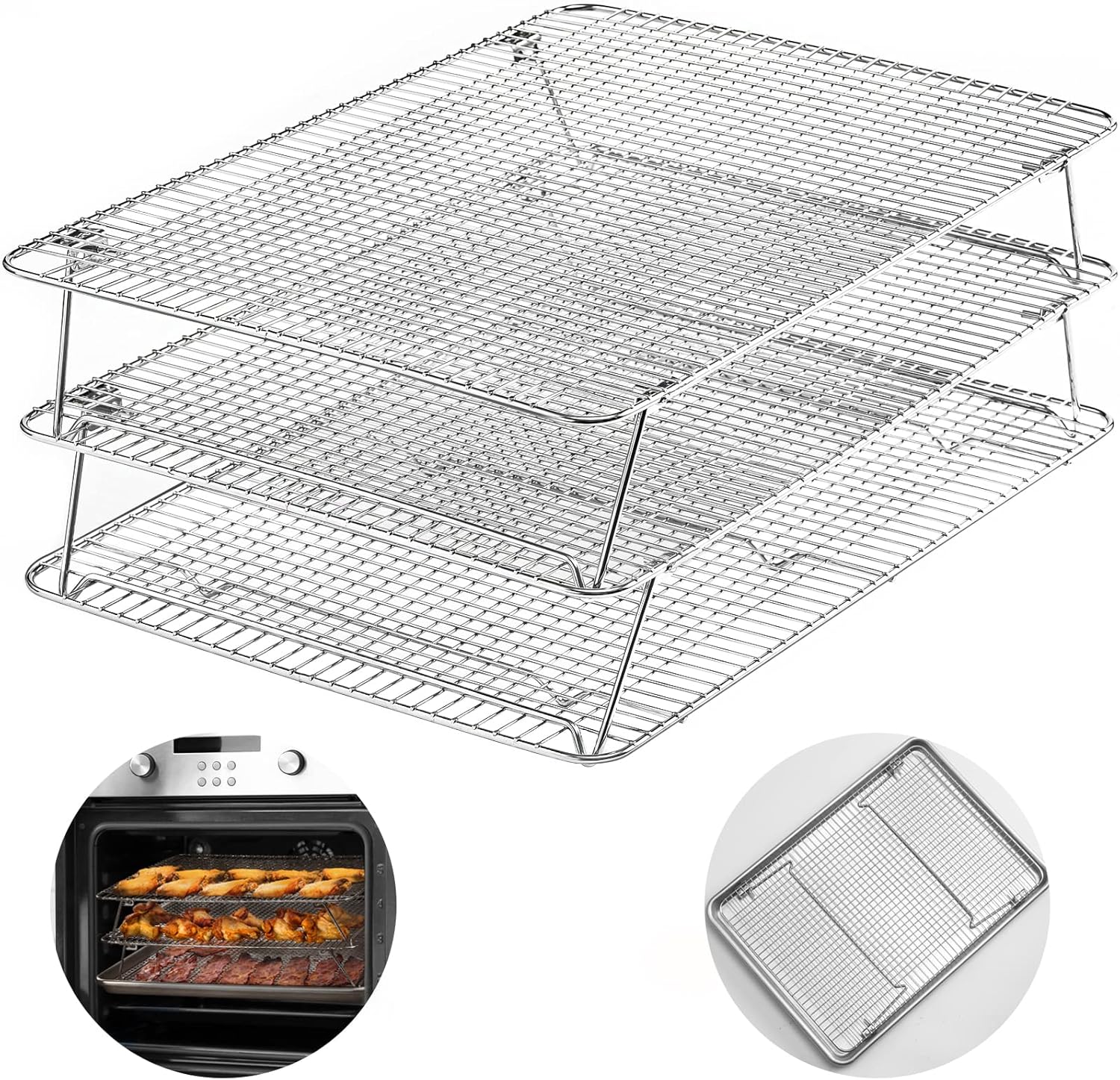
Grid spacing directly influences whether delicate baked goods remain intact or sag awkwardly between parallel support wires. Tight square grids provide uniform support for small cookies and pastries, preventing crumbs from dropping through into your pan or onto the counter. This structured layout maintains the clean appearance and shape of your fresh baked treats.
Wider parallel wire lines may allow soft baked items to warp or deform during the cooling process. Selecting appropriate wire configurations ensures structural stability for diverse foods, ranging from tiny muffin tops to large heavy pies, without compromising vital air circulation underneath the cooling food items during busy kitchen sessions.
Vertical Space and Multi-Tier Storage
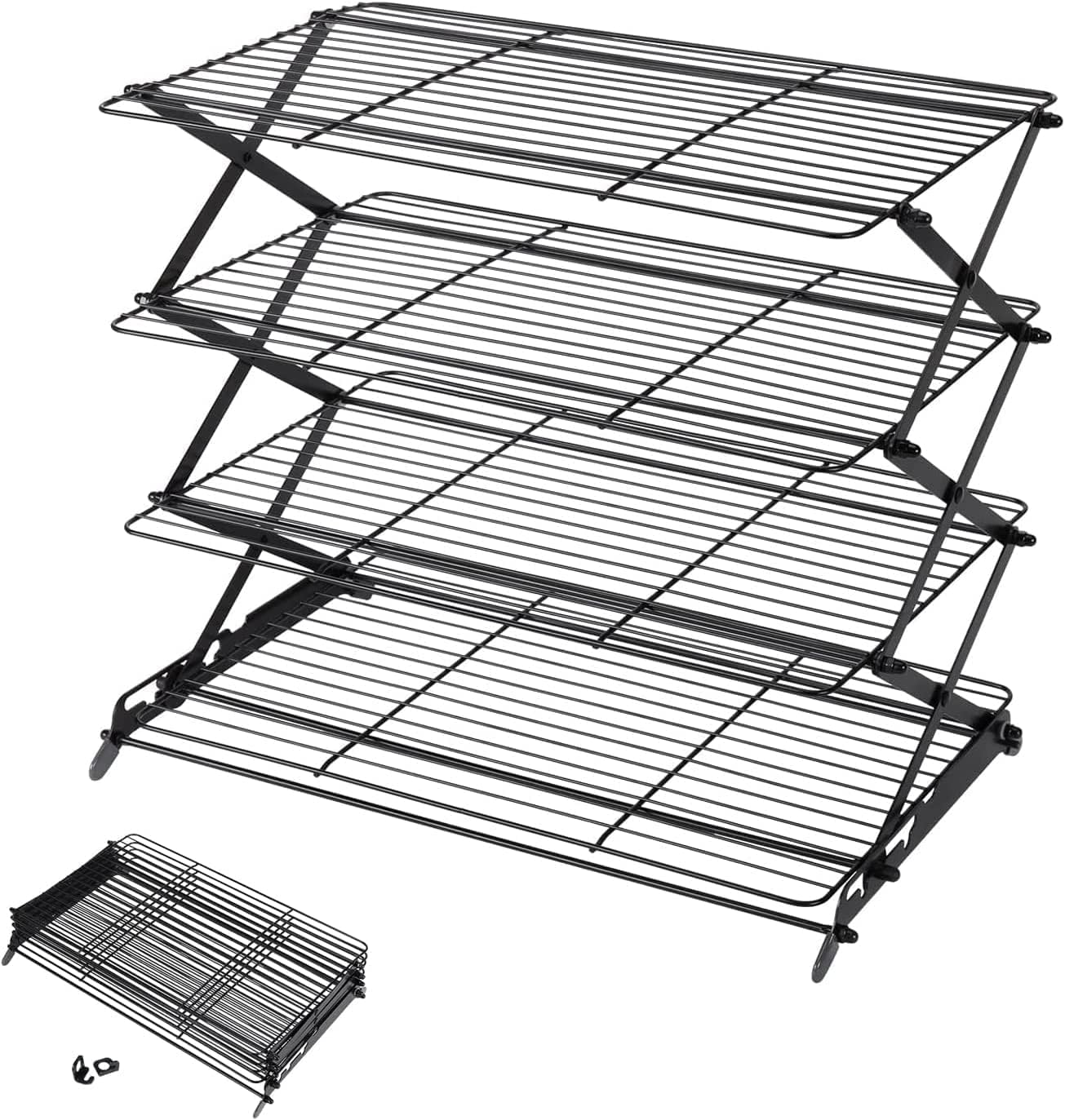
Limited kitchen counter space makes vertical stacking systems an appealing choice for home bakers managing large holiday baking batches. Multi-tier racks allow you to cool dozens of items simultaneously without taking up extra surface area. These collapsible towers fold down conveniently for straightforward storage inside crowded cabinets when not in active kitchen use.
However, managing taller vertical structures requires careful balancing when loading heavy cakes or dense casseroles onto upper levels. Assessing your available workspace helps determine whether simple single-tier models or complex stacked options best fit your daily cooking routine and limited cabinet storage capacity without causing unnecessary kitchen frustration.
Heat Tolerance and Oven Safety
Many quality cooling racks double as effective roasting platforms inside hot ovens up to high temperature limits like 575 degrees Fahrenheit. Checking maximum temperature ratings ensures the metal can handle intense broiling or baking tasks without releasing harmful toxins or warping under severe thermal stress during long cooking cycles or heavy roasting sessions daily.
Stainless steel configurations typically provide excellent thermal tolerance, making them suitable for crisping meats, draining excess grease, and roasting vegetables evenly. Confirming these temperature specifications broadens your cookware versatility across multiple meal preparation categories beyond simple pastry cooling routines in your busy home kitchen environment.
Maintenance and Cleaning Guidelines
Maintaining your baking racks involves understanding their material finish and specific manufacturer cleaning guidelines. Pure stainless steel options usually withstand aggressive dishwasher cycles without rusting, while non-stick coated models require gentle hand washing in warm soapy water to protect their delicate surface layers from scratching or peeling over extended periods of time.
Proper drying thoroughly prevents water spots and preserves the polished metal finish over years of regular baking use. Adhering to these simple upkeep steps keeps your kitchen equipment sanitary, functional, and ready for your next baking project without unexpected degradation or loss of structural integrity across daily family meals and snacks.
Frequently asked questions
Can I use cooling racks inside a hot oven for roasting meats?
Many stainless steel cooling racks are engineered to withstand high oven temperatures up to 575 degrees Fahrenheit, making them suitable for roasting meats, baking vegetables, and crisping foods. Checking the manufacturer specifications ensures your specific model can handle high-heat environments without warping or releasing harmful coatings. Racks designed without non-stick platings typically perform best for roasting tasks because they prevent coating damage from hot grease or heavy scrubbing. Always confirm your rack dimensions fit inside your roasting pan to catch drips safely.
How do I clean stuck-on food from wire cooling racks?
Cleaning stuck-on food depends heavily on whether your cooling rack features a bare stainless steel finish or a non-stick coating. Pure stainless steel models can usually be soaked in warm soapy water or run through the dishwasher for straightforward cleanup without risking damage. For non-stick versions, gentle hand washing with a soft sponge prevents scratching the delicate coating surface. Avoid using harsh metal scouring pads or abrasive chemical cleaners that might strip away protective layers or damage the underlying wire grid integrity.
What is the advantage of using stackable multi-tier cooling racks?
Stackable multi-tier cooling racks provide an efficient solution for bakers who face limited counter space but frequently bake large batches of cookies, muffins, or cakes. By utilizing vertical height instead of spreading multiple individual pans across your kitchen counters, these systems allow dozens of baked goods to cool simultaneously. Many stackable models also feature collapsible designs or folding legs, enabling individual tiers to be used separately when you only need a single surface for everyday baking or roasting tasks.
Do wire cooling racks fit inside standard baking pans?
Many cooling racks are specifically designed to fit standard half-sheet, quarter-sheet, or jelly roll baking pans. Checking the exact length and width dimensions before purchasing ensures that your rack sits flat inside the pan rim without sliding around during food transfer. Using a properly fitted rack allows air to circulate underneath while catching grease and crumbs during oven roasting. If your rack dimensions do not match your pan, it may wobble or fail to provide stable support for heavy food items.
Why is wire grid spacing important when cooling baked goods?
Wire grid spacing plays a major role in preventing small cookies, pastries, or delicate baked items from sagging or falling through during the cooling process. Tighter square grid configurations provide uniform support across the entire surface while allowing optimal air circulation underneath to prevent sogginess. Wider parallel wire lines offer less structural support and may cause soft baked goods to deform slightly as they cool. Selecting the appropriate grid pattern matches your specific baking habits and keeps your treats looking professional.