Appliances · Buying Guide
Best Baking Racks for Cooling: Stainless Steel & Stackable Picks
Finding the right baking racks for cooling transforms how you handle freshly baked cookies, delicate pastries, homemade breads, and savory roasted meats in your home kitchen. Whether you are prepping a single batch of chocolate chip cookies or managing multiple trays of treats, choosing a reliable wire grid makes a noticeable difference in airflow, texture, and overall baking success.
This review examines five distinct baking rack options ranging from compact stainless steel pairs to multi-tiered collapsible systems built for batch cooling. By evaluating exact dimensions, food-grade materials, and structural designs, you can select a setup that fits your specific kitchen space and everyday cooking requirements without unnecessary guesswork.
As an Amazon Associate, StacyLaughs earns from qualifying purchases.
Buying guide
Material Composition and Food Safety
Selecting the right material ensures your baking racks for cooling withstand heavy use and high oven temperatures without warping or releasing residues into food. Pure stainless steel options, such as 304 grade variants, offer exceptional durability and corrosion resistance without relying on surface platings. These bare metal designs prevent flaking, allowing you to roast and cool directly on the wire grid safely.
Alternatively, coated wire racks provide a smooth non-stick finish that helps delicate pastries release effortlessly after baking. While these coated models require careful hand washing to protect their surfaces, they excel at preventing delicate items from tearing. Evaluating whether you prefer bare stainless steel or a non-stick coating helps align your purchase with your preferred kitchen routine.
Dimensions and Pan Compatibility
Matching your cooling rack dimensions to your existing baking sheets is crucial for seamless kitchen workflows. Standard half-sheet pans require larger racks measuring around sixteen by eleven inches, while jelly roll pans pair best with compact ten by fifteen inch options. Checking these measurements beforehand prevents frustrating overhangs or instability when transferring loaded racks from countertops to ovens.
Furthermore, considering your oven interior space ensures the rack fits comfortably during roasting or baking tasks. A properly matched setup allows grease to drip evenly onto underlying pans while preventing awkward crowding. Taking time to measure your pans guarantees your new wire racks integrate smoothly into your current bakeware collection without compatibility issues.
Single-Tier Versus Stackable Designs
Deciding between single-tier trays and stackable towers depends heavily on your available counter space and baking volume. Single-tier models sit low on the counter and work exceptionally well for everyday cookie batches, bread loaves, and roasting meats. They provide straightforward access and require minimal storage room inside standard kitchen drawers or cabinets when your baking session concludes.
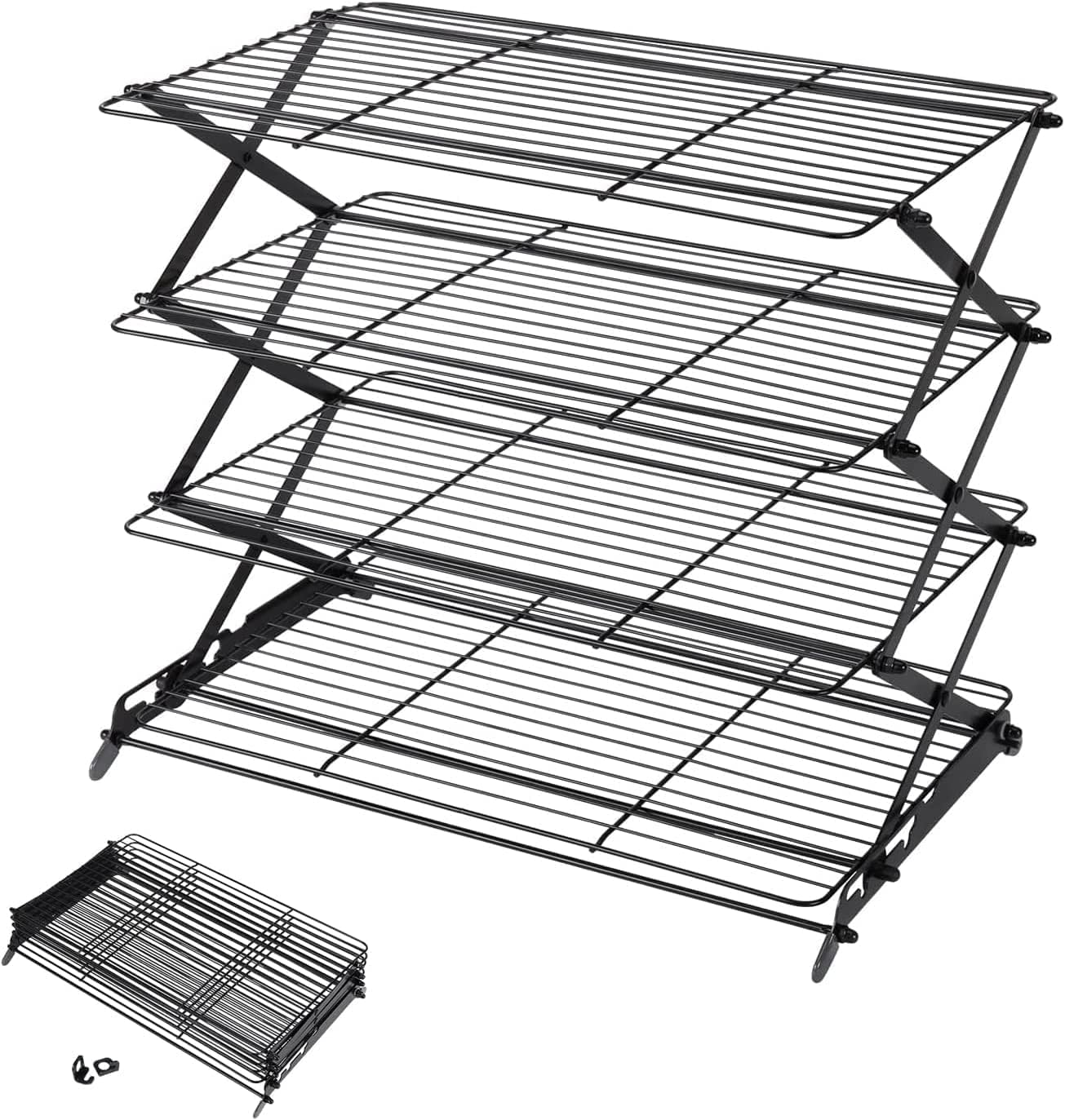
Conversely, stackable multi-tier systems maximize vertical space, letting you cool dozens of cookies or multiple cakes simultaneously without crowding surfaces. However, these vertical towers require sufficient overhead clearance beneath kitchen upper cabinets. Weighing your typical baking volume against your available kitchen footprint helps determine the most practical rack configuration.
Air Circulation and Grid Spacing
Optimal grid spacing plays a vital role in achieving perfectly crisp crusts and even cooling results across all your baked goods. Racks featuring tightly spaced wire grids prevent smaller items like mini muffins, nuts, and small cookies from slipping through or warping downward. Additionally, elevated feet lift the entire wire surface off the counter, allowing cool air to circulate completely underneath.
This continuous airflow prevents moisture from condensing on the bottom of freshly baked breads or cakes, preserving their desired textures. When roasting meats, elevated grid designs allow excess grease to drip away efficiently. Prioritizing proper grid geometry ensures professional cooling performance across a wide variety of sweet and savory culinary preparations.
Oven Safety and Heat Tolerance
Many modern baking racks are engineered to withstand high oven temperatures, transforming cooling tools into versatile roasting and broiling platforms. Stainless steel models frequently support heat levels up to 575 degrees Fahrenheit, making them safe for crisping bacon, roasting vegetables, or baking chicken. Verifying temperature thresholds allows you to use your wire racks for multi-step recipes that move straight from oven to counter.
Always check manufacturer specifications regarding maximum heat limits before placing any rack inside a hot oven. Coated or specialized materials may have different thermal boundaries compared to solid stainless steel. Selecting an oven-safe model expands your kitchen capabilities, enabling you to accomplish roasting, baking, and cooling tasks with a single versatile piece of equipment.
Cleaning and Maintenance Routines
Keeping your baking racks clean ensures long-lasting performance and prevents residue buildup from previous baking sessions. Many stainless steel wire racks are dishwasher safe, allowing for effortless cleanup after heavy roasting or sugary baking tasks. For stubborn residues, soaking the rack in warm water and cleaning gently with a soft brush helps maintain the wire grid without damaging the structure.
Non-stick or specialty coated models generally require gentle hand washing with mild soap to preserve their delicate surface finishes over time. Following manufacturer cleaning guidance prevents premature wear and keeps your racks hygienic for future use. Proper maintenance routines guarantee your cooling tools remain reliable staples in your kitchen bakeware collection for years.
Frequently asked questions
Can these baking racks be used safely inside a hot oven?
Many stainless steel cooling racks feature high heat resistance and are rated safe for oven temperatures up to 575 degrees Fahrenheit. This allows you to use them not only for cooling fresh cookies and breads, but also for roasting meats, baking chicken, or crisping bacon directly on sheet pans. However, you should always check the specific manufacturer guidelines for your chosen model to confirm its maximum temperature threshold before exposing it to high oven heat or broiling elements.
How do I prevent baked goods from sticking to the wire cooling grid?
To prevent delicate items like sticky cookies, cinnamon rolls, or soft cakes from sticking, you can lightly grease the stainless steel wire grid before placing baked goods upon it, or let items cool for a few minutes in the pan before transferring them. Additionally, choosing a rack with a non-stick coating or ensuring your bare metal stainless steel is clean and dry helps promote smooth food release without tearing your favorite homemade treats.
What is the advantage of using a stackable multi-tier cooling rack?
Stackable multi-tier cooling racks are designed to maximize vertical space utilization on crowded kitchen countertops. By stacking two, three, or four tiers on top of each other, you can cool massive batches of cookies, muffins, or pies simultaneously without spreading multiple flat trays across your entire kitchen workspace. This vertical setup is especially beneficial for home bakers working in smaller kitchens with limited counter space during major holiday baking sessions.
Are stainless steel cooling racks dishwasher safe for easy cleaning?
Most solid stainless steel cooling racks are fully dishwasher safe and designed to withstand regular machine washing without rusting or bending. For best results after baking sugary or greasy foods, soaking the wire rack briefly in warm soapy water and scrubbing gently with a soft brush helps remove stubborn residues. Always verify specific manufacturer care instructions, especially for coated models, to maintain their surface integrity and ensure long-lasting durability over years of regular kitchen use.
How do I choose the correct rack size for my baking sheets?
Selecting the correct rack size requires measuring your existing baking pans and cookie sheets before purchasing. Standard jelly roll pans typically require racks measuring approximately ten by fifteen inches, while large commercial half-sheet pans pair best with bigger 11.5 by 16.5 inch grids. Ensuring proper dimensions prevents overhang and instability, allowing the cooling rack to fit securely either inside your baking sheet during roasting or flat on your countertop during cooling.