Appliances · Buying Guide
Best Baking Racks for Every Kitchen Setup and Counter Space
Finding the right baking rack depends entirely on what you typically bake and how much counter space you have available in your kitchen. Whether you need a compact pair for a quarter sheet pan or a multi-tiered stackable option for cooling dozens of cookies at once, choosing sturdy materials ensures long-term reliability. Stainless steel and coated wire designs handle everything from simple cooling tasks to high-heat oven roasting.
Different configurations offer distinct advantages for everyday home bakers and cooking enthusiasts alike. Single-tier models fit neatly inside standard baking sheets, while collapsible vertical towers maximize vertical room during busy holiday baking sessions. Evaluating dimensions, material composition, and cleaning requirements helps you select a reliable tool that matches your specific cooking habits without cluttering your cabinets.
As an Amazon Associate, StacyLaughs earns from qualifying purchases.
Buying guide
Choosing Food-Grade Stainless Steel Versus Coated Racks
Selecting the right material directly impacts how long your baking rack will last and how safely it handles high-heat cooking tasks. Premium options crafted from solid stainless steel offer robust resistance to rust and warping without relying on metal plating or flaking coatings. This sturdy foundation allows you to roast meats and bake dense casseroles without damaging the underlying structure.
On the other hand, alternative coated wire designs provide smooth non-stick surfaces that simplify food release for delicate pastries and sticky treats. Understanding your routine cleaning habits and high-heat temperature requirements ensures you pick a material that withstands daily kitchen demands effortlessly while avoiding premature wear over years of frequent baking projects.
Matching Racks to Your Existing Baking Sheets
Before purchasing any baking rack, carefully measuring the interior dimensions of your primary baking pans is an essential step. Racks come in various footprints, ranging from compact quarter-sheet versions to spacious half-sheet models designed for large family meals. Selecting a compatible size prevents the rack from rocking inside your pan or sliding around awkwardly during food transfer.
Furthermore, matching the exact rack footprint to your pans ensures that food drippings fall neatly inside the sheet rather than spilling onto your hot oven floor. Taking a moment to verify these dimensions avoids frustration and guarantees that your new bakeware integrates smoothly with your current kitchen equipment collection for consistent results.
Maximizing Counter Area with Stackable Towers
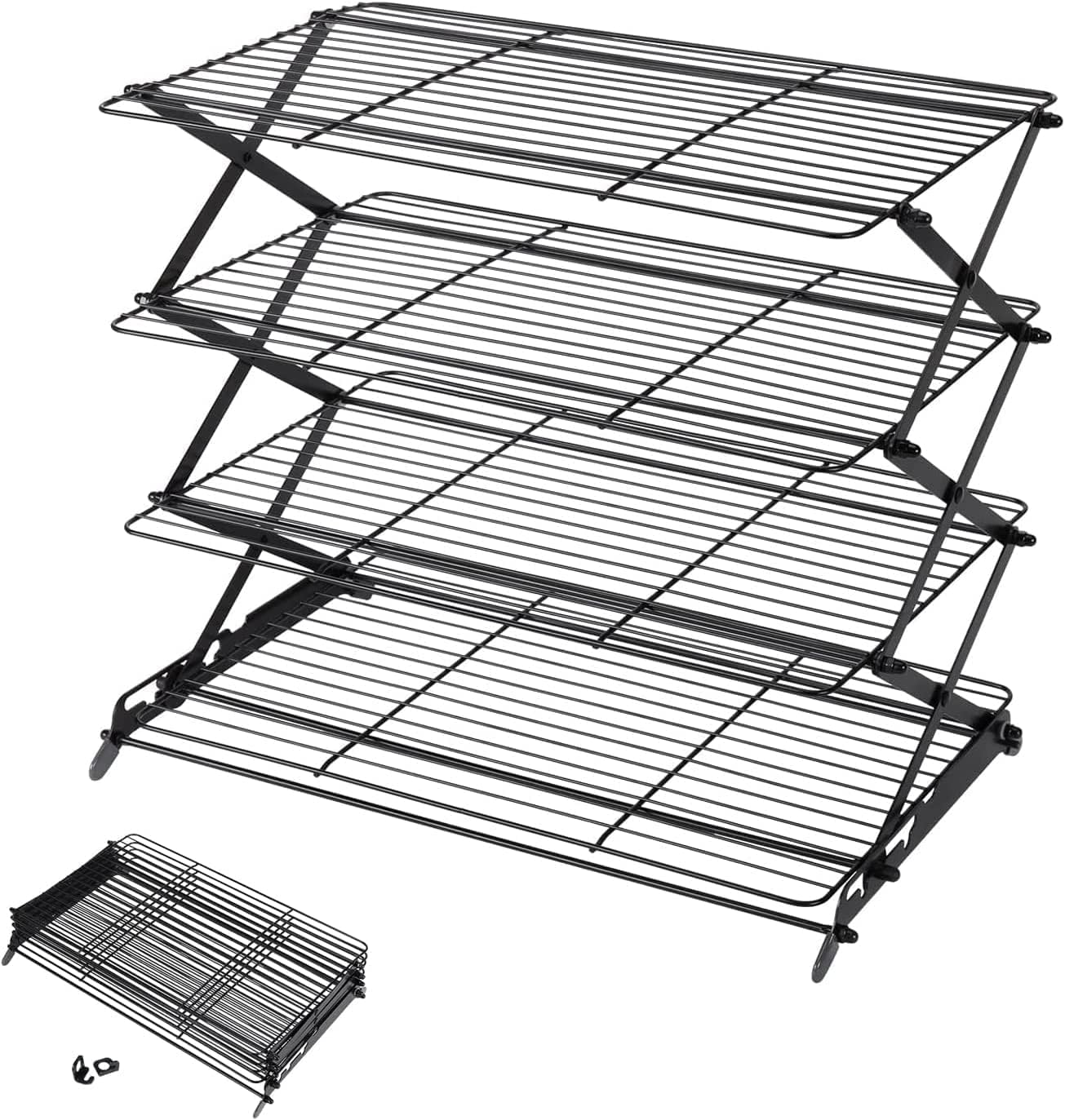
Limited kitchen counter space can quickly turn an ambitious baking project into a stressful logistical challenge. Stackable multi-tier cooling racks address this problem by building upward instead of spreading across every available surface in your kitchen. These vertical towers let you cool dozens of cookies, muffins, or multiple cake layers simultaneously without overcrowding your workspace during holiday baking sessions.
When selecting a vertical model, consider how easily the structure collapses for compact storage inside cabinets when not in use. Models featuring stable cross-brace designs offer reliable support for heavier items, ensuring your baked goods remain secure even in busy environments where accidental kitchen bumps happen frequently.
Evaluating Temperature Limits for Roasting and Baking
Many modern baking racks double as versatile roasting tools capable of safely withstanding intense oven heat. High-grade stainless steel variants frequently tolerate temperatures up to 575 degrees Fahrenheit, allowing you to bake, broil, roast meats, or smoke foods directly on the wire grid. This dual-purpose heat capability transforms a simple cooling accessory into an essential everyday cooking workhorse.
Checking the specific manufacturer temperature rating is crucial before placing any wire rack inside a hot oven environment. Choosing high-heat tolerant models ensures the metal will not warp, degrade, or react when exposed to elevated baking temperatures over extended cooking periods, giving you long-lasting structural confidence in your bakeware collection.
Preventing Small Foods From Slipping Through Gaps
The specific spacing of wires across a baking rack plays a major role in determining what types of food you can prepare successfully. Standard wide grids work wonderfully for large cakes, roasting meats, and bread loaves, but smaller treats like berries, diced vegetables, and bite-sized cookies can easily slip through wide openings without adequate support.
Tight-mesh configurations or closely spaced wire designs solve this common issue by creating a secure supporting surface for delicate items. Evaluating your typical baking menu helps you determine whether a tight mesh layout or standard grid spacing best serves your daily baking needs without causing frustrating food losses during preparation.
Simplifying Post-Baking Cleanup Routines
After finishing a large baking session, cleaning sticky sugars and roasted grease from wire racks can feel tedious if the design lacks smooth surfaces. Choosing dishwasher-safe stainless steel models allows you to place the racks directly into the machine, saving you significant time and manual effort during busy post-meal kitchen cleanup routines.
Alternatively, some specialty coated racks require gentle hand washing with warm soapy water to protect delicate non-stick finishes from abrasive scrubbing damage. Reviewing manufacturer care instructions beforehand ensures your baking racks remain clean, hygienic, and ready for your next kitchen adventure without experiencing premature finish degradation over years of frequent use.
Frequently asked questions
Can I put stainless steel baking racks directly into a hot oven?
Yes, many stainless steel baking racks are specifically engineered to withstand high oven temperatures up to 575 degrees Fahrenheit. This robust heat tolerance makes them ideal for roasting meats, baking casseroles, or broiling foods directly on the wire grid. However, you should always check the manufacturer specifications for your exact model before exposing it to high heat. Additionally, verify whether your rack features any non-stick coatings, as coated surfaces sometimes have lower temperature thresholds than bare 304 stainless steel designs to prevent coating damage.
Are stackable cooling racks stable enough for heavy cakes?
Many stackable cooling racks incorporate sturdy structures like X-shaped cross-braces designed to support significant weight from heavy pies, layered cakes, and multiple batches of cookies. When properly assembled and placed on a flat surface, these multi-tier towers remain balanced even when fully loaded. However, it is always wise to center heavy items carefully on each tier and avoid bumping the structure aggressively. Checking user weight recommendations and structural design features will help you determine if a particular stackable rack suits your heavy baking needs.
How do I prevent small cookies from falling through the wire gaps?
To prevent small cookies, berries, and diced vegetables from slipping through standard wire gaps, you can look for baking racks specifically designed with a tight mesh pattern. These tight-wire configurations provide a dense supporting grid that keeps small treats securely in place while still allowing proper airflow. If your current rack has wide grid spacing, you can also place a sheet of parchment paper or a fine mesh mat on top of the rack, though this may slightly alter bottom airflow during cooling.
Can I clean my baking racks in the dishwasher?
Many stainless steel baking racks are fully dishwasher-safe and can be placed directly inside the machine for effortless cleanup after baking or roasting tasks. However, cleaning requirements vary depending on the specific materials used in construction. Racks featuring delicate non-stick coatings often require gentle hand washing with warm soapy water and a soft sponge to protect the coating from harsh dishwasher detergents and abrasive cycles. Always consult the manufacturer guidelines provided with your specific product to ensure proper maintenance.
How do I choose the correct baking rack size for my pans?
Choosing the correct baking rack size requires measuring the interior dimensions of your primary baking sheets or roasting pans. A properly sized rack should fit comfortably inside the pan without jamming against the edges or riding up the sloping sides. For example, half-sheet pans typically require larger racks measuring around sixteen by eleven inches, while smaller quarter-sheet or jelly roll pans need more compact options. Checking your pan dimensions before buying ensures a secure fit and prevents messy drips outside your sheet.