Appliances · Buying Guide
Best Baking Tray with Lid Options for Secure Storage and Baking
Finding the right baking tray with lid can completely simplify how you prepare, transport, and store your favorite homemade treats, casseroles, and family meals. Whether you are baking a rich batch of brownies for a weekend gathering or roasting vegetables for a quick weeknight dinner, having a reliable protective cover changes how you manage your kitchen tasks from start to finish.
Different materials and physical designs offer distinct advantages for heat distribution, long-term durability, storage security, and easy cleanup. By examining pure stainless steel, traditional aluminum, and coated carbon steel options alongside their included covers, you can carefully choose a setup that fits your exact baking style, oven capacity, and food-preservation routines without guesswork.
As an Amazon Associate, StacyLaughs earns from qualifying purchases.
Buying guide
Material Selection and Heat Distribution
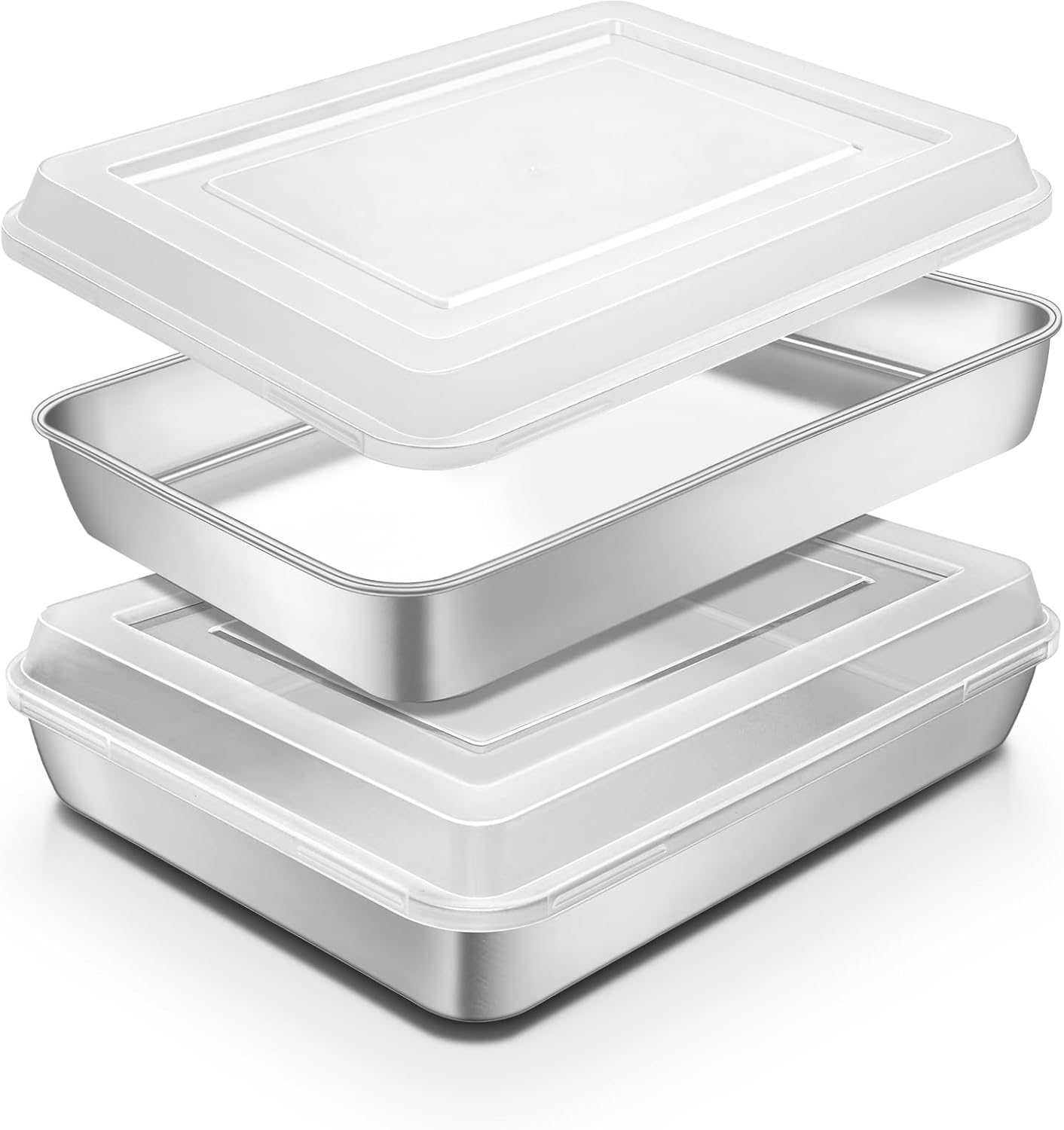
Choosing the right material for your baking tray with lid directly influences how evenly your recipes bake. Aluminum provides exceptional heat distribution, making it popular for achieving uniform results across large batches of cookies or roasted vegetables. Stainless steel offers a sturdy, non-reactive cooking surface that withstands high temperatures without warping or degrading over time.
Carbon steel bridges the gap by offering robust durability and efficient heat retention for traditional cakes and brownies. Each material interacts with heat differently, so matching your choice to your typical baking habits ensures better texture and browning.
Understanding Nonstick versus Uncoated Surfaces
Nonstick coatings simplify food release, allowing you to slide cakes, brownies, and roasted meals out of the pan with minimal effort. Many modern pans feature advanced coatings created without harmful chemicals like PFAS, PFOA, lead, or cadmium. These surfaces help prevent sticky residues from bonding to the metal.
Uncoated stainless steel or aluminum surfaces require traditional greasing methods or parchment paper to prevent sticking. However, they eliminate concerns about flaking coatings during high-heat roasting. Deciding between a coated and uncoated tray depends on whether you prefer effortless food release or long-term durability.
Evaluating Lid Types and Storage Security
A protective cover transforms a standard baking tray into an all-in-one tool for storage and transport. Some pans feature rigid plastic lids with locking snaps that establish a secure seal, while others utilize simple snap-on covers. Raised lids provide vertical clearance, preventing crushed frosting on decorated sheet cakes during transit.
It is crucial to verify whether your chosen lid is oven-safe. Most plastic or polypropylene lids are strictly designed for refrigerator storage and travel after the pan cools down. Assessing how you plan to transport your baked goods will help you determine if a locking lid system is necessary.
Managing Oven Temperatures and Thermal Limits
Baking trays and their included lids often have strict thermal limits that dictate how they can be used. Metal pans typically handle high oven temperatures, with many rated safely up to four hundred fifty degrees Fahrenheit or higher. This makes them versatile enough for roasting meats and preparing crispy side dishes.
Lids, conversely, almost always feature lower heat tolerances and must be removed prior to placing the pan in the oven. Reviewing the manufacturer specifications ensures you never expose plastic components to damaging heat levels during daily cooking routines.
Sizing Options and Depth Requirements
Selecting the correct physical dimensions and side depth ensures your baking tray fits comfortably in your oven and matches your recipe volume. Standard rectangular sizes like nine by thirteen inches accommodate everyday family meals, casseroles, and sheet cakes. Extra-deep options featuring two-inch sides provide crucial vertical capacity.
Measure your oven interior and refrigerator shelf space before purchasing to avoid storage conflicts. Wider half-sheet pans offer expansive cooking areas for large batches but demand careful cabinet organization based on your typical portion sizes.
Cleaning Guidelines and Maintenance Practices
Proper maintenance preserves the finish and structural integrity of your baking tray over years of frequent use. Many metal pans are rated as dishwasher safe, allowing for straightforward cleanup after messy meals. However, specific coatings or attached plastic lids often benefit from gentle hand washing.
Rounded corners and smooth brushed surfaces simplify manual washing by eliminating hard-to-reach crevices where food particles can accumulate. Following the manufacturer cleaning guidance prevents premature wear and keeps your bakeware looking pristine.
Frequently asked questions
Can I put the plastic lid of my baking tray inside the oven?
No, the plastic and polypropylene lids included with baking trays are strictly intended for refrigerator storage, food preservation, and transport. Exposing these plastic covers to active oven heat will cause melting and severe structural damage. You must always remove the lid entirely before placing the metal pan into a preheated oven. Once your baked goods have finished cooking and cooled down completely, you can place the lid back onto the tray for safe keeping.
Are stainless steel baking pans better than nonstick coated pans?
Stainless steel pans offer a durable, chemical-coating-free surface that withstands high heat without flaking or chemical leaching. They are ideal for individuals who prefer unreactive metal and do not mind using traditional greasing methods or parchment paper. Nonstick coated pans, on the other hand, provide effortless food release for delicate items like cakes and brownies without requiring extra oils. Neither option is universally superior; your choice depends entirely on your personal cooking preferences and maintenance style.
How do I clean baked-on grease from my metal baking tray?
Cleaning baked-on grease depends on whether your tray features a sensitive nonstick coating or a durable bare metal finish. For stainless steel or aluminum pans, you can wash them in the dishwasher or use warm soapy water with a non-abrasive sponge. If you are cleaning a nonstick coated pan, avoid metal scouring pads to protect the surface layer. Hand washing with mild soap and gentle scrubbing brushes will safely remove residue while preserving the pan integrity over time.
What is the advantage of using an extra-deep baking tray with a lid?
Extra-deep baking trays featuring two-inch sides provide significantly more vertical capacity than standard shallow pans. This extra depth prevents messy overflows when you are preparing tall layered dishes, heavy casseroles, lasagna, or thick sheet cakes. When paired with a raised locking lid, the extra clearance protects decorative icing and toppings from getting smashed during transport. This makes deep pans an excellent choice for potlucks, family gatherings, and transporting baked goods safely outside the home.
Will metal spatulas scratch the surface of my baking tray?
Whether metal spatulas will scratch your baking tray depends entirely on the specific surface construction of the model you choose. Standard nonstick coatings can easily scratch and degrade when scraped with metal utensils, requiring wood, silicone, or nylon tools for serving. However, certain specialty pans feature scratch-resistant nonstick coatings specifically engineered to be metal spatula safe. Always review the manufacturer specifications before using metal utensils to prevent accidental damage to your bakeware surface.