Appliances · Buying Guide
Best Baking Wire Cooling Rack Options for Every Kitchen Task
Finding the right baking wire cooling rack can completely change how you handle freshly baked cookies, roasted vegetables, and layered cakes. These wire tools elevate food above baking pans, allowing hot air to circulate freely beneath items for faster cooling, even roasting, and much crispier textures across all your favorite homemade recipes without soggy bottoms.
Whether you are outfitting a compact kitchen counter or preparing large weekend batches of treats, selecting a sturdy design ensures reliable performance over time. We examine five distinct options ranging from multi-tiered space savers to heavy-duty stainless steel grids tailored for specific pan sizes, heavy roasting tasks, and everyday baking needs.
As an Amazon Associate, StacyLaughs earns from qualifying purchases.
Buying guide
Material Quality and Corrosion Resistance
Choosing the right baking wire cooling rack starts with carefully evaluating its metal composition and overall construction quality for your kitchen. Stainless steel options, particularly professional grade 304, offer exceptional resistance to rust, corrosion, and high oven temperatures without peeling, warping, or flaking into your freshly prepared food during intense baking sessions and daily kitchen routines.
Avoid choices featuring cheap metal plating that may degrade rapidly under heavy daily use and repeated washing cycles in busy kitchens. Selecting solid stainless steel guarantees long-term durability and safety, ensuring your kitchen tool withstands frequent dishwasher cleaning and heavy roasting tasks for years without experiencing any structural failure, bending, or surface discoloration.
Sizing and Pan Compatibility
Matching your cooling rack dimensions to your existing baking pans is essential for seamless kitchen performance every single day. Standard half-sheet pans require larger rectangular grids, while compact toaster ovens, jelly roll pans, and smaller trays demand dedicated quarter-sheet options to sit properly inside the rim during high-heat oven use and routine cooling tasks.
Taking accurate measurements of your baking sheets prevents purchasing a rack that is either too large to fit inside your cookware or too small to offer stable support during heavy roasting tasks. Proper sizing ensures baked goods rest securely across the wire grid without tipping over edges or falling through wide openings while cooking.
Air Circulation and Grid Design
The primary functional purpose of a wire rack is elevating food to promote unobstructed air circulation underneath items. Tight crosshatch wire patterns prevent delicate cookies, pastries, and small baked goods from sagging into gaps, while integrated raised feet lift the entire metal platform off the countertop or sheet pan surface during cooling.
This specific design accelerates cooling speeds and ensures heat distributes evenly when used inside a hot oven for roasting meats or baking crisp items. Choosing a sturdy grid pattern prevents bowing under heavy food weights, keeping your baked results consistent, professional, and delightfully crisp across every single batch you prepare at home.
Storage and Vertical Stackability
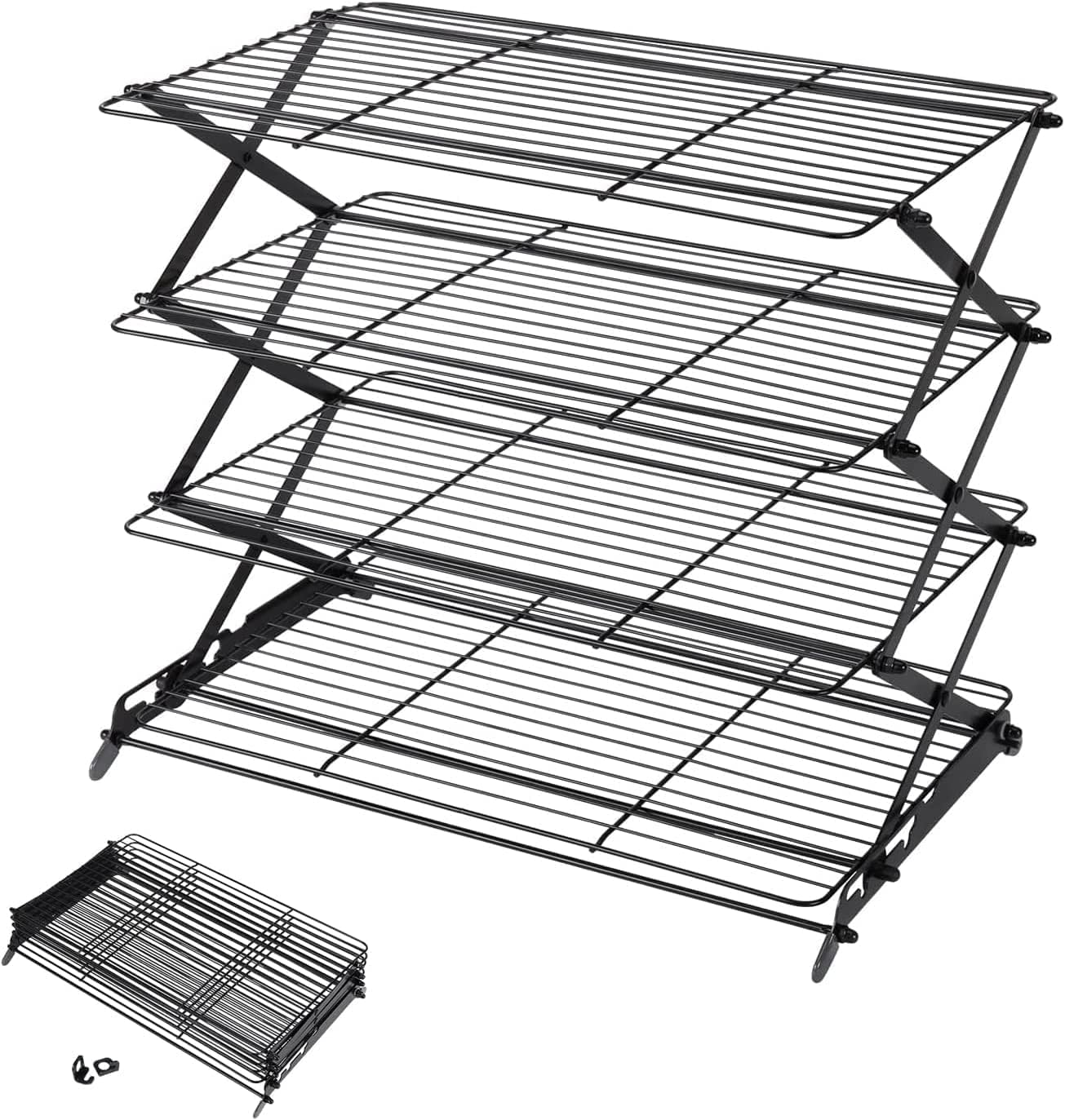
Counter space and kitchen cabinet storage limitations heavily influence which cooling rack design fits your lifestyle best. Multi-tier collapsible models allow you to stack several baking batches vertically, conserving precious countertop surface area during large holiday cooking sessions when you are processing dozens of cookies, muffins, and pastries at once.
Conversely, standard single-tier stainless steel racks take up minimal vertical room and slide easily into narrow cabinet spaces, drawers, or dishwasher slots for effortless cleanup and storage. Assessing your available kitchen storage capacity helps determine whether vertical stacking towers or traditional flat wire sheets work best for your everyday cooking routine without cluttering your kitchen.
Oven Safety and Heat Tolerance
Many modern wire racks double as roasting platforms inside hot ovens, making high heat tolerance a critical purchasing factor for home cooks. Quality stainless steel models safely withstand extreme temperatures up to 575 degrees Fahrenheit without warping under pressure, bending out of shape, or releasing toxic coatings into your roasting meats.
Verifying that your chosen rack is rated safe for high-heat oven use ensures you can transition seamlessly from baking delicate pastries to crisping bacon, broiling proteins, or roasting root vegetables. Always check manufacturer guidelines regarding maximum temperature limits before placing metal racks inside hot ovens to prevent accidental damage during cooking tasks.
Cleaning and Maintenance Ease
Keeping your baking wire cooling rack clean after handling sticky sugar glazes, melted chocolate, and savory roasted meats requires thoughtful material selection. Smooth stainless steel surfaces release baked-on food residue easily and are fully dishwasher safe, allowing for fast turnaround times between heavy baking batches without requiring excessive manual scrubbing.
On the other hand, non-stick coated options often require gentler hand washing in warm soapy water using soft cloths to protect the specialized finish from scratching or peeling. Choosing a low-maintenance cleaning design ensures you spend less time scrubbing stubborn grease and more time enjoying your homemade culinary creations with family.
Frequently asked questions
Can I put my stainless steel baking wire cooling rack directly into a hot oven?
Yes, high-grade stainless steel cooling racks designed for baking are typically engineered to withstand extreme oven temperatures, often up to 575 degrees Fahrenheit. This high heat tolerance allows you to use them safely inside the oven as roasting or broiling platforms, elevating proteins above sheet pans so fats drip away. However, you should always check the specific manufacturer guidelines for your exact model to confirm its maximum temperature rating before exposing it to high heat, ensuring you avoid any potential warping or structural damage during intense roasting sessions.
How do I clean baked-on grease and sticky residue from my wire cooling rack?
Cleaning baked-on residue depends largely on the material construction of your rack. For solid stainless steel models, you can typically soak the rack in warm, soapy water for a short period and then scrub gently with a brush or place it directly into the dishwasher for effortless cleanup. If your rack features a non-stick coating, you must avoid abrasive metal scrubbers or harsh scouring pads that could scratch the delicate finish. Instead, use a soft sponge with mild soap, rinse thoroughly, and dry completely to maintain the surface integrity over time.
What is the main advantage of using a multi-tier collapsible cooling rack?
The primary advantage of a multi-tier collapsible cooling rack is its exceptional ability to conserve precious counter space in kitchens with limited room. When you bake large batches of cookies, muffins, or cupcakes, traditional single-tier racks spread across your entire countertop. Stacking multiple tiers vertically allows you to cool dozens of baked items within a small footprint. Furthermore, many of these models feature collapsible frames that fold flat, making them remarkably easy to store inside standard kitchen cabinets once your baking session is finished.
Why does food sometimes fall through the grid openings of a cooling rack?
Food may fall through grid openings if the wire spacing is too wide for smaller items like mini cookies, nuts, or delicate pastries. When selecting a cooling rack, it is important to look at the grid pattern and wire spacing to ensure it suits the types of food you bake most frequently. If your rack features wider gaps, you can easily solve this issue by placing a piece of parchment paper on top or choosing a tight-wire grid model specifically engineered with smaller holes to securely support miniature baked goods without letting them sag.
Do I need to grease or season a stainless steel cooling rack before use?
No, solid stainless steel cooling racks do not require seasoning, oiling, or special chemical treatments before use. The smooth metal surface is naturally ready for everyday cooling and baking tasks straight out of the box. While some bakers choose to lightly mist racks with cooking spray when dealing with exceptionally sticky baked items like glazed pastries or honey-covered meats, raw stainless steel is corrosion-resistant and non-porous. This means it releases standard baked goods easily after cooling without requiring any seasoning processes common with cast iron or untreated carbon steel cookware.