Appliances · Buying Guide
Best Black Stone Pizza Oven Choices for Outdoor and Kitchen Use
Finding the right black stone pizza oven involves carefully balancing fuel types, countertop footprints, and maximum cooking temperatures to match your preferred baking style. Whether you prefer the outdoor mobility of gas-powered rotating stones or the convenience of indoor electric countertop models, understanding these core differences helps narrow down your choices for every gathering.
Different models offer specialized features such as multi-zone temperature controls, built-in thermometers, and automated rotation systems to streamline your cooking sessions. By thoroughly reviewing the physical dimensions, power requirements, and included accessory packages of each option, you can select a reliable pizza maker that fits seamlessly into your daily routine and home baking environment.
As an Amazon Associate, StacyLaughs earns from qualifying purchases.
Buying guide
Fuel Source and Power Requirements
Choosing the right fuel source is vital when selecting a pizza oven for your home or outdoor space. Gas-powered models require propane tanks and well-ventilated outdoor areas, offering traditional high-heat performance. Electric countertop units need reliable indoor outlets, letting you bake without managing open flames or gas lines.
Matching your power choice to your living situation ensures smooth cooking sessions. Apartments and dorms benefit from plug-in electric appliances, while spacious backyards accommodate portable gas cookers. Reviewing your available utility hookups prevents compatibility issues before your first baking attempt.
Temperature Ranges and Heat Retention
Maximum temperature capabilities dictate the style of crust you can achieve at home. Ovens reaching eight hundred to 950 degrees Fahrenheit mimic commercial pizzerias, producing crisp, blistered edges in under two minutes. Lower temperature ranges require longer baking times but offer gentle warmth for alternative dishes.
Effective heat retention materials, such as cordierite or ceramic stones, help maintain consistent cooking environments during back-to-back meal prep. Insulated doors and double-paned windows further trap thermal energy inside the chamber, ensuring even baking results across multiple pies without frustrating temperature drops.
Cooking Surface Dimensions and Capacity
Pizza stone dimensions determine the maximum size of pie you can create during your cooking sessions. Twelve-inch surfaces suit personal pizzas and small households, while fourteen-inch options accommodate larger family-sized meals. Evaluating your typical portion sizes helps you choose a suitable cooking area.
Consider how stone capacity influences the physical footprint of the appliance on your counter or patio table. Larger cooking surfaces require broader support structures and dedicated storage space, balancing generous food capacity against available spatial constraints in your kitchen or outdoor area.
Indoor Versus Outdoor Placement
Deciding between indoor countertop appliances and outdoor portable units depends entirely on your living arrangements and local climate. Indoor electric ovens fit neatly inside kitchens, apartments, and recreational vehicles, letting you bake year-round regardless of weather conditions outside.
Outdoor gas or battery-powered ovens require open-air environments like patios, decks, or campsites for safe ventilation. Assessing where you plan to cook most frequently ensures you select a model designed for proper airflow and weather durability.
Automated Rotation and Stone Design
Automated rotation mechanisms take the guesswork out of baking by turning the pizza stone continuously during cooking. This feature prevents uneven browning and eliminates the need for manual turning tools, ensuring consistent results for beginners and experienced cooks alike.
Removable cordierite or ceramic stones simplify post-cooking cleanup routines by letting you lift the baking surface out of the housing. Pairing automated rotation with removable stones creates a streamlined maintenance experience after every pizza night.
Included Accessories and Ease of Use
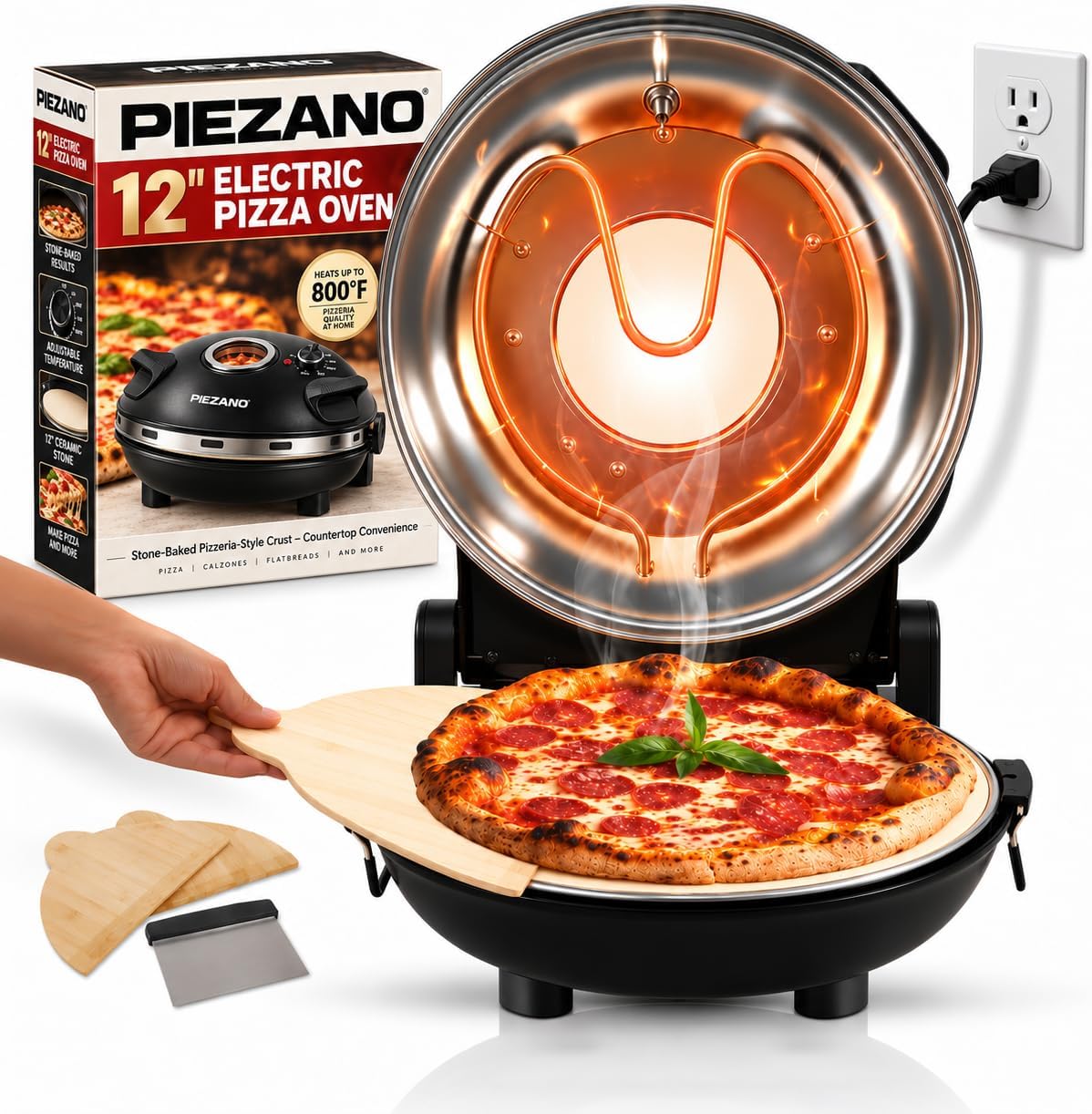
Comprehensive accessory packages enhance value by providing essential tools right out of the box. Look for models that include wooden pizza peels, dough scrapers, digital cookbooks, and specially fitted baking stones to start cooking immediately without extra purchases.
User-friendly controls, such as touchscreen presets, dual heating knobs, and built-in thermometers, simplify operation for cooks of all skill levels. Evaluating these built-in conveniences ensures a straightforward baking experience from your very first homemade pie.
Frequently asked questions
Can I use an outdoor gas pizza oven inside my kitchen?
No, outdoor gas pizza ovens require proper open-air ventilation and are designed exclusively for outdoor environments like patios, decks, or campsites. Operating gas-powered cooking appliances indoors poses serious safety hazards due to carbon monoxide accumulation and lack of adequate exhaust ventilation. If you prefer baking inside your home, you should always choose an electric countertop model specifically engineered with indoor safety features and standard electrical plug requirements for kitchen use.
Do electric indoor pizza ovens require special electrical outlets?
Most electric indoor pizza ovens operate on standard household electrical systems, but you must check the specific plug configuration and wattage requirements before plugging them in. Many models utilize a three-prong plug and draw higher wattages, such as 1200 to 1700 watts, to reach temperatures up to 800 degrees Fahrenheit. Because of this high power draw, it is best to plug the appliance directly into a dedicated wall outlet rather than using extension cords.
Why is a rotating pizza stone beneficial during cooking?
A rotating pizza stone turns continuously during the baking process, ensuring that heat distributes evenly across the entire crust from every angle. This automated movement eliminates the need to manually spin the pie with a peel, preventing burnt edges or unevenly cooked spots. Beginners and experienced cooks alike benefit from this feature because it delivers consistent, professional-quality browning without requiring constant monitoring or tricky manual adjustments near high heat sources.
How should I clean the removable pizza stones after use?
You should allow the ceramic or cordierite pizza stone to cool completely before attempting any cleaning procedures to prevent thermal shock and cracking. Once cooled, gently scrape away leftover food debris using a dry brush or a non-metallic scraper. Avoid submerging hot stones in water or using harsh dish soap, as porous stone materials absorb moisture and flavors that can affect future baking sessions.
Can I cook foods other than pizza in these ovens?
Many pizza ovens accommodate a wide variety of diverse dishes beyond traditional pies, depending on their physical dimensions and internal heat capabilities. Outdoor models often allow you to use cast iron skillets for cooking steaks, fish, nachos, and vegetables over high heat. Electric countertop ovens can handle flatbreads, calzones, roasted vegetables, and reheated slices, making them exceptionally versatile multi-use appliances for quick weeknight meals and entertaining guests.