Appliances · Buying Guide
Best Bread Baking Pan with Lid Options for Homemade Loaves
Baking bread at home requires reliable equipment to achieve a golden crust and a uniform crumb structure. Selecting a dedicated bread baking pan with lid allows home bakers to trap steam and heat effectively during the initial baking phase, producing predictable square shapes and tender interiors whether you are preparing sandwich bread, brioche, or traditional pain de mie.
Various materials, including aluminized steel, carbon steel, and heavy cast iron, offer distinct heat conduction properties, surface finishes, and maximum temperature tolerances. Reviewing your preferred baking styles, available storage space, and routine cleaning preferences ensures you choose a lidded baking vessel that matches your daily baking routine and recipe goals.
As an Amazon Associate, StacyLaughs earns from qualifying purchases.
Buying guide
Material Composition and Heat Conduction
Selecting the right material for your bread baking pan with lid directly influences how heat transfers to your dough. Aluminized steel and carbon steel offer rapid, even heat distribution, helping loaves rise consistently and develop uniform crusts. These materials respond quickly to oven temperature adjustments, making them popular choices for standard sandwich breads and delicate enriched doughs like brioche.
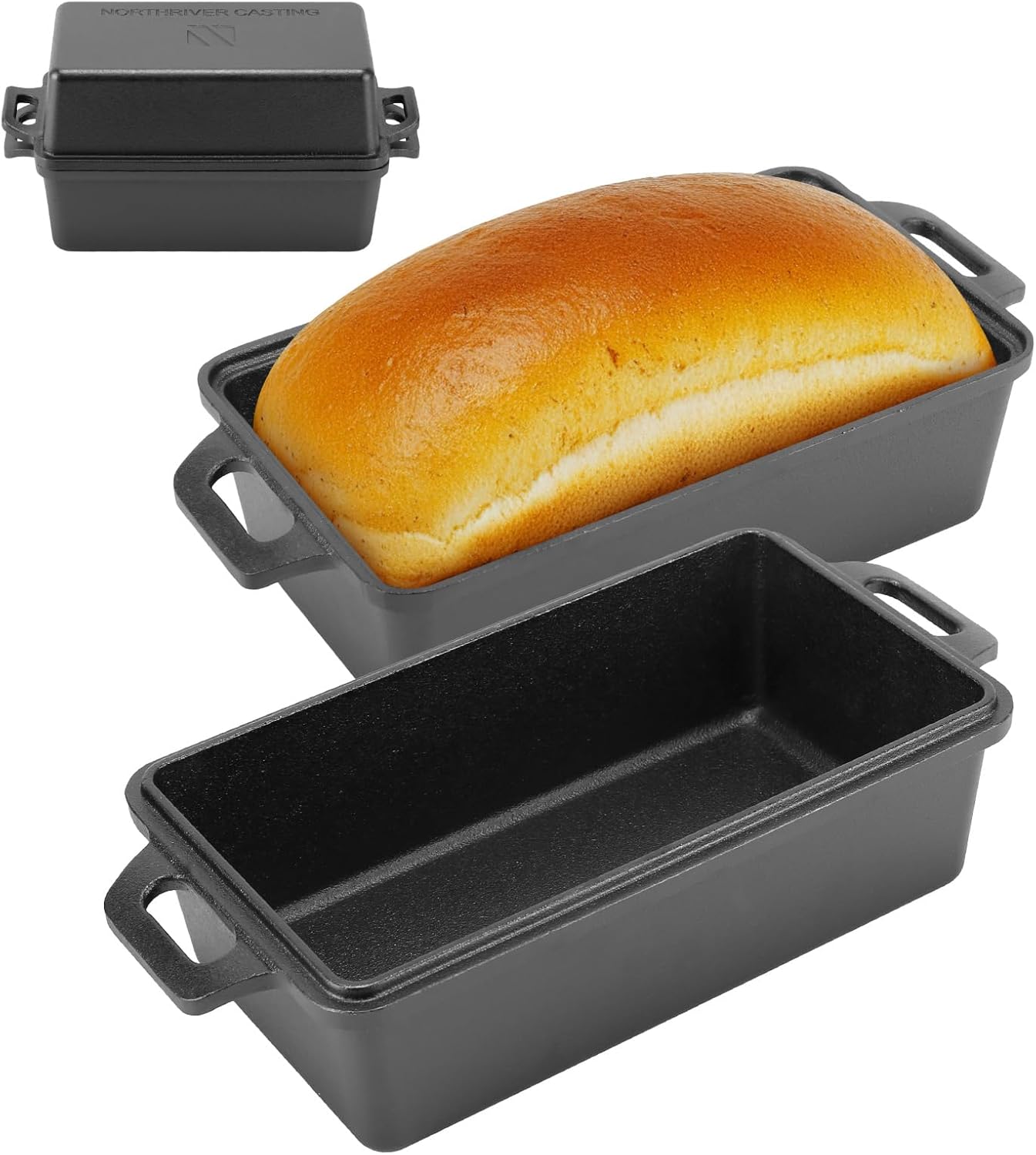
Cast iron models provide superior heat retention and excel at trapping steam when paired with a tight lid, which is ideal for artisan sourdough baking. While cast iron is heavier and requires more careful handling, it tolerates much higher oven temperatures than standard nonstick carbon steel pans. Evaluating your standard recipes helps determine whether steel or cast iron best serves your baking goals.
Surface Coatings and Nonstick Performance
Interior surface treatments dictate how easily finished loaves release from the pan without tearing or crumbling. Many carbon steel and aluminized steel pans feature specialized nonstick coatings free of harmful chemicals like PTFE and PFOA. These coatings allow baked bread to slide out effortlessly, reducing cleanup time and preserving the neat exterior structure of your homemade sandwich or specialty loaves.
Alternatively, raw or enameled cast iron options rely on seasoning or smooth enamel finishes to prevent sticking. Enameled surfaces require minimal upkeep and resist staining, whereas raw cast iron necessitates regular oil seasoning to maintain its protective layer. Reviewing your preferred maintenance routine ensures you choose a coating type that fits your lifestyle without causing frustration during cleanup.
Pan Dimensions and Capacity Requirements
Matching the pan dimensions and volumetric capacity to your typical dough batches ensures successful baking results. Standard 9x5-inch pans accommodate moderate loaf sizes suitable for smaller households, while extra-long Pullman pans designed for larger dough weights produce uniform family-sized sandwich bread. Checking external and internal measurements prevents overcrowding in your oven and ensures proper fit on standard oven racks.
Additionally, consider the shape of the pan, such as corrugated designs that enhance airflow or rectangular boxes with sliding lids. A lidded pan designed for square loaves creates distinct corner shapes ideal for slicing sandwich bread evenly. Assessing your household consumption and typical recipe yields guides you toward the optimal size for your kitchen.
Lid Design and Steam Management
The inclusion of a lid plays a vital role in managing moisture and heat retention during the baking cycle. Sliding lids on Pullman pans trap steam during the initial rise, forcing the dough to fill every corner and creating a classic square cross-section with a thin crust. This design prevents the top of the loaf from drying out prematurely.
Conversely, heavy cast iron lids act as miniature Dutch ovens, sealing in escaping moisture to produce a crackly, golden crust on artisan sourdough. Some sets also allow the lid to double as a secondary baking dish. Assessing whether you prefer a sliding sheet lid or a heavy interlocking cover helps achieve your desired crust texture.
Temperature Tolerances and Heat Sources
Every baking pan features specific temperature limits determined by its construction materials and surface coatings. Standard nonstick carbon steel and aluminized steel pans generally operate safely at moderate oven temperatures ranging from 420 to 450 degrees Fahrenheit. Exceeding these recommended limits can damage protective nonstick coatings and reduce the lifespan of your bakeware over time.
Cast iron options withstand significantly higher temperatures, often exceeding 500 degrees Fahrenheit, and transition seamlessly from home ovens to stovetops, induction cooktops, or outdoor grills. If your baking technique involves high-heat preheating or open-flame cooking, selecting a durable cast iron pan ensures safety and longevity under intense thermal conditions without warping.
Cleaning and Maintenance Routines
Understanding the proper maintenance requirements for your bread baking pan with lid protects your investment and ensures consistent performance. Most steel pans require gentle hand washing with warm soapy water and soft sponges to protect delicate nonstick coatings from scratching. Thoroughly drying these pans immediately after washing prevents rust and maintains structural integrity.
Raw cast iron pans demand a completely different routine, requiring manual oil seasoning after every wash and avoiding dishwashers entirely. Enameled cast iron offers easier cleaning but still benefits from hand washing to preserve the exterior finish. Selecting a maintenance routine that matches your daily habits ensures your bakeware remains in top condition for years.
Frequently asked questions
Can I use a bread baking pan with lid without the cover?
Yes, most lidded bread pans allow you to bake with or without the cover depending on your recipe goals. Leaving the lid off during baking allows the dough to rise into an open, domed shape with a rustic, golden-brown crust rather than forming a flat top. For instance, pullman pans and cast iron sets accommodate open-top baking for artisan loaves, brioche, or traditional cakes. Always verify the manufacturer's instructions regarding temperature limits and handling before baking uncovered, as heat retention and airflow characteristics will change when the cover is removed during the baking cycle.
How do I prevent bread dough from sticking to a lidded pan?
Preventing dough from sticking depends largely on the material and interior coating of your chosen pan. Many carbon steel and aluminized steel pans feature food-grade nonstick coatings that facilitate easy release without heavy greasing. For batter-heavy or liquid-based recipes, lining the interior with parchment paper provides an extra nonstick barrier. If you are using raw cast iron pans, regular seasoning with cooking oils creates a natural nonstick surface over time. Always allow baked loaves to cool slightly before attempting to unmold them to prevent the crumb structure from tearing against the interior walls.
What is the main benefit of using a corrugated bread pan?
A corrugated structure features subtle ridges along the exterior surface of the carbon steel or aluminized steel pan. These ridges promote optimal air circulation around the baking loaf and enhance overall heat distribution during the baking process. Additionally, the textured surface strengthens the metal body, making the pan more resistant to warping or deformation under repeated thermal expansion. This design helps ensure that your baked bread achieves a uniform texture, consistent color on all sides, and smooth un-molding when you remove the finished loaf from the compartment after cooling.
Are cast iron loaf pans safe to use on induction cooktops?
Raw and enameled cast iron loaf pans are fully compatible with induction cooktops, gas stoves, electric ranges, and conventional ovens. The heavy-grade iron construction allows these pans to absorb and distribute heat evenly across various cooking surfaces, making them versatile tools for recipes that require stovetop searing before oven baking. However, you should always consult the specific product guidelines regarding maximum temperature limits and handle heat protection. Using insulated oven mitts or potholders is essential when moving heavy cast iron cookware between different heat sources or removing them from a hot oven environment.
How should I clean and store my lidded bread pan?
Cleaning methods vary depending on your pan's material composition. Steel and nonstick coated pans generally require hand washing with warm water, mild soap, and a soft sponge to protect the protective surface, followed by complete drying to prevent rust. Raw cast iron pans must never be placed in a dishwasher or allowed to air dry; they require hand washing, drying over low heat, and an immediate oil seasoning application. When storing your lidded pans, many models support stackable storage to save cabinet space, though you should place protective pads between stacked cast iron pieces to prevent chipping the surface finish.