Appliances · Buying Guide
Best Bread Baking Proofing Basket Choices for Artisan Sourdough
Baking artisan sourdough at home relies heavily on proper dough support during the final rise, making a reliable bread baking proofing basket an essential tool for any home kitchen. These traditional rattan and cotton vessels shape your loaves while promoting ideal airflow and moisture absorption, helping you achieve professional crust patterns, distinct spiral rings, and reliable textures.
Whether you prefer classic round boules or elongated oval loaves, selecting the right proofing bowl ensures your dough retains its structure before scoring and baking. Exploring various sizes, natural materials, and included accessories lets you find a setup that matches your baking volume, skill level, and daily kitchen routine effortlessly without guesswork.
As an Amazon Associate, StacyLaughs earns from qualifying purchases.
Buying guide
Material Selection and Construction
Choosing the right material for your bread baking proofing basket dictates how well your dough rises and forms its crust. Traditional natural rattan cane remains popular because it breathes well, absorbing excess surface moisture from the dough to create crisp crusts. Rattan also imparts classic spiral patterns onto the outer surface of your round or oval loaves.
Alternatively, modern cotton rope alternatives offer flexibility and machine-washable convenience for home bakers seeking effortless cleanup routines. When evaluating options, check whether the basket uses hidden staples or secure stitching to ensure structural longevity during frequent baking sessions. Selecting materials that match your cleaning preferences prevents long-term maintenance frustration.
Sizing and Loaf Geometry
The physical dimensions of your proofing bowl directly determine the maximum size and shape of your finished artisan bread. Round baskets, typically measuring between eight and ten inches across, shape classic boules with even radial expansion and striking spiral patterns. Oval baskets, known as batards, accommodate elongated loaves suitable for traditional sandwich slices and sharing.
Matching the basket dimensions to your typical flour batch ensures your dough neither overflows the rim nor spreads too thin during the final rise. Consider your oven capacity and heavy dutch oven dimensions when choosing larger bowls, ensuring the proofed loaf transfers smoothly onto your hot baking surface without losing its structural integrity.
Fabric Liners and Accessories
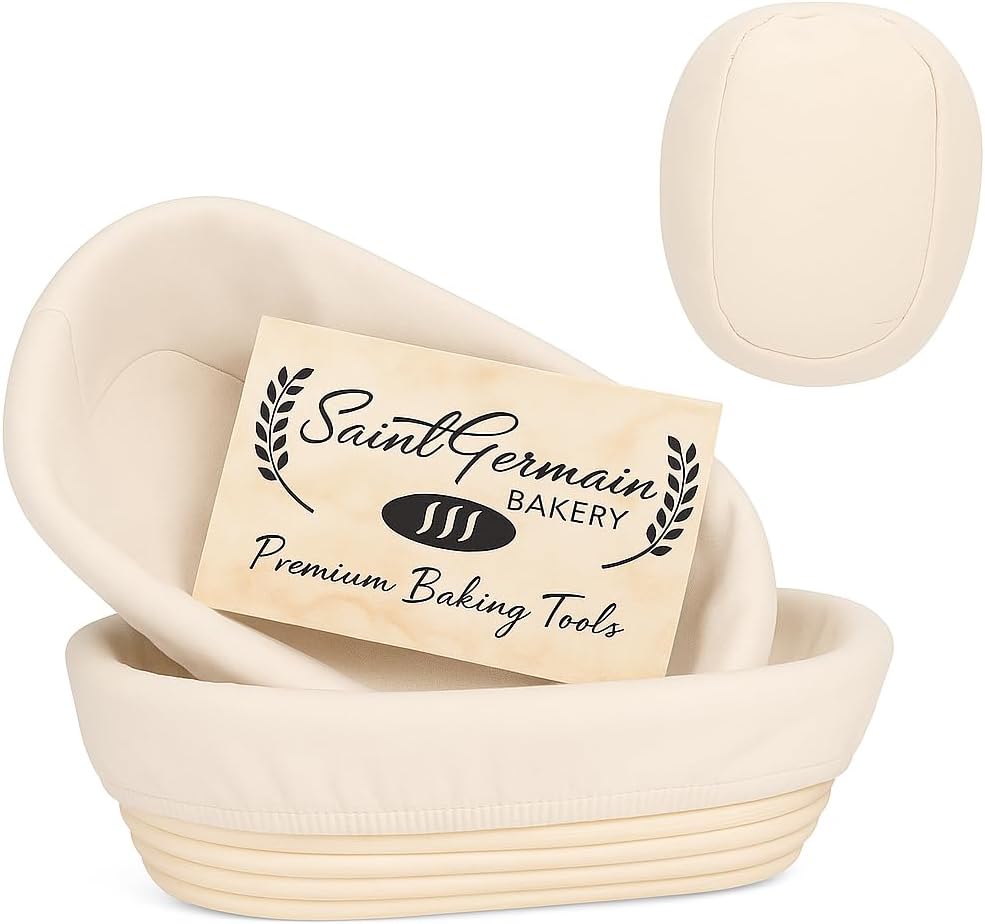
Many proofing basket sets include removable fabric liners that change how you interact with sticky or high-hydration dough mixtures. Liners prevent wet dough from clinging directly to the natural rattan crevices, making cleanup remarkably simple and fast after your dough is transferred. They also double as protective covers to shield proofing dough from drafts.
Using a liner results in a smooth crust without the signature spiral rings if you prefer a classic bakery appearance. Evaluate whether included liners feature elastic edges for a secure fit or require manual tucking. Assessing these accessory details helps you customize your baking workflow based on your specific dough hydration levels.
Cleaning and Maintenance Needs
Proper maintenance ensures your bread baking proofing basket remains hygienic and functional across years of consistent sourdough preparation routines. Natural rattan bowls typically require minimal active washing, relying instead on dry flour brushing once the residual dough has hardened completely. Storing them in well-ventilated areas prevents moisture accumulation and mold growth.
In contrast, fabric or cotton rope baskets often allow machine washing for deep cleaning convenience when flour buildup becomes heavy between baking projects. Always follow manufacturer guidelines regarding water temperature and drying methods to prevent fabric shrinkage or structural fiber degradation. Establishing a consistent cleaning routine protects your investment and ensures safe food contact conditions.
Storage and Kitchen Space
Evaluating your available kitchen storage space is essential when selecting proofing baskets, especially if you purchase multi-piece sets or bulk kits. Compact round bowls often feature stackable designs that nest neatly inside one another, minimizing the cabinet footprint required between baking days. Larger oval baskets demand more shelf room due to their elongated geometry and rigid frames.
Baskets equipped with hanging loops or foldable flexible structures offer alternative storage solutions, letting you hang them on wall hooks or store them flat in drawers. Assessing your kitchen layout beforehand prevents clutter and ensures your baking tools remain accessible yet out of the way during daily cooking activities.
Gift Appeal and Complete Kits
Many proofing basket options come packaged as comprehensive kits designed specifically for gifting to aspiring or experienced home bakers. These bundles frequently include scraping tools, scoring lame accessories, recipe booklets, and decorative packaging boxes that elevate the unboxing experience. Choosing an all-inclusive set removes the guesswork for beginners starting out.
When selecting a kit for a gift, check whether the included components match the recipient skill level and kitchen equipment availability. Providing a complete package allows the new baker to begin crafting artisan sourdough immediately without needing to purchase separate accessories, mixing bowls, or specialized companion tools separately from secondary retail sources.
Frequently asked questions
How do I prevent bread dough from sticking to my proofing basket?
To prevent dough from sticking, generously dust the interior of your basket with flour before placing the shaped loaf inside. Rice flour works exceptionally well because it resists absorption and creates a reliable barrier against wet dough surfaces. Alternatively, you can insert the provided cloth liner dusted lightly with flour. Never wash rattan baskets with excessive water, as moisture encourages sticking; instead, let leftover dough dry completely before brushing it out gently.
Can I bake bread directly inside a proofing basket?
No, you should never place a traditional proofing basket directly inside a hot oven or use it for baking. These baskets are crafted from natural rattan or cotton rope designed exclusively to support and shape the dough during its final proofing stage on the counter or in the refrigerator. Once proofing is complete, you must gently invert the dough out of the basket onto a hot baking stone, baking sheet, or inside a preheated dutch oven.
How should I clean and maintain my natural rattan proofing basket?
Natural rattan baskets require minimal cleaning and should never be submerged in water or put into a dishwasher. After each proofing session, shake out any loose flour and allow the basket to dry completely in a well-ventilated area. If sticky dough remnants adhere to the wood, let them dry thoroughly before using a stiff-bristled brush to flake them away safely. Storing the clean basket in a dry environment preserves its structural integrity for years.
What is the difference between round and oval proofing baskets?
Round proofing baskets shape dough into classic round boules, which expand evenly in all directions during baking and fit neatly inside standard round dutch ovens. Oval baskets shape dough into elongated batards, offering a traditional shape well-suited for slicing sandwich-sized pieces. Your choice depends primarily on your preferred baking vessel geometry, slicing preferences, and the visual style you want for your finished artisan sourdough loaves.
Do I need to use the fabric liner included with my basket?
Using the fabric liner is entirely optional and depends on your personal baking preference and dough hydration. Leaving the liner out allows the bare rattan to impart traditional spiral ring patterns directly onto your loaf crust while absorbing surface moisture. Inserting the liner provides a smooth surface that prevents sticking with high-hydration doughs and makes cleanup significantly faster. Many bakers switch between using and omitting the liner depending on their recipe requirements.