Appliances · Buying Guide

Best Bread Machine Pasta Dough Makers for Home Kitchens

Making fresh pasta and bread dough at home transforms ordinary meals into authentic culinary experiences, but manual kneading requires considerable physical effort and time. Modern electric dough makers and pasta machines simplify this process by combining automated mixing, simulated hand-kneading, and precise temperature controls. Whether preparing elastic pasta sheets or rich bread dough, these countertop appliances handle the heavy lifting to deliver consistent results for home cooks.

Selecting the right machine depends on your specific kitchen routine, batch size requirements, and whether you prefer an all-in-one dough mixer with fermentation capabilities or a dedicated extrusion pasta maker. Understanding the core features, bowl capacities, and operating modes of different models ensures you choose an appliance that seamlessly integrates into your daily routine, reducing prep time while maximizing texture and flavor in every batch.

As an Amazon Associate, StacyLaughs earns from qualifying purchases.

SAMSAIMO 6.5QT Electric Dough Mixer with Ferment Function and Stainless Steel Bowl
#1 Best Overall

SAMSAIMO 6.5QT Electric Dough Mixer with Ferment Function and Stainless Steel Bowl

Equipped with a 6.5QT 304 stainless steel bowl, this dough maker handles 300 to 1,400 grams of dough. It features an S-shaped kneading blade simulating hand-kneading, a smart constant temperature fermentation mode ranging from 77 to 95 degrees Fahrenheit, and a mechanical rotary knob control interface. Dual safety buckles and a suction-cup base maintain stability while running at lower noise levels.

Best for Large batch bread and dough

6.5QT large capacity bowlSmart constant temperature fermentation304 stainless steel materialMechanical knob control interfaceSuction-cup base stability
View on Amazon →

What stands out

  • Maintains steady temperatures between 77 and 95 degrees Fahrenheit to support active yeast fermentation and ensure proper dough expansion.
  • Features a food-grade 304 stainless steel bowl and removable S-shaped blade designed for corrosion resistance and easy cleanup.
  • Incorporates suction-cup feet and a double safety buckle to keep the unit stable and secure during high-speed kneading.

What to consider

  • The 6.5-quart capacity and robust motor housing create a larger countertop footprint that may require permanent storage space in compact kitchens.
  • The mixing bowl is not recommended for dishwasher use, requiring manual washing compared to the dishwasher-safe removable dough blade.
Key specifications
Capacity
6.5 quarts
Wattage
600 watts
Voltage
120 volts
Material
304 Stainless Steel
Controls Type
Rotary Knob
Item Dimensions D x W x H
11.3"D x 10.7"W x 10.82"H

The practical verdict

This electric dough mixer suits home bakers needing a reliable appliance for large family-size batches of bread, pizza, or pasta dough. Avoid if you have very limited counter space or prefer entirely dishwasher-safe components. The powerful motor and constant temperature fermentation function deliver consistent gluten development, though the large stainless steel bowl requires hand washing to preserve its finish.

#2
AIZIYO DoughChief 7.4QT Electric Dough Maker with Ferment Function
Family Sized Dough Proofing Box

AIZIYO DoughChief 7.4QT Electric Dough Maker with Ferment Function

Best for Family size baking preparation

Designed for home bakers, this appliance features a 7.4QT stainless steel mixing bowl and a removable S-shaped dough blade. It offers three distinct modes including mix, ferment, and a combined mix and ferment function. The built-in proofing box maintains a stable 77 to 100 degrees Fahrenheit temperature range, while a face-up touch panel and removable lid simplify operation and ingredient addition during mixing.

What stands out

  • Offers three versatile operational modes covering mixing, constant-temperature fermentation, and combined cycles for streamlined baking prep.
  • Includes a generous 7.4-quart stainless steel bowl that easily accommodates family-sized batches of bread, pizza, or pasta dough.
  • Features a removable top lid that lets you add water or flour safely while the machine actively runs.

What to consider

  • Operating at 250 watts with a large 7.4-quart capacity means heavy, dense dough loads may require careful batch sizing to prevent motor strain.
  • The touch panel interface demands dry fingers for responsive control, which can slow adjustments during messy baking sessions.
Key specifications
Capacity
7.4 quarts
Wattage
250 watts
Voltage
110
Material
304 Stainless Steel
Controls Type
Touch
Item Dimensions D x W x H
11.42"D x 12.2"W x 9.6"H

The practical verdict

Best for families and home bakers looking to automate both kneading and proofing stages for various dough types. Avoid if you require high-powered continuous kneading for exceptionally stiff commercial-grade doughs. The 7.4-quart bowl and 3-in-1 system provide excellent versatility, though the touch panel requires dry hands and the large size takes up meaningful counter space.

#3
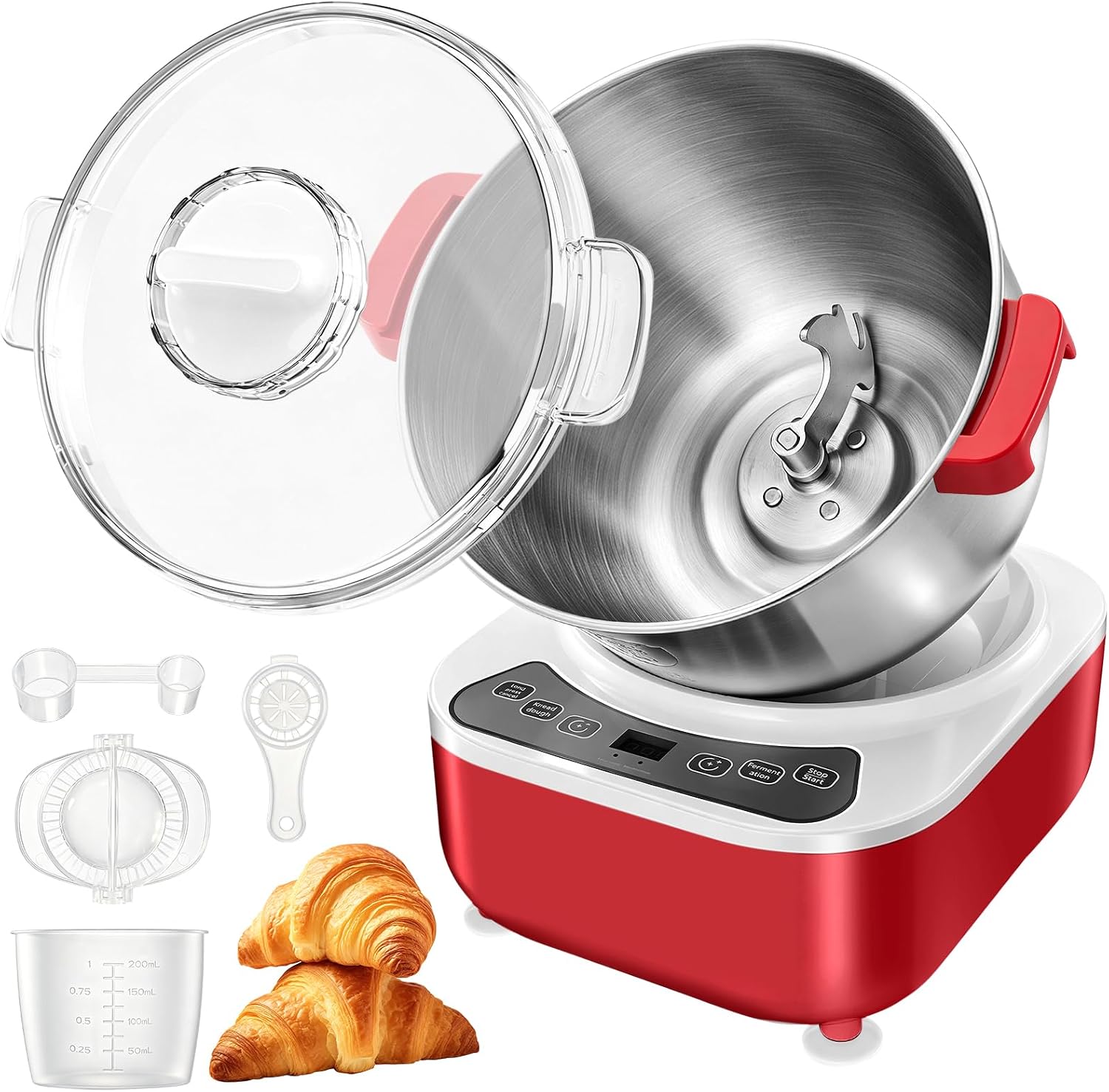
Sakerplus Automatic 7L Electric Dough Mixer with Ferment Function
Multi-Stage Digital Dough Processor

Sakerplus Automatic 7L Electric Dough Mixer with Ferment Function

Best for Versatile digital recipe processing

Combining kneading, resting, and fermentation functions, this automatic dough maker features a spacious 7-liter bowl capable of handling 400 to 1600 grams of dough. It utilizes a digital control panel for precise time adjustments and includes side handles for portability. The transparent lid contains flour dust while allowing visual progress checks, and select sets include bonus measuring tools and accessory attachments.

What stands out

  • Combines automated kneading, resting, and fermentation stages into a single unit controlled via a digital panel.
  • Provides a spacious 7-liter mixing bowl that accommodates up to 1600 grams of dough for large baking projects.
  • Includes convenient side handles that make transporting the mixer between countertops and storage pantries much easier.

What to consider

  • The inclusion of plastic and aluminum components alongside stainless steel offers a mixed material build rather than uniform all-metal construction.
  • The digital control panel and multiple operational stages require a brief learning curve to master exact timings for different recipes.
Key specifications
Capacity
7 liters
Wattage
220 watts
Voltage
7 volts
Material
Aluminum, Plastic, Stainless Steel
Item Dimensions D x W x H
11"D x 10.5"W x 9.5"H
Special Features
Removable Bowl

The practical verdict

Ideal for bakers who want granular digital control over kneading, resting, and fermentation cycles in a high-capacity machine. Avoid if you prefer simple mechanical knobs or an all-steel construction. The generous 7-liter capacity and side handles offer great practical convenience, making it a strong contender for regular family baking routines despite its mixed-material body.

#4
AIZIYO DoughChief 5.3QT Electric Dough Maker with Ferment Function
Compact Countertop Fermentation Unit

AIZIYO DoughChief 5.3QT Electric Dough Maker with Ferment Function

Best for Compact daily baking needs

Built for everyday baking, this compact dough mixer features a 5.3QT stainless steel bowl and a simulated hand-kneading program. It incorporates three operating modes for mixing and fermentation, supported by a face-up touch panel and a removable lid for adding ingredients. The unit is sized to fit standard kitchens while delivering consistent gluten development and controlled proofing environments for various dough recipes.

What stands out

  • Features a compact footprint of 11.8 inches square that fits comfortably on standard kitchen countertops without overcrowding.
  • Utilizes a simulated hand-kneading program with an S-shaped blade to develop elastic gluten structures without overworking the dough.
  • Equipped with a dedicated fermentation mode that maintains optimal rising conditions for active yeast recipes.

What to consider

  • The 5.3-quart bowl capacity is smaller than larger multi-quart alternatives, limiting the maximum size of single-batch bread preparations.
  • The 200-watt motor is optimized for home baking tasks and may struggle with ultra-dense, low-hydration commercial pasta doughs.
Key specifications
Capacity
5.3 quarts
Wattage
200 watts
Voltage
110
Material
Plastic, Stainless Steel
Controls Type
Touch
Item Dimensions D x W x H
11.8"D x 11.8"W x 9.85"H

The practical verdict

Suited for home bakers with limited counter space who want an efficient appliance for moderate bread and pasta dough batches. Avoid if you frequently prepare oversized family batches requiring a 7-quart or larger bowl. The compact 5.3-quart design balances footprint with capable mixing and fermentation modes, though power output remains geared toward standard domestic baking.

#5
VEVOR 150W Electric Pasta Maker with 8 Pasta Shapes and Flour Capacity
Automatic Extrusion Noodle Maker

VEVOR 150W Electric Pasta Maker with 8 Pasta Shapes and Flour Capacity

Best for Fresh home pasta extrusion

This dedicated 150W automatic pasta maker features a 500g flour capacity and four intelligent operating modes. It employs a two-way kneading rod and four-dimensional mixing to extrude fresh noodles through eight interchangeable shaping discs. The unit comes complete with measuring cups, a cleaning brush, a spatula, and dishwasher-safe parts, enabling users to create multiple pasta varieties quickly at home.

What stands out

  • Includes eight interchangeable pasta shaping discs to easily produce a wide variety of homemade noodles and pasta types.
  • Employs a two-way kneading rod and four-dimensional mixing to replicate hand-kneaded pasta textures within fourteen minutes.
  • Provides a complete accessory kit including measuring cups, a spatula, and a specialized cleaning brush for post-use maintenance.

What to consider

  • The 500-gram flour capacity produces smaller noodle batches, requiring multiple runs when serving larger groups or gatherings.
  • Precise water-to-flour ratios are mandatory to prevent dough from sticking inside the extrusion chamber during automated operation.
Key specifications
Operation Mode
Automatic
Number Of Discs
8
Number of Blades
8
Material Type
POM+SUS410+PC+ABS
Blade Material Type
Stainless Steel
Item Dimensions L x W x H
13.4"L x 7.1"W x 11"H

The practical verdict

Best for pasta enthusiasts looking to extrude fresh, shaped noodles automatically in minutes. Avoid if you need an appliance primarily designed for large bread loaves or pizza dough fermentation. The generous 500g flour capacity and eight interchangeable shaping discs make noodle creation straightforward, provided you carefully measure ingredients according to the included ratio guidelines and follow proper cleaning routines.

Buying guide

Capacity and Batch Sizing

Choosing the correct bowl capacity depends entirely on your household size, typical baking frequency, and the types of recipes you prepare regularly. Larger 7-quart and 7.4-quart mixing bowls easily handle heavy flour loads required for multi-loaf bread baking, large pizza nights, or big family dinners without forcing you to split ingredients into multiple batches.

Conversely, more compact 5.3-quart units or dedicated extrusion models fit tighter kitchen counter spaces while managing moderate daily portions efficiently. Matching the stated capacity directly to your routine ensures optimal motor performance, prevents premature wear, and delivers uniform gluten development across every single mix without strain.

Motor Power and Performance

Motor wattage and internal torque dictate how effectively an appliance handles dense bread, pizza, or pasta doughs without stalling under heavy operating pressure. Higher wattage motors provide sustained rotational power during extended mixing cycles, significantly reducing the risk of thermal overload when processing stiff, low-hydration flour mixtures for heavy artisan breads.

However, lower-wattage models often incorporate smart intermittent operation modes and integrated ventilation vents to protect internal electrical components during prolonged tasks. Reviewing these power specifications helps you carefully balance energy consumption with the robust mechanical strength needed for your specific baking style, recipe variety, and weekly frequency demands.

Fermentation and Temperature Control

Built-in fermentation functions eliminate guesswork by maintaining stable, constant temperatures that encourage active yeast multiplication. Temperature ranges spanning from seventy-seven to one hundred degrees Fahrenheit establish an ideal microenvironment for dough to rise evenly, doubling in volume and developing rich honeycomb internal structures without requiring external proofing boxes or warm oven setups.

When evaluating fermentation capabilities, check whether the machine offers standalone proofing modes or combined mixing cycles. Units featuring dedicated temperature regulation streamline the entire bread-making process from raw flour to finished rise inside a single bowl, saving valuable time and reducing kitchen cleanup clutter significantly.

Control Interfaces and Usability

Operating interfaces vary from traditional mechanical rotary knobs to modern face-up digital touch panels. Mechanical knobs offer tactile precision and remain easy to operate even when your fingers are covered in flour or moisture. In contrast, digital panels present clear program selections and timer readouts for precise recipe timing.

Consider your personal preference for tactile feedback versus digital automation when choosing an appliance control layout. Transparent lids with convenient top openings also enhance usability by letting you monitor gluten development and add water safely mid-cycle without interrupting the active mixing process.

Blade Design and Gluten Development

The internal shape and movement of the kneading blade directly influence how effectively gluten structures form within your dough. S-shaped blades utilizing simulated hand-kneading programs mimic traditional artisan techniques through intermittent mix-pause rhythms. This gentle yet robust action develops elastic, chewy dough textures without overworking the mixture.

Extrusion models rely on specialized multi-directional mixing rods to push dough through shaping discs for fresh noodles. Comparing blade configurations helps ensure the machine matches your target recipes, whether you are crafting stretchy pizza crusts or extruded pasta shapes.

Cleaning and Maintenance Practicality

Maintenance convenience plays a major role in how often you will ultimately use your dough maker or pasta machine. Food-grade 304 stainless steel bowls and removable blades resist corrosion, odors, and food stains, making routine cleanup straightforward after completing baking sessions.

Many removable components support dishwasher cleaning, though checking manufacturer guidelines for specific bowls prevents accidental finish damage. Selecting appliances with smooth, accessible interior surfaces ensures food residues wash away easily with minimal scrubbing effort.

Frequently asked questions

Can these machines handle both bread and pasta dough?

Yes, many electric dough mixers and pasta makers are explicitly designed to handle a wide variety of recipes, including bread, pizza, pastry, and pasta dough. Appliances featuring simulated hand-kneading S-shaped blades develop the necessary gluten structure for chewy bread and pizza crusts. Meanwhile, dedicated extrusion machines utilize specialized shaping discs to press fresh noodles directly from flour and liquid. Always consult the manufacturer instructions and follow recommended flour-to-water ratios to ensure optimal consistency and prevent motor strain during operation.

Do I need to use yeast with the fermentation function?

Yes, the built-in constant temperature fermentation functions found on these dough makers require active yeast or baking powder to properly raise the dough. The heating mechanism maintains a stable environment ranging between seventy-seven and one hundred degrees Fahrenheit, which encourages yeast activity and helps the dough expand uniformly. Without active yeast or rising agents, the fermentation mode will provide warmth but cannot produce the honeycomb pores and volume expansion characteristic of successfully proofed bread dough.

Are the mixing bowls and removable blades dishwasher safe?

Cleaning compatibility varies depending on the specific model and material construction. Many removable S-shaped kneading blades and extrusion parts are rated dishwasher safe for effortless post-baking cleanup. However, manufacturers frequently recommend hand washing the stainless steel mixing bowls rather than placing them in a dishwasher to preserve their surface finish. Always review the specific care instructions provided by the manufacturer before placing any components into an automatic dishwasher.

Can I add water or flour while the machine is running?

Several electric dough makers feature removable upper lids equipped with small top openings specifically designed for adding ingredients during active operation. This convenient design allows home bakers to pour in additional water, flour, or seasonings without stopping the motor or interrupting the mixing cycle. This keeps the workspace clean by containing flour dust while ensuring the hydration level can be adjusted smoothly as the gluten structure develops inside the bowl.

How do I prevent pasta dough from sticking in an extrusion machine?

Preventing pasta dough from sticking inside an automatic extrusion machine relies heavily on maintaining the correct flour-to-water ratio specified in the user guide. Adding too much or too little liquid can cause the mixture to clog the extrusion chamber or stick to internal mixing rods. Following the provided measuring cup guidelines and letting dry flour residue settle naturally before brushing it away helps maintain smooth operation and simplifies cleanup after every use.

Final thoughts

Selecting the right appliance for bread machine pasta dough involves balancing bowl capacity, motor power, and specialized features like constant temperature fermentation. Whether you choose a high-capacity countertop mixer for family-size loaves or an automated extrusion machine for fresh noodles, matching the unit to your baking habits ensures long-term satisfaction.

By carefully reviewing mechanical controls, material construction, and cleaning requirements, you can find a reliable kitchen tool that streamlines your daily food preparation. Embracing these automated systems reduces hands-on labor, allowing you to enjoy fresh, homemade breads, pizzas, and pastas with consistent texture and exceptional flavor every single time.