Appliances · Buying Guide
Best Carbon Steel Baguette Pan Options for Crisp French Bread
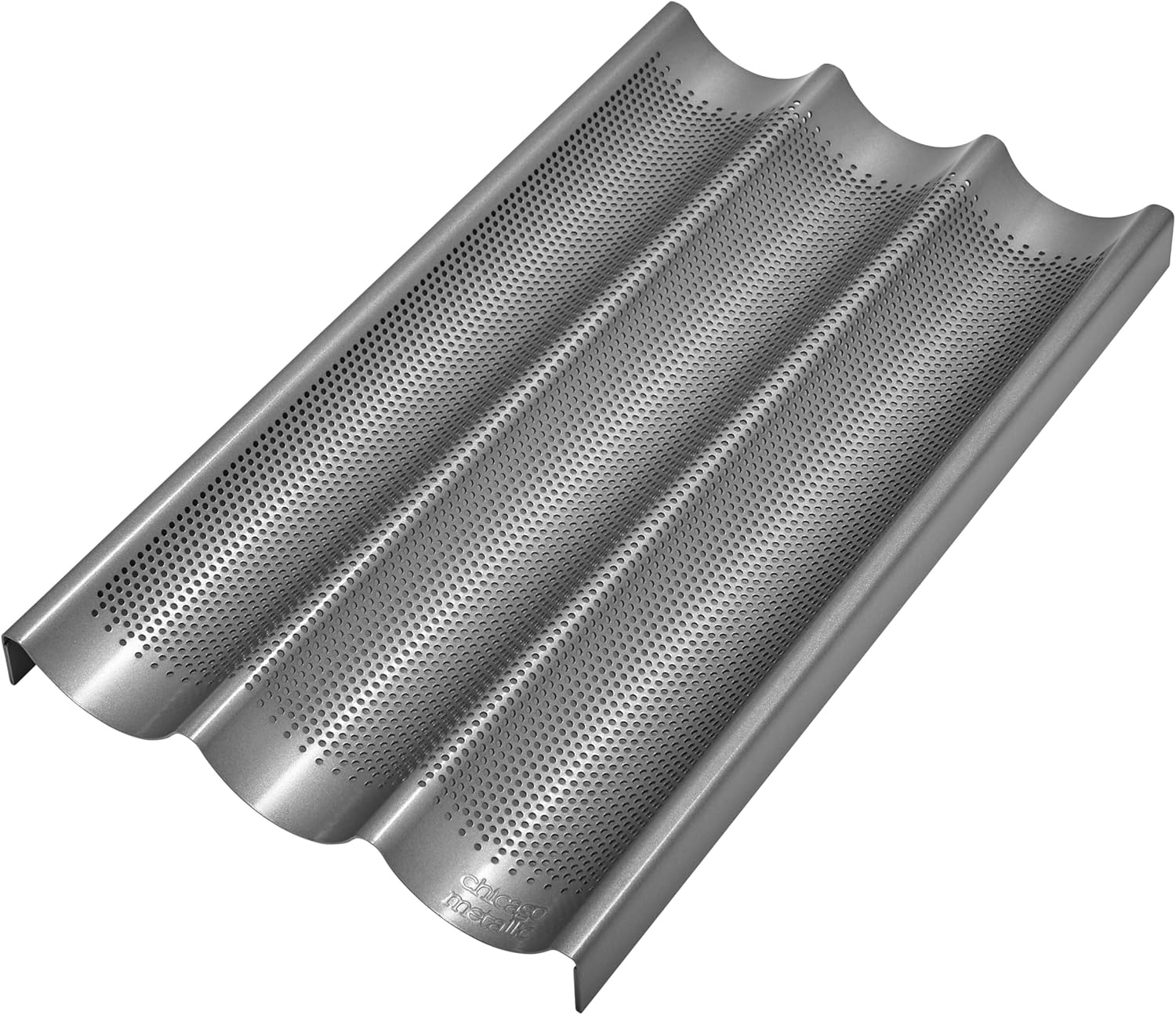
Baking artisanal French bread at home requires specialized equipment that promotes proper airflow and even heat distribution. A quality carbon steel baguette pan transforms standard kitchen dough into professional-style loaves with crackly, golden crusts. Perforated surfaces allow direct heat to reach every part of the shaped dough, preventing soggy bottoms and ensuring uniform browning across your entire baking batch.
Choosing the right baking tray depends heavily on your specific oven dimensions, batch size preferences, and daily cleaning routine. Whether you need a multi-pack for large family gatherings or a sturdy single tray with professional-grade thickness, evaluating structural features like gauge thickness and surface coatings ensures reliable performance for homemade Italian and French breads.
As an Amazon Associate, StacyLaughs earns from qualifying purchases.
Buying guide
Material Composition and Gauge Thickness
Selecting the right carbon steel baguette pan starts with examining the material composition and metal gauge thickness. Thicker carbon steel panels, such as 0.8mm designs, offer superior thermal conductivity and resist warping under high oven temperatures. This robust construction ensures that heat transfers evenly to your bread dough, preventing scorched spots and underbaked centers. Investing in heavy-duty metals provides long-term durability for frequent baking routines.
When evaluating your options, pay close attention to how the manufacturer constructs the edges and framework. Reinforced or fluted rims add structural integrity, keeping the tray flat even after repeated heating cycles. While thinner metals might seem lighter to handle, they often bend over time. Choosing a solid, heavyweight carbon steel foundation guarantees stable performance whether you are baking delicate French baguettes or dense artisan sourdough loaves.
Perforation and Airflow Design
Perforated surfaces are essential for achieving the classic crispy crust associated with authentic French baguettes. Tiny holes drilled across the baking channels allow hot oven air to circulate freely underneath and around the shaped dough. This constant airflow evaporates surface moisture quickly, which directly triggers the desirable crackly texture and golden-brown coloration. Without proper ventilation, bread bottoms can trap steam and turn soft or soggy.
Reviewing the hole distribution and tray layout helps you understand how effectively a pan will brown your baked goods. Some models feature dense perforation patterns across the entire base, while others limit holes to specific areas. Pairing a ventilated carbon steel tray with correct oven temperatures ensures that your artisan creations bake evenly from top to bottom. This design element bridges the gap between home kitchens and professional bakeries.
Nonstick Coatings and Food Release
A reliable nonstick coating transforms your baking experience by allowing freshly baked loaves to slide effortlessly off the tray. Many modern carbon steel baguette pans utilize food-grade silicone or dual-layer nonstick finishes that prevent dough from sticking without releasing harmful substances at high temperatures. These coatings simplify the cleanup process significantly, sparing you from aggressive scrubbing or soaking after every baking session.
Maintaining these specialized surfaces requires following manufacturer guidelines, such as using silicone or wooden utensils instead of metal scrapers. Applying a light brush of butter or oil before the initial bake can further enhance release performance. Evaluating the coating type ensures you select a tray that balances easy food removal with long-lasting durability, keeping your kitchen workflows smooth and hassle-free over years of regular use.
Sizing and Oven Compatibility
Before purchasing any baguette pan, measuring your oven interior is a critical step to ensure a proper fit. Trays typically range from 15 to 16 inches in length, and overlooking these physical dimensions can lead to frustrating clearance issues with your oven walls or racks. If you plan to bake multiple pans side by side, checking both width and depth specifications becomes even more important to avoid overcrowding.
Consider how many loaf channels you need based on your typical household baking volume. Single trays usually hold three standard loaves, while multi-pack bundles double that capacity for larger families or entertaining guests. Matching the physical size of the pan to your specific oven capacity guarantees that heat circulates unimpeded around all sides, preventing uneven baking results caused by restricted airflow near the oven boundaries.
Cleaning and Maintenance Protocols
Proper care and cleaning routines extend the service life of your carbon steel baguette pan significantly. While many models are labeled as dishwasher safe, manufacturers frequently recommend hand washing with mild soap to preserve the integrity of specialized nonstick coatings. Avoiding harsh abrasive pads prevents scratches on the silicone or metallic surface layers, ensuring smooth bread release continues over countless baking cycles.
Taking a few extra minutes to wash and dry your baking trays by hand safeguards your investment against premature wear. Storing them in a dry cabinet away from heavy cookware prevents accidental warping or surface scuffs. Following these straightforward maintenance guidelines keeps your carbon steel equipment in top condition, ready to produce golden, crusty baguettes whenever inspiration strikes your home kitchen.
Value Bundles and Included Accessories
Exploring multi-pack options and accessory bundles can deliver exceptional value for dedicated home bakers. Some product offerings include two pans for the price of one, allowing you to scale up production immediately without purchasing separate items later. Other kits feature complementary tools like baker's couche cloths and dough scrapers, providing everything needed to transition smoothly from dough proofing to final oven baking.
Assessing whether you will actually utilize these added accessories helps determine the best purchasing choice for your needs. If you already own proofing cloths, a standalone pan or a dual-pack might represent a more practical investment. Weighing the cost against included components ensures you select a package that enhances your baking routine without cluttering your kitchen with duplicate or unnecessary tools.
Frequently asked questions
Why choose a carbon steel baguette pan over standard baking sheets?
Carbon steel baguette pans offer exceptional thermal conductivity and feature specialized wave-shaped channels that support traditional French bread geometry during the baking process. Unlike flat baking sheets that allow dough to spread outward into unstructured shapes, these designated gutters guide the rising dough upward while maintaining distinct loaf forms. Furthermore, the perforated construction encourages uniform airflow around every side, actively promoting the crisp, golden-brown crust and airy interior texture characteristic of authentic artisan baguettes.
How should I clean and maintain my nonstick carbon steel pan?
Maintaining your nonstick carbon steel pan requires gentle care to preserve the specialized surface coating over years of baking. While many manufacturers state that their trays are dishwasher safe, washing them by hand with warm water, mild dish soap, and a soft sponge is frequently recommended to extend service life. Avoid using abrasive scrubbing pads or harsh metal utensils that can scratch the nonstick layer. Thoroughly drying the pan before storage prevents moisture accumulation and keeps your equipment ready for future baking projects.
Are perforated holes really necessary for baking French bread?
Perforated holes play a critical role in developing the signature crust texture of professional-grade baguettes. As the dough bakes, moisture turns into steam that must escape freely to prevent the bottom of the bread from becoming soft or soggy. The tiny openings across the carbon steel surface allow hot oven air to circulate directly underneath the dough, encouraging rapid moisture evaporation and even browning. Without these perforations, achieving that crackly, artisanal crust consistency becomes significantly more difficult in a standard home oven.
What oven temperature limits apply to carbon steel baguette pans?
Most carbon steel baguette pans are engineered to withstand high baking temperatures, typically ranging between 446 and 450 degrees Fahrenheit. These elevated thresholds allow home bakers to utilize aggressive oven heat necessary for achieving proper bread rise and crust development. Always consult the specific manufacturer guidelines for your exact pan model before preheating, as exceeding the stated upper temperature rating can damage specialized nonstick silicone coatings or warp the underlying metal framework during extended baking cycles.
Can I use parchment paper or baking oil with these pans?
Applying a light coating of butter or oil before your first bake is a widely recommended practice that enhances the nonstick performance of carbon steel trays. Additionally, lining the channels with parchment paper provides an extra layer of assurance for effortless loaf release and simplifies post-baking cleanup. While factory nonstick coatings handle most baking tasks efficiently, using these extra preparation methods can be particularly helpful when working with sticky artisan doughs or high-hydration sourdough recipes in your home kitchen.