Appliances · Buying Guide
Best Ceramic Bakeware Sets with Lids for Everyday Oven-to-Table Cooking
Finding the right ceramic bakeware sets with lids can transform how you handle daily meal prep, holiday dinners, and effortless refrigerator storage. These versatile kitchen staples combine heat-retentive materials with protective covers to simplify moving food from the oven directly to the table and straight into the fridge without extra dish transfers.
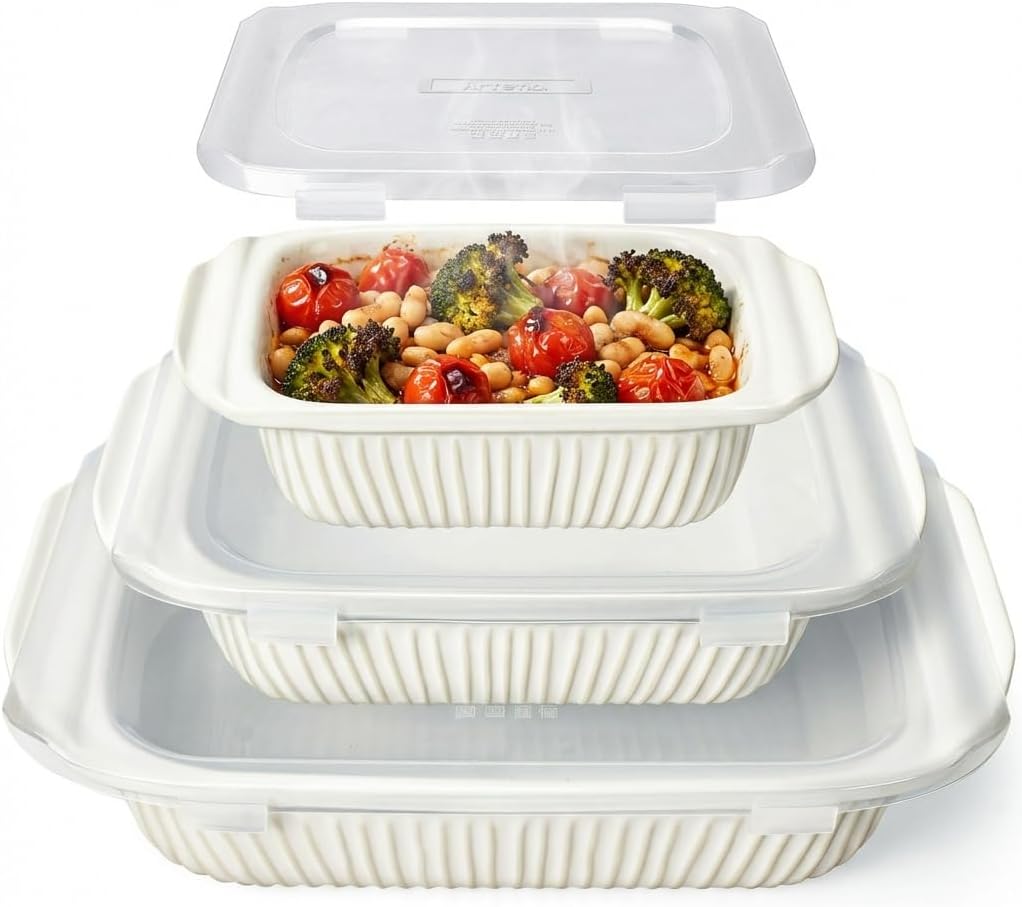
Exploring options featuring varied capacities, matching ceramic or plastic lids, and specialized nesting designs helps home cooks match their specific baking routines. Whether you need deep dishes for family-sized lasagnas or compact square pans with draining racks, understanding the core specifications ensures you select bakeware that fits your storage spaces and cooking style.
As an Amazon Associate, StacyLaughs earns from qualifying purchases.
Buying guide
Material Composition and Heat Retention
Ceramic bakeware offers exceptional heat retention capabilities, keeping your baked dishes warm long after they leave the oven. Stoneware and traditional glazed ceramics distribute thermal energy evenly, preventing hot spots that can burn casseroles or unevenly bake desserts. Understanding how different ceramic formulations handle thermal shock ensures your bakeware withstands frequent transitions from cold refrigerators to hot ovens without cracking or degrading over time.
When shopping for sets with lids, inspect the base material specifications to confirm maximum temperature thresholds. Some specialty finishes accommodate high-heat broilers, while others excel primarily in standard baking environments. Choosing a composition that matches your typical cooking habits protects your investment and delivers consistent culinary results across various recipes.
Lid Varieties and Functional Trade-offs
Lids transform standard baking dishes into comprehensive storage vessels, yet cover materials dictate how you can use them. Polypropylene plastic lids offer lightweight convenience for refrigerator storage, protecting leftovers from dust and minor spills. However, these plastic components cannot enter ovens, microwaves, or dishwashers, requiring manual washing and separate removal before reheating tasks begin.
Conversely, matching ceramic lids withstand high oven temperatures, allowing you to bake and cover dishes simultaneously. While ceramic covers provide a seamless aesthetic and direct heat resistance, they add substantial weight and lack any transparency for checking food. Weighing your need for lightweight fridge storage against oven-safe cover utility helps determine the ideal set configuration for your kitchen.
Sizing Options and Nested Storage
Evaluating available capacities and physical dimensions ensures your new bakeware efficiently handles both single-serve meals and large family gatherings. Multi-piece collections typically feature graduated sizing, offering small, medium, and deep large pans to accommodate everything from side vegetable dishes to massive family lasagnas. Checking these exact dimensions beforehand prevents storage friction and ensures comfortable placement inside standard home ovens.
Nested storage structures allow smaller pans to fit inside larger ones, conserving valuable cabinet footprint. When cabinet space is at a premium, prioritizing stackable designs prevents cluttered shelves. However, non-nested assortments featuring unique shapes require more lateral space, making careful spatial planning essential for keeping your kitchen organized.
Handle Design and Oven Safety
Safe handling is paramount when removing heavy, bubbling casseroles and roasts from hot ovens. Look for bakeware featuring integrated side handles or extra-wide grips that accommodate bulky protective oven mitts securely. Ergonomic ridges, vertical textures, or extended tabs provide a confident hold, drastically reducing the risk of accidental slips or burns during hectic kitchen routines and dinner parties.
Handle configurations also affect how easily you can lift matching lids during table service. Covers equipped with side grips or raised knobs make uncovering hot dishes straightforward without steam burns. Always verify manufacturer temperature limits for both bases and handles to ensure safe operation under maximum heat settings.
Cleaning and Maintenance Protocols
Maintaining your ceramic bakeware requires following specific manufacturer care guidelines to preserve glazed finishes and structural integrity. Most ceramic dishes feature dense, smooth interiors that resist food residue and release baked cheese or stubborn sugars easily. Dishwasher-safe construction cuts down post-dinner cleanup work, letting you transition pans straight from the dinner table into automated wash cycles without aggressive scrubbing.
However, component care instructions often vary between ceramic bases and auxiliary lids or racks. Plastic lids typically demand hand washing in warm water to prevent warping, while stainless steel racks need attention around wire joints to prevent grease buildup. Respecting these component-specific rules guarantees long-term durability.
Specialized Racks and Multipurpose Lids
Advanced bakeware sets often include thoughtful accessories like stainless-steel draining racks and multi-use lids that significantly expand your daily cooking functionality. Elevated wire inserts allow excess grease and cooking liquids to drip away safely from roasting meats and dense vegetables, actively promoting lower-oil meal preparation styles without requiring separate specialized kitchen pans or extra gadgets.
Lids that double as flat charcuterie trays or serving platters add incredible value when entertaining family and guests. Choosing sets with these bonus features maximizes utility in smaller kitchens where storage space remains at a strict premium, giving you multiple serving options without cluttering your limited cabinet shelves or drawers.
Frequently asked questions
Can I put ceramic bakeware with lids directly into a preheated oven?
Most high-quality ceramic bakeware is engineered to withstand substantial oven temperatures, often up to 400 or 600 degrees Fahrenheit depending on the specific manufacturing standards. However, you must always verify whether your specific set includes oven-safe ceramic covers or plastic refrigerator lids. Plastic lids must be completely removed before placing any dishes into a hot oven or microwave, as they lack heat-resistant properties and will melt. Always check the manufacturer guidelines for your exact product variant.
Are plastic lids included with ceramic bakeware airtight?
The polypropylene lids supplied with many ceramic bakeware collections are specifically designed for refrigerator and freezer storage rather than airtight sealing. These covers protect your prepared foods and leftovers from dust, airborne particles, and minor spills while stacked on refrigerator shelves. They are not engineered to prevent liquid leaks if a dish tilts sideways during transport. If you need secure, leakproof liquid transport for travel, you should rely on dedicated sealed containers instead of standard refrigerator storage lids.
How do I clean baked-on grease and food residue from ceramic baking dishes?
Cleaning baked-on residue is generally straightforward due to the smooth glazed interiors found on most ceramic bakeware. Many sets are fully dishwasher safe, allowing you to place the cooled ceramic base directly into automated wash cycles. For stubborn, burnt-on food, soaking the dish in warm, soapy water before gentle scrubbing helps protect the glaze finish. Avoid using harsh metal scouring pads or abrasive cleaners that can scratch the smooth surface over time.
What are the benefits of using stainless-steel draining racks with bakeware?
Included stainless-steel draining racks elevate meats, poultry, and roasted vegetables off the bottom of the ceramic dish during baking. This elevation allows excess fat and cooking grease to drain away from your food, supporting lower-oil roasting recipes. Additionally, raising the food improves hot air circulation around the ingredients for more even browning and crisp exterior textures. These racks eliminate the need for separate roasting pans, saving valuable storage space in your kitchen cabinets.
Can I transfer a cold ceramic dish straight from the fridge to a hot oven?
Rapid temperature changes can induce thermal shock, which risks cracking or shattering ceramic bakeware regardless of high heat tolerance. While durable stoneware and heat-resistant ceramics handle baking environments exceptionally well, it is always safest to let chilled dishes sit at room temperature for a brief period before placing them into a hot oven. Following manufacturer instructions regarding thermal shock prevents accidental damage and preserves the structural integrity of your bakeware investment.