Appliances · Buying Guide
Best Ceramic Bakeware With Lids For Everyday Roasting And Entertaining
Selecting the right ceramic bakeware with lids helps streamline meal preparation, baking, and food storage without needing extra containers. Ceramic options offer even heat distribution, helping dishes bake steadily from edge to center while retaining moisture under a matching cover. This material choice supports various cooking styles, letting you move hot food directly from the oven to the dining table for serving.
Whether you are preparing a large family casserole, baking specialty cheese, or roasting meats with a rack, these covered dishes transition seamlessly into daily kitchen routines. Evaluating capacities, dimensions, and cleaning instructions ensures you select the ideal setup for your kitchen, matching your household portion sizes and storage space constraints.
As an Amazon Associate, StacyLaughs earns from qualifying purchases.
Buying guide
Determining Capacity and Household Size
Selecting the correct capacity ensures your ceramic bakeware accommodates your typical meal portions without risking messy overflows during the baking process. Smaller single-quart dishes work well for side dishes, desserts, or baked cheeses, whereas four-quart models comfortably suit large family casseroles, potlucks, and holiday gatherings. Evaluating your usual recipe volumes prevents buying a dish that is either too restrictive for guests or excessively large for weeknight dinners.
Consider how many people you regularly cook for when choosing physical dimensions and interior layouts. A standard rectangular shape offers flexible layout options for lasagna, layered bakes, and roasted vegetables, fitting comfortably inside most standard home ovens. Matching your household portion habits to the appropriate dish size guarantees efficient meal preparation and reduces the need to transfer leftovers into separate storage containers.
Evaluating Temperature Limits and Oven Safety
Understanding the maximum temperature thresholds of your ceramic bakeware prevents thermal shock and accidental damage during high-heat cooking tasks. Many quality ceramic dishes handle standard oven environments up to high limits, supporting thorough roasting, baking, and broiling without cracking. Always check manufacturer specifications before moving dishes between extreme temperature ranges, such as transferring a frozen dish directly into a preheated baking environment.
Furthermore, verify whether your chosen bakeware is compatible with microwaves, freezers, or other auxiliary appliances. While ceramic pieces transition easily from chilled or frozen storage into warm ovens, they typically lack direct stovetop or induction burner compatibility. Keeping these specific heating limitations in mind protects your cookware investment and ensures safe, predictable performance throughout your daily kitchen operations.
Material Composition and Durability Factors
Ceramic and stoneware materials offer exceptional heat distribution properties, ensuring that casseroles, meats, and baked goods cook evenly from the outer edges to the center. Dense enamel glazes provide protective barriers against stubborn stains, surface scratches, and everyday kitchen wear, helping your bakeware maintain its attractive appearance through frequent high-temperature use and repeated cleaning cycles.
Selecting lead-free stoneware adds an important layer of safety and peace of mind for preparing daily family meals. Although ceramic pieces tend to be noticeably heavier than thin metal pans, their robust construction completely resists thermal warping and supports reliable performance across years of baking, table serving, and food storage routines.
Lid Functionality and Storage Versatility
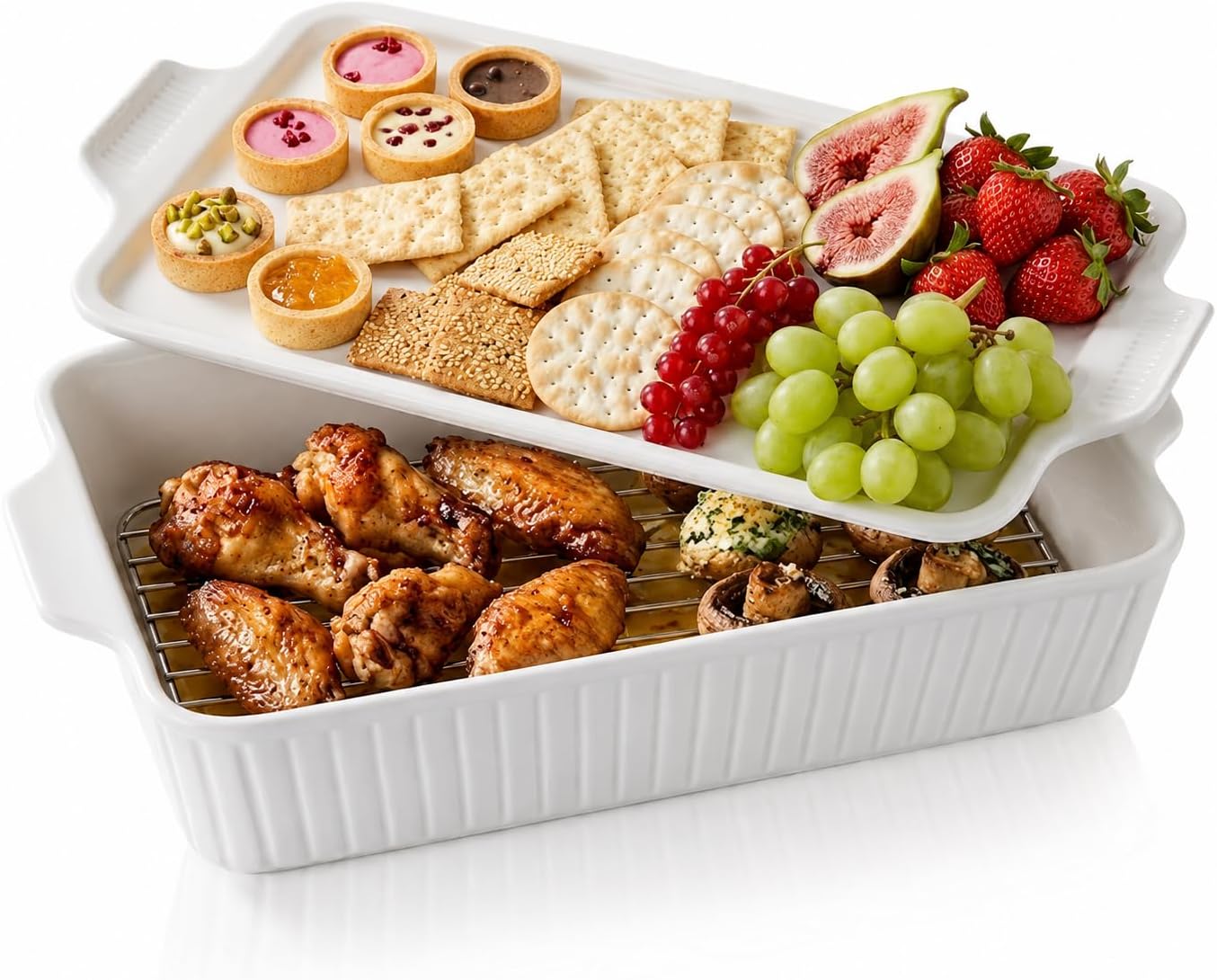
Bakeware featuring matching lids eliminates the continuous need for disposable aluminum foil during baking, effectively locking in natural moisture to keep roasted meats, lasagna, and casseroles tender and flavorful. These coordinating covers also double as protective barriers when transferring leftover portions directly into the refrigerator, significantly reducing the number of separate storage containers you need to manage.
When cabinet space is a primary priority, look for nesting designs or low-profile covers that stack efficiently together. Evaluating how lids store alongside their corresponding bases prevents countertop clutter and ensures your kitchen cabinets remain neatly organized and easily accessible for your everyday cooking, serving, and baking tasks.
Cleaning Ease and Maintenance Guidance
Non-porous exterior and interior enamel glazes significantly simplify post-cooking cleanup routines by preventing baked-on cheese, sauces, and stubborn food residues from bonding permanently to the ceramic surface. Most quality ceramic bakeware supports dishwasher cleaning, allowing you to load heavy pans easily into the machine after hosting large family dinners or festive holiday gatherings without tedious hand scrubbing.
Following manufacturer maintenance instructions protects the protective glaze from unnecessary surface wear over time. Quick rinses and gentle scrubbing keep your dishes looking pristine, ensuring your bakeware remains a hygienic, attractive, and reliable centerpiece for future everyday meals and celebratory cooking events.
Integrated Handles and Transport Security
Ergonomic side handles provide a secure and steady grip when moving heavy, hot ceramic dishes from a preheated oven directly to the dining table for serving. Look for handle designs that offer enough clearance to accommodate thick oven mitts safely, significantly minimizing the risk of accidental slips during transit through a busy kitchen environment.
Matching lids featuring easy-lift side grips or tabs further enhance overall usability, letting you remove covers smoothly while serving guests at the table. Evaluating handle and grip construction ensures comfortable, confident handling, even when you are navigating family gatherings or holiday meals with a fully loaded baking dish.
Frequently asked questions
Can ceramic bakeware with lids go directly into the microwave?
Many ceramic baking dishes with lids are explicitly rated as microwave safe, allowing you to reheat leftovers conveniently without transferring food to another plate. However, you should always verify the specific product care instructions provided by the manufacturer before placing any ceramic piece into a microwave. Additionally, ensure that matching lids fit loosely or are positioned to allow steam to escape safely during heating. Avoiding abrupt temperature transitions, such as moving a dish straight from a freezing environment into a hot microwave, prevents potential thermal cracking and extends the lifespan of your bakeware.
Are ceramic casserole dishes safe to use on stovetop burners?
Standard ceramic and stoneware bakeware is generally not designed for direct flame, stovetop burner, or induction cooktop use. Exposing ceramic bottoms directly to open burners can cause severe thermal shock, leading to cracking or structural failure. If a recipe requires browning meats or reducing sauces on the stovetop before baking, you should use a separate compatible pan for those preliminary steps. Once those initial cooking tasks are complete, you can transfer your ingredients into the ceramic dish with its lid for final oven roasting or baking.
How do I prevent food from sticking to ceramic baking dishes?
While most ceramic bakeware features a smooth, non-porous enamel glaze that resists sticking, applying a light coating of cooking oil, butter, or baking spray before adding your ingredients helps ensure effortless food release. This simple preparation step is particularly useful when baking cheesy casseroles, sticky desserts, or egg-based dishes. Allowing the dish to cool slightly after removing it from the oven also helps set the food structure, making it much easier to scoop out clean portions without leaving stubborn baked-on residues across the interior enamel surface.
Can I use ceramic lids in place of aluminum foil in the oven?
Yes, ceramic lids are specifically designed to replace disposable aluminum foil during the baking and roasting process. Placing the matching ceramic cover on your dish locks in natural moisture and heat, keeping meats tender and preventing casseroles from drying out in the oven. This reusable approach reduces household waste while providing a tight seal that keeps food warm when moving from the oven straight to the serving table. Furthermore, the same lid transitions seamlessly to cover leftovers when you store the dish inside the refrigerator.
What is the best way to clean baked-on residues from ceramic pans?
To clean stubborn baked-on food residues from your ceramic bakeware, start by allowing the dish to cool down completely to avoid thermal shock. Soak the pan in warm, soapy water for fifteen to twenty minutes to loosen dried sauces or cheese. Use a non-scratch sponge or nylon brush to gently scrub the glazed interior and exterior surfaces. Most ceramic dishes are also dishwasher safe, allowing for convenient automated cleaning once heavy debris is rinsed away. Avoid using harsh metal scouring pads that could scratch the enamel finish.