Appliances · Buying Guide

Best Cold Bulk Fermentation Sourdough Gear for Your Kitchen

Mastering bread and pizza dough requires careful control over rising times and environmental conditions, especially when managing cold bulk fermentation for complex flavor development and improved digestibility. Whether you are cultivating wild yeast in a specialized jar or organizing individual dough balls in stackable metal containers, having the right equipment transforms your daily kitchen routine and streamlines your baking workflow.

Different stages of baking call for distinct tools, ranging from precision aliquot tubes that track exact rise percentages to temperature-controlled folding boxes that completely defy seasonal weather shifts. Exploring these dedicated accessories helps you achieve consistent textures, open crumb structures, and reliable outcomes across every single homemade loaf or artisan pizza crust you choose to bake at home.

As an Amazon Associate, StacyLaughs earns from qualifying purchases.

Stainless Steel Pizza Dough Proofing Container Set
#1 Best Overall

Stainless Steel Pizza Dough Proofing Container Set

Designed for home pizza makers, this three-pack of stainless steel containers holds forty-four ounces each for individual dough balls. Clear lids let you monitor cold bulk fermentation without opening the box, while snap closures keep air out. A stackable profile saves refrigerator space, and the set includes a handy dough cutter.

Best for Individual pizza dough storage

Food-grade stainless steelClear airtight lidStackable fridge designDishwasher safe materialIncludes dough cutter
View on Amazon →

What stands out

  • Durable stainless steel construction resists stains and cracks while offering straightforward cleanup in the dishwasher after baking sessions.
  • Clear snap-on lids allow you to monitor dough fermentation visually without letting ambient air dry out the surface.
  • Stackable profile organizes multiple dough balls neatly inside cramped refrigerators or tight kitchen cabinet spaces efficiently.

What to consider

  • Metal construction prevents you from seeing the sides of the rising dough ball directly, restricting your view entirely to the clear top lid.
  • The specific forty-four ounce capacity per container requires precise portioning if you prefer working with significantly larger or smaller individual dough weights.
Key specifications
Capacity
1300 ml
Item Dimensions L x W x H
7.7"L x 7.7"W x 3.2"H
Material Type
Stainless Steel
Product Care Instructions
Dishwasher Safe
Lid Material
Plastic
Closure Type
Snap

The practical verdict

This container set suits home pizza makers and bakers who portion individual dough balls for cold overnight storage. Avoid this product if you prefer transparent side walls to monitor radial expansion. The main trade-off involves relying on top-down visual checks through the clear lid rather than observing side-wall bubbles.

#2
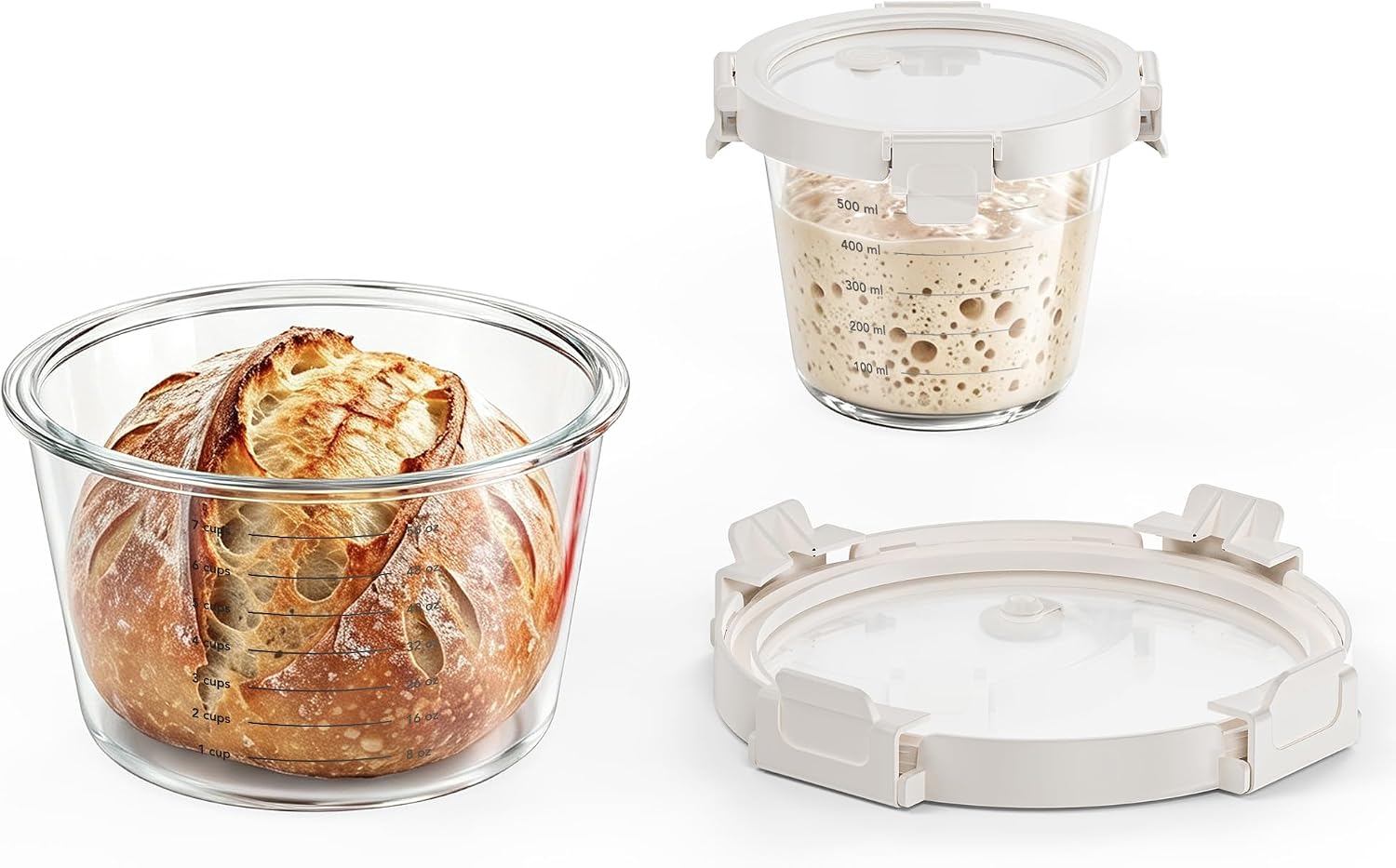
GENICOOK Borosilicate Glass Sourdough Starter And Dough Proofing Containers
Multi-Size Glass Mixing & Storage

GENICOOK Borosilicate Glass Sourdough Starter And Dough Proofing Containers

Best for Versatile glass baking prep

Featuring two borosilicate glass containers in twenty-four ounce and seventy-one ounce sizes, this set supports sourdough starter feeding, batter mixing, and dough proofing. Airtight BPA-free lids with silicone seals minimize spills. The wide mouth simplifies cleaning, and the durable glass handles microwave, oven, refrigerator, and dishwasher use securely.

What stands out

  • Borosilicate glass safely transitions from refrigerator storage to microwave or oven heating environments without cracking under normal thermal shifts.
  • Clear measuring marks printed on the glass help track ingredient volumes accurately during daily starter maintenance or mixing.
  • Two distinct capacities accommodate both small starter feedings and large bulk dough mixing projects seamlessly within one unified set.

What to consider

  • Glass bowls add noticeable weight to your kitchen setup compared to lightweight plastic alternatives when handling large seventy-one ounce batches.
  • The glass cover plate style lid rests securely with a seal but lacks locking mechanical clips for heavy transport applications.
Key specifications
Capacity
4.4 pounds
Size
Large
Material Type
Borosilicate Glass
Product Care Instructions
Dishwasher Safe, Microwave Safe
Lid Material
Glass cover plate
Item Dimensions L x W x H
4.6"L x 3.2"W x 1.5"H

The practical verdict

This container set suits bakers seeking multifunctional glass vessels for both starter maintenance and large dough mixing. Avoid if you require lightweight, unbreakable plastic travel containers. The main trade-off balances the superior thermal durability and clarity of heavy glass against increased empty weight during handling and washing.

#3
Solrify Sourdough Aliquot Glass Fermentation Tracker Tube
Precision Fermentation Tracker

Solrify Sourdough Aliquot Glass Fermentation Tracker Tube

Best for Small-sample rise tracking

Crafted from clear glass, this compact aliquot jar features a zero to one-hundred fifty percent scale to track small dough samples precisely. The kit includes a stabilizing silicone base, vacuum pump, lid, and cleaning brush to monitor fermentation progress without guessing or relying solely on external timers.

What stands out

  • Precision zero to one-hundred fifty percent scale lets you monitor exact dough rise percentages for timing cold fermentation accurately.
  • Isolates a tiny dough sample so you can judge bulk fermentation without guessing or disturbing a massive mixing bowl.
  • Includes a silicone base for stability alongside a vacuum pump and cleaning brush to maintain equipment effortlessly.

What to consider

  • The tiny one-ounce capacity is strictly limited to monitoring small sample portions rather than holding your main bulk batch.
  • Using a separate tracking tube requires remembering to transfer a representative sample dough piece every single time you mix.
Key specifications
Capacity
1 ounces
Size
Small
Material Type
Glass
Included Components
Base, Glass Jar, Lid, brush, pump
Model Number
Mini01
Number of Items
1

The practical verdict

Best for analytical bakers who want precise numerical tracking of fermentation rise milestones. Avoid if you prefer monitoring your entire dough mass inside a single primary container. The main trade-off is the extra step of managing a separate sample tube alongside your main mixing vessel.

#4
YILIHCIA 34 Oz Wide Mouth Glass Sourdough Starter Jar
Wild Yeast Cultivation

YILIHCIA 34 Oz Wide Mouth Glass Sourdough Starter Jar

Best for Dedicated sourdough starter jar

This thirty-four ounce wide mouth glass jar provides ample headroom for wild yeast expansion and active feeding. It features a built-in temperature strip and rotatable elastic tracking band. Dual lids accommodate breathable room-temperature fermentation and secure refrigerator storage, while an included long silicone spatula simplifies scraping.

What stands out

  • Extra-wide mouth design allows effortless hand washing and simple ingredient feeding without creating sticky counter messes.
  • Built-in temperature strip and rotatable elastic tracking band help monitor ambient thermal zones and exact feeding times easily.
  • Dual lid system provides an unbleached linen cloth for breathable fermentation and an aluminum cover for secure fridge storage.

What to consider

  • The thirty-four ounce capacity is tailored specifically for maintaining a starter culture rather than holding large bulk bread dough.
  • Elastic tracking bands require manual adjustment after every feeding to maintain accurate records of your starter peak rise.
Key specifications
Product Dimensions
3.74 x 3.74 x 7.28 inches
Item Weight
1.21 pounds
Manufacturer
YILIHCIA
ASIN
B0GZDCMDM8
Item model number
YL-SSJ-34
Best Sellers Rank
#13,200 in Grocery & Gourmet Food (See Top 100 in Grocery & Gourmet Food) #15 in Sourdough Starters

The practical verdict

Ideal for cultivating and maintaining healthy wild yeast cultures with built-in tracking tools. Avoid if you need a vessel large enough for full bread dough bulk fermentation. The main trade-off is dedicating a jar exclusively to starter upkeep rather than general kitchen food storage.

#5
GIYUDOT Folding Bread Proofing Box With Temp Control
Temperature-Controlled Proofer

GIYUDOT Folding Bread Proofing Box With Temp Control

Best for Climate-controlled dough proofing

Engineered for compact kitchens, this folding proofing box features adjustable temperature control from fifty to one-hundred thirteen Fahrenheit and a forty-eight hour timer. Five insulating layers maintain consistent heat, while a stainless steel shelf ensures even distribution. It accommodates jars or bowls and collapses flat for storage.

What stands out

  • Adjustable temperature control from fifty to one-hundred thirteen Fahrenheit lets you maintain consistent warmth despite cold ambient kitchen climates.
  • Foldable design collapses flat when not in use, saving valuable storage space in compact or crowded kitchens.
  • Dual-view window positioning lets you monitor either tall fermentation jars or wide proofing bowls with equal ease.

What to consider

  • Requires a dedicated electrical outlet and countertop space during operation, unlike passive storage containers that fit inside refrigerators.
  • The folding fabric and insulation construction requires careful spot cleaning compared to smooth solid dishwasher-safe glass bowls.
Key specifications
Capacity
22 liters
Wattage
63 watts
Temperature Range
50-113 °F
Material
Polyester, Oxford Fabric, Acrylic, Polypropylene, Insulation Cotton
Control Type
Smart Controller
Item Dimensions D x W x H
11"D x 11"W x 11"H

The practical verdict

Best for bakers struggling with cold kitchen environments who need active thermal control during bulk fermentation. Avoid if you rely entirely on passive refrigerator retarding. The main trade-off is accommodating an active electrical appliance on your counter rather than using passive storage methods.

Buying guide

Material Selection for Thermal Performance

Choosing the correct material for your baking equipment significantly influences how well your dough handles temperature shifts and ambient kitchen climate changes during food preparation. Borosilicate glass provides crystal-clear visibility for monitoring wild yeast activity, gluten development, and internal bubble formation during cold bulk fermentation while safely handling microwave and oven heat without cracking under sudden thermal stress.

Stainless steel offers rugged durability, resisting stains, lingering odors, and physical cracks during heavy daily kitchen routines, though solid metal walls naturally lack side transparency for observing rising dough balls directly. Weighing these distinct material characteristics helps you balance visual monitoring requirements against long-term structural resilience.

Capacity Planning for Batch Sizes

Matching your container capacity to your typical baking volume prevents messy overflows and ensures optimal headroom for wild yeast expansion. Smaller twenty-four to thirty-four ounce jars excel at maintaining active sourdough starter cultures or small pre-ferments without taking up excessive counter space. Conversely, seventy-one ounce bowls or multi-quart proofing boxes accommodate full bulk dough mixes and large batches of artisan bread.

Evaluating your average recipe scale ensures you select containers that fit your exact workflow requirements efficiently. Oversized vessels leave excess air space, while undersized jars risk messy spills during peak fermentation. Matching container volume to your baking habits keeps your kitchen organized and productive.

Temperature Control and Climate Management

Managing ambient temperatures is essential for predictable fermentation timing, especially during colder seasonal months when kitchens lack natural warmth. Dedicated proofing boxes with adjustable heating ranges and internal sensors provide a stable environment to keep wild yeast active. These active warming systems eliminate guesswork by maintaining consistent thermal zones independently of your home heating system.

Passive storage containers rely entirely on your refrigerator or room climate for retarding and proofing processes. Combining active heating chambers with precise environmental tracking tools gives you total mastery over your bulk fermentation schedule, ensuring reliable rise times regardless of outside weather conditions.

Visibility and Fermentation Tracking

Monitoring dough expansion accurately helps you catch the peak rise before shaping or moving batches into cold retardation. Crystal-clear glass jars and containers allow you to observe internal bubbles and volume changes in real time. Specialized aliquot tracker tubes isolate tiny dough samples, providing numerical scale markers that remove uncertainty from your fermentation timeline.

Opaque stainless steel boxes require top-down visual checks through clear lids rather than side-wall observations. Choosing between transparent glass walls and top-view lids depends on how closely you prefer tracking the microscopic structural changes happening throughout your dough mass during bulk fermentation.

Storage Efficiency and Kitchen Footprint

Maintaining an organized kitchen requires equipment designed to minimize clutter on countertops and inside crowded refrigerator shelves. Stackable container designs allow you to layer multiple pizza or bread dough balls vertically, saving precious refrigerator real estate. Foldable proofing boxes collapse flat when idle, fitting easily into narrow cabinet gaps.

Bulky non-stackable bowls and rigid warming appliances demand dedicated storage footprints that can overwhelm small kitchen layouts. Prioritizing modular, stackable, or collapsible gear ensures your baking hobby remains manageable without dominating your available cabinet and counter space.

Cleaning and Maintenance Protocols

Maintaining hygiene during sourdough baking requires equipment that cleans effortlessly after sticky dough and flour residue exposure. Smooth borosilicate glass surfaces and dishwasher-safe stainless steel containers simplify routine wash cycles. Wide-mouth jar designs eliminate awkward narrow necks, allowing your hands and cleaning tools to reach every interior corner without frustration.

Following manufacturer care instructions preserves the structural integrity of seals, lids, and specialized heating components over years of regular use. Selecting dishwasher-safe materials reduces post-baking cleanup labor, ensuring you spend less time scrubbing sticky bowls and more time enjoying your homemade artisan bread.

Frequently asked questions

Why is cold bulk fermentation important for sourdough baking?

Cold bulk fermentation slows down yeast activity while allowing beneficial bacteria to continue developing complex organic acids and deep flavors. This extended resting phase inside a refrigerator improves dough extensibility, makes scoring easier, and enhances the overall crumb structure of your baked artisan bread. Managing this cold stage requires suitable containers or jars that fit securely on refrigerator shelves without letting the dough dry out or absorb unwanted food odors from surrounding items.

How do I choose the right container size for my dough?

Choosing the right container depends entirely on whether you are maintaining a starter culture, mixing a single loaf, or portioning individual pizza dough balls. Smaller jars around twenty-four to thirty-four ounces work best for feeding and storing active wild yeast cultures. Larger seventy-one ounce bowls or multi-pack stainless steel boxes accommodate substantial bulk dough quantities or separate dough balls for multi-pizza baking sessions. Always ensure adequate headroom to prevent messy overflows during peak fermentation activity.

Can I monitor fermentation without opening my containers?

Many modern fermentation containers feature clear glass walls or transparent top lids that let you visually monitor bubble formation, yeast activity, and volume expansion in real time without releasing trapped humidity or altering internal temperatures. Specialized aliquot tracker tubes take this a step further by isolating a small dough sample next to a numerical scale, giving you precise rise measurements without disturbing your main bulk batch or guessing when shaping time has arrived.

Do I need an active proofing box if my kitchen is cold?

While passive containers rely entirely on room temperature or refrigerator chill, an active folding proofing box provides adjustable heating ranges and precise internal sensors to maintain consistent warmth during cold seasonal months. This active climate control prevents sluggish yeast performance and ensures predictable fermentation timelines regardless of unheated ambient room conditions. It serves as a practical solution for bakers struggling with drafty kitchens or unstable indoor temperatures during baking preparation.

What is the best way to clean and maintain glass and metal baking gear?

Keeping your baking equipment clean involves following manufacturer care instructions, which often include dishwasher-safe ratings for borosilicate glass and stainless steel components. Wide-mouth glass jars and smooth metal containers simplify hand washing by eliminating hard-to-reach corners where dried dough and flour residue can accumulate. Removable silicone seals and BPA-free lids should be washed regularly to prevent residue buildup, ensuring your starter jars and proofing containers remain hygienic for every future baking project.

Final thoughts

Equipping your kitchen with the right tools for cold bulk fermentation transforms how you manage wild yeast, dough resting phases, and temperature control. Whether you choose stackable stainless steel boxes for pizza balls, versatile glass jars for mixing, or active warming boxes for cold environments, each accessory serves a distinct purpose.

Selecting equipment that matches your specific batch sizes, available storage space, and kitchen climate ensures consistent baking outcomes. By focusing on practical design attributes like clear visibility, durable materials, and easy maintenance, you can streamline your baking routine and consistently produce exceptional artisan sourdough and pizza at home.