Appliances · Buying Guide
Best Cold Ferment Pizza Dough Containers for Perfect Crusts
Making artisan pizza at home requires careful attention to fermentation, especially when managing individual dough balls in the refrigerator over several days for optimal flavor development. Proper containers keep moisture locked in while preventing your dough from drying out or absorbing unwanted refrigerator odors during extended cold resting periods.
Selecting the right vessel depends on your preferred pizza size, available refrigerator shelf space, and material preferences such as flexible silicone or durable stainless steel. Reviewing specific capacities and physical designs helps match your home baking routine to equipment that simplifies dough management from initial portioning to final shaping. Ensuring each portion rises independently prevents cross-interference.
As an Amazon Associate, StacyLaughs earns from qualifying purchases.
Buying guide
Choosing the Right Capacity for Your Pizza Size
Selecting the correct container capacity ensures your pizza dough has enough room to expand during cold fermentation without spilling over or pressing against the clear lid. Smaller 500ml and 850ml options comfortably house 180 to 330 gram portions suited for classic ten to twelve inch pies, keeping individual dough balls neatly isolated so their rise remains uninterrupted.
Larger 1000ml to 1300ml vessels accommodate 300 to 400 gram balls designed for bigger twelve to sixteen inch pizzas. Matching container volume to your target dough weight prevents structural distortion and maintains proper hydration throughout the overnight resting process, ensuring professional results in your home kitchen without crowding other refrigerator contents.
Material Differences Between Silicone and Stainless Steel
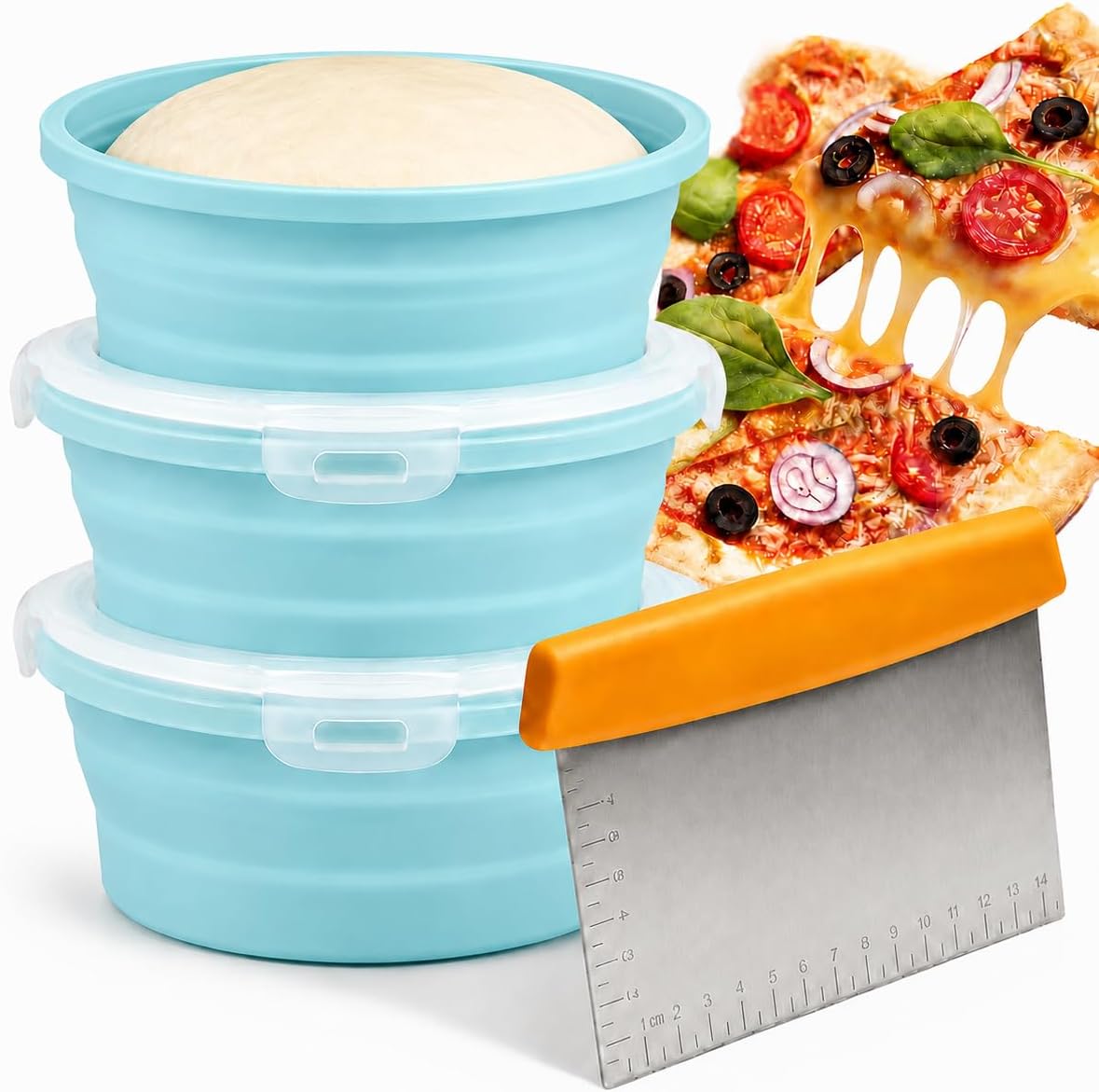
Material choice significantly impacts how you handle, clean, and store your proofing boxes during regular home baking routines. Food-grade silicone offers flexible walls and collapsible designs that save valuable cabinet room, though they require careful transport when filled with heavy, rising dough balls destined for multi-day refrigerator cold fermentation sessions and meal prep.
Premium stainless steel provides exceptional durability, resisting stains, surface cracks, and lingering food odors over years of heavy baking use. While metallic surfaces lack flexibility for effortless dough release, they offer rigid structural stability that stacks securely on crowded refrigerator shelves without flexing or warping during extended overnight storage periods and everyday kitchen handling tasks.
Evaluating Airtight Lids and Monitoring Fermentation
Clear airtight lids play an essential role in cold fermentation by preventing your dough balls from forming an undesirable dry crust on top. Being able to see directly through the transparent lid lets you monitor the rising process and gas bubble formation without breaking the protective seal, ensuring your yeast remains active.
A secure, tight-fitting lid also blocks unwanted strong refrigerator odors from seeping into your delicate yeasty dough overnight. Whether utilizing snap-fit plastic covers or fitted metallic lids, maintaining a dependable barrier preserves internal moisture levels and guarantees uniform yeast activity throughout the entire resting schedule without requiring constant guesswork or lid removal.
Space-Saving Designs and Refrigerator Organization
Refrigerator space is frequently at a premium when chilling multiple pizza dough balls for a weekend family baking session. Stackable containers allow you to build efficient vertical columns, utilizing vertical height rather than sprawling across every available shelf in your kitchen appliance while keeping your ingredients neatly organized and easily accessible at all times.
Some flexible silicone models even feature innovative collapsible sidewalls that shrink down significantly when empty, making off-season cabinet storage remarkably effortless and clutter-free. Carefully evaluating your available shelf dimensions and overall refrigerator layout helps you choose between fixed metal boxes and flexible stackable trays that fit your specific kitchen lifestyle and storage constraints perfectly.
Understanding Dough Ball Sizing and Pizza Dimensions
Portioning dough accurately dictates the final diameter, thickness, and overall texture of your homemade pizza crust. Smaller 180 to 250 gram portions fit neatly into compact 500ml containers to yield classic ten to twelve inch personal pies, ensuring each individual ball maintains its spherical shape during the multi-day cold ferment session easily.
Larger 300 to 400 gram balls require high-capacity 1000ml to 1300ml boxes to support twelve to sixteen inch family pizzas without cramping or pushing against the clear lid. Matching your container dimensions to your preferred dough ball weight prevents uneven rising and maintains structural integrity throughout the entire fermentation cycle without messy overflows.
Cleaning and Maintenance for Long-Lasting Use
Proper maintenance ensures your pizza dough proofing boxes remain hygienic and ready for your next weekend baking endeavor. Most silicone and stainless steel options feature convenient dishwasher-safe construction, simplifying cleanup after sticky yeast dough has been completely removed from the interior surfaces without requiring harsh abrasive scrubbing tools or special chemical cleansers.
Premium stainless steel resists stains and lingering odors naturally, while food-grade silicone surfaces offer helpful non-stick properties that ease dough extraction before shaping your crust. Following manufacturer care instructions protects your equipment investment and keeps your fermentation boxes performing reliably over years of regular home pizza making sessions, meal preparation, and artisan baking tasks at home.
Frequently asked questions
Why is cold fermentation important for pizza dough?
Cold fermentation slows down yeast activity significantly, allowing enzymes to break down complex starches and proteins over a multi-day resting period in your refrigerator. This gradual fermentation process develops rich flavors, enhances crust texture, and improves overall digestibility compared to rapid room-temperature rising methods. Clear airtight proofing containers protect the dough during this extended timeline by maintaining consistent internal moisture levels and blocking unwanted refrigerator odors from altering the taste of your artisan crust.
What size dough ball fits in these proofing containers?
Container capacity directly dictates the ideal dough ball weight and resulting pizza size you can prepare. Smaller 500ml and 850ml containers accommodate 180 to 330 gram portions, which are perfectly sized for classic ten to twelve inch personal pizzas. Larger 1000ml to 1300ml options easily hold 300 to 400 gram balls designed for bigger twelve to sixteen inch pies. Matching your dough weight to the correct container volume prevents overflow during the rise and ensures professional results.
Should I choose silicone or stainless steel dough proofing boxes?
Choosing between silicone and stainless steel depends on your storage preferences and handling style. Food-grade silicone offers flexible walls and collapsible designs that save cabinet space, while reinforced steel frames provide stability. Stainless steel resists stains, cracking, and lingering food odors over years of heavy use, though it lacks flexible walls for dough release. Evaluating your kitchen storage space and material preferences helps determine which option best supports your weekly baking routine.
How do airtight lids prevent dough from drying out?
Airtight lids create a sealed environment that traps internal moisture around the fermenting dough ball. During overnight cold fermentation in the refrigerator, circulating cold air can rapidly form a tough, dry crust on exposed dough surfaces if left uncovered. Clear airtight lids stop this moisture loss completely while allowing you to monitor the rising process and gas bubble formation visually without needing to open the container and release built-up humidity.
Can these containers be washed in a dishwasher?
Yes, all featured pizza dough proofing containers are explicitly designed to be dishwasher safe for easy cleanup after baking. After removing fermented dough, you can place the silicone boxes, stainless steel trays, and clear lids directly into your dishwasher to remove any residual flour or oil. Following manufacturer care instructions protects your equipment investment and ensures your proofing boxes remain hygienic and ready for your next batch of homemade pizza dough.