Appliances · Buying Guide
Best Cookie Dehydrator for Royal Icing and Smooth Finishes
Decorating cookies with royal icing requires patience, especially when waiting for delicate details to set properly before packaging, gifting, or stacking. Ambient humidity and room temperature often prolong drying times, leading to smudged surfaces, cracked top layers, or completely ruined artistic designs. Utilizing a dedicated countertop dehydrator offers a controlled, warm environment to accelerate the hardening process without risking dust, pet hair, or accidental contact.
Choosing the right appliance involves evaluating tray capacities, precise temperature controls, and rear fan airflow mechanics to ensure even drying across every decorated treat. Whether managing a small batch of intricate holiday cookies or large production runs, selecting a reliable machine helps bakers achieve a hard, stable finish efficiently and reliably.
As an Amazon Associate, StacyLaughs earns from qualifying purchases.
Buying guide
Evaluating Tray Capacity for Batch Volume
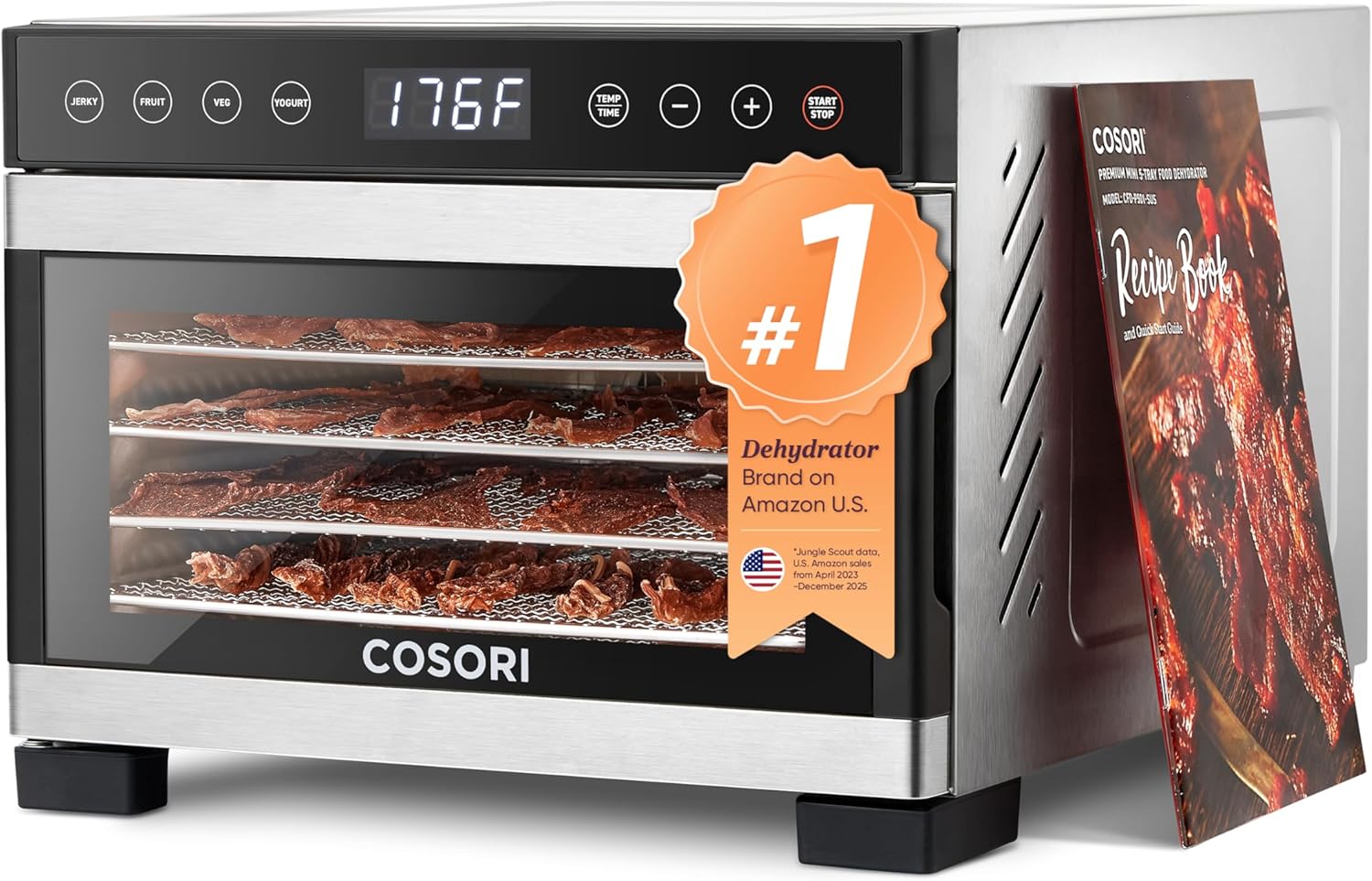
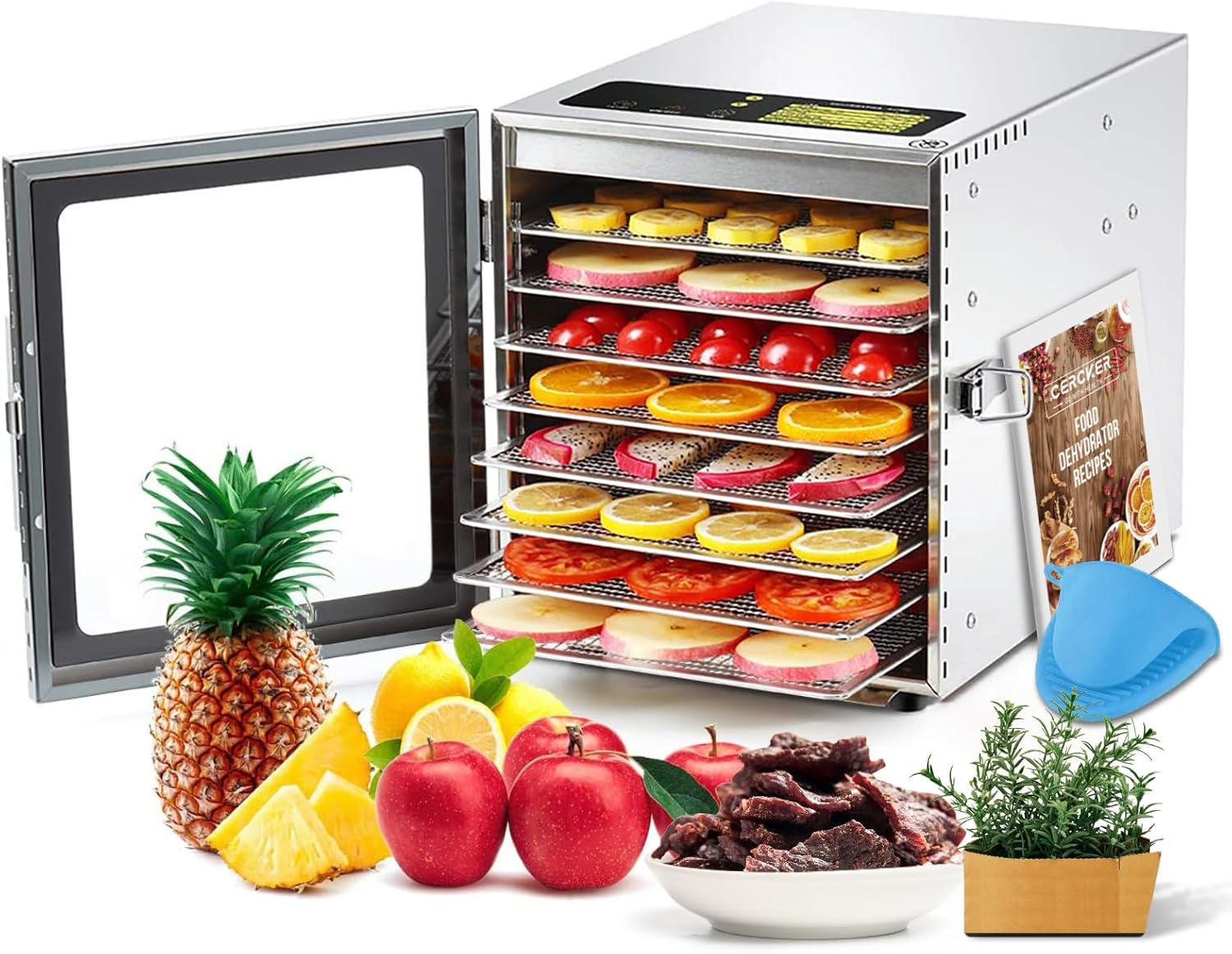
Choosing the correct tray capacity directly influences how many decorated cookies you can dry simultaneously. Smaller five-tray units offer limited square footage, which works well for casual bakers handling single dozen batches. In contrast, larger six-tier or eight-tier configurations provide expansive surface areas suited for extensive baking projects or holiday production runs. Assessing your typical batch size helps determine whether a compact or multi-tier appliance best fits your workflow.
When evaluating capacity, consider the physical dimensions of the trays alongside total square footage. Wire mesh or stainless steel sheets must accommodate varied cookie cutter shapes without overlapping. Selecting a model with adequate tier spacing prevents icing smudges during loading and unloading. Matching tray capacity to your usual baking volume ensures efficient drying without overcrowding delicate sugar artwork.
Understanding Airflow Mechanics and Fan Placement
Airflow design plays a critical role in drying royal icing evenly across every shelf without requiring manual tray rotation. Rear-mounted fans push forced hot air horizontally across the chamber, creating consistent convection circulation from back to front. This engineering prevents moisture pockets that can otherwise ruin delicate icing finishes or cause uneven drying patterns across the trays.
Traditional vertical airflow dehydrators often require users to swap tray positions manually to achieve uniform results. Units featuring rear-mounted drying motors eliminate this extra labor by distributing heat evenly through specialized vents. Prioritizing models with advanced airflow technology ensures that cookies positioned near the front dry just as rapidly as those in the rear.
Temperature Range and Precision Controls
Precise temperature control is essential when working with delicate sugar-based decorations like royal icing. Lower temperature ranges starting around ninety-five degrees Fahrenheit allow gentle drying without overheating butter-based baked goods or causing icing finishes to crack or bubble. Digital control panels with fine-degree incremental adjustments let bakers select exact thermal settings for consistent outcomes.
While meat jerky requires high heat, royal icing benefits from controlled, moderate warmth combined with steady air circulation. Having a wide temperature spectrum provides added versatility for drying herbs, fruits, or pet treats. Selecting a dehydrator with intuitive digital displays and dependable thermostat regulation ensures repeatable results across different recipes and ambient kitchen conditions.
Material Selection and Durability Factors
Dehydrator construction materials directly affect cleaning ease, food safety, and long-term durability in active kitchens. Stainless steel trays resist corrosion, withstand frequent dishwashing cycles, and provide a rigid, stable surface for arranging heavy batches of cookies. Premium grades offer enhanced resistance against wear, ensuring the equipment maintains its structural integrity over years of regular baking projects.
Plastic components, when used, should feature BPA-free certifications to ensure safety during food contact. Removable mesh screens and drip trays simplify cleanup by catching stray crumbs or icing debris. Evaluating the build quality of both the interior chamber and exterior housing helps buyers invest in a kitchen appliance designed for lasting performance.
Noise Levels and Operational Environment
Operating noise is an important consideration, especially if your kitchen is adjacent to living areas or if you frequently run overnight drying cycles for large cookie batches. Advanced brushless motors and optimized fan designs significantly reduce decibel output, often operating quietly below forty-eight or forty-five decibels. This low-noise performance prevents disruptive appliance hum from interfering with daily household activities.
Dehydrators with poorly insulated housings or vibrating internal parts can generate bothersome background sounds during extended multi-hour sessions. Reviewing motor specifications and sound dampening features helps identify models suited for peaceful home environments. Choosing a quiet appliance ensures you can complete long icing-drying sessions comfortably without unwanted acoustic disturbance in the house.
Footprint Constraints and Storage Practicality
Countertop space and storage availability dictate which dehydrator model will integrate smoothly into your kitchen workflow. Compact units take up minimal counter space and fit easily inside standard kitchen cabinets, making them ideal for occasional bakers with limited room. Larger multi-tier appliances demand permanent counter dedication or ample pantry storage clearance due to their heavier physical dimensions.
Evaluating depth, width, and height dimensions prevents placement issues beneath upper cabinets or inside tight storage shelves. Features like integrated cord wraps, non-slip feet, and stackable modular designs enhance everyday convenience when putting the machine away after use. Balancing capacity needs with available kitchen footprint ensures practical long-term satisfaction.
Frequently asked questions
Why use a food dehydrator for royal icing instead of air drying?
Using a food dehydrator provides a controlled, warm environment with steady airflow that hardens royal icing significantly faster than traditional room-temperature air drying. Ambient humidity, drafts, and household dust can easily ruin delicate cookie designs, whereas an enclosed dehydrator protects the treats while accelerating the evaporation of moisture from the icing surface. This controlled setting ensures a hard, smooth finish and prevents accidental smudging, allowing bakers to package or stack their decorated creations much sooner.
What temperature should I set when drying royal icing?
When drying royal icing, keeping the temperature low is essential to prevent melting the butter in the cookie base or causing the icing to crack and bubble. Most bakers set their dehydrators between ninety-five and one hundred ten degrees Fahrenheit for gentle, even drying. Avoid high heat settings designed for meat jerky, as excessive warmth can ruin the visual appearance and texture of the sugar decorations. Always consult specific recipe guidelines for best results.
Do I need to rotate trays during the royal icing drying process?
Whether you need to rotate trays depends entirely on the dehydrator's internal airflow design. Models equipped with rear-mounted fans and forced hot air convection distribute heat evenly across all shelves, eliminating the need to manually rotate trays during operation. Older vertical stack designs or bottom-fan models often require periodic shelf rotation to ensure every cookie dries at the same rate. Choosing a rear-fan unit saves time and effort during large baking projects.
How many cookies can fit inside a standard dehydrator?
The number of cookies that can fit inside a dehydrator varies widely depending on tray count, square footage, and individual cookie dimensions. Smaller five-tray models offering around three square feet of drying space accommodate modest batches, ideal for home bakers. Larger six-tier or eight-tier appliances provide up to six and a half square feet of surface area, allowing you to dry dozens of decorated cookies simultaneously across multiple spacious stainless steel shelves.
Are stainless steel trays better than plastic trays for royal icing?
Stainless steel trays are generally favored for their superior durability, corrosion resistance, and ease of cleaning during frequent baking tasks. They provide a rigid, stable platform that supports heavy cookie arrangements without warping. While BPA-free plastic or polycarbonate stackable trays offer lightweight flexibility and adjustable heights, stainless steel construction withstands rigorous dishwashing cycles and maintains a professional appearance over years of regular use in active home kitchens.