Appliances · Buying Guide
Best Cookie Scoops for Baking: Stainless Steel Sets
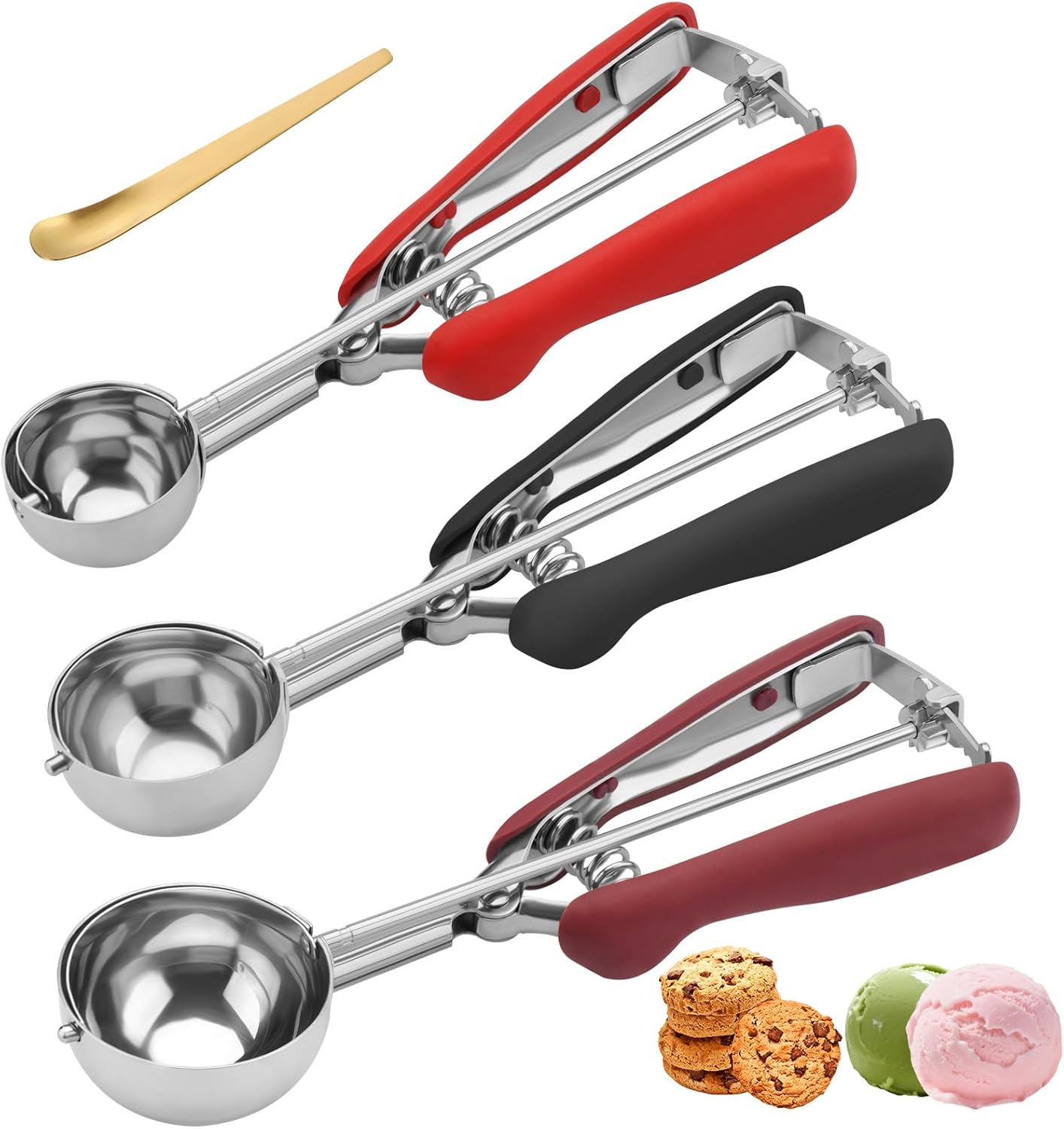
Baking uniform cookies and portioning batters relies heavily on having reliable utensils on hand. Cookie scoops for baking offer a straightforward way to drop consistent amounts of dough onto baking sheets, helping treats bake evenly across every batch. These multi-piece sets typically feature varying sizes to accommodate everything from miniature pastries to larger bakery-style cookies without guessing measurements.
Constructed primarily from durable metals like stainless steel, these utensils often incorporate mechanical triggers and rubberized grips to simplify repetitive kitchen tasks. Selecting a suitable set involves evaluating handle ergonomics, sizing options, and clean-up requirements to match your typical baking projects and personal comfort preferences in the kitchen.
As an Amazon Associate, StacyLaughs earns from qualifying purchases.
Buying guide
Sizing and Capacity Options
Choosing the correct scoop size directly influences how evenly your baked goods turn out in the oven. Standard sets typically use industry numbering systems like #60, #40, and #20 to designate small, medium, and large capacities ranging from one to three tablespoons. Smaller scoops work wonderfully for bite-sized pastries, truffles, or miniature cookies, while larger options suit standard drop cookies and muffin cups.
Matching the capacity to your typical baking projects prevents uneven baking times across a single tray. If you frequently bake diverse recipes ranging from rich cupcakes to delicate cookies, selecting a multi-piece set ensures you always have the correct volumetric measure ready. Always verify the exact tablespoon or fluid ounce measurements provided by the manufacturer rather than relying solely on visual appearance.
Material Quality and Durability
The longevity of your baking utensils depends heavily on the primary construction materials used by the manufacturer. High-grade 18/8 stainless steel is widely preferred because it resists rust, corrosion, and pitting even when exposed to sugary doughs and frequent washing cycles. All-metal models offer exceptional structural strength, making them reliable choices for dense frozen treats or stiff bread doughs.
While lower-quality metals can bend or stain over time, durable stainless steel maintains its clean appearance and mechanical reliability through countless baking sessions. Inspecting the build quality around the bowl and handle pivot points helps ensure the tool can withstand regular squeezing without loosening. Choosing robust materials ultimately reduces the need for frequent replacements and supports consistent everyday kitchen performance.
Handle Ergonomics and Comfort
Repetitive scooping during large baking sessions can quickly strain your hands and wrists if the utensil lacks proper ergonomic support. Many modern designs incorporate thick rubber or silicone handle grips that provide a comfortable, cushioned hold. These non-slip surfaces prevent the tool from twisting in your hand when portioning sticky ingredients or cold ice cream straight from the freezer container.
Bakers with sensitive joints often benefit significantly from textured handles that distribute pressure evenly across the palm during operation. Conversely, minimalist all-metal handles offer a sleeker profile and take up less storage space, though they lack the cushioning of rubberized versions. Consider your personal hand comfort and typical batch sizes when deciding between padded grips and traditional metal designs.
Trigger Mechanisms and Release Systems
A smooth mechanical trigger system transforms sticky dough portioning from a frustrating chore into a quick, effortless task. Spring-loaded wire scrapers sweep through the bowl interior to push out rounded portions neatly onto baking sheets. Checking the tension and responsiveness of this internal lever ensures you can release contents without applying excessive hand pressure or straining your wrists.
Some designs feature a deliberate minute gap between the scraper blade and the scoop bowl to ensure the mechanism moves freely without binding. While this prevents the trigger from jamming on dense ingredients, it may occasionally require a quick wipe to remove lingering crumbs. Evaluating how the trigger operates helps you find a balance between clean food release and mechanical reliability.
Maintenance and Cleaning Requirements
Keeping your baking tools hygienic requires minimal effort when the materials and design support straightforward cleaning routines. Most stainless steel scoop sets are rated safe for both hand washing and residential dishwashers, allowing stubborn sugar and fat residues to wash away easily. However, paying attention to manufacturer guidelines ensures you prevent potential moisture buildup inside rubber-coated handle seams over time.
Thoroughly drying your utensils immediately after washing helps preserve metal finishes and prevents water spots from forming on stainless steel surfaces. If a model features soft rubber handles, storing them in a dry environment prevents trapped moisture from affecting the bonded joints. Selecting dishwasher-safe construction simplifies post-baking cleanup, letting you spend more time enjoying your freshly baked treats with family.
Multi-Purpose Kitchen Versatility
Although primarily designed for drop cookies, quality portion scoops prove exceptionally versatile across a wide variety of everyday cooking and baking tasks. You can utilize these handy utensils to portion out uniform muffin and cupcake batters, shape homemade meatballs, or form decorative melon balls for fruit salads. They also work remarkably well for serving consistent scoops of mashed potatoes or frozen sorbet.
Investing in a multi-size set allows you to adapt a single tool collection to countless recipes beyond standard dessert preparation. Choosing models with sturdy mechanical builds ensures they handle denser foods like cookie dough just as easily as soft fruits or ice cream. Evaluating how many different food prep tasks a set can accomplish adds practical value to your kitchen tool drawer.
Frequently asked questions
What do the numbers like #20, #40, and #60 mean on cookie scoops?
The numbers stamped onto commercial-style cookie scoops correspond to the dish size designation used in the food service industry. These figures indicate roughly how many level scoops fit into a standard thirty-two ounce volume. For example, a #60 scoop yields smaller portions around one tablespoon, a #40 scoop produces medium portions near two tablespoons, and a #20 scoop creates larger three tablespoon portions. Understanding these industry standards helps bakers select the exact portion size needed for consistent results across different recipes.
Are stainless steel cookie scoops safe to put in the dishwasher?
Most quality cookie scoops manufactured from food-grade stainless steel are explicitly rated as dishwasher safe by their makers. Putting them through a standard dishwasher cycle helps remove stubborn sugary dough residues and fats without requiring extensive manual scrubbing. However, models featuring rubberized handle grips or bonded components should be dried thoroughly after washing to prevent moisture accumulation near the metal seams. Checking specific manufacturer instructions ensures your chosen set maintains its mechanical integrity and clean finish over years of regular use.
Why does my cookie scoop leave a small amount of dough behind?
Many mechanical scoop designs incorporate a deliberate, tiny clearance gap between the internal wire scraper blade and the inner wall of the bowl. This microscopic space ensures the mechanical lever moves freely back and forth without binding or catching on dense ingredients. While this engineering choice prevents the trigger from jamming during fast-paced baking, it can occasionally leave a thin layer of residue inside the bowl. Wiping the interior or giving the scoop a gentle tap resolves this minor occurrence.
Can I use a cookie scoop for foods other than cookie dough?
Quality portion scoops are exceptionally versatile kitchen workhorses suitable for a wide range of culinary applications beyond standard drop cookies. You can easily use them to portion out uniform amounts of cupcake or muffin batter into paper liners. They also work wonderfully for shaping homemade meatballs, portioning rice, scooping consistent mounds of mashed potatoes, or serving firm ice cream and fruit sorbets. Having multiple sizes available allows you to tackle various food preparation tasks with consistent volumetric portions.
How do I choose between rubber-gripped handles and all-metal handles?
Deciding between rubber-gripped handles and minimalist all-metal designs depends primarily on your personal comfort preferences and storage habits. Rubber or silicone handles provide a cushioned, non-slip surface that significantly reduces hand strain and wrist fatigue during long baking sessions with sticky doughs. Conversely, all-metal models offer a slim, streamlined profile that takes up less space in crowded utensil drawers and withstands high-heat sanitizing without degradation. Evaluating your typical batch sizes helps determine which handle style best suits your kitchen workflow.