Appliances · Buying Guide
Best Cooling Racks for Baking and Oven Roasting
Choosing the right cooling rack for baking transforms how cookies, artisan loaves, and roasted meats turn out in your home kitchen. A dependable wire grid ensures proper air circulation beneath hot pans and freshly baked goods, preventing soggy bottoms and ensuring uniform cooling and roasting results across all your favorite recipes every time you bake.
Different kitchen setups require specific designs, ranging from single heavy-duty stainless steel sheets to multi-tier collapsible structures that save valuable counter space. Evaluating materials, sizing, and heat tolerance helps you select a reliable tool suited to your everyday baking routines, heavy roasting tasks, and extensive holiday cookie baking sessions without taking up unnecessary room on counters.
As an Amazon Associate, StacyLaughs earns from qualifying purchases.
Buying guide
Material Composition and Food Safety
Selecting the right material ensures your cooling rack remains durable and safe for everyday culinary tasks. Professional-grade 304 stainless steel offers excellent resistance to rust and warping without relying on chemical platings that might chip over time. Pure metal construction guarantees that high heat will not cause peeling or flaking into your freshly baked goods.
When evaluating options, look for heavy-gauge wire construction that resists bending under heavy roasts or dense artisan loaves. Avoiding coated alternatives prevents potential toxin transfer during high-temperature oven roasting. Investing in solid stainless steel provides long-term reliability, ensuring your bakeware withstands years of frequent washing and heavy baking projects safely and effectively.
Dimensions and Pan Compatibility
Matching your cooling rack dimensions to your existing baking pans prevents frustrating sizing mismatches in the kitchen. Standard half-sheet pans require larger racks measuring roughly sixteen by eleven inches, while jelly roll pans need slightly smaller configurations. Measuring your oven interior and sheet pans beforehand ensures the wire grid sits securely inside.
Paying attention to physical measurements also impacts how many items you can prepare at once. A rack that is too large will not fit inside your pans for roasting, whereas an undersized grid leaves wasted space. Verifying exact length and width specifications guarantees seamless integration with your current bakeware collection and storage spaces.
Airflow and Grid Design
Proper airflow is essential for preventing soggy bottoms on cookies, pastries, and freshly baked artisan bread. Look for racks featuring raised feet or elevated legs that lift your baked goods well above the counter surface. This elevation allows ambient air to circulate freely underneath, cooling items evenly and preserving crisp crusts.
The wire grid pattern also plays a critical role in preventing smaller baked goods from slipping through. Tight rectangular or square grid configurations support delicate treats securely while maintaining open spaces for maximum ventilation. Selecting a balanced grid design ensures both efficient cooling performance and easy food removal every time.
Temperature Tolerance and Oven Safety
Many modern cooling racks double as versatile roasting tools capable of handling intense oven temperatures safely. If you plan to use your rack for baking bacon, roasting vegetables, or crisping chicken, verify its maximum heat rating. High-grade stainless steel models frequently withstand temperatures up to 575 degrees Fahrenheit without sustaining damage.
Checking temperature thresholds prevents warping, discoloration, or structural failure during high-heat cooking tasks. Some specialized stackable racks have lower heat limits suitable primarily for cooling rather than heavy oven roasting. Aligning the product's thermal capacity with your intended cooking methods ensures safe and versatile performance across various recipes.
Storage and Stackability Options
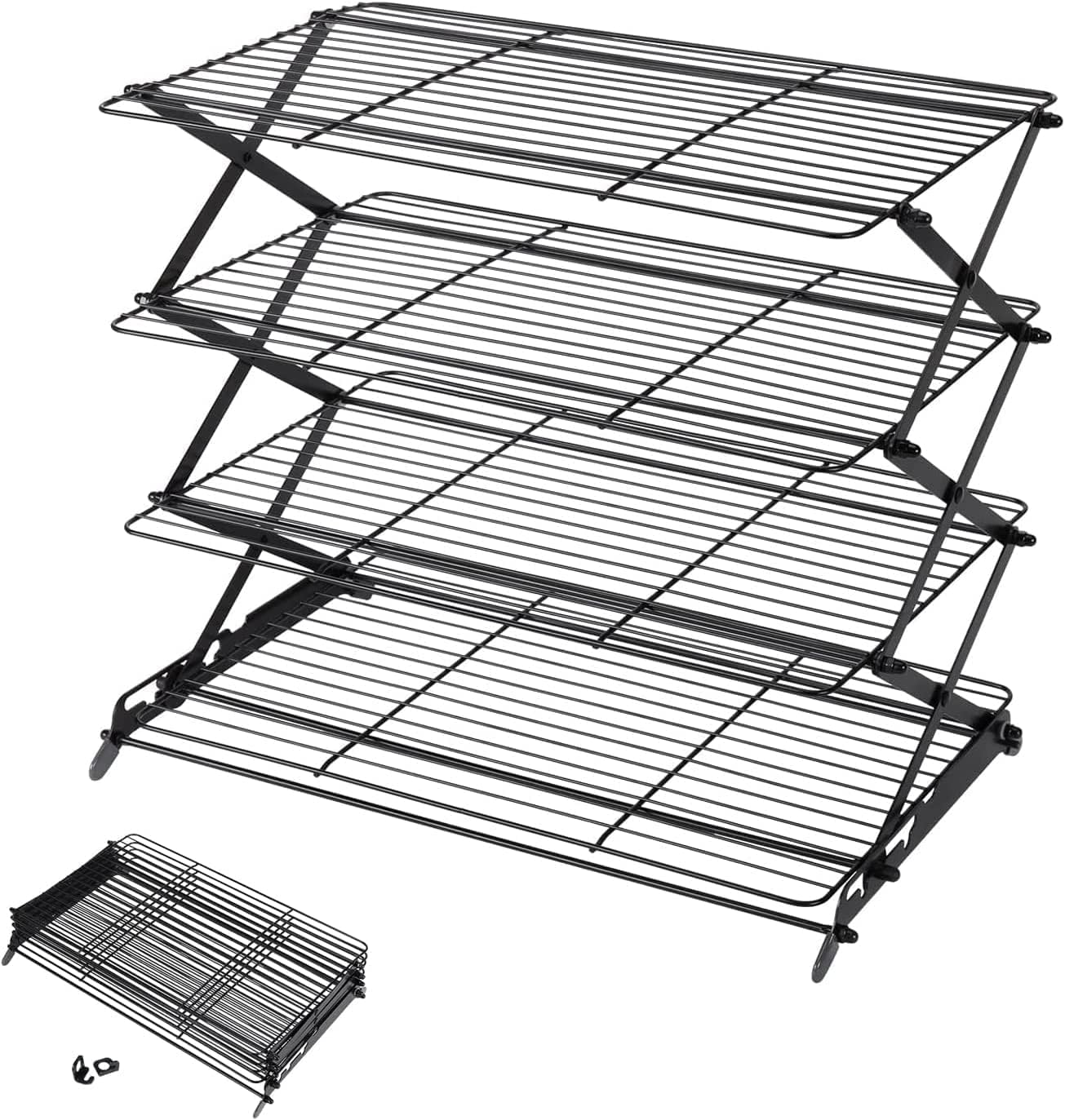
Kitchen cabinet space often dictates whether a single-tier or multi-tier cooling rack system is most appropriate. Stackable racks and collapsible towers allow you to cool massive batches of cookies simultaneously without occupying excessive horizontal counter space. These vertical solutions maximize efficiency during large holiday baking projects.
Conversely, if your kitchen has ample counter room and limited vertical clearance, standard single or multi-pack flat racks might be easier to store horizontally. Evaluating your available storage areas helps you choose between space-saving collapsible towers and traditional flat wire grids that slide easily into baking sheet organizers.
Maintenance and Cleaning Convenience
Cleanup convenience is a major consideration when working with sticky glazes, melted sugars, and roasted meat drippings. Dishwasher-safe stainless steel racks eliminate scrubbing fatigue by allowing automatic machine cleaning without risk of rust. Smooth wire surfaces and rounded edges further simplify manual washing routines.
Non-stick coated racks require gentle hand washing with warm soapy water to protect their specialized finishes from scratching. Understanding manufacturer cleaning recommendations ensures your bakeware maintains its appearance and performance over years of use. Prioritizing easy-to-clean materials saves valuable time and effort after every baking session.
Frequently asked questions
Can I use a cooling rack directly inside my oven for roasting meats?
Many stainless steel cooling racks are engineered to withstand high oven temperatures, making them suitable for roasting meats, baking bacon, or crisping poultry. However, you must always check the specific manufacturer temperature rating before placing any rack in the oven. Models constructed from 304 stainless steel often handle temperatures up to 575 degrees Fahrenheit safely, whereas specialized stackable variants may have lower heat thresholds restricted primarily to cooling tasks.
How do I prevent baked goods from sticking to the wire grid?
While stainless steel wire grids naturally release most cookies and breads cleanly, delicate items or sticky pastries can occasionally adhere to the metal. You can lightly brush the wires with cooking oil or butter before placing your baked goods on the rack. For coated racks, avoiding abrasive scouring pads prevents damage to the non-stick surface, ensuring smooth food release over years of regular baking and cooling sessions.
Are stackable cooling racks stable enough for heavy artisan bread?
Stackable cooling racks vary significantly in their structural capacity and support design. Heavy-duty stainless steel tiers with robust triangular supports handle moderate weights effectively, but extremely dense, heavy artisan sourdough loaves are often best supported on single wide platforms or sturdy elevated single-tier racks. When assembling vertical stacks, ensuring proper alignment on a flat surface is essential to maintain balance and prevent tipping during loading and unloading.
Can I put my stainless steel cooling rack in the dishwasher?
Most pure stainless steel cooling racks are fully dishwasher safe and designed to resist rust, warping, and discoloration during automatic washing cycles. This makes cleanup effortless after messy roasting tasks or dripping glazes. However, models featuring specialized non-stick coatings often require gentle hand washing with warm soapy water to preserve their delicate finishes. Always review the specific product care guidelines provided by the manufacturer before running them through a dishwasher.
What size cooling rack do I need for standard half-sheet pans?
Standard commercial half-sheet baking pans typically measure thirteen by eighteen inches, requiring a cooling rack with dimensions around eleven and a half by sixteen and a half inches to fit securely inside the rim. Smaller jelly roll pans require compact racks measuring roughly ten by fifteen inches. Measuring your existing bakeware collection before purchasing ensures your new wire grid fits properly for both in-pan oven roasting and convenient countertop cooling tasks.