Appliances · Buying Guide
Best Cooling Rack in Oven Options for Crispier Baking and Roasting Results
Finding the right cooling rack for oven use transforms everyday baking and roasting by elevating food above fats and hot pan surfaces. Stainless steel wire configurations allow heated air to circulate freely beneath items, yielding uniformly crisp textures on cookies, vegetables, and roasted meats without scorching.
Selecting a reliable oven-safe wire grid requires matching dimensions to existing bakeware while evaluating construction materials. Exploring different sizes, tier counts, and heavy-duty designs helps home cooks match specific recipes and pan sizes without guesswork or performance compromises during busy meal preparations.
As an Amazon Associate, StacyLaughs earns from qualifying purchases.
Buying guide
Material Composition and Food Safety
Choosing a cooling rack for oven use begins with examining the primary construction material. Food-grade stainless steel, particularly 304 or 18/8 grade, provides superior durability and heat tolerance compared to coated metals. Uncoated steel surfaces eliminate the risk of flaking platings transferring unwanted elements into heated food during high-temperature roasting.
Opting for solid metal construction also prevents warping and bending when exposed to intense oven heat. Home cooks should verify that welded joints are smooth and corrosion-proof, ensuring long-term reliability and straightforward maintenance through repeated dishwasher cycles without degrading structural integrity.
Dimensions and Pan Compatibility
Matching your cooling rack to existing bakeware dimensions prevents stability issues inside the oven. Racks designed for jelly roll pans typically measure around ten by fifteen inches, while half sheet versions accommodate larger thirteen by eighteen inch pans. Quarter sheet options suit compact nine by thirteen inch pans.
Checking exact width and length measurements ensures the rack sits securely inside the pan rim without sliding. Proper fit allows juices to drip cleanly into the pan below while preventing edges from catching on oven walls during loading and removal.
Height Clearance and Air Circulation
The vertical distance between the oven rack and the food surface dictates airflow efficiency. Models featuring a full one-inch height allow heated air to circulate completely around baked goods and meats, ensuring crisp bottoms and even browning without soggy patches.
When roasting fatty meats, adequate elevation keeps food above rendered drippings rather than letting items sit in accumulated liquids. Evaluating leg height helps home cooks achieve desired roasting textures and efficient cooling results after removal from the heat source.
Grid Spacing and Food Support
Wire grid configuration directly impacts what types of food can be placed on the surface. Racks featuring tight square spacing prevent smaller cookies, delicate pastry items, and roasted vegetables from slipping through the openings during baking or cooling processes.
Maintaining uniform wire distribution supports delicate items evenly without causing surface indentations or warping. Buyers should evaluate grid patterns based on their typical baking habits, ensuring pastries and meats remain stable throughout extended cooking sessions.
Stackable Designs Versus Single Tiers
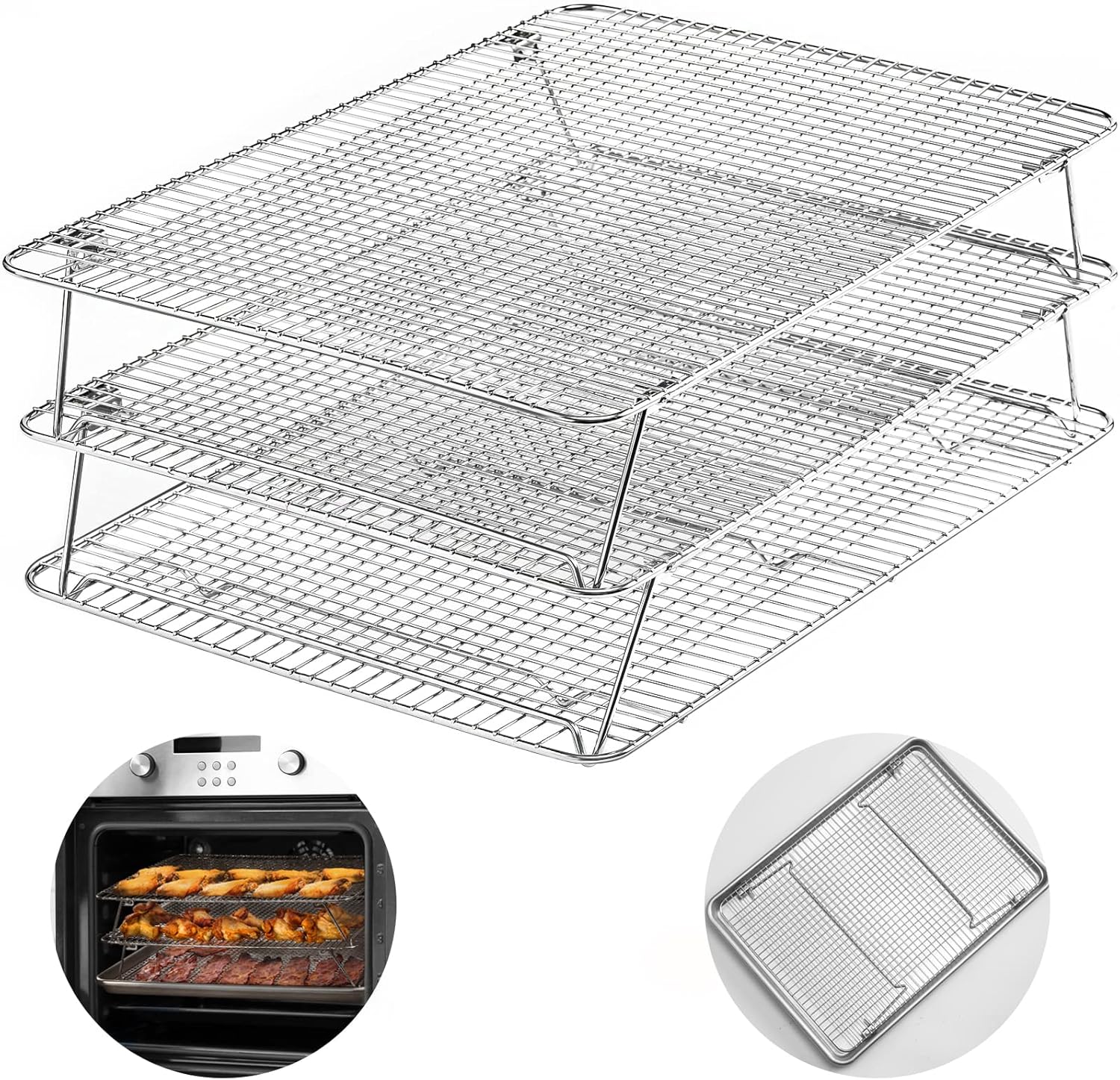
Space management during large baking projects often depends on whether a rack features stackable tiers. Multi-tier collapsible configurations allow users to bake or cool dozens of cookies or multiple cake layers simultaneously by utilizing vertical oven space efficiently.
While stackable models maximize output, single-tier racks offer simpler handling and easier storage in crowded cabinets. Home cooks must balance batch size requirements against available vertical clearance inside their specific oven cavity.
Cleaning and Maintenance Requirements
Oven use exposes wire racks to baked-on residues, grease, and caramelized sugars. Selecting dishwasher-safe stainless steel models simplifies cleanup, allowing users to run units through regular cycles without worrying about rust formation or surface degradation.
Smooth, burr-free wire joints prevent sponges from snagging during manual cleaning. Following manufacturer maintenance guidelines, such as soaking after use, keeps stainless steel surfaces pristine and ready for subsequent baking and roasting assignments.
Frequently asked questions
Can I use any cooling rack inside a hot oven?
Not all cooling racks are designed for high-heat cooking environments. You should always verify that a rack is specifically labeled as oven-safe and check its maximum temperature rating, which often reaches up to 575 degrees Fahrenheit for stainless steel models. Standard decorative racks may feature coatings that degrade under intense heat.
How do I prevent food from sticking to my wire baking rack?
While stainless steel offers a smooth surface, applying a light coating of cooking oil or spray to the wires before adding items helps minimize sticking. For sticky baked goods or sugary glazes, letting the rack cool slightly and soaking it in warm water makes cleanup much easier.
What is the advantage of using a cooling rack inside a baking pan?
Placing a wire rack inside a baking sheet elevates meat, vegetables, or pastries above accumulated grease and juices. This elevation allows hot air to circulate freely beneath the food, resulting in crispier textures on cookies and preventing roasted meats from boiling in their own drippings.
Are stackable cooling racks stable enough for heavy meats?
Stackable racks are engineered to support various baked goods and meats when assembled correctly, but stability depends on the sturdiness of the folding legs and the weight distribution of the food. For exceptionally heavy roasts, using individual single-tier heavy-duty racks provides maximum stability.
How do I choose the correct rack size for my bakeware?
To find the correct size, measure the interior bottom dimensions of your favorite baking sheets or roasting pans. Select a rack whose length and width match those interior measurements so the unit sits flat and secure without catching on pan edges.