Appliances · Buying Guide
Best cooling racks dollar tree options and heavy-duty alternatives
Finding reliable cooling racks dollar tree shoppers often look for can lead to exploring various multi-tier and heavy-duty alternatives for home baking projects. When preparing large batches of cookies, breads, or pastries, having dependable equipment makes a noticeable difference in how evenly baked goods cool down on crowded kitchen counters during busy weekend baking sessions.
Upgrading from basic kitchen tools to structured stacking systems helps save valuable counter space while accommodating multiple pans at once. This overview examines several popular wire rack options featuring collapsible designs, adjustable height settings, and durable stainless steel construction to support everyday baking needs without cluttering your kitchen workspace or limiting your recipe volume.
As an Amazon Associate, StacyLaughs earns from qualifying purchases.
Buying guide
Material Quality and Durability
Choosing the right material for your baking tools ensures long-term reliability and safe food contact during everyday kitchen tasks. Stainless steel wire grids offer exceptional resistance to rust, bending, and corrosion, making them suitable for frequent use with moist doughs, heavy meats, and roasted vegetables. High-grade metal construction also withstands elevated oven temperatures without warping under heavy loads.
Non-stick coatings provide an alternative benefit by helping delicate cookies and sticky pastries release smoothly without leaving behind stubborn residues that require heavy scrubbing. Evaluating your preferred cleaning routine helps determine whether a polished metal surface or a coated wire mesh fits your cooking style best over years of baking.
Space Saving and Storage
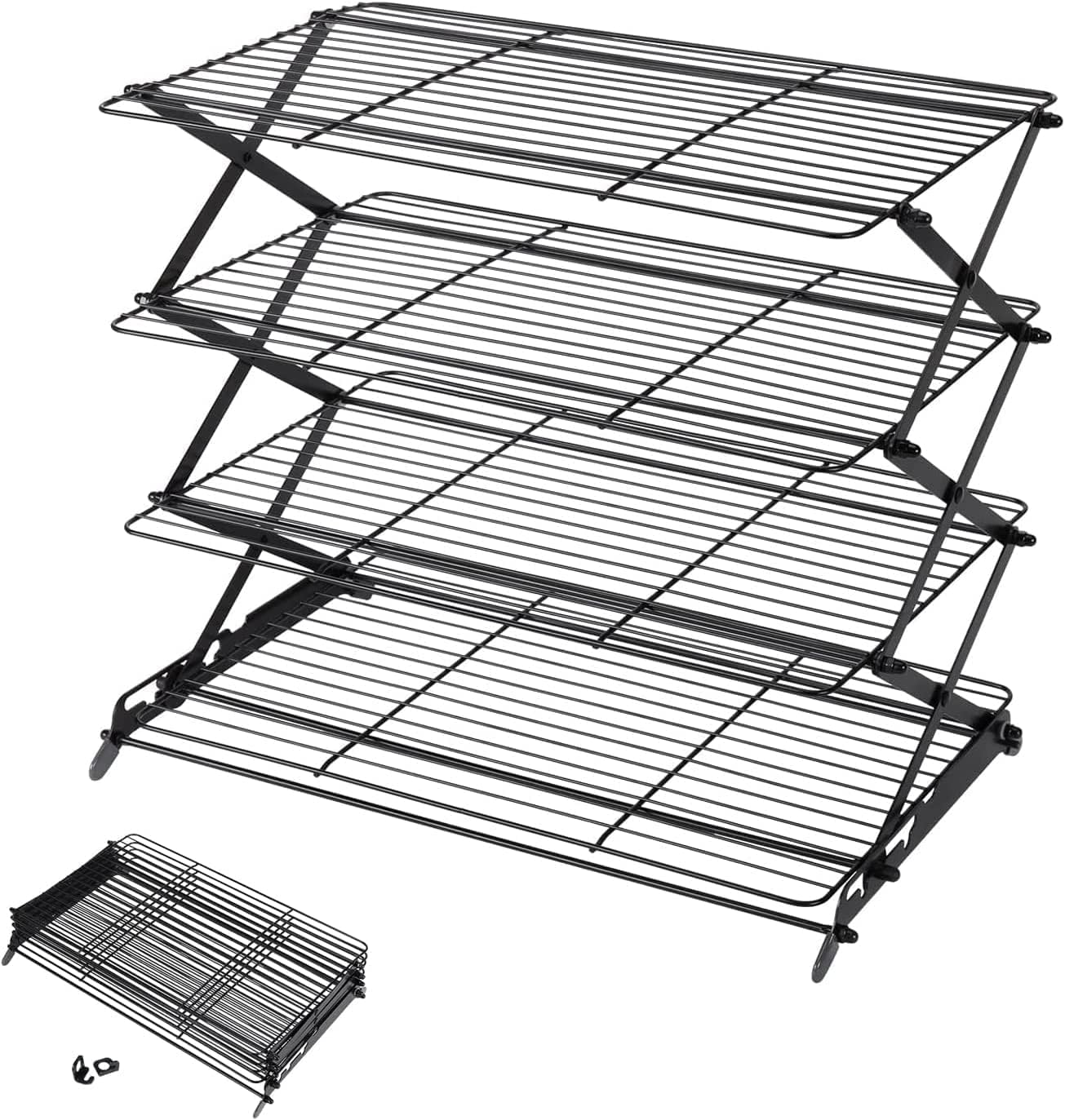
Counter space is often at a premium in home kitchens, especially when preparing large batches of holiday treats or weekend family meals. Collapsible cooling racks featuring multi-tier stackable designs allow you to maximize vertical clearance instead of cluttering horizontal surfaces. When the baking session concludes, these units fold down flat into slender profiles for effortless storage inside narrow cabinets.
Assessing your available storage areas before purchasing helps prevent overcrowding in pantry corners or drawers. While single-layer racks occupy minimal depth, stackable alternatives require designated vertical gaps to accommodate folded frames. Matching the physical dimensions of your storage spaces to the collapsed product profile ensures seamless everyday kitchen organization.
Height Settings and Clearance
Vertical clearance between tiers plays a crucial role in determining which types of baked goods you can cool simultaneously. Adjustable height settings provide valuable flexibility, allowing you to accommodate flat sugar cookies on one tier while leaving taller vertical clearance for fluffy layer cakes, breads, or tarts on another level without squashing delicate crusts.
Fixed-height multi-tier racks offer a simplified setup process but may limit clearance if you frequently bake bulky pastries or roasting pans. Reviewing your typical baking repertoire helps clarify whether adjustable settings are necessary. Selecting a model with sufficient vertical space prevents frustrating food damage during busy multi-tier batch cooling sessions.
Air Circulation and Grid Design
Proper airflow is essential for stopping the cooking process quickly and preventing warm baked goods from developing soggy bottoms. Racks featuring fine, evenly distributed mesh surfaces allow air to circulate freely around the entire perimeter of cookies and pastries. This open hollow structure helps crisp crusts set properly while keeping small food items secure.
Wider wire spacing can cause smaller treats like miniature tarts or roasted vegetables to slip through gaps, creating unnecessary kitchen messes. Choosing a tight grid pattern ensures every piece of food stays firmly in place. Elevated feet also lift the entire wire grid off the counter to maximize bottom ventilation.
Heat Resistance and Oven Use
Many wire cooling racks are engineered to double as versatile oven-safe baking and roasting tools capable of withstanding high temperatures. Stainless steel models can often endure temperatures up to 575 degrees Fahrenheit, allowing you to transition directly from baking meats in the oven to cooling them safely on the counter.
Coated racks may have specific temperature limitations that restrict their use to room-temperature cooling rather than active oven roasting. Checking manufacturer guidelines regarding thermal tolerance ensures you do not damage non-stick finishes during high-heat cooking tasks. Versatile oven compatibility expands your overall cooking capabilities significantly.
Cleaning and Maintenance
Post-baking cleanup can consume valuable time unless your cooling racks feature residue-resistant surfaces. Polished stainless steel and quality non-stick coatings help prevent flour crumbs and sticky sugar syrups from bonding permanently to the wire frame. Wiping down smooth surfaces with a soft damp cloth often removes light messes instantly.
Dishwasher-safe designs offer additional convenience by eliminating tedious hand scrubbing after heavy baking projects. However, verifying whether a rack requires initial washing or specific drying steps helps protect the metal finish from premature wear. Proper maintenance practices preserve the structural integrity and appearance of your kitchen tools.
Frequently asked questions
Can these multi-tier cooling racks be used individually?
Many multi-tier and stackable cooling racks feature folding legs or modular frames that allow you to separate the tiers and use them individually on standard baking sheets or counters. This versatility gives you the option to spread out single batches of cookies when you do not need vertical stacking height. However, some permanent multi-tier assemblies are designed strictly as connected vertical units, so checking the specific folding mechanism of your chosen model ensures it meets your individual single-sheet baking preferences before you begin preparing recipes.
Are stainless steel cooling racks safe for use inside the oven?
High-grade stainless steel cooling racks are engineered to withstand elevated oven temperatures, often up to 575 degrees Fahrenheit, making them fully suitable for roasting meats, baking bacon, or crisping vegetables. In contrast, racks featuring specialized non-stick coatings or painted finishes may have strict thermal limits that restrict their use exclusively to room-temperature cooling. Always review the manufacturer specifications for your specific model before placing any wire rack into a hot oven to prevent damaging the finish or compromising structural safety.
How do I clean sticky sugar residues off wire mesh grids?
Cleaning sticky sugar and flour residues from wire mesh grids is easiest when you soak the rack in warm, soapy water shortly after use to loosen hardened debris. Using a soft brush or cloth helps clear tight gaps without scratching polished metal surfaces or peeling protective coatings. Many stainless steel and polished wire racks are also fully dishwasher-safe, allowing you to skip manual scrubbing entirely and maintain a hygienic cooking surface with minimal effort during busy baking routines.
Do collapsible cooling racks require tools for assembly?
Collapsible cooling racks are designed for user-friendly operation and typically require no tools whatsoever to fold, unfold, or adjust between different tier configurations. Their hinged or interlocking frames allow you to expand the vertical structure within seconds for active baking sessions and flatten the entire unit down compactly for storage inside tight cabinet spaces or drawer gaps. This tool-free convenience makes them especially popular for home bakers who value quick setup and effortless kitchen organization after finishing large recipes.
Will small cookies fall through the gaps of a grid cooling rack?
Whether small cookies fall through depends heavily on the grid design and spacing of the specific cooling rack you choose. Many modern wire racks incorporate fine, evenly distributed mesh surfaces with flat gaps explicitly engineered to support tiny treats like miniature cookies, roasted vegetables, and bite-sized snacks securely. Reviewing the mesh configuration prior to purchase helps ensure that delicate baked items stay safely in place rather than slipping through wide wire intervals during cooling.