Appliances · Buying Guide
Best Countertop Oven for Baking: Top French Door Picks
Finding the ideal countertop oven for baking transforms how you handle everyday family meals, delicate pastries, and large weekend dinners without ever needing to fire up a full-sized traditional kitchen range. Modern countertop appliances pack robust wattage ratings, specialized convection fans, and dedicated baking presets directly into versatile kitchen footprints designed for daily convenience.
Whether you require an expansive interior designed to easily accommodate wide baking pans, multiple pizzas, or a streamlined profile to preserve precious counter space, carefully evaluating core specifications like total capacity, heating technology, and door style ensures you select a dependable countertop appliance matching your specific baking workflow and menu preferences.
As an Amazon Associate, StacyLaughs earns from qualifying purchases.
Buying guide
Capacity and Interior Dimensions
Selecting the right countertop oven requires examining internal capacity and overall exterior dimensions to ensure it closely matches your household cooking style and daily meal volume. Models range from compact 0.6 cubic foot cavities to expansive 42-liter chambers designed for multi-pan use. If you frequently bake large 12-inch pizzas, wide casserole dishes, or multi-shelf batches, prioritize wider interior widths, ample depth specifications, and spacious vertical clearance to prevent overcrowding.
Conversely, if your counter space is severely limited, a slimmer vertical profile helps preserve valuable workspace without sacrificing essential culinary utility. Always measure your available countertop area, depth, and overhead cabinetry clearance before purchasing to guarantee a safe, comfortable, and visually balanced fit within your established kitchen layout and daily routine.
Heating Elements and Convection Systems
The heating technology inside a countertop oven dictates its baking efficiency, browning consistency, and overall cooking speed. Units featuring reliable upper and lower heating elements distribute thermal energy evenly across your baked goods, preventing uneven crusts or soggy pastry bottoms. Advanced models incorporate high-velocity convection fans that circulate superheated air continuously around the entire internal food cavity for superior results.
This active airflow significantly accelerates baking times while producing uniform crispness on delicate pastries, roasted meats, and homemade breads. When evaluating options, look for precise temperature regulation or adjustable heater ratios if you want specialized control over top and bottom browning intensities during complex baking tasks.
Control Types and Presets
Control interfaces vary significantly among modern countertop ovens, ranging from traditional analog knobs to sophisticated digital touch panels and multi-button displays. Analog dials offer straightforward, tactile adjustments that let you quickly set time and temperature without navigating complex menus or subfolders. This physical setup appeals to everyday bakers who prefer operational simplicity and rapid adjustments during flour-heavy baking sessions.
Digital controls, however, provide precise numerical feedback, specialized cooking presets, and programmable memory slots for storing recurring family recipes. While digital panels can introduce a brief learning curve, they eliminate guesswork by automating exact time and temperature parameters for specific items like pizza, toast, and delicate pastries, thereby enhancing daily baking convenience.
Door Design and Access
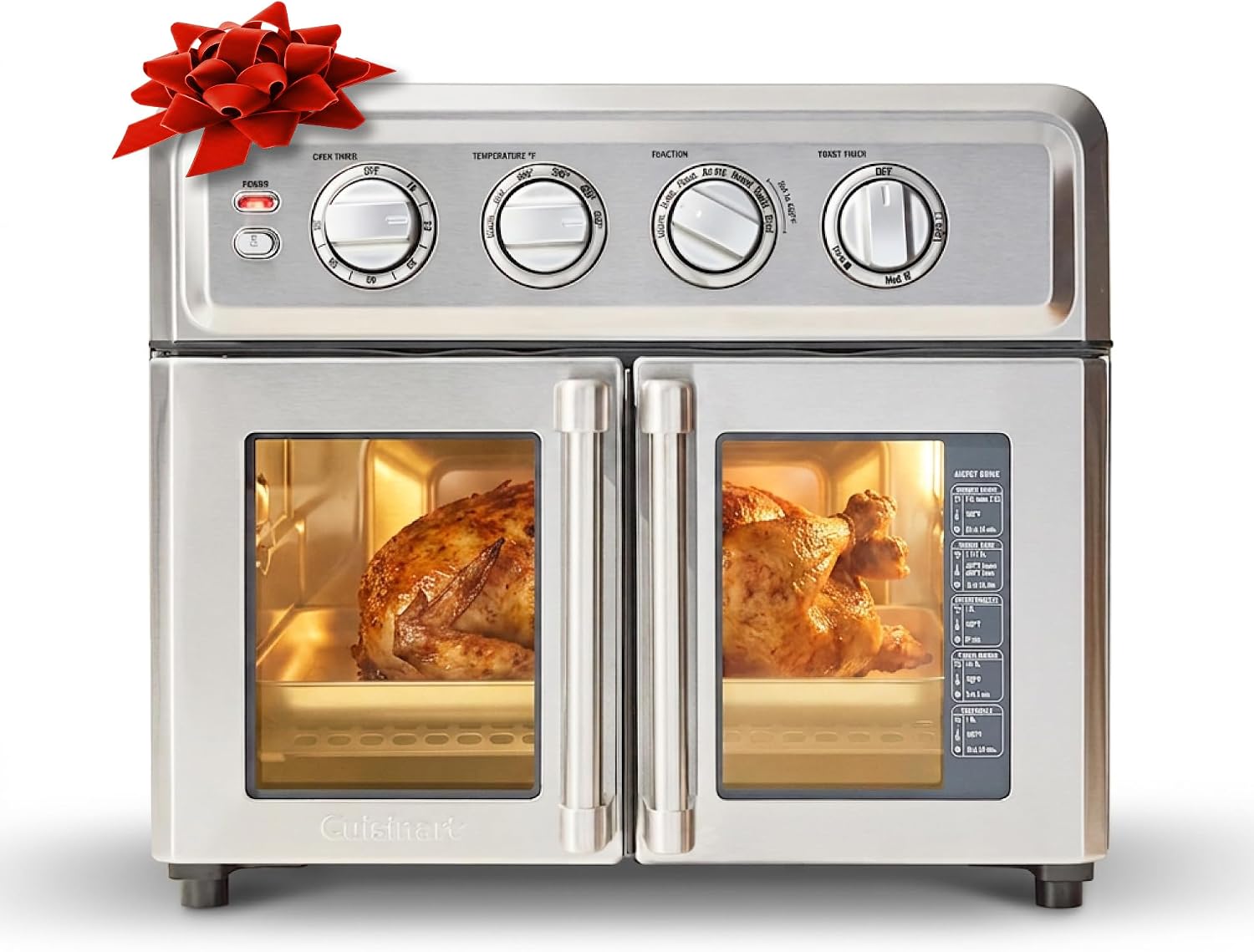
Door design plays a crucial role in daily kitchen safety, accessibility, and convenience when handling hot baking pans. French door configurations stand out by splitting the opening into two synchronized sides, requiring less clearance arc in front of the appliance. This design allows you to reach directly into the center of the oven with one hand.
Features like magnetized door assists or soft-hold mechanisms keep the doors securely open while you load or unload heavy ceramic dishes or wide sheet pans. Traditional drop-down doors, by contrast, create a physical barrier that forces you to reach over the extended glass panel, making French doors a preferred ergonomic choice for frequent bakers.
Included Accessories and Materials
The durability, safety, and longevity of a countertop oven depend heavily on its internal and external material construction. High-grade stainless steel housings resist corrosion, withstand intense daily wear, and offer a clean aesthetic that complements contemporary kitchens. Additionally, carefully inspecting the included accessory package ensures you have the right physical tools for your specific baking, broiling, and roasting requirements right out of the box.
Standard accessory packages frequently feature heavy-duty wire racks, durable baking pans, mesh air fry baskets, and removable crumb trays to simplify messy cleanup routines. Look for PFAS-free interior components and dishwasher-safe accessories if you value health-conscious materials and effortless post-cooking maintenance after preparing sticky casseroles, roasted meats, or sugary baked desserts.
Temperature Ranges and Wattage
Power output ratings and operating temperature ranges dictate what types of specialized baking projects your countertop oven can successfully execute. Most robust countertop models operate around 1700 to 1800 watts, providing sufficient electrical thermal energy for rapid preheating, intensive roasting, and reliable baking tasks. Wide temperature capabilities spanning from low dehydration settings up to high-heat thresholds expand your overall functional horizons significantly.
High upper temperature limits allow you to achieve exceptionally crispy crusts on artisan breads and pizzas, while stable low-temperature modes easily handle proofing dough or slow cooking. Evaluating your preferred recipes against a unit wattage rating and temperature spectrum ensures the appliance successfully meets your baking demands without straining your standard kitchen electrical circuit.
Frequently asked questions
Can a countertop oven completely replace a traditional full-sized kitchen oven for baking?
For many households, a versatile countertop oven featuring robust wattage ratings and active convection capabilities can successfully handle everyday baking tasks like cookies, cakes, small roasts, and standard pizzas. However, its interior cavity dimensions naturally remain smaller than a built-in kitchen range, meaning you cannot bake multiple massive sheet pans simultaneously. If you primarily cook for smaller family gatherings or prepare standard portion sizes, a high-capacity countertop unit provides an efficient alternative, saving kitchen energy while delivering comparable browning and baking performance.
What are the main benefits of choosing a French door countertop oven?
French doors provide exceptional ergonomic advantages by splitting the oven opening into two synchronized doors that swing outward with a single pull. This design requires significantly less clearance space in front of the appliance compared to traditional drop-down doors. Furthermore, it allows you to reach straight into the center of the baking cavity with one hand without leaning over a hot glass panel, making loading and unloading heavy baking pans much safer and more convenient.
How do I choose the correct capacity for my baking needs?
Choosing the correct capacity depends entirely on your household size and the types of dishes you plan to bake regularly. If you frequently prepare meals for large gatherings, bake two pizzas at once, or use wide 15 by 12 pans, an extra-large 26 to 42-liter model is essential. For single users, couples, or basic daily meal prep involving smaller portions, a compact 0.6 cubic foot or lower capacity model preserves precious counter space while easily handling standard everyday baking requirements.
Do countertop ovens require special electrical considerations in the kitchen?
Most high-powered countertop ovens operate between 1700 and 1800 watts, requiring a standard household electrical outlet to function properly. Because they draw significant electrical current during high-heat baking and air frying operations, it is generally recommended to plug them into a dedicated countertop circuit rather than sharing an outlet with other heavy-draw kitchen appliances like microwaves or coffee makers. This prevents potential circuit overloads and ensures the oven receives steady, uninterrupted power for optimal thermal performance.
How should I clean and maintain my countertop baking oven?
Regular maintenance involves allowing the oven to cool completely before wiping down the stainless steel exterior and interior surfaces with a damp cloth and mild soap. Many models include removable crumb trays and dishwasher-safe accessories like wire racks and baking pans to streamline cleanup tasks. Avoid using abrasive scouring pads that can damage non-stick coatings or scratch exterior finishes, and always follow the manufacturer compatibility guidance for specific cleaning instructions to preserve your appliance's longevity.