Appliances · Buying Guide
Best Containers to Defrost Frozen Pizza Dough and Proof Balls
Managing homemade pizza preparation often involves handling cold storage, whether you need to proof fresh dough or safely thaw frozen batches for your next baking session. Using dedicated containers helps maintain the structural shape and moisture of your dough balls during critical temperature transitions without sticking to the sides. Proper storage safeguards your recipe from drying out prematurely while resting.
Finding the right vessel simplifies the entire process of moving ingredients from the deep freezer to the refrigerator and finally onto your kitchen counter. This selection highlights several stackable options designed to keep dough protected, organized, and properly contained throughout the entire preparation and thawing cycle. Reviewing these choices helps you pick a container that matches your batch sizes and storage space constraints.
As an Amazon Associate, StacyLaughs earns from qualifying purchases.
Buying guide
Material Selection for Dough Storage
Choosing the right material for your proofing and defrosting containers directly impacts both long-term durability and daily ease of use in a busy kitchen. Silicone offers natural flexibility, allowing you to release risen or thawed dough balls smoothly without tearing the delicate gluten structure. Many modern silicone options even incorporate embedded steel frames for added rigidity and structural stability during transport.
Stainless steel provides an alternative that naturally resists staining, lingering odors, and cracking over years of heavy home baking routines. While metal lacks physical flexibility and microwave compatibility, it delivers exceptional longevity and hygiene. Reviewing your personal kitchen workflow helps determine whether flexible silicone or rigid metal better suits your specific baking preferences.
Capacity and Sizing Requirements
Container capacity dictates how large your individual pizza dough balls can grow during both room temperature fermentation and refrigerator thawing phases. Smaller vessels ranging from six hundred to seven hundred milliliters easily suit standard individual portions, whereas larger one thousand to thirteen hundred milliliter boxes comfortably accommodate heavier balls designed for substantial family-sized pizzas.
Matching the container volume precisely to your typical baking recipe prevents overcrowding or premature structural restriction of the natural rising process. Evaluating your preferred finished pizza dimensions ensures you select a model capable of safely handling expanding dough without spilling over the rims or flattening out incorrectly during storage.
Airtight Seals and Moisture Control
Maintaining proper moisture levels is vital when proofing fresh dough or defrosting frozen portions over extended periods in cold storage. Airtight lids equipped with secure snap closures effectively prevent the outer layers of the dough from drying out and forming an unwanted crust before your homemade baking session officially begins.
Clear lids offer an added functional advantage by letting you monitor the fermentation and thawing progress visually without ever breaking the airtight seal. This direct visibility helps you time your baking schedule accurately without letting ambient refrigerator air disrupt the controlled interior environment inside the storage box or container.
Temperature Resistance and Thawing Flexibility
Versatile kitchen containers must handle extreme thermal shifts smoothly, especially when transferring ingredients directly from the deep freezer to the refrigerator or microwave oven. Premium silicone models typically boast wide temperature tolerances, allowing them to endure freezing cold and high heat applications without cracking, warping, or degrading over extended periods of time.
Checking the manufacturer temperature ratings ensures your chosen boxes support both cold fermentation schedules and rapid defrosting routines safely. Selecting thermally adaptable vessels streamlines your kitchen preparation workflow by letting you utilize the exact same container across multiple distinct stages of cooking and baking without any hesitation.
Space-Saving Stackable Design Features
Organizing a crowded home refrigerator requires thoughtful storage solutions that maximize vertical space without causing tipping or structural instability. Durable stackable containers allow you to layer multiple dough balls efficiently, keeping your refrigerator shelves neat and preventing individual boxes from sliding around during cold storage or extended thawing cycles.
Certain flexible silicone designs feature innovative collapsible walls that reduce the physical height of the container significantly when completely empty. This helpful space-saving attribute makes it much easier to store your proofing gear compactly in tight kitchen cabinets when you are not actively baking homemade pizzas or artisan breads.
Included Accessories and Value Sets
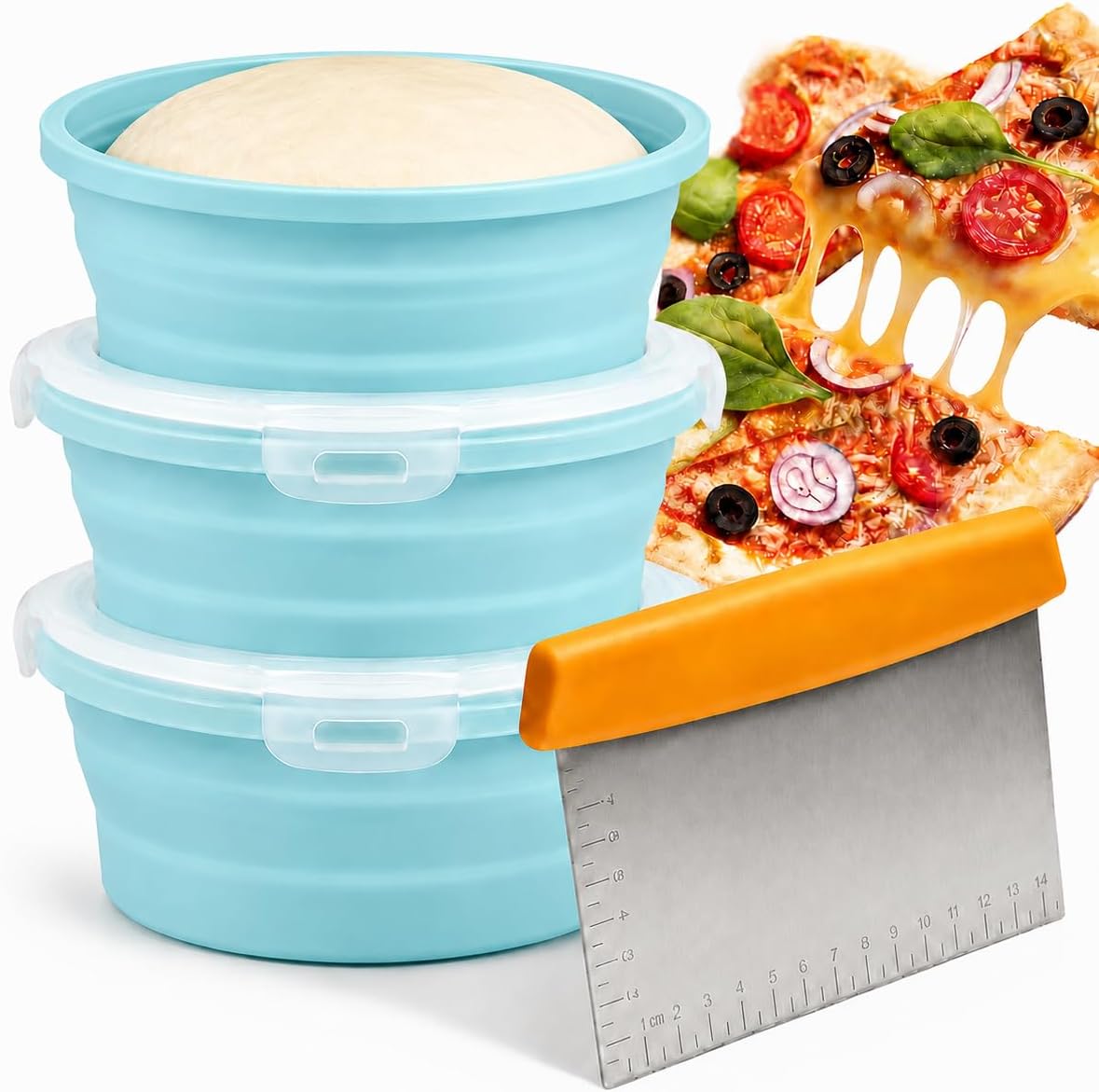
Purchasing bundled sets that include complementary tools like dedicated dough cutters can truly streamline your pizza preparation process right out of the box. Having a reliable scraper or cutter makes dividing large batches of sticky dough into uniform portions much simpler before you place them into individual proofing vessels for rising or thawing.
Multi-pack configurations also ensure you have enough containers to handle simultaneous multi-batch baking projects or store various pizza toppings safely alongside your resting dough. Carefully evaluating what extra accessories come bundled in the set helps you determine the overall practical value for your everyday kitchen routines and long-term baking schedules.
Frequently asked questions
How do containers help when defrosting frozen pizza dough?
Containers protect frozen pizza dough by maintaining an enclosed environment that prevents the outer edges from drying out during the thawing process. Using an airtight box in the refrigerator keeps the dough hygienic and prevents unwanted odors from affecting the flavor. Clear lids allow you to monitor the gradual thaw and subsequent rise without opening the seal. LFGB silicone, stainless steel, and steel-framed models each offer reliable options to manage temperature transitions safely from freezer to fridge to counter.
Can I use these containers in both the freezer and microwave?
Temperature compatibility varies depending on the specific material of your pizza dough containers. Silicone proofing boxes generally handle extreme thermal ranges, making them suitable for freezer storage, refrigerator cold fermentation, and microwave reheating. However, stainless steel containers cannot be placed in a microwave oven due to metal safety restrictions, though they remain completely freezer-safe. Always review the manufacturer specifications for each product to ensure proper care during freezing and warming tasks in your kitchen.
What size container do I need for a standard pizza dough ball?
The ideal container size depends directly on the weight of your dough ball and your target pizza diameter. Smaller containers around six to seven hundred milliliters accommodate three hundred gram balls for twelve-inch pizzas nicely. Larger capacities ranging from one thousand to thirteen hundred milliliters comfortably fit four hundred gram balls designed for fourteen to sixteen-inch pizzas. Choosing the right volume prevents the dough from overflowing during the rising phase while giving it enough room to expand naturally.
Are silicone pizza proofing containers easy to clean and store?
Silicone proofing containers are generally dishwasher-safe and feature non-stick properties that make removing sticky dough or washing away residue straightforward. Many silicone models incorporate collapsible walls or stackable designs, allowing you to reduce their height and store them compactly in crowded kitchen cabinets. This space-saving attribute helps keep your baking gear organized. Stainless steel variants also stack neatly and resist staining, though they maintain a fixed rigid structure that does not collapse.
Why is an airtight clear lid important for pizza dough proofing?
An airtight lid is crucial because it locks in essential moisture, stopping the dough surface from drying out and forming a tough skin during extended cold fermentation or thawing. A clear lid adds convenience by allowing you to inspect the fermentation bubbles and check size changes visually without breaking the protective seal. This prevents ambient room air from disrupting the temperature inside the box, ensuring your pizza dough maintains optimal hydration and rises evenly until ready for baking.