Appliances · Buying Guide
Best Disposable Cake Pans with Lids for Every Baking Need
Finding the right disposable cake pans with lids significantly simplifies the process of baking, securely transporting, and storing your favorite homemade meals and delicious desserts. By carefully matching your container choices to specific recipe volumes, temperature requirements, and transport needs, you can achieve reliable baking results with minimal post-meal cleanup effort.
Whether you prefer compact square pans for everyday treats, heavy-duty rectangular trays for large family gatherings, or charming mini loaf containers for school bake sales, dependable aluminum bakeware delivers unmatched everyday convenience for any busy kitchen household schedule.
As an Amazon Associate, StacyLaughs earns from qualifying purchases.
Buying guide
Material Composition and Durability
Aluminum serves as the primary material for disposable baking pans due to its exceptional thermal properties and lightweight nature. High-grade aluminum distributes heat uniformly across the base and walls, preventing hot spots that can ruin delicate cakes or brownies. Selecting thicker gauge aluminum provides enhanced structural rigidity, ensuring the container maintains its shape even when filled with dense batters or heavy casseroles during transport.
While lightweight options offer budget-friendly convenience for casual potlucks, extra heavy-duty configurations resist flexing and bending much better. Understanding how the material handles weight helps prevent accidental spills when lifting loaded pans out of the oven. Matching the aluminum thickness to your specific recipe requirements guarantees a secure baking and serving experience every time.
Dimensions and Capacity Requirements
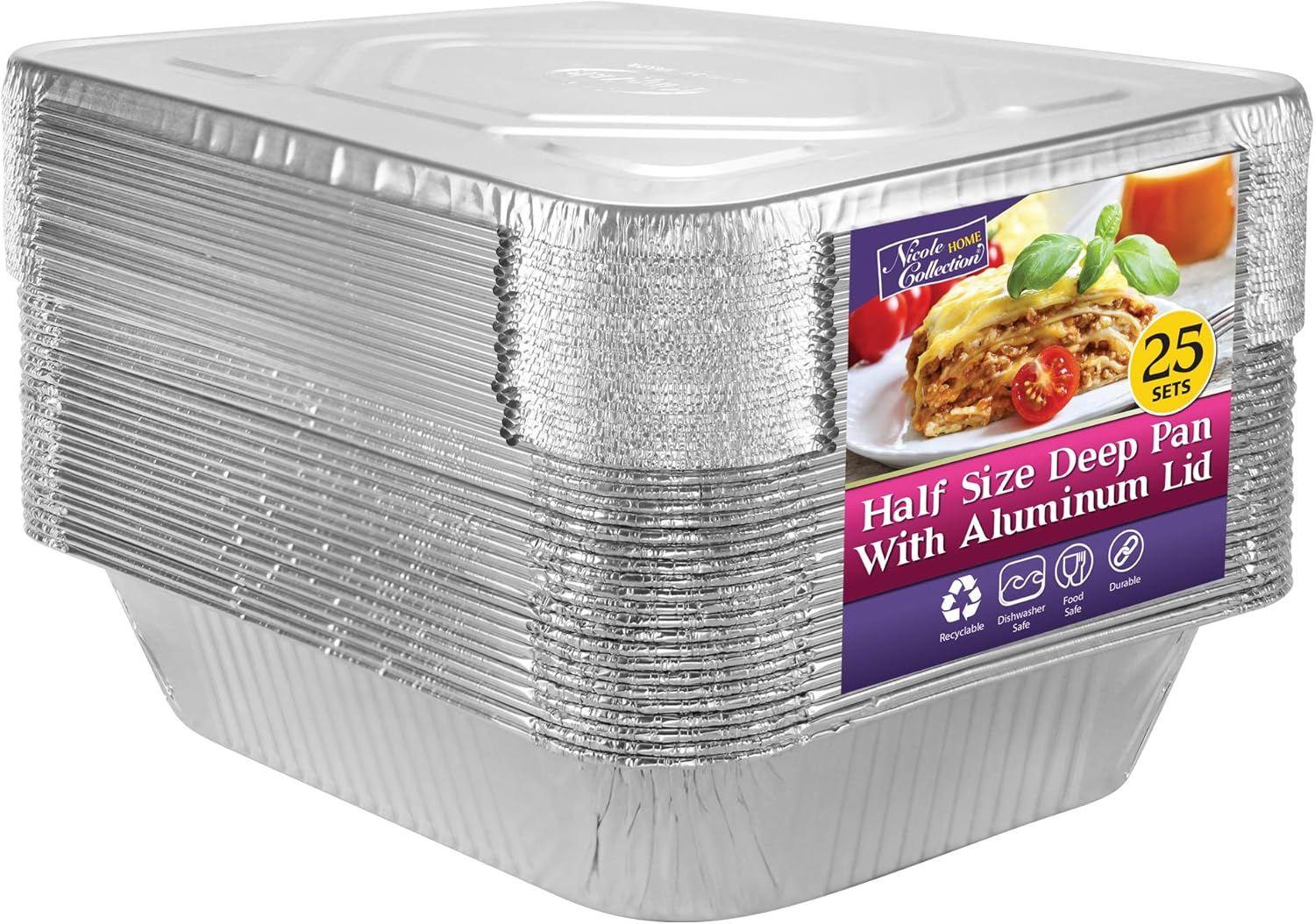
Choosing the correct pan dimensions ensures your recipes fit properly without overflowing or baking unevenly. Standard square options work well for small batches, while half-size rectangular trays accommodate family meals and large sheet cakes. Capacity measurements, ranging from small individual portions to large multi-cup volumes, dictate how many servings each pan can successfully produce for your household or event.
Wall height is another critical factor when evaluating physical dimensions for your baking needs. Taller sidewalls prevent batter or toppings from spilling over during the rising process, whereas shallow trays suit brownies and bars. Reviewing both top and bottom measurements guarantees compatibility with your oven racks and refrigerator shelves.
Temperature Ratings and Heat Tolerance
Baking pans must withstand the specific heat levels required by your favorite recipes without warping or degrading. Most aluminum containers support moderate to high oven temperatures, with upper limits ranging from 200 degrees Celsius up to 500 degrees Fahrenheit depending on the manufacturing grade. Checking these thermal specifications prevents accidental damage during high-heat roasting or broiling tasks.
Freezer compatibility is equally important for meal prep enthusiasts who batch-cook meals ahead of time. Pans rated for freezing allow you to transition food directly from storage to the oven without changing containers. Always verify manufacturer guidelines regarding microwave restrictions, as standard foil pans cannot safely handle microwave heating environments.
Lid Security and Transport Features
Matching clear plastic lids transform simple baking trays into secure transport containers for parties and potlucks. Dome lids provide extra vertical clearance for frosted cakes and tall toppings, preventing smudges and preserving food presentation. A snug fit along the rim ensures that sauces and dressings stay contained while moving dishes from your kitchen to an outdoor gathering.
Transparent covers also allow you to inspect food contents without removing the protective lid, keeping items fresh longer. When selecting sets, check whether the lids snap securely onto the aluminum edges or rest loosely. Reliable lid retention makes stacking multiple prepped dishes in your refrigerator or car trunk significantly easier.
Pack Quantities and Value Considerations
Purchasing options range from small ten-packs for occasional home use to large forty-pack bundles tailored for frequent hosts and commercial baking operations. Assessing your typical baking frequency helps determine whether bulk purchasing offers better long-term financial value. Buying larger quantities reduces the per-unit cost, making it ideal for community events, holiday baking marathons, and small catering businesses.
Conversely, smaller pack counts prevent excess clutter in crowded kitchen cabinets if you only bake on special occasions or holidays. Evaluating your available storage space ensures you can conveniently store unopened sleeves of pans without hassle. Balancing upfront cost against your actual usage frequency leads to a much more satisfying purchase decision.
Cleanup and Disposal Convenience
One of the primary advantages of disposable bakeware is the elimination of tedious post-meal scrubbing. Single-use aluminum pans allow you to bake, serve, and discard the tray directly into a recycling bin once the meal is finished. This hassle-free cleanup is especially beneficial after hosting large parties, potlucks, or school bake sales where traditional dishwashing is impractical.
For eco-conscious cooks, many aluminum containers are fully recyclable after a quick wipe or rinse of food residue. Some heavy-duty versions also support manual dishwasher cleaning if you prefer to reuse them across multiple cooking cycles. Reviewing recommended product care instructions ensures you get maximum convenience from your chosen bakeware set.
Frequently asked questions
Can disposable aluminum cake pans be placed directly in the oven?
Yes, disposable aluminum cake pans are specifically designed for safe oven use, though temperature limits vary by manufacturer and product grade. Most standard foil pans easily handle normal baking temperatures ranging up to 400 or 500 degrees Fahrenheit. It is essential to check the specific upper temperature rating provided by the manufacturer before baking. Additionally, these pans should never be used in a microwave oven, as metal foil causes dangerous sparking and can damage kitchen appliances.
Are the plastic lids safe for heating in the oven or microwave?
Plastic lids included with disposable aluminum pans are strictly intended for food storage, transport, and room-temperature presentation. They are not heat-resistant and will melt or deform if placed inside a hot oven, toaster oven, or microwave. Always remove the clear plastic lid entirely before placing your aluminum baking pan into the oven for cooking or reheating. Use the lid only after the food has finished baking and cooled down completely to secure it for storage or travel.
Can these disposable foil pans be washed and reused multiple times?
While many aluminum pans are technically sturdy enough to be hand-washed and reused for light baking tasks, they are primarily manufactured as single-use disposable containers. Extra heavy-duty models maintain their structural integrity better after gentle washing, but lightweight versions may warp or crease easily during cleaning. If you choose to reuse your foil pans, wash them carefully by hand with mild soap and warm water, avoiding harsh scouring pads that can damage the aluminum surface.
How do I choose the correct pan size for my specific baking recipe?
Choosing the right size depends entirely on your recipe yield and serving requirements. Standard square eight-inch pans accommodate small batches of brownies or casual side dishes, while half-size nine-by-thirteen-inch pans suit large casseroles, sheet cakes, and family-sized meals. Reviewing both the top rim dimensions and the depth of the sidewalls ensures your batter has enough room to rise without spilling over the edges during the baking process.
Are aluminum baking pans safe to store in the freezer?
Aluminum baking pans are generally safe for freezer storage, making them an excellent choice for batch-cooking enthusiasts and meal preppers. You can assemble casseroles, lasagnas, or baked goods ahead of time, cover them securely with the matching clear lid, and store them directly in the freezer. When you are ready to eat, many freezer-safe aluminum pans allow you to transfer the dish straight from frozen storage into the oven for convenient reheating.