Appliances · Buying Guide
Best Embossed Glass Measuring Cups for Precise Daily Kitchen Tasks
Finding reliable kitchen tools often depends on how clearly you can measure liquids and dry ingredients during cooking or baking routines. An embossed glass measuring cup brings permanence to your kitchen workflow, using raised or etched markings that resist fading over time compared to traditional printed ink layers.
These glass vessels come in various liquid capacities, ranging from small shot-style portions to larger two-cup volumes, offering dedicated dual-sided scales designed for both right-handed and left-handed users. Selecting the right model depends on your daily recipe requirements and how easily you prefer to pour hot or cold liquids without creating a messy workspace.
As an Amazon Associate, StacyLaughs earns from qualifying purchases.
Buying guide
Capacity and Volume Requirements
Choosing the correct capacity for your embossed glass measuring cup depends entirely on your typical cooking and baking habits. Smaller four-ounce models work exceptionally well for accurately portioning espresso shots, cocktail ingredients, or concentrated liquid seasonings. However, more substantial culinary tasks require significantly more room to operate safely without accidental overflows during vigorous mixing sessions on crowded countertops.
Standard two-cup or five-hundred-milliliter vessels provide the broad versatility needed for everyday home baking, allowing you to measure milk, water, and broth efficiently in a single batch. Carefully assessing your most frequent recipes helps you determine whether a compact beaker or a larger multi-unit cup serves your daily kitchen routine best.
Scale Permanence and Marking Types
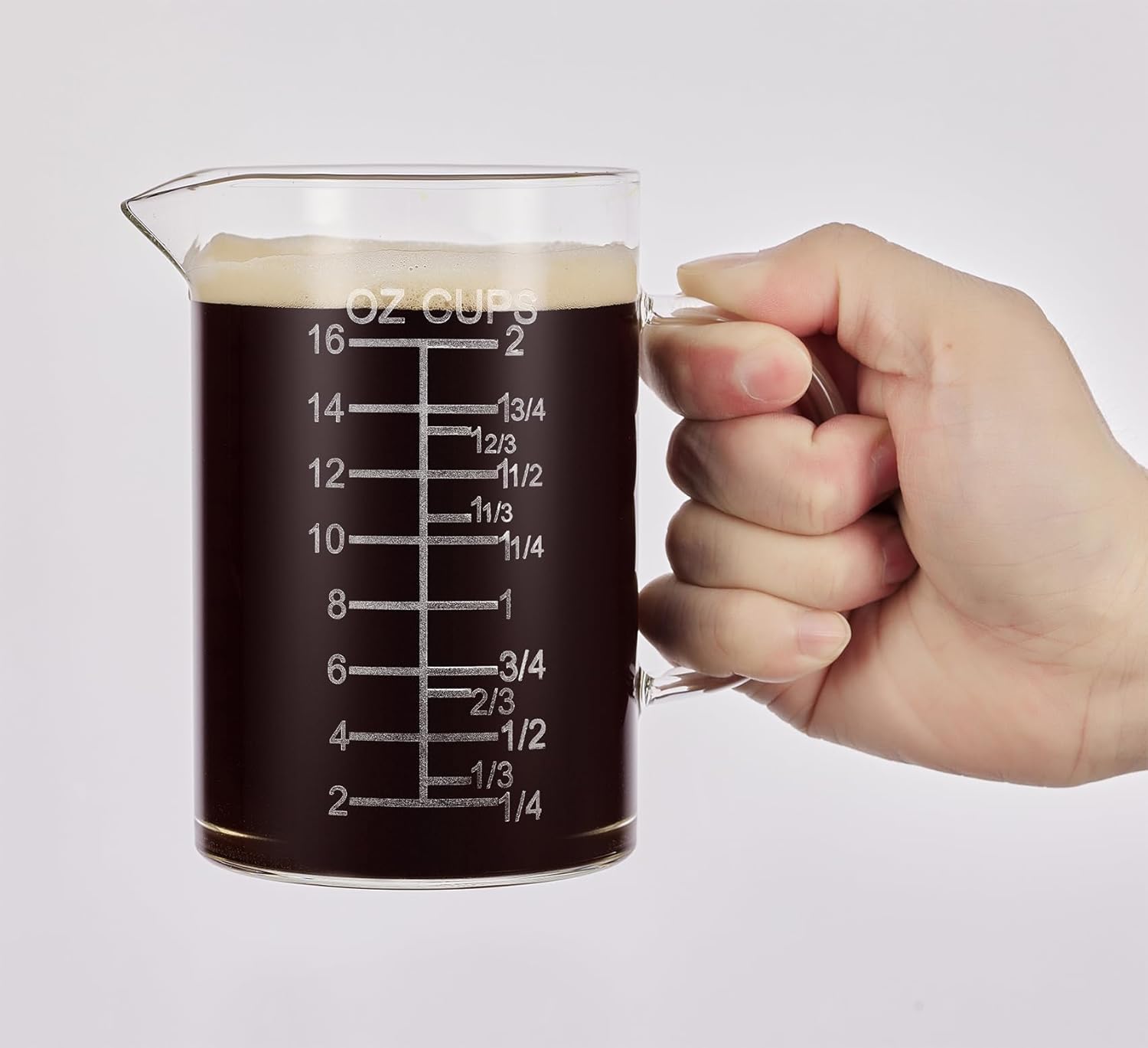
Measuring cups featuring printed ink scales often suffer from fading over months of frequent washing, scrubbing, and exposure to hot liquids. Selecting models with embossed, etched, or raised graduation lines ensures that your volume markers remain clearly legible over years of regular kitchen use. These permanent markings eliminate guesswork caused by worn-out paint layers on glass surfaces during food preparation.
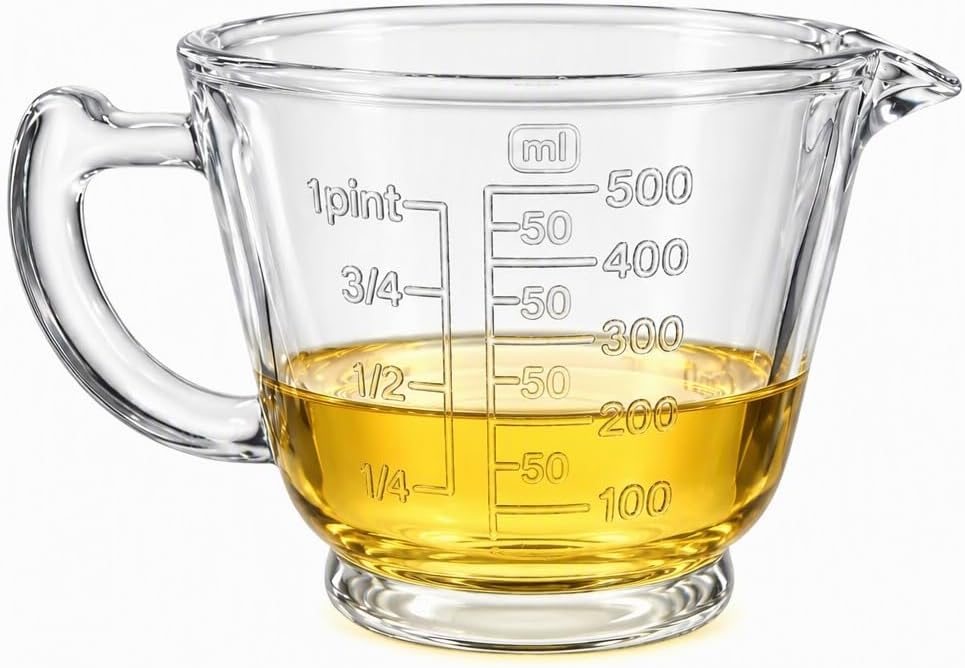
When reviewing scale types, look for options that display multiple units such as milliliters, fluid ounces, pints, and cups simultaneously across the body. This comprehensive multi-unit visibility prevents the need for tedious manual conversion calculations when following recipes from various international sources, baking blogs, or traditional family cookbooks.
Material Composition and Thermal Safety
The material makeup of your measuring cup dictates its overall durability and how well it manages sudden shifts in temperature during busy cooking sessions. Thickened borosilicate glass is widely recognized for its exceptional thermal shock resistance, allowing safe transitions between cold refrigerators and hot microwaves or ovens without experiencing any structural failure.
Food-grade glass models also ensure that no unwanted chemical residues, stains, or lingering odors transfer into your sensitive ingredients during complex meal preparation tasks. Inspecting the glass thickness and structural build helps you choose a vessel capable of safely withstanding the rigorous thermal demands of daily cooking environments over many years of reliable service.
Ergonomic Handle Design and Comfort
Handling heavy liquids safely requires a secure grip to prevent accidental spills, making handle design an essential purchasing factor for any kitchen tool. Ergonomically thick handles provide better control and comfort, especially when lifting hot milk, melted butter, or boiling broth away from stovetop heat sources during complex meal preparation. A sturdy connection point is vital.
Look closely for heat-resistant or non-slip handle constructions that stay comfortably cool to the touch during microwave heating tasks or hot liquid transfers. A well-designed handle significantly reduces hand strain, ensuring you can pour ingredients smoothly even when the glass measuring vessel is filled completely to its maximum stated capacity.
Spout Shape and Pouring Accuracy
The shape of the pouring spout directly influences how cleanly you can transfer liquids into narrow mixing bowls, drinking glasses, or baking pans. V-shaped spouts are particularly effective at directing liquid streams precisely, minimizing messy drips and stray spills along the outer glass walls of the container during busy recipe sessions and baking workflows.
When preparing thin batters, sticky syrups, cooking oils, or salad dressings, a well-formed spout prevents liquid from running down the side of the vessel. Evaluating spout geometry ensures your baking and beverage-making processes remain exceptionally tidy and efficient from the initial mixing stage to the final kitchen pour into baking pans.
Left-Handed and Right-Handed Usability
Traditional measuring cups frequently feature scale markings on only one exterior side, forcing left-handed cooks to awkwardly twist the vessel to read liquid volumes. Choosing models equipped with dual-sided markings solves this issue entirely by accommodating both left-handed and right-handed individuals effortlessly during fast-paced daily cooking and baking preparation tasks.
Dual scales ensure that whichever hand you favor, you can view measurements accurately without straining or guessing liquid levels across the glass walls. This inclusive design aspect significantly improves overall kitchen efficiency, making recipe execution straightforward and comfortable for everyone living in a shared household environment throughout the entire week and during holiday baking.
Frequently asked questions
Are embossed glass measuring cups safe for use in microwave ovens?
Most borosilicate glass measuring cups designed for kitchen use are thermally shock-resistant and safe for microwave heating, refrigeration, and freezer storage. However, you should always review specific manufacturer guidelines regarding temperature limits before placing any glass vessel directly into a microwave or oven. Avoiding sudden extreme temperature shifts, such as moving a freezing cup straight into a hot environment, helps prevent thermal cracking. Ensuring proper handling safeguards both the glass and your prepared ingredients during everyday cooking tasks.
Why are dual-sided etched scales better than printed ink markings?
Etched or embossed graduation lines are permanently carved into the glass surface, meaning they will not fade, rub off, or wash away over time from frequent cleaning. In contrast, traditional printed ink markings rely on surface layers that can degrade with exposure to hot liquids and harsh dishwashing detergents. Additionally, dual-sided markings allow both left-handed and right-handed users to read volume measurements instantly from any angle without awkward twisting or tilting of the cup.
Can I use a small four-ounce glass measuring cup for standard baking recipes?
A small four-ounce or one-hundred-twenty-milliliter glass measuring cup is generally too compact for standard baking recipes that require multiple cups of flour, milk, or water. Instead, these miniature vessels are ideally suited for precise tasks like portioning espresso shots, mixing cocktail ingredients, melting small amounts of butter, or measuring concentrated liquid seasonings. If your baking routine involves larger volumes, selecting a two-cup or five-hundred-milliliter model will provide the necessary capacity for successful ingredient preparation.
How do V-shaped spouts improve liquid pouring performance?
V-shaped spouts concentrate the flowing liquid into a narrow, directed stream, which helps prevent messy drips, spills, and liquid running down the outer walls of the glass container. This targeted pouring design is particularly helpful when transferring thin liquids, milk, oils, batters, or syrups into narrow bowls, bottles, or drinking glasses. By controlling the flow rate and direction, a precision spout keeps your countertops cleaner and ensures accurate ingredient distribution during cooking workflows.
What cleaning methods should I follow for glass measuring cups?
Glass measuring cups with etched scales can typically be washed safely in a dishwasher or cleaned by hand using warm water and mild dish soap. The non-porous glass surface prevents food residues and odors from sticking, allowing quick cleanup after handling sticky ingredients like syrups or oils. Always exercise caution when washing heavy glass items in crowded dishwashers to prevent accidental chipping against other cookware, and follow any specific manufacturer compatibility guidance for maintenance.