Appliances · Buying Guide
Best Etched Glass Measuring Cup Options for Precise Kitchen Tasks
Choosing a reliable measuring tool simplifies baking and cooking routines. Etched glass measuring cups offer permanent graduation lines carved directly into the material instead of relying on printed ink layers that can fade over time. These kitchen essentials help home cooks measure liquids like milk, broth, and oil with confidence while handling everyday meal prep tasks.
Various capacities ranging from compact 240 ml vessels to larger 1000 ml pitchers accommodate different recipe requirements. Built from high borosilicate glass, these cups withstand temperature shifts and offer features like V-shaped spouts and insulated handles. Reviewing individual options helps match a specific cup size and design to your daily cooking and baking habits.
As an Amazon Associate, StacyLaughs earns from qualifying purchases.
Buying guide
Material Composition and Durability
Choosing a measuring cup crafted from high borosilicate glass ensures resistance to thermal shock during active kitchen tasks. This specialized glass formulation tolerates rapid temperature shifts safely, allowing direct transitions from refrigerator storage to microwave heating. Thickened walls and bases provide additional structural reinforcement against accidental countertop bumps, extending the operational lifespan of your measuring tools in busy cooking environments.
Unlike standard soda-lime glass or plastic alternatives, borosilicate material resists clouding and chemical degradation from repeated dishwasher cycles. Buyers should verify that the glass body maintains clear visibility and robust construction to handle everyday liquid ingredients like oils, milk, and broths without sustaining surface scratches or structural fatigue over years of regular use.
Measurement Scale Legibility
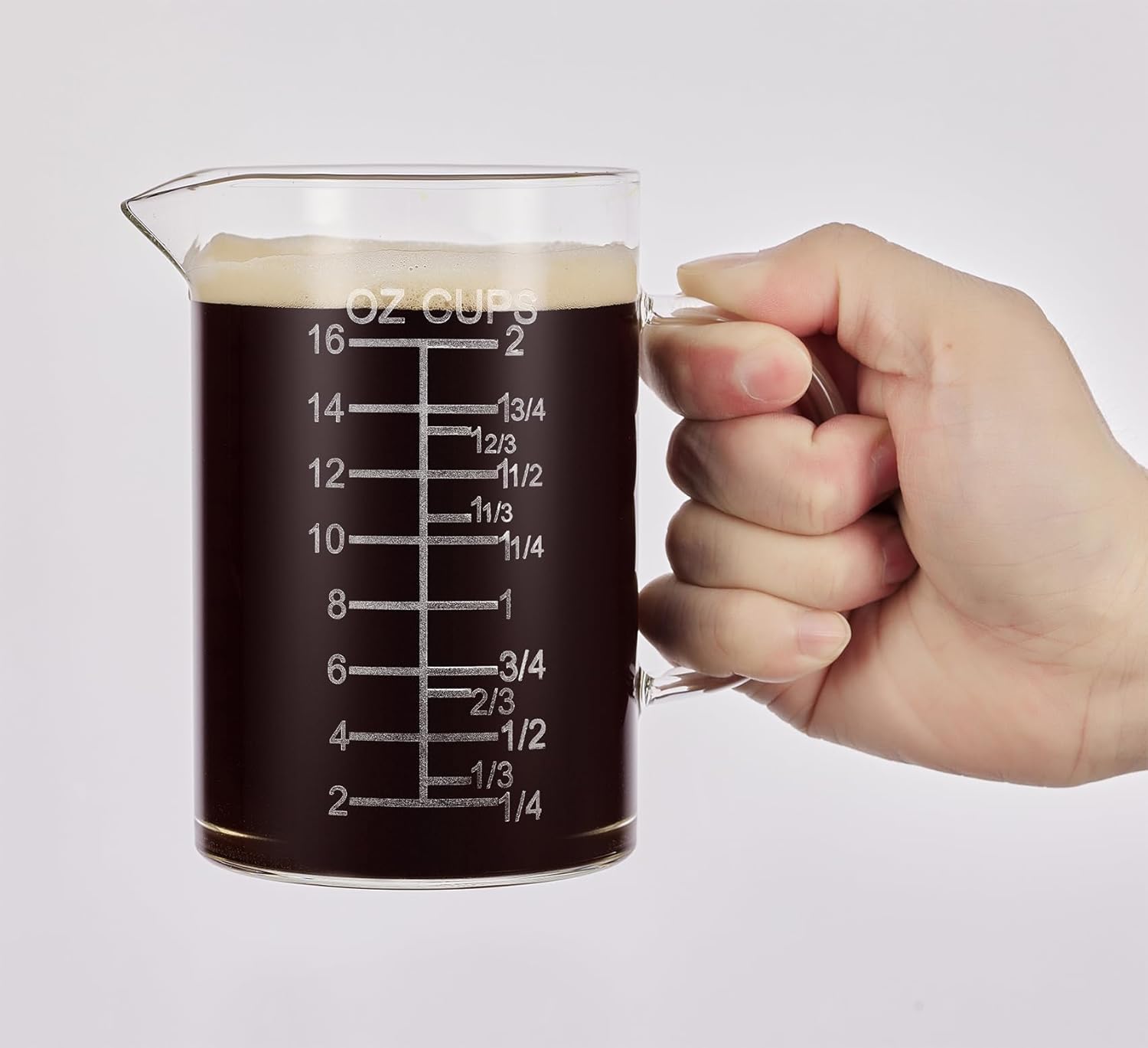
Choosing permanent etched graduation lines offers superior longevity compared to printed ink markings that frequently wear away after routine washing cycles. Etching carves the scale directly into the glass surface, ensuring measurements remain clearly visible through years of heavy kitchen use. Buyers benefit from selecting models featuring multi-unit scales combining metric milliliters with US cups and fluid ounces for versatile recipe execution.
Dual-sided or internal mirror etching scales further enhance everyday usability by accommodating left-handed cooks and enabling top-down volume reading without lifting filled vessels off the counter. Evaluating how measurement lines are applied prevents premature fading issues, ensuring accurate liquid dispensing for baking and cooking recipes every single time you prepare meals in your kitchen.
Capacity Selection and Volume
Selecting the correct capacity depends heavily on your typical cooking and baking batch sizes. Compact 240 ml or 250 ml models excel at small-scale tasks like measuring coffee additions, oil, or single-cup liquid volumes. Mid-sized 500 ml options provide a balanced middle ground for standard baking recipes, while larger 1000 ml pitchers handle heavy-duty multi-cup liquid measurement requirements effortlessly without constant interruptions.
Matching the cup volume to your household needs prevents the frustration of continuous refilling steps during complex recipe preparation. Oversized pitchers take up extra cabinet storage space, whereas undersized cups demand multiple measuring cycles. Assessing your frequent recipe demands ensures you select a practical vessel size that optimizes your kitchen workflow and storage layout.
Spout Design and Pouring Control
A precision V-shaped spout significantly improves pouring control when transferring liquids into narrow containers, mixing bowls, or baking pans. This specialized spout shape guides the liquid stream accurately, preventing messy spills, drips, and counter messes. Evaluating spout geometry ensures that thin liquids like milk and water, as well as viscous sauces and oils, flow smoothly without running down the exterior glass wall.
Combined with a stable handle, an effective V-spout minimizes wrist strain during active pouring tasks. Kitchen vessels lacking proper spout definition often cause accidental splashing when tipping contents rapidly. Prioritizing models with engineered pouring spouts guarantees cleaner liquid transfers and more reliable measurement execution across diverse culinary applications.
Handle Ergonomics and Thermal Safety
Ergonomic handle design plays a vital role in ensuring safe, comfortable handling during kitchen tasks. Handles that provide a secure grip away from the heated cup body protect hands from thermal transfer when measuring warm broths or melted ingredients. Insulated handle configurations offer added reassurance when working with items removed directly from microwaves or hot cooking environments.
The physical weight of filled glass vessels places demands on wrist strength, making comfortable handle geometry essential. Separate handle loops allow fingers to wrap securely around the grip, reducing fatigue during extended mixing sessions. Evaluating handle placement and thermal insulation properties ensures confident lifting and tipping throughout daily meal preparation routines.
Cleaning and Maintenance Practicalities
Maintaining hygiene in kitchen glassware is simplified when models are certified as dishwasher safe for routine cleaning. High borosilicate glass withstands harsh dishwasher detergents and high water temperatures without degrading surface integrity or clouding transparency. Smooth glass surfaces prevent food residue buildup, allowing quick manual washing when preferred over automated cleaning cycles.
Buyers should check manufacturer maintenance instructions to preserve the lifespan of specialized features like internal mirror scales or insulated grips. Proper care prevents thermal shock accidents by avoiding sudden extreme temperature changes, such as placing freezing glass directly onto hot burners. Following basic cleaning and handling guidelines ensures your measuring cup remains dependable for years.
Frequently asked questions
Can etched glass measuring cups go straight from the refrigerator to the microwave?
High borosilicate glass measuring cups are engineered to withstand sudden temperature changes, making them thermally shock-resistant across wide temperature ranges. This allows you to transition the cup safely from sub-zero refrigerator or freezer storage directly into a microwave or oven without risking structural failure. However, users should always handle heated glassware with caution and avoid placing extremely hot glass onto cold, wet surfaces to prevent accidental thermal breakage. Ensuring proper care preserves the borosilicate body.
Why choose etched markings over printed ink scales on measuring cups?
Etched graduation lines are carved permanently directly into the glass surface, whereas traditional markings rely on printed ink layers applied externally. Over time, repeated washing in dishwashers and exposure to abrasive sponges can cause printed ink scales to wear away, fade, or completely wash off. Etched scales eliminate this fading concern entirely, ensuring your measurement lines remain clearly visible and accurate throughout years of regular kitchen use, regardless of how frequently you clean the vessel.
How do V-shaped spouts improve liquid pouring performance?
The V-shaped spout configuration is specifically engineered to concentrate the liquid stream into a narrow, controlled path when tipping the measuring cup. This design prevents liquids from spreading across the outer rim, which frequently causes messy drips down the side of the glass onto countertops. Whether you are transferring thin fluids like milk and water or viscous items like oil and pancake batter, a well-defined V-spout ensures accurate delivery directly into mixing bowls and narrow containers.
Are glass measuring cups suitable for measuring dry ingredients as well as liquids?
Glass measuring cups featuring volumetric scales are primarily designed for liquid ingredients like water, milk, broth, and oils. While you can measure volume-based dry ingredients such as sugar or flour in a pinch, professional baking often relies on weight measurements for dry goods to ensure recipe accuracy. The V-spout and pour-focused design of glass pitchers make them less ideal for leveling off dry flours compared to flat-rimmed dry measuring cups, but they handle liquid volumes exceptionally well.
What is the advantage of internal mirror etching scales?
Internal mirror etching scales provide graduation lines on the inside walls of the glass cup, allowing users to check liquid volume levels directly from above without needing to lift the vessel off the counter or squat down to eye level. This top-down readability streamlines active cooking and baking workflows by letting you pour and monitor measurements simultaneously. It offers added convenience when working with multiple ingredients, reducing unnecessary handling and physical strain during complex kitchen tasks.