Appliances · Buying Guide
Best Extra Large Glass Mixing Bowl Options for Sourdough and Prep
Choosing an extra large glass mixing bowl transforms how you manage large family meals, heavy holiday baking, and intricate sourdough proofing routines. These heavy-duty kitchen vessels offer crystal-clear visibility and expansive capacity for handling massive dough batches or tossing large dinner salads without overcrowding your workspace or spilling precious ingredients across your counters.
Finding the right model depends entirely on your specific cooking habits, whether you require a dedicated sourdough setup complete with a matching lid and utility tools or a sturdy multi-purpose bowl for everyday kitchen tasks. Reviewing essential specifications like volume capacity, wall thickness, and thermal limits ensures you select a dependable companion that fits your exact routine.
As an Amazon Associate, StacyLaughs earns from qualifying purchases.
Buying guide
Assessing Capacity and Volume Requirements
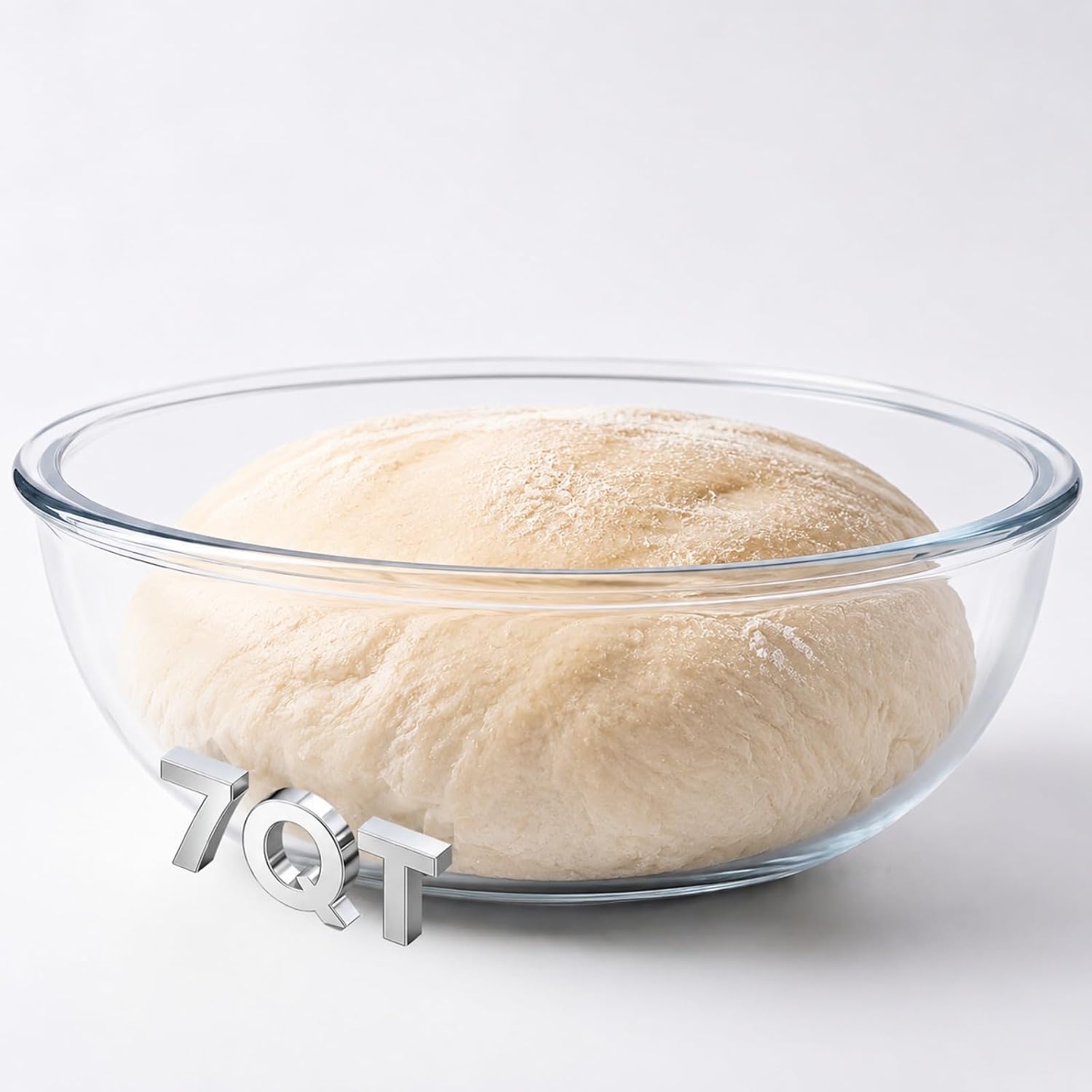
Selecting the proper volume for your extra large glass mixing bowl depends directly on whether you bake heavy sourdough loaves or mix massive family salads. Models ranging from six to seven quarts provide ample space for large batches, preventing ingredient spills over the rim. Reviewing your typical batch sizes ensures you select a bowl that accommodates your workload without feeling cumbersome or excessively bulky during everyday kitchen tasks.
Smaller households might find massive bowls difficult to store, while dedicated bakers require expansive interior dimensions to allow yeast dough to rise fully. Consider your standard recipes and countertop space before committing to a specific capacity tier. Matching your volume needs prevents frequent overcrowding and guarantees comfortable stirring space for dressings, batters, and heavy bread doughs.
Evaluating Borosilicate Glass and Thermal Resilience
High borosilicate glass offers superior thermal shock resistance, allowing your mixing bowl to transition safely between extreme temperatures. This material properties enable direct movement from a cold refrigerator straight into a warm microwave or oven without cracking risks. Understanding thermal limits helps you utilize the bowl for diverse cooking steps, from chilling fruit salads to melting ingredients.
Durability against sudden temperature swings makes borosilicate vessels a reliable investment for frequent home cooks. Unlike standard glass, this specialized formulation handles high-heat baking environments with confidence. Checking temperature ratings ensures your chosen bowl supports your specific culinary routines, whether you are proofing sourdough near a warm stove or storing leftovers in freezing conditions.
Analyzing Lid Types and Fermentation Covers
Lids significantly influence how you use your glass mixing bowl for food storage and bread proofing. Some models feature airtight glass covers that lock in moisture, while others provide ventilated designs or elastic fabric covers tailored for sourdough fermentation. Selecting the right lid configuration depends on whether you prioritize tight seals for leftover preservation or breathable airflow for active yeast cultures.
Evaluating cover options also involves checking material care requirements, such as hand washing wooden or elastic accessories versus putting dishwasher-safe glass lids in the machine. Assessing these included components prevents unexpected maintenance hurdles and ensures your storage setup matches your daily kitchen cleanup preferences.
Understanding Weight and Physical Stability
Heavy-duty glass mixing bowls often weigh between three and six pounds, providing exceptional physical stability during vigorous hand kneading and heavy whisking. A reinforced base prevents the bowl from sliding or tipping across countertops when you mix dense doughs or whip thick batters. However, this substantial weight requires careful two-handed handling and sturdy storage shelves.
Balancing stability against portability is crucial for cooks who experience hand fatigue or prefer lightweight kitchenware. While heavier vessels stay firmly anchored during intensive food prep, lighter options offer easier maneuverability when rinsing or transferring contents. Weighing these physical characteristics against your personal comfort ensures long-term satisfaction with your purchase.
Inspecting Surface Finish and Cleaning Convenience
An ultra-smooth, non-porous glass interior prevents food residue, flour, and sticky sourdough dough from clinging tightly to the walls during intensive prep work. This non-stick characteristic simplifies everyday cleanup, allowing quick hand washing under running water or straightforward placement in the dishwasher. Non-porous surfaces also resist absorbing stubborn food odors and stains from previous meals.
Maintaining pristine glass surfaces preserves the crystal clarity needed to monitor ingredient consistency and fermentation progress at a glance. Choosing dishwasher-safe models streamlines post-cooking chores, saving valuable time after large family dinners or weekend baking marathons. Prioritizing smooth glass construction guarantees long-lasting hygiene and effortless maintenance throughout years of daily kitchen use.
Utilizing Included Utensils and Versatile Applications
Many extra large glass mixing bowls come packaged with complementary accessories like wooden mixing spoons, slotted forks, or elastic covers. These bundled items enhance the immediate utility of your purchase, providing ready-to-use tools for folding dough or tossing party salads. Evaluating whether a kit includes these extras helps determine overall value and reduces the need for separate tool purchases.
Versatility extends beyond baking, as these expansive bowls serve double duty as elegant serving dishes and secure refrigerator storage containers. Their multi-functional nature makes them indispensable assets for holiday banquets, meal prepping, and casual outdoor picnics. Selecting a well-equipped model maximizes your kitchen efficiency across numerous daily cooking scenarios.
Frequently asked questions
Can an extra large glass mixing bowl go straight from the freezer to the microwave?
Many high-borosilicate glass mixing bowls are engineered to withstand significant thermal shock, allowing safe transitions from a freezing environment directly into a microwave or oven without cracking risks. However, you should always verify the specific temperature tolerance limits of your chosen model before attempting rapid heating steps. Checking manufacturer guidelines ensures that sudden heat changes do not compromise the structural integrity of the glass during food reheating, meal prep defrosting, or baking tasks.
Are extra large glass mixing bowls safe for the dishwasher?
Yes, the majority of glass mixing bowls featured here are fully dishwasher safe, allowing for effortless cleanup after heavy baking or large family meals. The smooth, non-porous glass surfaces resist food stains and odors, meaning they come out of the wash cycle clean and neutral. If your bowl includes specialized wooden utensils or elastic fabric covers, those specific accessories typically require hand washing and air drying rather than machine cycles.
What capacity is best for sourdough bread making and proofing?
A capacity between six and seven quarts is widely considered ideal for sourdough bread making and dough proofing. This extra-large volume provides ample room for flour, water, and active starter to expand during bulk fermentation without overflowing the rim. The expansive interior also gives you plenty of workspace to perform stretch and fold techniques comfortably right inside the bowl, reducing the need for extra countertop equipment during baking prep.
Do glass mixing bowls come with lids included?
Included accessories vary significantly depending on the specific product package you choose. Some models come equipped with matching glass lids, airtight seals, ventilated covers, or elastic fabric tops, while others consist solely of the open glass bowl. Reviewing the component list for each option ensures you select a model that meets your storage and proofing requirements without needing to purchase separate covers later.
Why is borosilicate glass preferred for large kitchen mixing bowls?
Borosilicate glass is heavily favored for large kitchen bowls due to its superior thermal resilience and impact resistance compared to standard glass. It can handle extreme temperature ranges from sub-zero freezer conditions up to high oven heats without failing. Furthermore, its non-porous structure ensures that acidic ingredients, heavy marinades, and sticky sourdough starters will not react with the surface, preserving pure food flavors and maintaining long-term kitchen hygiene.