Appliances · Buying Guide
Best Federal Glass Mixing Bowls for Daily Baking and Meal Prep
Finding the right set of glass mixing bowls transforms how you handle daily baking, meal preparation, and food storage in a busy home kitchen. Quality glassware offers reliable durability for mixing thick batters, tossing large salads, storing leftovers securely, and transitioning seamlessly from refrigerator to preheated oven or microwave during routine cooking tasks. Careful evaluation prevents clutter.
Selecting dependable glass mixing bowls depends heavily on understanding individual capacity needs, material compositions like borosilicate or tempered glass, and whether included lids match your storage style. Reviewing these distinct product options helps match specific kitchen tasks with functional designs suited for everyday routines, ensuring you choose containers that fit your storage shelves and habits effectively.
As an Amazon Associate, StacyLaughs earns from qualifying purchases.
Buying guide
Material Composition and Thermal Resilience
Selecting glass mixing bowls requires looking closely at whether the construction utilizes standard glass, tempered glass, or high borosilicate formulations. Borosilicate options typically withstand broader temperature shifts, allowing safe transitions from cold refrigeration directly into preheated ovens or microwaves without structural compromise. Understanding these foundational material properties ensures your chosen bowls handle demanding baking tasks, hot liquids, and freezing temperatures reliably during daily meal preparation.
Reviewing manufacturer specifications helps confirm exact thermal limits and structural reinforcements for specific product models. Choosing durable glass materials reduces worries about staining, scratching, or retaining pungent food odors over years of heavy daily use, keeping your kitchen prep tools hygienic, clear, and ready for any recipe.
Capacity Range and Sizing Needs
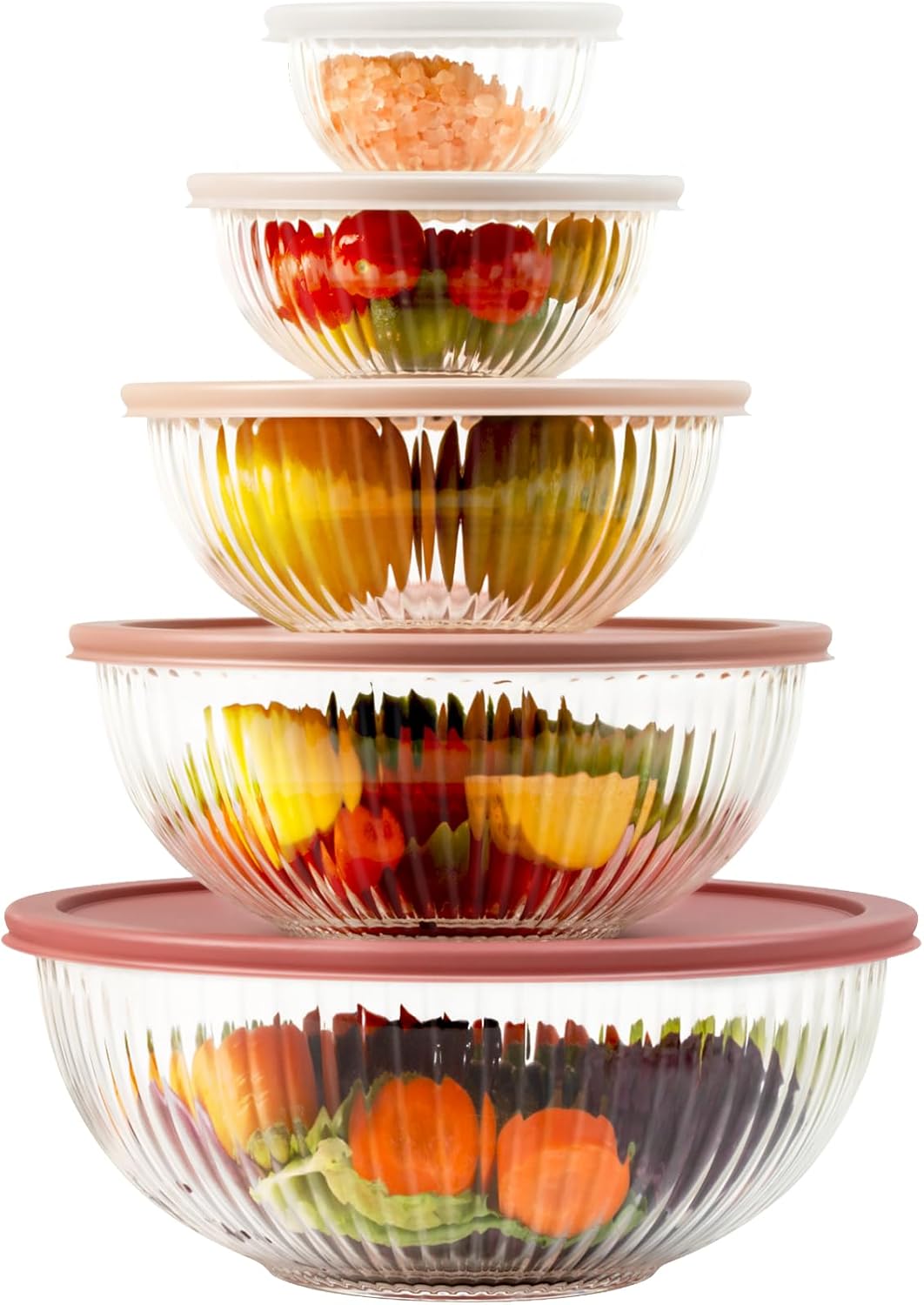
Assessing your typical cooking habits determines whether a three-piece, four-piece, or five-piece bowl set best fits your daily routines. Smaller bowls under one quart work well for beating single eggs, holding chopped herbs, or measuring dry baking ingredients, while larger vessels exceeding four quarts handle heavy dough kneading and family-sized salads effortlessly. Matching bowl capacity to your household volume prevents overcrowding your workspace.
Opting for a balanced multi-capacity collection ensures you always have an appropriately sized container on hand for any recipe. This eliminates awkward compromises when scaling ingredients up or down, making everyday food preparation smoother and far more organized across breakfast mixing, lunch assembly, and dinner baking tasks.
Lid Types and Airtight Sealing
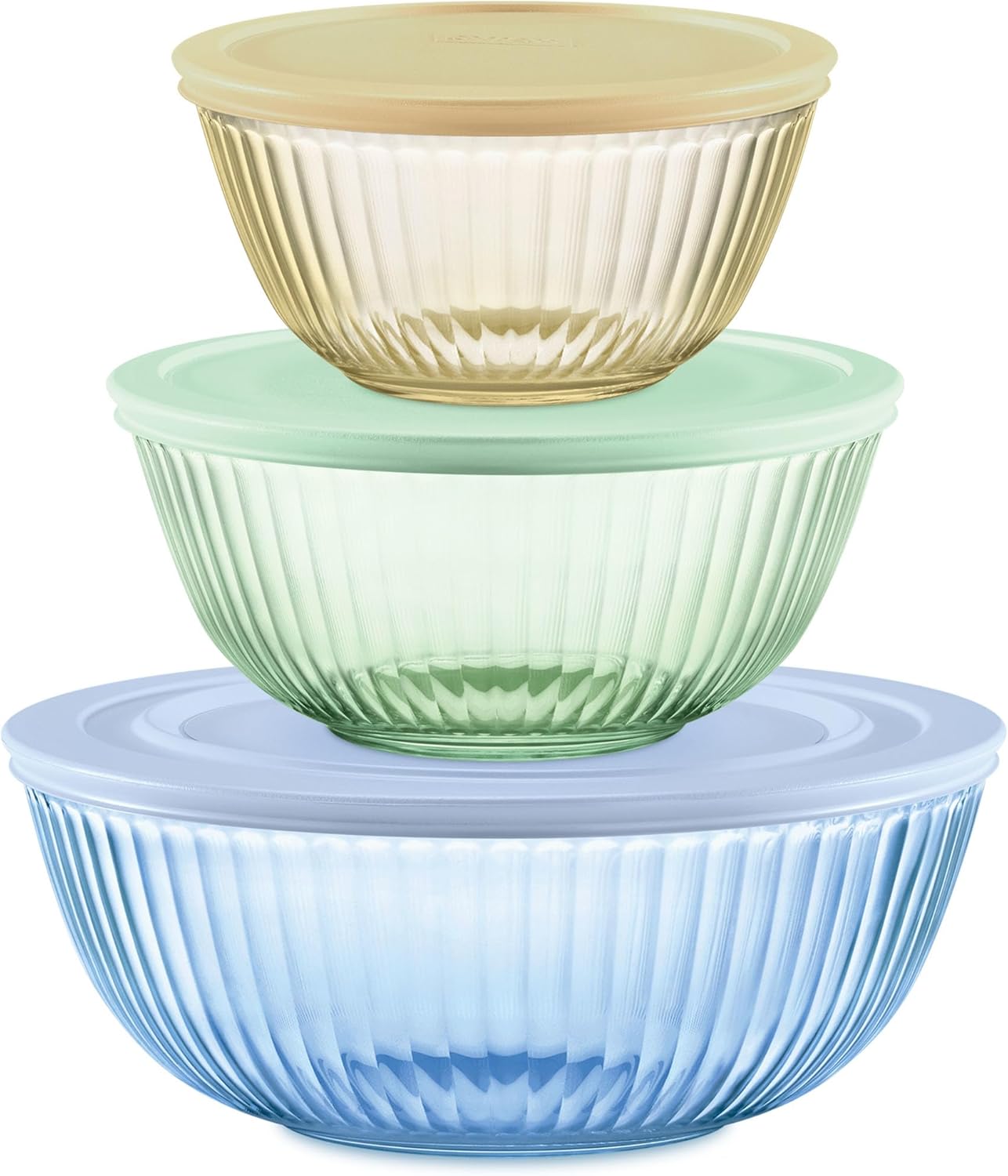
Deciding whether you need storage lids changes how you use your mixing bowls after prep work finishes. Sets featuring plastic lids with silicone gaskets and locking clasps provide airtight seals that keep leftovers fresh and prevent accidental liquid spills during refrigerator storage or travel. These sealed configurations streamline meal prep by letting you mix, bake, and store in one container.
If your preferred bowls lack included lids, you will need to rely on alternative wraps or plates for food storage. Considering how often you store leftovers directly in mixing bowls helps clarify whether airtight lid inclusion is a mandatory feature for your specific household meal planning workflow.
Storage, Nesting, and Kitchen Footprint
Kitchen cabinet and pantry space is often at a premium, making the physical storage profile of mixing bowl sets a vital consideration for any home cook. Bowls designed to nest neatly inside one another drastically reduce the surface footprint required in your cupboards, whether stored with lids attached or stacked adjacently on crowded kitchen shelves.
Carefully evaluating how many pieces make up a set helps prevent cabinet clutter in smaller kitchens and pantries. Choosing stackable, space-saving designs ensures your storage areas remain tidy and organized, allowing quick, easy access to the exact bowl size you need without unstacking an unstable tower of heavy glassware during busy meal preparation routines.
Maintenance and Dishwasher Compatibility
Keeping glassware clean should be straightforward, making dishwasher-safe construction an essential factor for routine kitchen upkeep and maintenance. Many borosilicate and tempered glass bowls withstand regular dishwasher cycles effortlessly, though matching plastic or silicone lids often require top-rack placement or specific care instructions to maintain their structural shape and sealing integrity over time.
Reviewing manufacturer care guidelines ensures your bowls and lids last for years without warping, staining, or material degradation. Smooth interior glass surfaces also simplify manual washing when dealing with sticky batters, doughs, or stubborn baking residues, saving valuable cleanup time after every meal preparation session in your kitchen.
Everyday Utility for Baking and Prepping
Glass mixing bowls serve multiple everyday purposes beyond simple mixing, acting as highly versatile vessels for baking sweet batters, tossing fresh salads, marinating meats, and serving delicious side dishes during family meals or casual dinner parties. Their sturdy construction provides welcome stability on countertops while you vigorously whisk, stir, or knead heavy ingredients.
Selecting bowls with thoughtful ergonomic design details, such as thickened exterior rims for secure gripping or wide-mouth openings for easy ingredient transfer and stirring, greatly enhances daily kitchen usability. Matching your bowl set to these practical attributes ensures comfortable handling and reliable performance across every food preparation and baking task you tackle at home.
Frequently asked questions
Are glass mixing bowls safe for use in ovens and microwaves?
Many glass mixing bowls featuring borosilicate or tempered glass construction are engineered to handle high temperatures, making them safe for microwave and preheated oven use. However, you must always check specific product guidelines, as plastic or silicone lids included with certain sets must be removed before placing the bowls into a hot oven or microwave. Failing to remove non-glass components can result in severe damage to the lids. Always confirm individual manufacturer instructions before heating your glassware.
How do I clean and maintain glass mixing bowls properly?
Maintaining glass mixing bowls is generally straightforward because smooth interior glass surfaces resist stains and odors effectively. Most glass bowls are dishwasher safe, allowing for effortless cleanup after heavy baking or meal prep sessions. For matching plastic or silicone lids, manufacturer instructions often recommend top-rack dishwasher placement or gentle hand washing to preserve their flexible shape and secure airtight seal over years of regular use. Avoid using harsh scouring pads that might scratch the glass surface.
What are the benefits of choosing borosilicate glass over standard glass?
Borosilicate glass is renowned for its superior thermal shock resistance compared to standard glass formulations. This specialized composition allows bowls to transition safely across extreme temperature shifts, such as moving directly from a freezing refrigerator into a hot oven or microwave without cracking under thermal stress. Additionally, borosilicate glass tends to be thicker, more durable, and completely free of lead or cadmium, offering home cooks greater peace of mind during everyday cooking and baking tasks.
Can glass mixing bowls with lids prevent food spills during storage?
Yes, glass mixing bowls equipped with specialized airtight lids featuring silicone gaskets and locking clasps are designed to keep food secure and prevent spills during refrigerator storage or transport. These tight seals lock in freshness and block out unwanted refrigerator odors. However, bowls that come without lids require alternative covers like plastic wrap or silicone sheets if you plan to store leftovers directly inside them. Always ensure clasps are fully engaged for optimal airtight performance.
How can I fix a warped or ill-fitting plastic bowl lid?
Temperature fluctuations or long-term storage can occasionally cause flexible plastic or silicone lids to lose their original shape. If you notice a lid isn't fitting snugly onto your glass bowl, a simple remedy involves soaking the lid in boiling water for three to five minutes to soften the material. While it is still warm and pliable, press the lid firmly onto the rim of the bowl and let it cool completely. This process helps reshape the lid for a secure fit.