Appliances · Buying Guide
Best Countertop Ovens for Reaching Ideal French Bread Pizza Temperatures
Making crispy French bread pizza at home requires careful attention to appliance temperature ranges and heating elements. Whether you are melting thick layers of mozzarella or toasting a crust until golden brown, having the right countertop equipment makes all the difference in achieving consistent texture.
Different countertop ovens offer distinct temperature ceilings, ranging from standard baking ranges up to high-heat stone settings designed for rapid cooking. Evaluating these capabilities helps home cooks select a machine that matches their favorite recipes without guesswork.
As an Amazon Associate, StacyLaughs earns from qualifying purchases.
Buying guide
Temperature Range Capabilities
When evaluating countertop appliances for baking French bread pizza, examining the maximum temperature range is a critical first step. Standard ovens typically top out around 450 degrees Fahrenheit, providing steady heat for melting cheese and warming bread bases. However, specialized high-heat units can reach up to 800 degrees Fahrenheit, mimicking commercial pizzeria environments. Understanding your preferred crust texture helps determine whether a moderate baking range or an extreme high-heat model suits your daily routine.
Higher settings allow for rapid cooking times, often crisping dough in under six minutes. Lower thresholds also enable versatile tasks like keeping food warm. Reviewing control types, whether knobs or touchscreens, ensures you adjust heat levels accurately. Matching the thermal capacity to your favorite recipes guarantees reliable baking outcomes without guesswork.
Internal Capacity and Dimensions
Countertop space availability directly influences which oven capacity you should choose for your kitchen. Large 25-liter models offer generous interior room, accommodating wide pizzas, multi-tier trays, and family-sized casseroles simultaneously. Conversely, compact specialized units feature lower vertical profiles, saving surface area while restricting clearance for tall pans. Measuring your available counter space and overhead cabinets before purchasing prevents unexpected fitting issues.
Footprint dimensions dictate how far the appliance extends from front to back, which matters greatly for models featuring flip-up storage designs or swinging doors. Ensuring surrounding clearance guarantees safe operation and easy food loading. Balancing internal volume against exterior dimensions allows you to prepare large meals without overwhelming your kitchen counters.
Heating Elements and Technology
The type and placement of heating elements inside a countertop oven significantly affect how evenly your food cooks. Modern appliances often use quartz elements, infrared technology, or upper and bottom dual heating coils to distribute warmth effectively. Infrared systems combine with rapid air circulation to promote edge-to-edge even cooking, reducing overall meal preparation times.
Independent top and bottom heat controls provide precise management over how your meals brown. When baking bread-based pizzas, having active bottom heat ensures a crisp crust while top heat melts the cheese thoroughly. Reviewing these internal heating specifications helps you select an appliance capable of delivering uniform textures across your favorite culinary creations.
Door Designs and Access
Door configurations impact both convenience and spatial efficiency in busy kitchen environments. Double French door designs let you open one or both doors independently, reducing the required swing clearance and making it much easier to check on food. Single-pull French doors open simultaneously with a single motion, offering immediate access to the interior cooking racks.
Viewing windows built into these doors allow you to monitor baking progress without releasing accumulated internal heat. Selecting a door style that matches your specific kitchen layout prevents awkward reaching and improves everyday safety. Examining these physical access features ensures your chosen appliance integrates smoothly into your daily cooking routine.
Control Interfaces and Presets
Control interfaces dictate how easily you can program cooking temperatures and timer durations. Traditional mechanical knobs offer straightforward adjustments for quick settings, while digital touchscreens provide exact temperature readouts and pre-programmed cooking modes. Presets tailored for specific styles like thin-crust, New York, or frozen foods take the guesswork out of baking specialized dishes like French bread pizzas.
Selecting an interface that aligns with your personal comfort level prevents operating frustration. Clear digital displays help track countdown timers and active heating functions with high precision. Evaluating these control options ensures you can operate the appliance effortlessly whether you are baking a quick snack or managing a complex meal.
Included Accessories and Maintenance
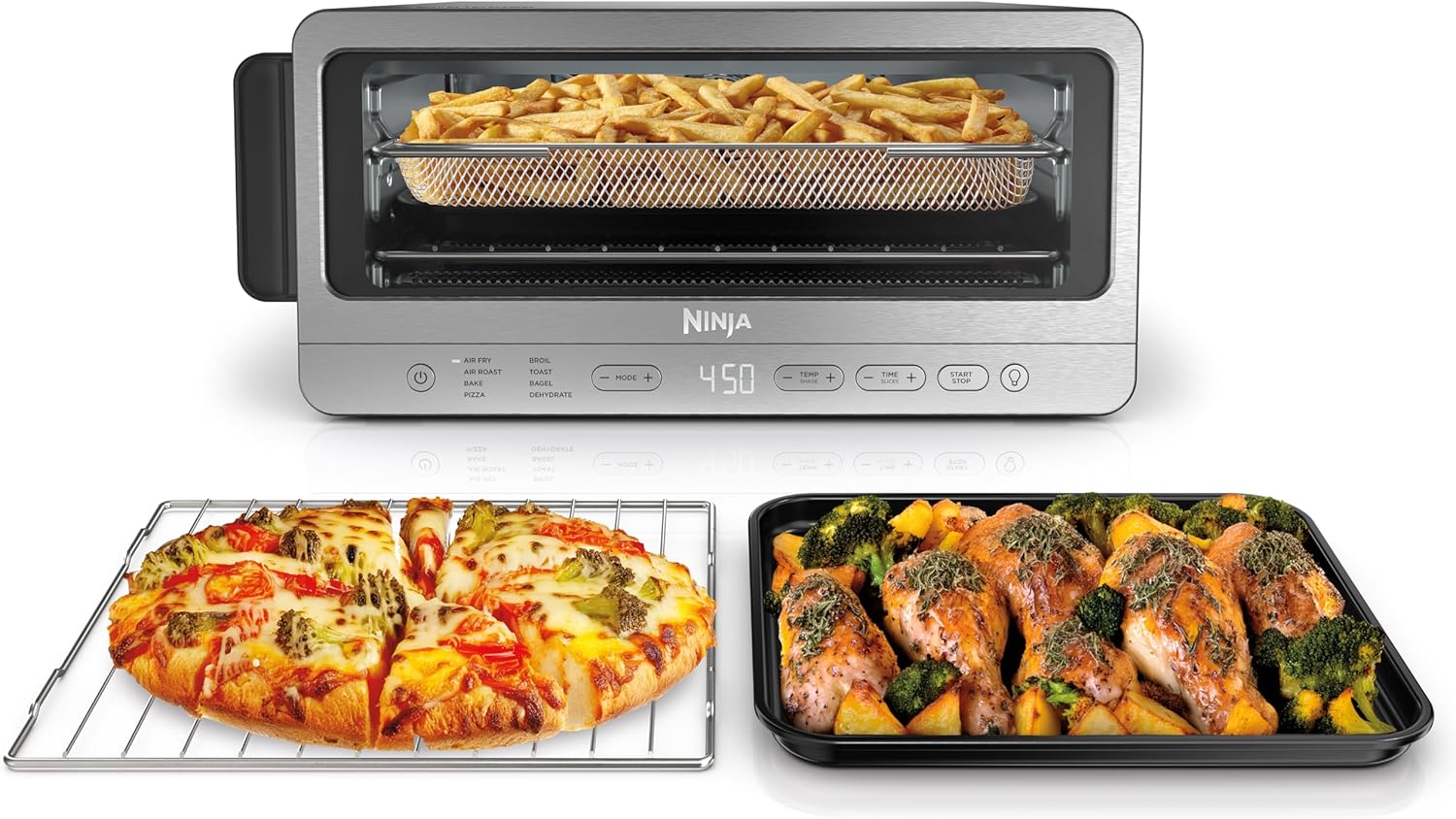
The accessories included with a countertop oven expand its versatility right out of the box. Removable ceramic pizza stones, wire racks, baking pans, and air fry baskets allow you to transition between different cooking methods seamlessly. Natural stone surfaces transfer heat efficiently for crisp crusts and are often removable to simplify post-cooking cleanup tasks.
Removable crumb trays catch stray food particles, protecting the interior heating elements and easing routine maintenance. Following manufacturer guidelines regarding dishwasher-safe parts ensures your equipment remains in top condition over years of frequent use. Reviewing what comes in the box helps you determine if additional bakeware purchases are necessary for your kitchen.
Frequently asked questions
What temperature should I set my countertop oven to bake French bread pizza?
Most standard countertop ovens achieve optimal results for French bread pizza when set between 400 and 450 degrees Fahrenheit. This temperature window allows the bread base to warm through and achieve a golden exterior while melting shredded cheese thoroughly without burning the toppings. If your appliance supports higher temperatures up to 800 degrees Fahrenheit, you can achieve an even crispier crust in a shorter timeframe, though you must monitor the cooking process closely to prevent over-browning your ingredients.
Can I use a regular toaster oven for baking a frozen French bread pizza?
Yes, regular toaster ovens accommodate frozen French bread pizza easily, provided the interior dimensions match the length of your bread slices. Many digital and manual countertop models feature dedicated bake or toast functions designed to handle frozen items effectively. Simply place your pizza on the included wire rack or baking pan, select a moderate temperature setting around 400 degrees Fahrenheit, and monitor the timer until the cheese is bubbling and the crust is crisp.
Are high-heat pizza ovens better than standard toaster ovens for bread pizza?
High-heat pizza ovens reach up to 800 degrees Fahrenheit, making them superior for achieving authentic pizzeria-style crispy crusts rapidly. However, standard toaster ovens offer greater versatility with multi-rack positions, larger capacities, and lower temperature ranges suited for everyday baking, roasting, and air frying. Your choice depends on whether you prioritize extreme crust crisping or multi-function cooking flexibility for preparing various family meals throughout the week.
How do removable pizza stones affect the cooking process?
Removable natural ceramic pizza stones absorb and transfer heat directly to the base of your food, promoting an evenly baked and delightfully crispy crust. Because stone surfaces retain thermal energy efficiently, they also support back-to-back cooking sessions without losing significant heat between baking batches. Furthermore, being removable makes them much easier to clean once the appliance has cooled down completely following your everyday meal preparation routine.
What is the advantage of a French door design on a countertop oven?
French door designs provide significant practical advantages by reducing the outward swing clearance needed on your countertop compared to traditional drop-down doors. This design lets you open one or both doors simultaneously using either independent handles or a single-pull mechanism, granting immediate access to internal food racks. This layout is especially helpful in cramped kitchen spaces where counter depth is limited, allowing you to load and unload heavy baking pans safely and comfortably.