Appliances · Buying Guide
Best french bread pizza oven temperature settings for crispy crusts
Achieving the ideal french bread pizza oven temperature is essential for turning simple bakery loaves into golden, bubbling treats with perfectly melted cheese. Selecting the right countertop appliance allows home cooks to manage precise thermal ranges, ensuring that open-faced toppings cook evenly while the crust remains satisfyingly crisp and firm every single time you bake.
From multi-rack convection cookers to ultra-hot ceramic stone burners, today's kitchen technology gives you direct control over heat distribution. Evaluating your options based on wattage, interior capacity, and temperature limits ensures you find a reliable machine tailored to your favorite baking recipes and household meal routines.
As an Amazon Associate, StacyLaughs earns from qualifying purchases.
Buying guide
Temperature Range and Thermal Limits
Selecting the right countertop oven requires evaluating the maximum thermal limits available for your specific baking needs. While standard ovens peak around 450 degrees Fahrenheit for general roasting and baking, specialized units can soar up to 800 or 850 degrees. Higher thermal caps are essential if you want to achieve authentic, blistered crusts on homemade breads and pizzas. Understanding these temperature boundaries ensures your appliance matches your culinary ambitions without falling short on heat output during crucial cooking moments.
Lower temperature capabilities are equally important for tasks like proofing dough, dehydrating fruits, or keeping finished meals warm. Appliances offering granular adjustments down to 100 degrees provide exceptional versatility for delicate kitchen workflows. Always verify the bottom and top thresholds before purchasing to guarantee the equipment handles both gentle warming and blistering high-heat baking effectively.
Interior Capacity and Pan Compatibility
Interior dimensions dictate what size dishes, pans, and pizzas you can comfortably load into your countertop oven. Compact models offering around 0.6 cubic feet handle standard six-slice toast batches or twelve-inch circular pies easily. However, larger households or meal preppers may need expansive forty-plus-liter cavities that accommodate wide rectangular baking sheets. Assessing your daily portion requirements prevents the frustration of buying an appliance that cannot fit your favorite casserole dishes or sheet pans.
Vertical clearance is another crucial factor when baking thick loaves of bread or roasting whole chickens. Units with low interior profiles excel at flat pizza making but struggle with tall items. Checking both depth and height specifications ensures your cookware collection integrates smoothly with the chosen oven cavity.
Heating Elements and Convection Power
The configuration of heating tubes and convection fans directly influences how evenly your food bakes and browns. Multiple heating elements positioned at both top and bottom ensure balanced thermal transfer across baking stones and wire racks. High-velocity convection fans accelerate cooking times by circulating hot air continuously around the food cavity. This technology eliminates cold spots, resulting in evenly melted cheese and uniformly crisped crusts on open-faced bakery items.
Wattage ratings also indicate raw heating power, with higher wattage models heating up much faster. Devices featuring rapid-heating tubes reduce or eliminate lengthy preheating cycles, saving valuable time during busy weeknight meal preparation. Prioritize robust thermal layouts if consistent browning and speed are your top priorities.
Control Interfaces and Digital Precision
Navigating your appliance settings should be intuitive, whether through traditional mechanical dials or advanced digital LED panels. Mechanical knobs offer immediate, tactile adjustments for cooking time, temperature, and function without requiring menu navigation. Conversely, digital interfaces provide precise, incremental temperature tuning, allowing adjustments in exact single-degree or five-degree steps. Choosing between these control types depends entirely on your personal preference for tactile simplicity versus digital accuracy.
Preset programs simplify operation by pre-programming optimal heat curves for specific foods like frozen pizzas, wings, or artisan breads. These automated modes remove guesswork for novice cooks while still allowing manual overrides for experienced bakers. Evaluate how easily you can read and adjust the control panel in your kitchen lighting conditions.
Countertop Footprint and Storage Design
Countertop real estate is a precious commodity in most kitchens, making the physical dimensions and footprint of your oven a vital consideration. Large-capacity convection ovens span extensive widths and depths, requiring permanent counter space that can crowd smaller cooking areas. Measuring your available counter space and overhead cabinet clearance before purchasing prevents frustrating installation surprises. Compact or vertically designed units offer alternative solutions for restricted kitchens.
Some modern electric ovens incorporate clever engineering, such as flip-up storage designs, to reduce their active footprint by half when not in use. Consider how easily you can move or store the appliance if your kitchen counters require flexibility. Balancing capacity with physical dimensions ensures harmonious integration into your living space.
Included Accessories and Maintenance Ease
The quality and variety of included accessories significantly enhance the practical value of your countertop oven. Essential additions like removable ceramic baking stones, wire racks, air fry baskets, and specialized pans expand your culinary capabilities right out of the box. Removable crumb trays simplify cleanup by catching food debris before it burns onto the bottom heating elements. Durable materials like stainless steel and non-stick interior coatings further streamline routine post-cooking maintenance.
Maintaining your oven according to manufacturer guidelines preserves its operational longevity and performance. Easy-to-wipe exterior finishes resist oil splatters and fingerprints, keeping the appliance looking polished. Reviewing what tools and cleaning aids come packaged with the unit helps you get started immediately without hidden extra expenses.
Frequently asked questions
What temperature is best for baking french bread pizza in a countertop oven?
Baking french bread pizza typically requires a high temperature ranging between 400 and 450 degrees Fahrenheit to ensure the crust turns golden and crunchy while the cheese melts thoroughly. If you are using a specialized high-heat electric pizza oven, temperatures can be pushed up to 800 degrees for rapid, pizzeria-style results in just a few minutes. Adjusting your heating elements to activate both top and bottom heat sources guarantees even cooking across open-faced toppings without scorching the delicate bread base.
Do I need to preheat my countertop oven before cooking a pizza?
Preheating is generally recommended for achieving a crispy crust, especially when baking pizzas or artisanal breads. Many modern countertop ovens feature rapid-heating elements or dedicated pizza presets that shorten preheating times significantly, sometimes eliminating the traditional wait. If your appliance includes a heat-conducting ceramic stone, allowing it to heat up fully ensures proper thermal transfer for an even bake. Skipping preheating can result in a soggy crust, as the moisture from the sauce and cheese releases before the dough sets.
Can countertop ovens handle other meals besides pizza and french bread?
Modern countertop ovens are remarkably versatile appliances designed to replace multiple kitchen devices with functions like roasting, baking, broiling, air frying, and toasting. You can easily prepare family meals ranging from roasted chicken wings and casseroles to roasted vegetables, cakes, and dehydrated snacks. Their adjustable temperature ranges and convection fans accommodate diverse recipes from breakfast to dinner, making them efficient central workhorses for everyday cooking without ever needing to turn on your full-size kitchen range.
How do I clean and maintain my electric pizza or toaster oven?
Maintaining your countertop oven involves following manufacturer guidelines for routine cleaning after the appliance has cooled down completely. Most models include removable crumb trays and baking stones that can be taken out and wiped clean with warm soapy water to remove grease and food particles. Stainless steel exteriors and non-stick interiors resist staining and can be wiped down with a damp cloth. Avoid harsh abrasive pads that might scratch specialized interior coatings or damage sensitive heating elements during maintenance.
What is the difference between French doors and traditional pull-down doors?
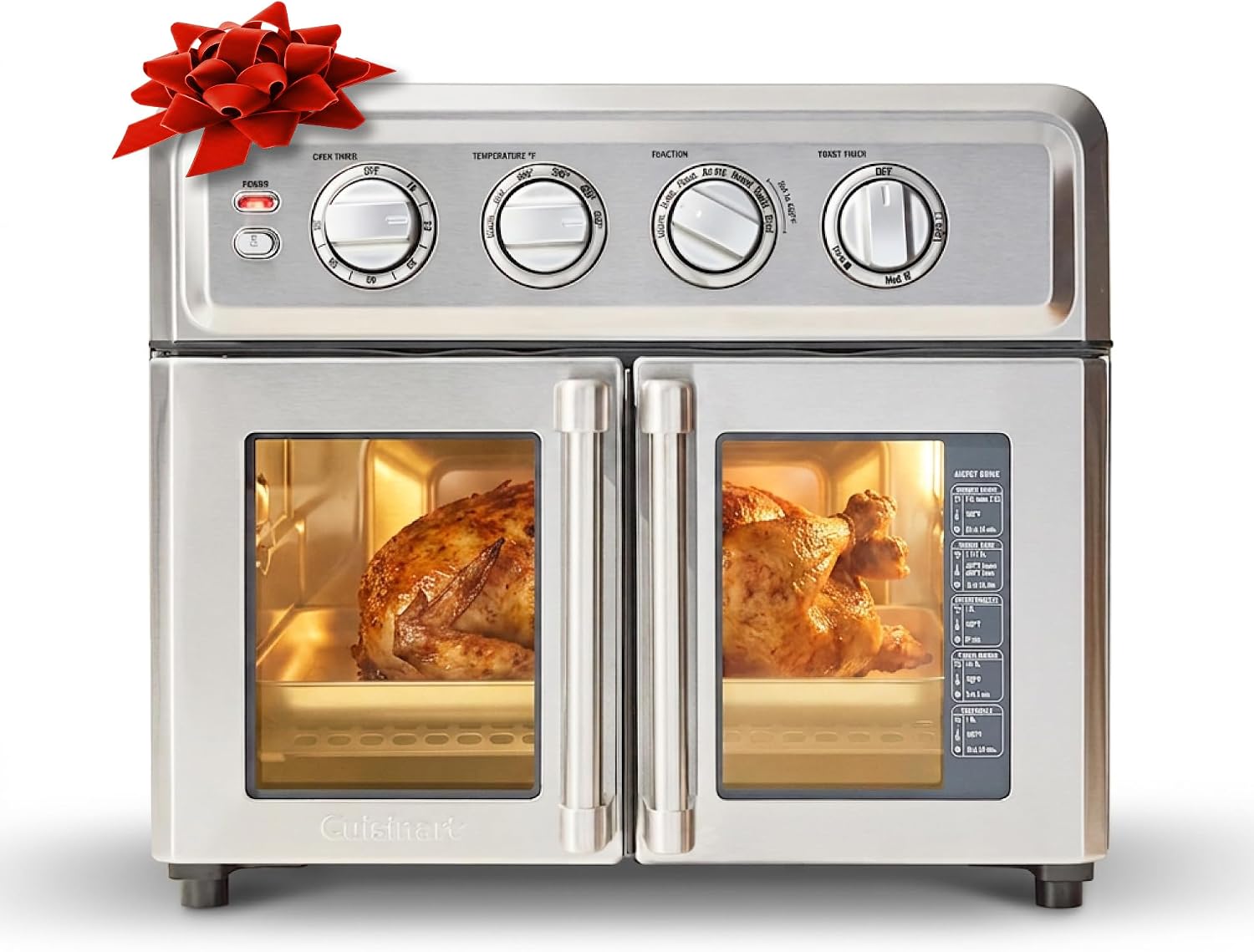
French doors feature a double-door design that swings open outward from the center, often equipped with a synchronized one-hand operation mechanism or magnetized assists to hold them open. This design eliminates the barrier of a hot, heavy drop-down door, making it much easier to load and unload heavy baking pans safely. Traditional pull-down doors open downward like a standard oven door, which can create a physical reach barrier across your countertop when handling large dishes or hot pizzas.