Appliances · Buying Guide
Best Glass Measuring Cup Set Options For Everyday Kitchen Baking

Finding the right glass measuring cup set helps streamline baking and cooking prep work in any busy kitchen environment. These sets offer sturdy materials designed to handle various liquid and dry ingredients accurately without absorbing food odors or lingering stains over time. Whether you are melting butter, mixing heavy cake batter, or scaling precise liquids for a complex recipe, having multiple sizes ensures you always have the correct container readily on hand for the task.
Selecting a collection involves carefully reviewing capacity ranges, handle styles, and storage requirements to match your specific cooking habits and available cabinet space. Some collections include protective lids or specialized small measuring glasses, while others focus on classic nesting designs featuring clear measurement markings for everyday readability. Exploring these distinct options helps you find durable kitchen glassware perfectly suited for routine cooking and baking tasks.
As an Amazon Associate, StacyLaughs earns from qualifying purchases.
Buying guide
Material Composition and Durability
Glass measuring cup sets typically feature either tempered glass or borosilicate glass. Tempered glass undergoes specialized thermal treatments to enhance impact resistance, making it a reliable choice for everyday kitchen drops and knocks. Borosilicate glass focuses on thermal shock resistance, allowing vessels to transition safely between extreme hot and cold environments without cracking. Understanding these material differences helps shoppers choose glassware that aligns with their specific cooking habits and appliance usage.
Evaluating the thickness and weight of the glass walls also matters for longevity. Thicker walls generally offer greater structural stability when mixing heavy batters or handling large volumes of liquid. However, heavier glass increases the overall weight of the set, which may influence ease of lifting. Reviewing these attributes ensures you select durable kitchen tools suited for your daily culinary routines.
Capacity Range and Selection
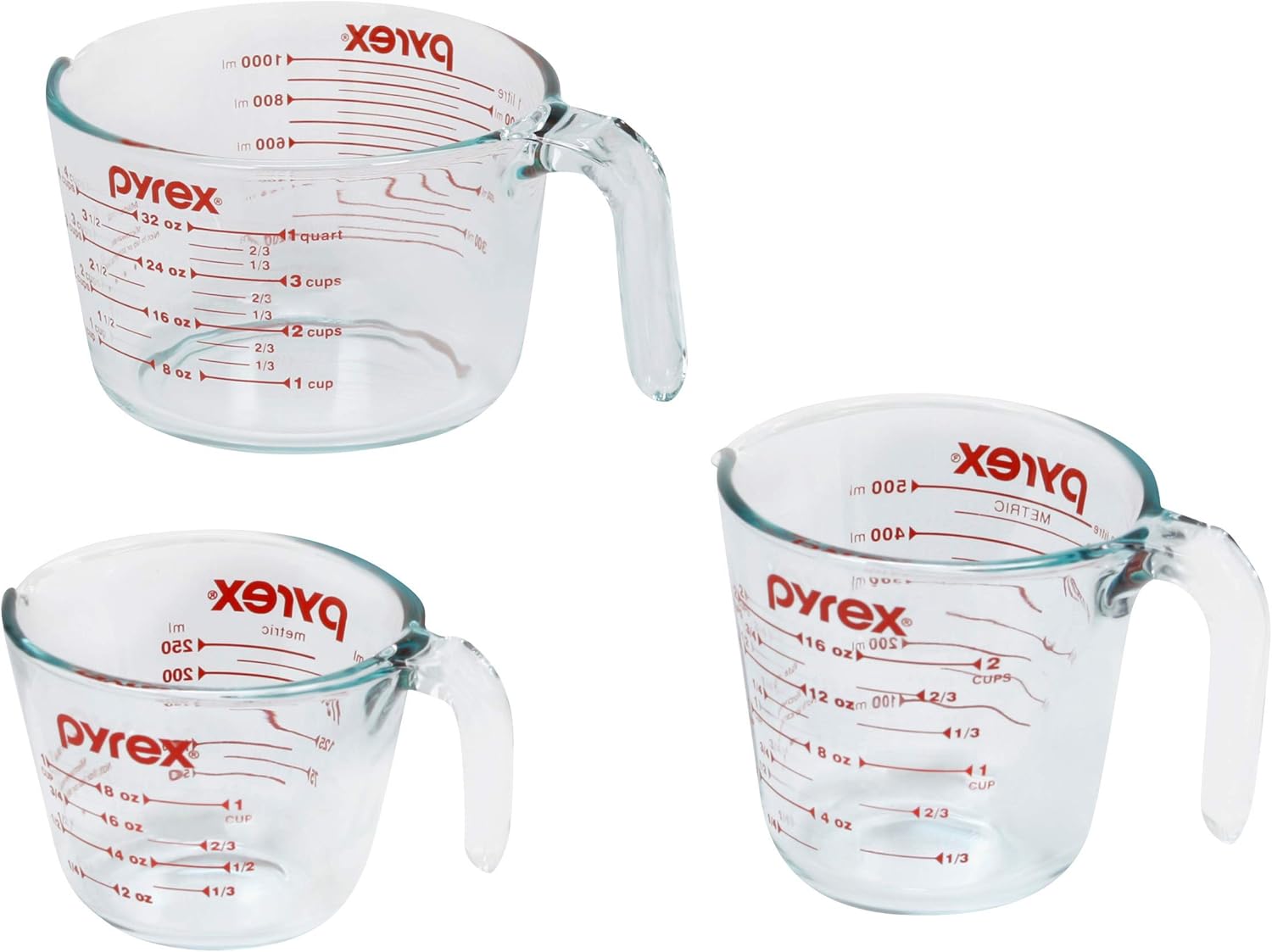
Assessing your typical recipe requirements guides the ideal capacity range for a measuring cup set. Standard sets usually feature one, two, and four-cup vessels, which cover most baking and cooking tasks. Some collections expand this range by including specialized small glasses for measuring ounces, teaspoons, or tablespoons, while others incorporate large eight-cup bowls for high-volume batter mixing. Choosing the right capacity combination prevents the need for multiple batches.
Matching the set size to your household cooking volume ensures efficient meal preparation. Smaller households may find standard three-piece collections completely sufficient for daily needs, whereas avid bakers often benefit from expanded multi-piece sets. Carefully reviewing the maximum and minimum fill lines included in a collection guarantees you can accurately scale both large broths and minor liquid extracts.
Handle Design and Pouring Control
The presence or absence of a handle significantly impacts how comfortably you maneuver a filled measuring cup. Ergonomic handles with textured grips provide extra security when lifting heavy, liquid-filled containers from countertops to mixing bowls. Alternatively, handleless cup designs utilize compact, nesting profiles that save valuable cabinet space but require careful gripping. Evaluating your hand comfort and grip strength helps determine the most practical design.
Spout design also dictates how cleanly liquids transfer into smaller vessels without messy drips. V-shaped spouts and curved lips help guide a focused, steady stream of liquid during pouring. Checking the spout shape ensures you can transfer milk, oil, or broth smoothly without creating kitchen counter messes. Balancing handle comfort and spout precision optimizes your overall measuring experience.
Measurement Markings and Readability
Clear, easy-to-read measurement markings are essential for accurate recipe execution. Many glass measuring cups feature bold imperial and metric scales printed or etched directly onto the transparent or translucent glass walls. High-contrast colors, such as red or white, enhance visibility against various liquid contents. Checking how clearly these units are displayed ensures you can read fluid levels quickly without squinting or guessing fill lines.
Multi-scale markings add further versatility by displaying cups, ounces, milliliters, and sometimes even tablespoons side by side. This eliminates the need for manual unit conversions when following international recipes or specialized baking guides. Ensuring the markings resist fading over time through regular dishwasher use helps maintain long-term measurement accuracy in your kitchen glassware.
Storage and Cabinet Space Optimization
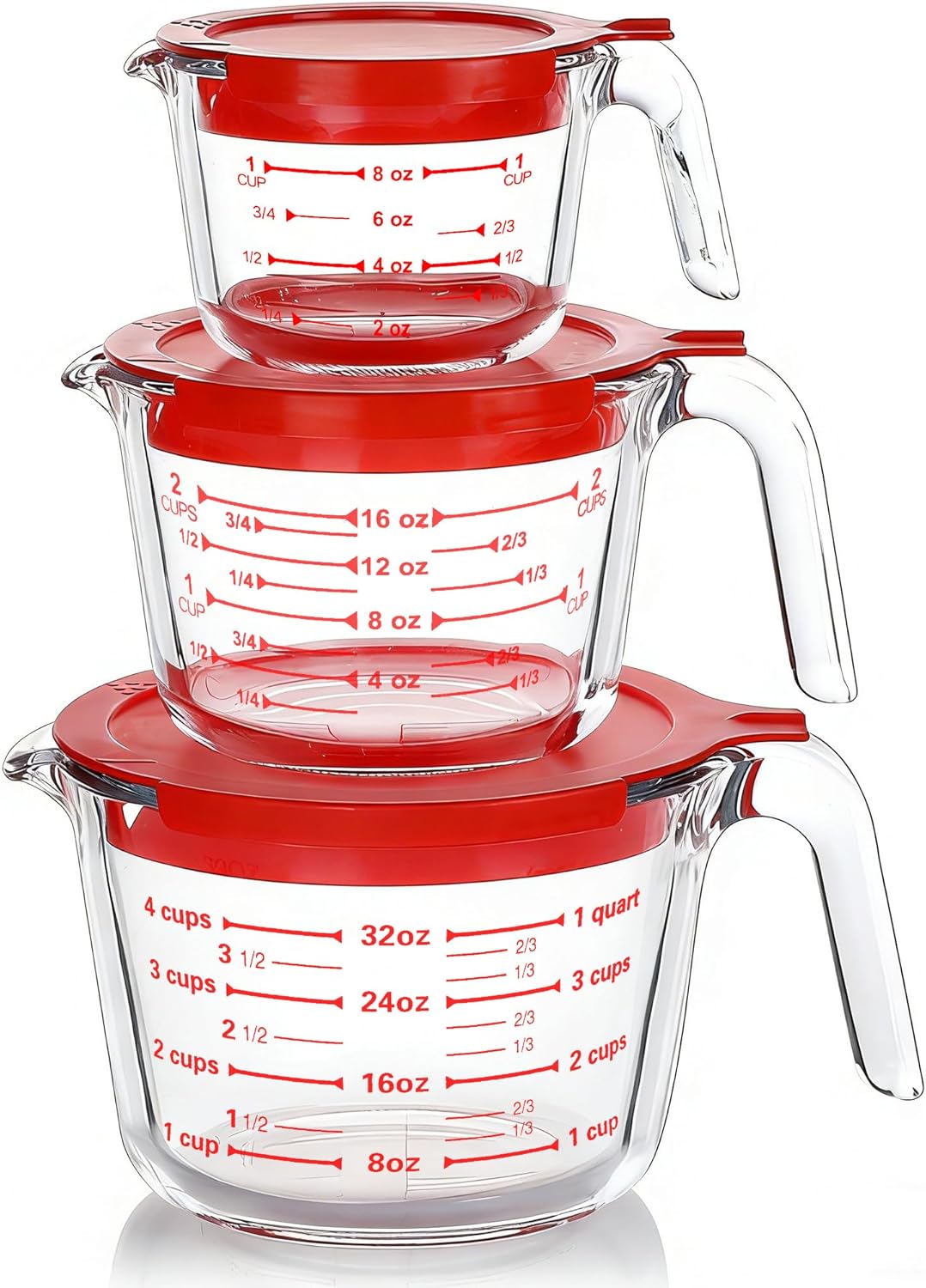
Managing kitchen storage space is a key consideration when selecting a glass measuring cup set. Most traditional sets feature a nesting design, allowing smaller cups to fit neatly inside larger ones to minimize shelf footprints. Some modern collections include fitted protective lids, enabling cups to stack securely even when covered. Evaluating your available cabinet or drawer space helps you choose a collection that stores efficiently.
Incorporating lids also transforms measuring vessels into temporary storage containers for leftover liquids or prepped ingredients. However, sets with extra components require additional organization to keep matching lids and cups together. Weighing the benefits of nesting simplicity against lidded storage versatility ensures your kitchen stays organized without cluttering working surfaces.
Maintenance and Appliance Compatibility
Proper maintenance ensures your glass measuring cups maintain their clarity and structural integrity over years of use. Most borosilicate and tempered glass sets support dishwasher cleaning, microwave heating, and freezer storage. However, specific components like non-tempered mini glasses or plastic storage lids may carry manufacturer restrictions regarding microwave or high-heat oven exposure. Reviewing these compatibility guidelines prevents accidental damage.
Selecting dishwasher-safe glassware simplifies cleanup after messy baking sessions involving sticky syrups, oils, or heavy batters. Nonporous glass surfaces resist absorbing food odors, flavors, or stains, keeping the containers fresh for subsequent recipes. Understanding routine care requirements guarantees your measuring cups remain dependable kitchen staples for all your daily culinary preparation tasks.
Frequently asked questions
Can I use glass measuring cups in the microwave?
Many glass measuring cups made from tempered or borosilicate glass are completely safe for microwave use, allowing you to melt butter, heat milk, or warm liquids directly in the container. However, you must always check the specific manufacturer guidelines for each piece, as certain specialized mini glasses or non-tempered components may carry usage restrictions. Avoiding sudden temperature shocks and verifying product labels ensures safe heating without risking cracks or structural damage during food preparation.
What is the difference between tempered glass and borosilicate glass measuring cups?
Tempered glass undergoes a specialized thermal treatment that increases its mechanical strength and impact resistance, making it durable against everyday bumps and drops in busy kitchens. Borosilicate glass contains unique chemical compositions designed to resist thermal shock, allowing the material to withstand extreme temperature shifts between hot and cold environments without cracking. Both materials offer nonporous, stain-resistant surfaces that do not absorb food odors, but they handle thermal and physical stress through slightly different engineering properties.
Are glass measuring cups dishwasher safe?
Most standard glass measuring cups are designed to be fully dishwasher safe, significantly simplifying cleanup after baking or cooking tasks involving sticky batters, oils, and heavy liquids. Placing items on the top rack or following specific manufacturer washing instructions helps preserve printed measurement markings and protective lids over time. Nonporous glass naturally resists staining and odor retention, ensuring the containers remain exceptionally clean and clear even after repeated washing cycles in busy household kitchens.
How do I choose between nesting cups and lidded measuring cup sets?
Choosing between traditional nesting cups and lidded sets depends primarily on your storage habits and ingredient preparation style. Nesting sets stack compactly inside one another to save valuable cabinet space, operating purely as measuring vessels with open spouts. Lidded sets provide the added versatility of temporary refrigerator storage, allowing you to measure and cover liquids or batters in the same container. Evaluate whether you need multi-purpose storage lids or prefer simple, open-top nesting convenience.
Do glass measuring cups include small units like teaspoons and tablespoons?
While standard measuring cup sets typically focus on larger volume increments like cups, ounces, and milliliters, certain specialized collections include mini cups with fractional scales. These compact measuring glasses feature detailed markings for teaspoons, tablespoons, fluid ounces, and milliliters, helping you scale micro-quantities of liquids accurately. Reviewing the individual pieces included in a set ensures you select a collection that accommodates both large broth measurements and tiny extract portions effectively.