Appliances · Buying Guide
Best Glass Measuring Cups for Everyday Kitchen Baking and Cooking
Finding the right glass measuring cup transforms everyday baking and cooking tasks by offering precise liquid measurement, dependable thermal performance, and effortless cleanup routines across your kitchen. Whether you are melting butter in a microwave, mixing heavy cake batters, or preparing multi-step family recipes, durable glassware provides a reliable, nonporous alternative to plastic or metal kitchen tools.
Modern glass measuring sets come in various configurations, ranging from compact multi-piece nesting kits to large single vessels and lidded storage containers. Evaluating your typical recipe volumes, cabinet storage space, and appliance heating habits helps you select the ideal glassware to support your daily culinary routines efficiently over years of heavy kitchen use.
As an Amazon Associate, StacyLaughs earns from qualifying purchases.
Buying guide
Material Composition and Durability
Glass measuring cups rely on specialized formulations like tempered soda-lime or borosilicate glass to handle kitchen demands. These materials offer nonporous surfaces that resist absorbing food odors, flavors, or vibrant colors from ingredients like tomato sauce or turmeric. Unlike plastic alternatives, quality glass does not warp or leach chemicals under high heat.
Selecting the right material ensures long-term reliability during baking and cooking routines. Borosilicate glass handles extreme thermal shifts well, while high-quality tempered glass provides robust impact resistance for everyday kitchen tasks. Evaluating how these materials perform under stress helps home cooks choose vessels that maintain structural integrity through years of heavy usage.
Capacity Range and Set Versatility
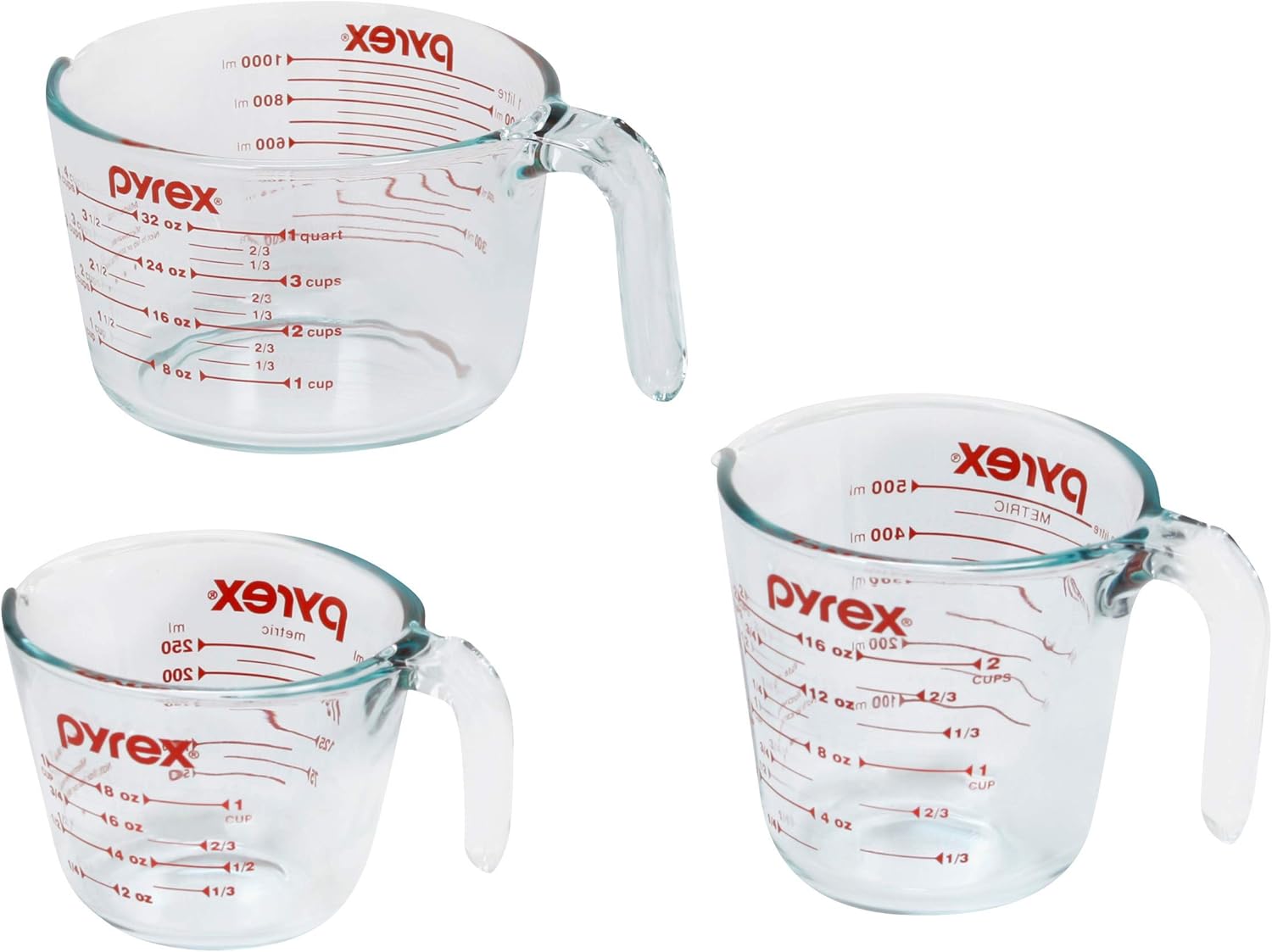
Choosing an appropriate capacity range depends directly on the scale of your regular baking and cooking projects. Multi-piece sets typically feature one-cup, two-cup, and four-cup vessels, covering everything from minor ingredient additions to substantial batter mixing. Having multiple distinct sizes prevents the continuous inconvenience of repeatedly washing a single container during complex multi-step recipes.
Specialty collections may also include fractional sizes or extra-large containers, such as five-ounce or eight-cup options. Assessing your typical recipe volumes ensures you select a set that matches your exact workflow needs. Larger vessels accommodate heavy liquid mixing, while smaller cups provide precision for measuring extracts, milk, or melted butter without visual estimation errors.
Measurement Markings and Readability
Clear, high-contrast measurement markings are vital for executing recipes accurately every single time. Bold typography featuring both imperial ounces and metric milliliters allows users to check liquid volumes quickly without squinting. Markings that are permanently fused or etched into the glass surface resist fading or washing away over years of mechanical dishwashing and scrubbing routines.
Side-by-side unit displays eliminate the need for manual conversion calculations during complex international cooking tasks. Transparent or semi-transparent glass walls enable cooks to view fluid levels from multiple angles, ensuring accuracy from a standing position. Prioritizing legible and durable scales minimizes costly measuring mistakes in both casual baking and precision cooking and baking environments.
Pour Spout and Handle Ergonomics
Ergonomic handles and well-designed pour spouts significantly impact the comfort and safety of daily liquid transfer tasks. A comfortable grip prevents hand fatigue when lifting heavy, full containers of dense batter or water. Curved spouts direct liquids smoothly into mixing bowls or baking pans, minimizing messy drips and accidental spills across busy kitchen countertops and tables.
Evaluating handle dimensions ensures they accommodate different hand sizes securely during heavy use. Slip-resistant textures or thoughtfully proportioned handle designs provide better control when hands are damp or slippery. Pairing a sturdy handle with a precision spout transforms routine liquid measuring into a controlled, clean part of food preparation tasks.
Thermal Tolerance and Appliance Safety
Thermal tolerance determines whether a measuring cup can move safely between cold refrigerators, active microwaves, and hot preheated ovens. High-quality glass variants withstand extreme temperature shifts without cracking or warping under sudden heat exposure conditions safely. Checking manufacturer appliance guidelines ensures you avoid thermal shock when heating butter, melting chocolate, or warming liquids rapidly.
Dishwasher compatibility also simplifies cleanup after sticky baking sessions involving sugary syrups or dense oils. Nonporous glass surfaces release baked-on residues easily during standard wash cycles without retaining stubborn food aromas or stains over time. Understanding appliance limitations protects your kitchen investments from accidental breakage caused by improper heating methods or sudden temperature extremes.
Storage Footprint and Nesting Design
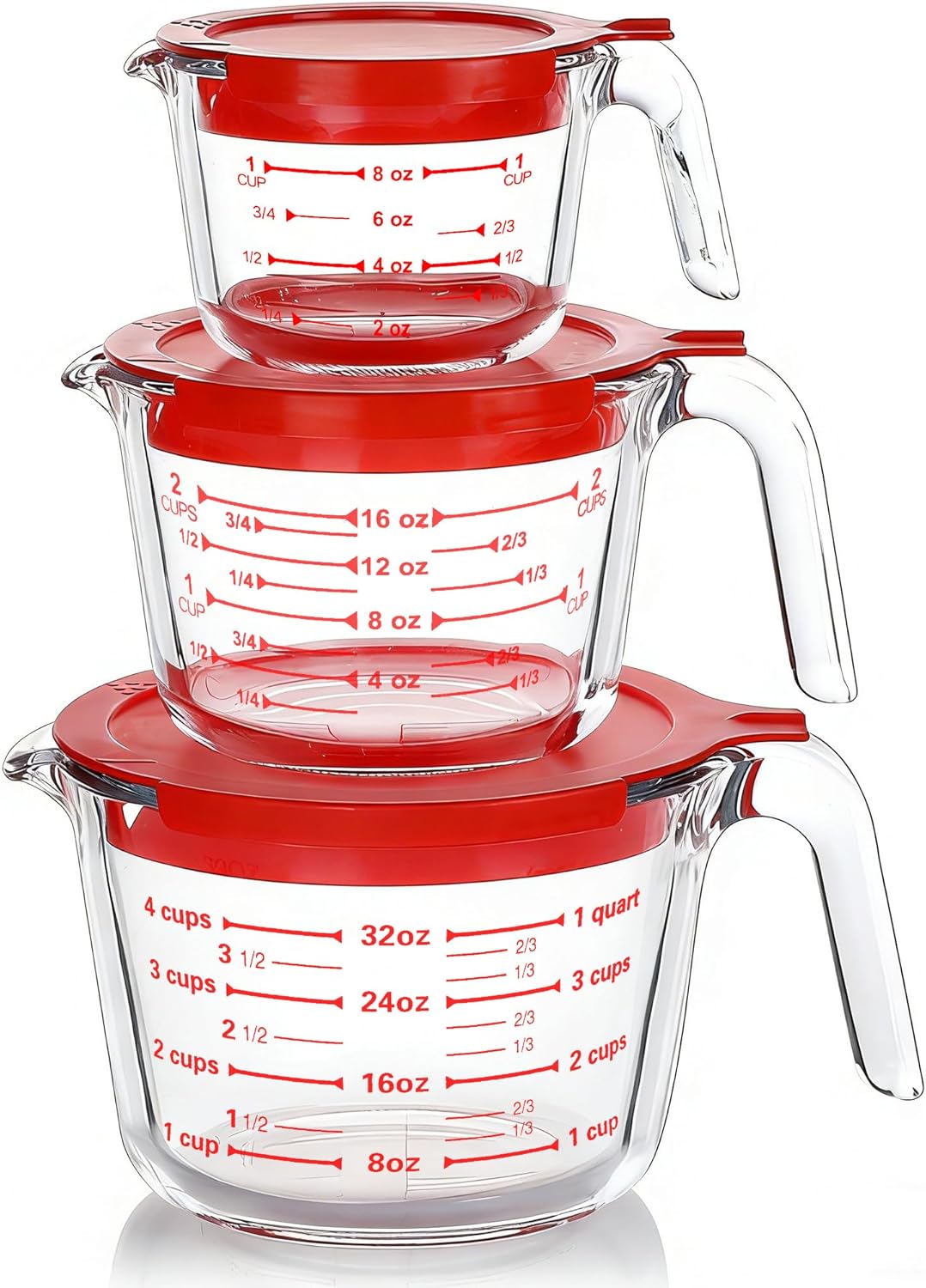
Kitchen cabinet space is frequently at a premium, making the storage footprint an essential purchasing consideration for home cooks and bakers. Nesting designs allow smaller cups to fit neatly inside larger ones, conserving valuable shelf space efficiently. Some modern sets also accommodate protective lids that enable secure stacking when covering stored ingredients or prepared batters.
Carefully evaluating the physical dimensions and overall weight of multi-piece sets helps prevent overcrowding in kitchen cupboards. While larger capacities like eight-cup bowls offer immense versatility for big batches, they require dedicated storage clearance. Balancing your available storage space with the physical size of your glassware ensures an organized, accessible kitchen setup daily now.
Frequently asked questions
Can glass measuring cups be used in the microwave?
Many glass measuring cups feature tempered or borosilicate glass constructions that are explicitly rated for microwave use, such as melting butter or warming liquids. However, you must always verify specific manufacturer guidelines, as certain specialized or non-tempered glass components—such as specific small measuring glasses—may carry restrictions against microwave heating. Always check product instructions before placing any glass container directly into an active microwave to prevent thermal damage or accidental breakage.
Are glass measuring cups dishwasher safe?
Most standard glass measuring cups are designed to be dishwasher safe, typically enduring regular wash cycles without losing clarity or damaging the measurement markings. Placing them on the top or bottom rack depends on the specific manufacturer recommendations provided with your set. Nonporous glass resists absorbing food stains, oils, and odors during meals, making cleanup straightforward after baking sessions. Regular washing maintains the transparent finish and clean pouring spouts over years of kitchen use.
What is the difference between tempered glass and borosilicate glass?
Tempered glass undergoes specialized thermal treatments to increase its mechanical strength and impact resistance, making it durable for everyday kitchen drops and appliance use. Borosilicate glass contains boron trioxide, which provides a very low coefficient of thermal expansion and exceptional resistance to extreme temperature shocks. Both materials perform reliably in culinary environments, but borosilicate glass is particularly favored for handling sudden transitions between extreme hot and cold temperatures without cracking or warping.
How should I store multiple glass measuring cups to save space?
Storing multiple glass measuring cups efficiently depends on whether your set features a nesting design or includes protective covers. Many multi-piece sets allow smaller cups to nest neatly inside the largest container, significantly reducing the horizontal shelf space required in your cabinets. If your set includes matching lids, you can often stack the containers with their lids attached, provided your cabinet vertical clearance permits it. Organizing them carefully prevents chipping and maximizes available kitchen storage.
Why do some measuring cup sets include lids?
Measuring cup sets that include matching lids offer enhanced versatility by allowing the containers to function as temporary storage vessels or mixing bowls. Instead of transferring ingredients to a separate container after mixing, you can snap on a lid to store batters, sauces, or liquids directly in the refrigerator or freezer. This feature reduces extra dishwashing and keeps ingredients fresh while preventing unwanted food odors from escaping into your refrigerator environment during food storage.