Appliances · Buying Guide
Best Green Glass Mixing Bowls for Every Kitchen Task
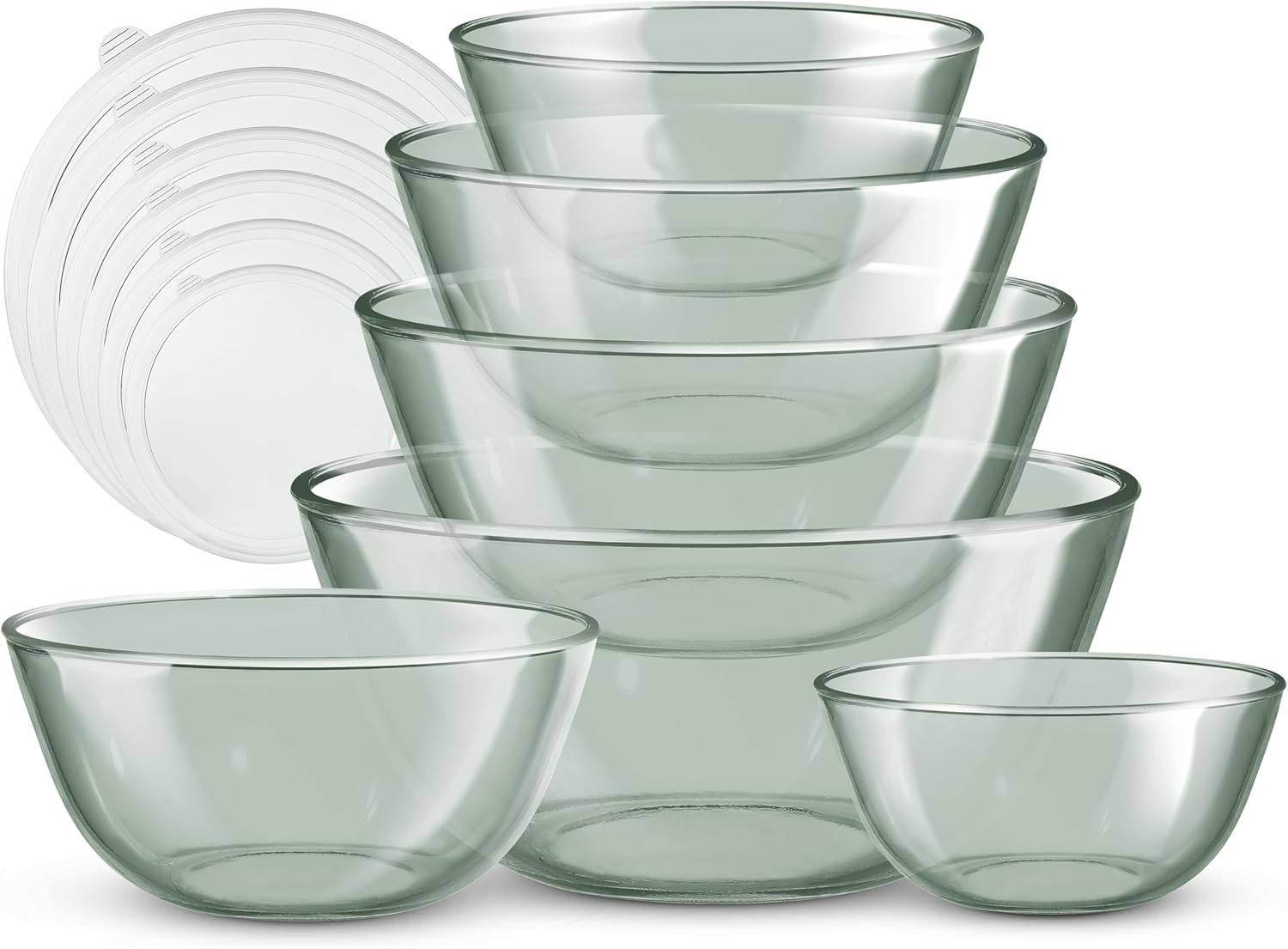
Finding the right prepware changes how you handle daily cooking, baking, and storing tasks. Green glass mixing bowls bring both visual appeal and reliable functionality to your countertop, letting you transition smoothly from whisking batters to refrigerating leftovers. Whether you need a compact stack for quick ingredient prep or a comprehensive nesting set with airtight seals, options vary widely in piece count, dimensions, and material composition.
Evaluating these options requires looking closely at actual specifications like borosilicate or tempered glass construction, lid inclusion, and physical dimensions. Because every kitchen handles different volumes of food, understanding what each specific set offers helps you select the ideal match for your cooking style without relying on guesswork or generic claims.
As an Amazon Associate, StacyLaughs earns from qualifying purchases.
Buying guide
Material Composition and Durability
Choosing the right green glass mixing bowl starts with examining the underlying material. Options typically feature borosilicate or tempered glass. Borosilicate glass handles thermal shifts well, making it a favorite for baking and microwave tasks. Tempered glass undergoes specialized cooling processes that increase its resistance to physical impacts and sudden temperature swings.
Consider how you plan to use your bowls daily. If you frequently move dishes from cold refrigerators to warm microwaves, check manufacturer specifications for thermal limits. Understanding these material traits helps ensure your glassware remains durable and reliable throughout years of regular kitchen food preparation.
Capacity Range and Piece Count
Mixing bowl sets vary significantly in the number of pieces included and their respective volumes. Smaller sets might offer three foundational sizes for basic baking, while larger collections provide up to twelve pieces spanning fractional quarts to massive multi-quart capacities. Think about the types of recipes you tackle most frequently.
If you routinely mix large batches of dough or toss family-sized salads, look for options featuring capacities exceeding four quarts. Conversely, if you primarily prep small quantities of chopped vegetables or whisk individual eggs, compact bowls under one quart will suit your workflow much better.
Lid Integration and Food Storage
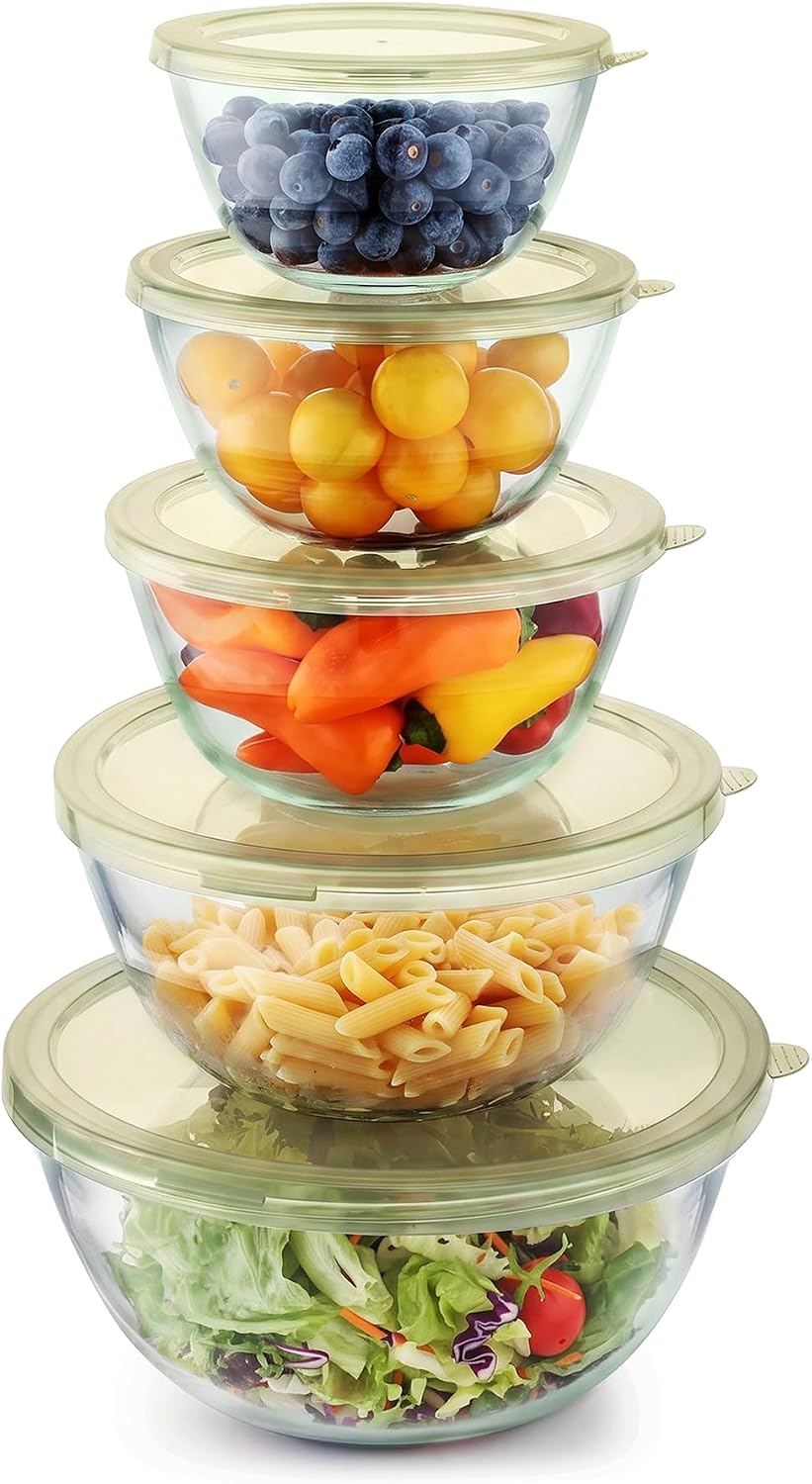
Many modern glass mixing bowl sets come equipped with matching lids, transforming prep vessels into convenient storage containers. Plastic lids designed for these sets generally offer airtight or secure seals to keep pre-portioned ingredients and leftover meals fresh inside your refrigerator without requiring extra containers.
Review care guidelines regarding lid compatibility carefully. While the glass bases usually withstand high oven or microwave temperatures, matching plastic lids are typically restricted to refrigerator storage or top-rack dishwasher cycles. Matching your storage habits to these rules prevents accidental warping.
Rim Shape and Handling Comfort
The physical geometry of a mixing bowl heavily influences its practical usability during active cooking. Deep sides provide ample vertical space for vigorous whisking and kneading, effectively containing splatters of flour or liquid batters. Wide rims offer a secure handhold when lifting, carrying, or passing filled bowls.
Evaluate your kitchen strength and counter space against the stated dimensions. Bowls featuring wide lips and deep walls reduce accidental spills, though they also require more expansive storage space inside your lower cabinets compared to straight-sided stacking alternatives.
Nesting Design and Cabinet Space
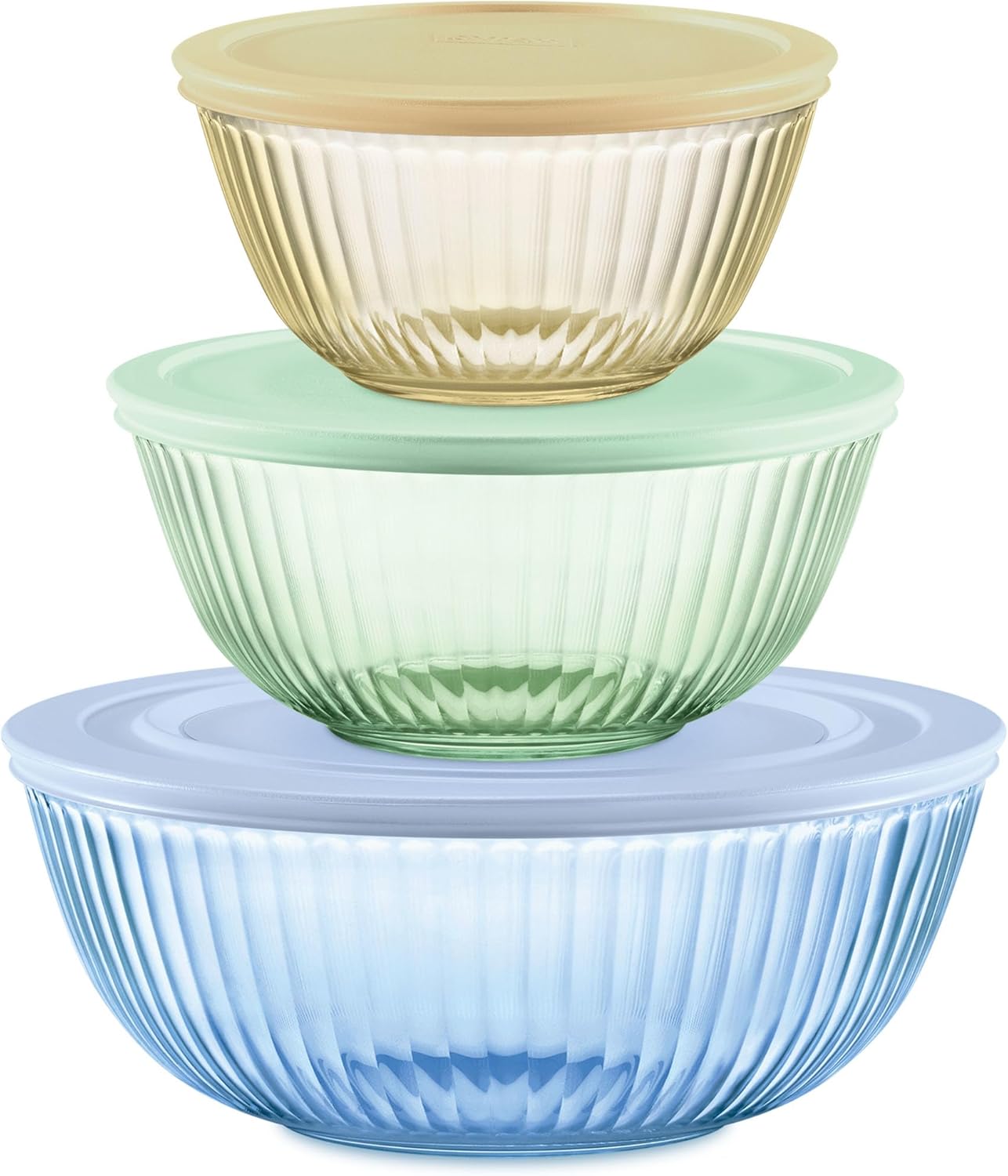
Kitchen storage capacity often dictates how many mixing bowls you can comfortably own. Nesting bowls solve this challenge by allowing smaller units to fit entirely inside larger ones, consolidating your collection into a single vertical footprint. This design keeps kitchen shelves tidy and organized.
Measure your available cabinet height and width before purchasing multi-piece sets. While nesting significantly reduces the horizontal surface area required, larger sets with tall stacked configurations still demand adequate vertical clearance between shelves to store comfortably.
Cleaning and Maintenance Guidelines
Maintaining your glassware properly ensures it retains its appearance and structural integrity over time. Most glass mixing bowls feature smooth, non-porous surfaces that resist staining and lingering food odors, and many are rated safe for routine dishwasher cleanup cycles.
Always adhere strictly to manufacturer care instructions regarding temperature limits and cleaning methods. Avoiding extreme thermal shocks, such as placing a freezing bowl directly onto a hot burner, protects your investment and keeps your kitchen tools functioning safely through daily use.
Frequently asked questions
Can green glass mixing bowls go straight from the refrigerator to the microwave?
Many borosilicate and tempered glass bowls are engineered to handle transitions from cold environments to microwave heating safely. However, you should always check the specific product guidelines provided by the manufacturer before making rapid temperature changes. Extreme thermal shifts can stress glassware if the particular material composition is not rated for such use. Ensuring your bowls are clean and free of hidden cracks also helps maintain safety during heating.
Are the plastic lids included with these bowls safe for microwave use?
Most plastic lids supplied with glass mixing bowl sets are designed specifically for refrigerator storage and food preservation rather than active heating. Exposing these lids to high microwave or oven temperatures can cause warping or structural damage. Always remove the plastic lid or set it loosely aside before placing your glass bowl into a microwave. Following the manufacturer care instructions for each lid guarantees a secure fit over time.
How do I choose the correct bowl capacity for baking bread dough?
Baking bread dough requires plenty of expansion space during the rising process. A mixing bowl with a capacity of at least four to four and a half quarts provides enough room for yeast dough to double or triple in volume without spilling over the edges. Deep sides are particularly helpful for kneading ingredients thoroughly without scattering flour across your countertops. Matching the bowl volume to your typical recipe batch size ensures comfortable food preparation.
Do green glass mixing bowls stain or retain food odors over time?
Glass features a smooth, non-porous surface that naturally resists absorbing food colors, oils, and lingering odors. Unlike some plastic alternatives, high-quality borosilicate and tempered glass bowls will not hold onto the scents of strong ingredients like garlic, onions, or spices after washing. Regular cleaning in a dishwasher or by hand with warm soapy water easily restores the clean surface, keeping your kitchenware fresh for every subsequent recipe you prepare.
What is the benefit of a nesting design for glass mixing bowl sets?
A nesting design allows smaller bowls to fit neatly inside the next largest size, consolidating an entire multi-piece collection into a single compact stack. This space-saving configuration minimizes the horizontal shelf footprint required in your kitchen cabinets, keeping your cookware organized and easy to access. When selecting a set, consider your cabinet dimensions to ensure the stacked height of the nested bowls clears your interior shelf spacing.