Appliances · Buying Guide
Best Green Pyrex Mixing Bowl Sets for Kitchen Prep and Storage
Finding the right green pyrex mixing bowl setup brings a reliable splash of color and practical utility to your kitchen routine. These tempered glass vessels handle everyday tasks smoothly, ranging from mixing morning pancake batters to securely storing evening leftovers. Because households vary in their daily cooking habits, selecting the correct configuration ensures you have the exact sizing needed for meal preparation, baking, and serving family meals without cluttering your cabinet space.
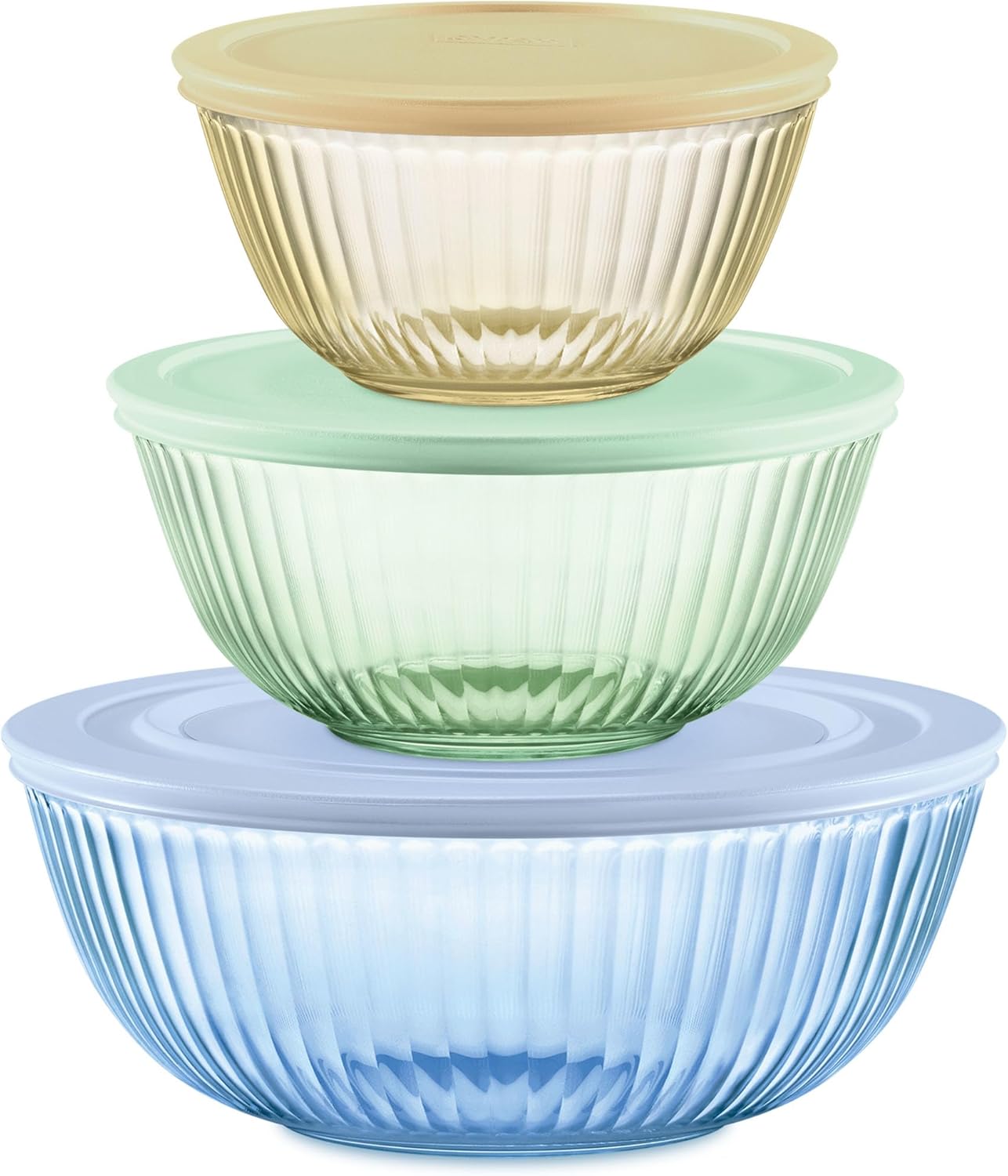
Whether you want a single large container or a multi-pack featuring tinted lids, options range from unlidded nesting bowls to full sets designed for multiple tasks. Exploring these configurations helps you match your daily baking, food storage, and entertainment habits efficiently while keeping cleanup straightforward.
As an Amazon Associate, StacyLaughs earns from qualifying purchases.
Buying guide
Capacity and Sizing Considerations
Choosing the correct bowl capacity is essential for matching your everyday cooking and baking habits. Small 1.3-quart bowls easily handle quick whisking tasks, egg beating, and measuring dry ingredients. Meanwhile, larger options accommodate big batches of bread dough, heavy cake batters, or family-sized salads effortlessly without messy spills. Understanding your recipe volume prevents kitchen bottlenecks.
Evaluating your typical recipes helps determine whether a compact multi-pack set or a large ten-cup single bowl serves your kitchen best. Selecting appropriate physical dimensions prevents overcrowding your prep counter and ensures comfortable handling during active mixing routines. Planning ahead guarantees you always have adequate room for your ingredients while maintaining efficient workflow during busy cooking sessions.
Material and Durability Factors
Tempered glass provides a dependable foundation for mixing bowls due to its inherent resistance to stubborn food stains and lingering odors. Unlike porous materials, glass maintains a clean surface appearance even after handling strongly flavored ingredients like garlic, spices, or tomato sauces repeatedly. This durable composition ensures long-term reliability across frequent baking and everyday food preparation tasks.
Furthermore, tempered glass withstands thermal transitions, allowing you to move vessels safely from refrigerator storage directly into microwave or preheated oven environments. Understanding how glass reacts to heat gives you confidence when baking casseroles or warming chilled leftovers. Prioritizing robust materials reduces the likelihood of surface wear over years of regular home kitchen use.
Storage and Lidded Convenience
Bowls equipped with BPA-free plastic lids offer exceptional convenience for busy households that frequently store leftovers or prep ingredients ahead of time. An airtight lid seal keeps food fresh longer while preventing accidental refrigerator spills during hectic weeks. Selecting lidded sets eliminates the ongoing need for disposable plastic wrap during routine meal storage tasks.
Conversely, unlidded options focus entirely on open mixing and baking performance while maximizing stackability inside crowded kitchen cabinets. Nesting designs allow multiple bowls to stack tightly together, saving valuable storage space when not in active use. Weighing your need for covered storage against open-bowl simplicity helps streamline your kitchen organization strategy effectively over time.
Cleaning and Maintenance Practices
Maintaining your glassware properly ensures it stays hygienic and clear through years of heavy kitchen use. Tempered glass bowls are fully dishwasher safe, meaning you can place them directly into standard machine cycles without worrying about surface scratching. Following manufacturer care instructions keeps the underlying material integrity completely intact and dependable for daily baking.
Plastic lids require slightly more attention, typically designated as top-rack dishwasher safe to prevent heat-induced warping from lower dishwasher heating elements. Hand washing or placing covers correctly in the top rack extends their functional lifespan and preserves the airtight seal. Adhering to proper care guidelines prevents premature degradation of both glass and plastic components over time.
Color and Aesthetic Choices
Tinted glassware introduces vibrant color accents to your kitchen countertop, moving away from plain transparent designs. Sets frequently combine shades like green, pink, yellow, and blue, adding a playful visual element to your kitchenware collection. These colored accents make serving food directly from the bowl more visually appealing during casual family gatherings and meals.
However, mixed-color collections mean you must accept a variety of hues rather than a single monochromatic palette. If your kitchen interior relies on a specific color scheme, evaluating the included lid and glass shades prevents aesthetic clashes. Balancing your desire for color variety against uniform styling ensures your mixing bowls complement your overall home decor smoothly.
Multi-Pack Versus Single Bowl Selection
Deciding between a multi-pack set and a single large bowl depends heavily on the variety of tasks you perform daily. Multi-pack sets offer graduated sizes that accommodate everything from small prep work to large mixing jobs, providing comprehensive kitchen versatility. This all-in-one approach suits home cooks who need multiple vessels ready simultaneously.
On the other hand, purchasing a single large bowl focuses your investment on a high-capacity container designed for specific baking projects. This option minimizes cabinet clutter if you rarely need small prep dishes. Assessing your cooking repertoire helps determine whether a comprehensive set or a targeted single bowl provides better everyday value for your household.
Frequently asked questions
Can green pyrex mixing bowls be used in the oven?
Yes, the tempered glass construction of these mixing bowls supports safe use in preheated ovens. When baking or roasting, you can transfer the glass vessel directly from prep counters into the oven without structural issues. However, you must always remove the plastic lids before placing any bowl into an oven environment, as plastic components are not designed for direct oven heat. Following these usage guidelines ensures safe baking performance and prevents damage to the plastic covers.
Are the plastic lids microwave safe for warming food?
The BPA-free plastic lids included with these mixing bowls are microwave safe, allowing you to warm leftovers or softened ingredients conveniently without transferring contents to another dish. You can place the lidded bowl directly into the microwave for routine heating tasks. To maintain lid longevity and prevent warping, ensure you follow manufacturer recommendations regarding microwave use and avoid exposing the plastic to excessive, prolonged heat beyond normal food warming requirements.
Do the mixing bowls absorb food odors or stains?
High-quality tempered glass naturally resists absorbing stubborn food odors and colorful stains, unlike many plastic alternatives. Even when you mix strongly flavored ingredients like garlic, spices, or tomato-based sauces, the glass surface cleans thoroughly without retaining residual smells. This odor resistance keeps your bowls smelling fresh and looking clear across years of frequent kitchen preparation, making glass a preferred choice for versatile everyday cooking tasks.
How should I clean my tinted glass mixing bowls and lids?
Cleaning these items is straightforward because both the glass bowls and plastic lids are dishwasher safe. For optimal maintenance, place the tempered glass bowls securely in the dishwasher and position the BPA-free plastic lids on the top rack to protect them from lower heating elements. Hand washing is also effective if you prefer manual cleanup. Following these simple care steps prevents unnecessary wear and keeps your bowls and covers in great condition.
Can these mixing bowls be stacked for easy storage?
Many of these round glass mixing bowls feature a nesting design that allows them to stack conveniently inside one another, helping you save valuable cabinet space. When storing unlidded or lidded bowls, verify how they fit within your kitchen shelving. Stacking helps keep your counters and cabinets organized, though you should handle nested glass pieces carefully to prevent scratching or chipping during removal and placement.