Appliances · Buying Guide
Best Heavy Duty Aluminum Baking Sheets for Even Heat Conduction
Choosing the right heavy duty aluminum baking sheet can significantly improve your everyday cooking and baking routines in the home kitchen. Pure aluminum offers remarkable thermal conductivity, distributing heat quickly and evenly across the entire surface. This ensures your cookies, roasted vegetables, and meats brown uniformly without unwanted hot spots.
When upgrading your kitchen bakeware, understanding the practical differences between various sizes and constructions helps you pick the right tool for your specific recipes. Options range from standard half sheets to extra-large pans and multi-piece sets, each built to handle high oven temperatures while resisting daily wear and tear during regular meal preparation.
As an Amazon Associate, StacyLaughs earns from qualifying purchases.
Buying guide
Material Composition and Heat Conduction
Choosing the right metal is essential for achieving consistent baking results in your everyday home kitchen. Pure aluminum stands out for its exceptional thermal conductivity, spreading heat quickly and evenly across the entire baking surface. This rapid heat transfer helps eliminate frustrating hot spots that frequently cause uneven browning in delicate cookies and savory roasted vegetables.
Unlike heavier steel pans that heat quite slowly, aluminum responds rapidly to standard oven temperature adjustments. Selecting a heavy-duty option ensures the metal retains sufficient mass to cook evenly while maintaining reliable structural integrity during high-heat roasting. Understanding how aluminum interacts with heat helps you select bakeware that consistently delivers wonderful culinary outcomes.
Rim Reinforcement and Warp Resistance
High oven temperatures can easily cause flimsy metal baking sheets to bend or twist out of shape during cooking. Look for pans featuring reinforced rims, often built with encapsulated steel cores or sturdy galvanized edges. These supportive borders add crucial rigidity that prevents the flat tray from warping during prolonged exposure to intense heat.
A warp-resistant rim also provides a stable structure, making it much safer to transfer heavy loaded trays in and out of the hot oven. When the edges remain completely flat, your food bakes uniformly without shifting cooking oils or batters to one side. Investing in reinforced construction protects your bakeware over years of regular family meal preparation.
Sizing and Oven Compatibility
Matching your baking sheet dimensions to your oven interior is a crucial practical step before making any final purchase. Standard half sheets fit comfortably inside most residential ovens, leaving enough space around the outer edges for proper heat circulation. Measuring your oven racks beforehand prevents frustrating clearance issues during busy weeknight meal preparation.
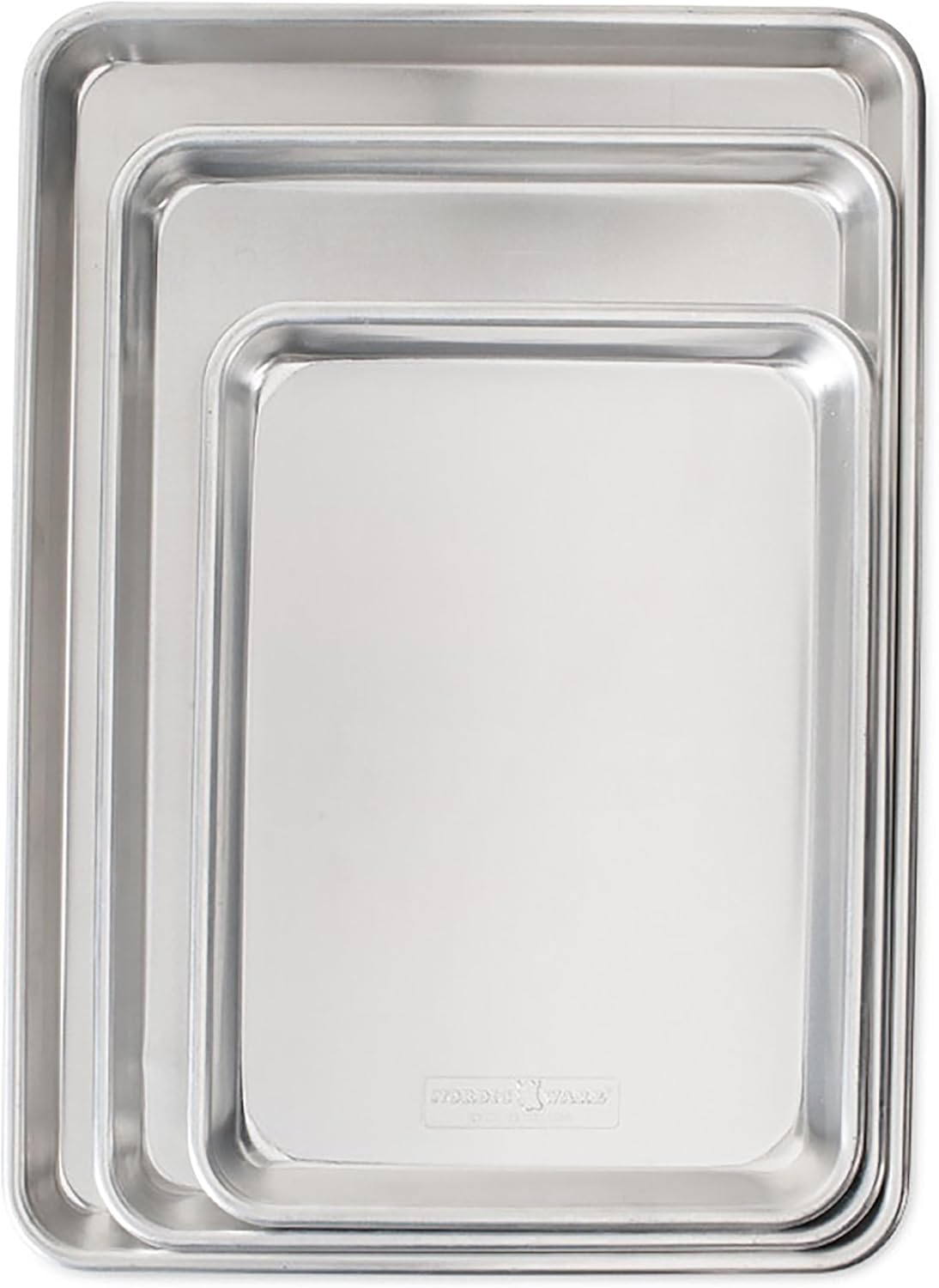
Extra-large pans offer fantastic capacity for big family batches but require significantly more space both inside the appliance and during storage. If you choose multi-piece sets containing quarter sheets and jelly roll pans, ensure you have adequate cabinet space to organize the varying dimensions efficiently without cluttering your daily kitchen drawers.
Maintenance and Cleaning Requirements
Pure aluminum baking sheets require specific care routines to maintain their surface quality over years of regular kitchen use. Hand washing with warm soapy water is generally recommended, as automated dishwashers can cause harmless oxidation or discoloration on uncoated aluminum metals. Addressing stubborn food residues with gentle baking soda pastes effectively preserves the original metal finish.
Over time, uncoated aluminum naturally develops a darker patina that many home cooks appreciate for its seasoned non-stick baking qualities. Embracing this gradual color change helps protect the metal while enhancing your everyday baking experience. Following proper manufacturer cleaning guidelines ensures your heavy-duty sheets remain functional and reliable for countless homemade family recipes.
Surface Coating and Food Contact
Many heavy-duty baking sheets utilize bare, uncoated aluminum surfaces to maximize thermal transfer and eliminate unnecessary chemical additives. This pure metal construction provides a reliable cooking area for roasting meats, baking cookies, and preparing daily meals safely. Understanding whether a pan is coated or uncoated helps you choose the right surface style for your home kitchen.
Uncoated pans work wonderfully with parchment paper or silicone baking mats if you prefer an extra layer of protection against sticking. Because pure aluminum conducts heat so efficiently, your food browns evenly without requiring artificial non-stick coatings. Evaluating your personal cooking preferences guides you toward the ideal baking sheet design for daily use.
Evaluating Pack Counts and Versatility
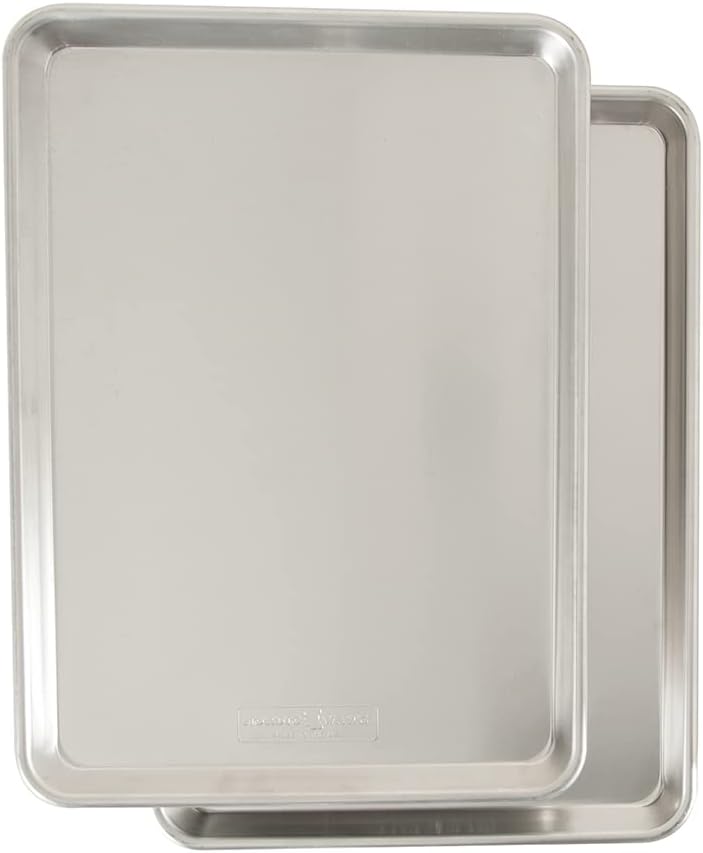
Baking sheets are often sold as single items, dual packs, or multi-size sets, each offering distinct advantages for home cooking routines. Multi-packs allow you to bake larger batches simultaneously or prep multiple meal components without stopping to wash pans between cooking rounds. This operational efficiency is especially helpful during busy weeknight family dinner schedules.
Single pans or assorted sets cater to specific storage constraints and diverse recipe varieties. Assessing how many baking sheets you realistically use at one time prevents unnecessary kitchen clutter while ensuring you always have adequate workspace. Matching the pack count to your typical household meal volume guarantees practical utility from your new bakeware investment.
Frequently asked questions
Why choose aluminum over stainless steel for baking sheets?
Pure aluminum offers superior thermal conductivity compared to ordinary stainless steel, distributing heat up to thirty percent faster across the entire pan surface. This rapid and even heat distribution ensures your cookies, roasted vegetables, and baked goods brown uniformly without developing frustrating hot spots. Additionally, aluminum bakeware is significantly lighter than cast iron or thick steel alternatives, making it much easier to handle when loaded with heavy food batches during daily meal preparation routines.
How do I prevent my aluminum baking sheet from warping?
High-quality aluminum baking sheets often feature reinforced encapsulated steel rims that add structural strength and resist twisting under high oven temperatures. To further prevent warping, avoid thermal shock by never transferring a hot pan directly from a blazing oven into cold water. Letting the baking sheet cool down naturally on a heat-safe surface before washing helps preserve its flat shape and structural integrity over years of regular baking and roasting tasks.
Can I put aluminum baking sheets in the dishwasher?
Hand washing with warm soapy water is generally recommended for uncoated aluminum baking sheets. Running these pure metal pans through an automated dishwasher can cause harmless oxidation, pitting, or discoloration due to harsh detergent chemicals. If you encounter stubborn food residues or baked-on stains, applying a simple paste made from baking soda and water or lemon juice helps clean the surface effectively without damaging the underlying aluminum material.
Do aluminum baking sheets require parchment paper or silicone mats?
Uncoated aluminum baking sheets do not strictly require parchment paper or silicone baking mats, as foods can be placed directly onto the clean metal surface. However, many home cooks choose to use parchment paper or silicone mats to simplify cleanup after baking sticky cookies, roasting savory meats, or preparing messy sheet pan dinners. These liners provide an optional non-stick barrier that prevents delicate foods from adhering while keeping your metal pans pristine.
What size baking sheet should I buy for my oven?
Standard half sheets measure approximately eighteen by thirteen inches and fit comfortably inside most residential kitchen ovens while allowing proper airflow around the edges. If you cook for a large family or frequently prepare massive meal batches, an extra-large twenty-one by fifteen-inch sheet offers maximum surface space. Conversely, multi-piece sets containing quarter sheets and jelly roll pans provide versatile smaller dimensions that accommodate compact toaster ovens or side-dish portions easily.