Appliances · Buying Guide
Best Heavy Duty Cookie Scoop Options for Uniform Baking
Finding the right baking tool can transform how you prepare sweet treats and savory portions in your kitchen. A dependable heavy duty cookie scoop helps portion dense dough quickly while ensuring consistent sizes for even baking results across every single baking sheet you fill. Choosing the correct utensil minimizes effort when working with chilled dough or sticky batters.
Different models offer various bowl capacities, comfortable handle materials, and mechanical release systems designed to reduce hand fatigue during large baking sessions. Exploring specific stainless steel options allows home bakers to select designs matching their favorite recipes, ranging from bite-sized morsels to extra large bakery style cookies, making cleanup straightforward after use.
As an Amazon Associate, StacyLaughs earns from qualifying purchases.
Buying guide
Material Quality and Durability
Choosing a sturdy utensil starts with examining the primary construction materials used by the manufacturer. Stainless steel grades like 18/8 and 304 offer exceptional resistance against rust, corrosion, and pitting over years of frequent kitchen use. Selecting a model with a thickened bowl prevents bending when digging into chilled dough or hard frozen ice cream. Avoid flimsy alternatives that warp under pressure during large batches.
Metal thickness directly influences how long the tool will last in your kitchen drawer or utensil crock. Premium options maintain their gleaming finish even after repeated dishwasher cycles without degrading. Prioritizing robust metallic builds ensures consistent performance whether you are preparing sweet cookies or savory meatballs on busy weeknights for family and guests.
Handle Comfort and Ergonomics
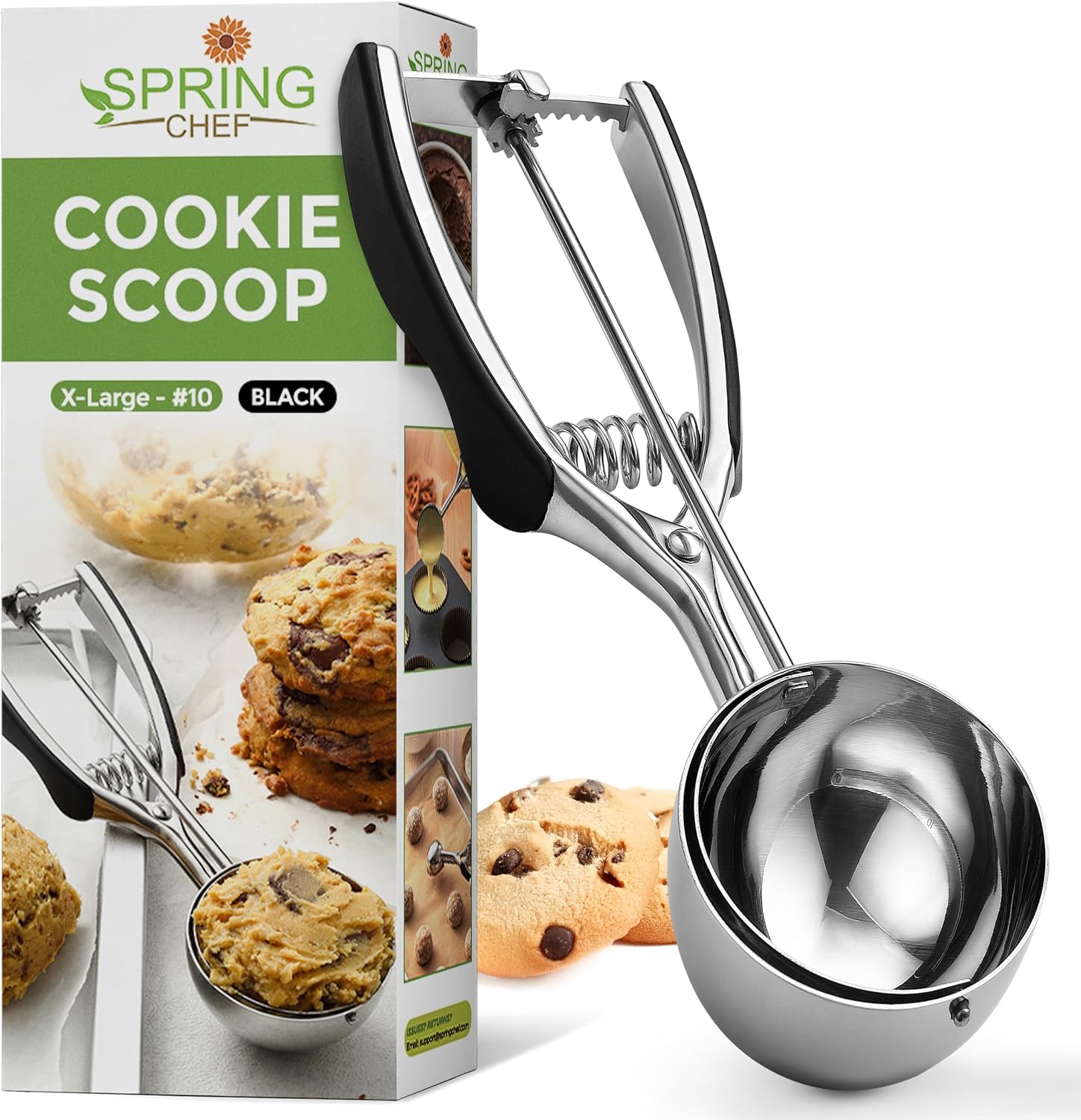
Hand fatigue can quickly ruin a fun baking session when preparing dozens of treats for a holiday party or family event. Ergonomic handles constructed with soft touch rubber or non-slip silicone provide a cushioned grip that absorbs pressure during repeated squeezing. These materials prevent slipping when hands become slightly damp during active kitchen prep tasks.
Selecting a handle shape that fits naturally in your palm reduces physical strain on your wrists over extended periods. Textured grips offer added stability during dense dough scooping, while contoured designs allow for quick hand repositioning between trays. Evaluating your personal grip preference ensures you can complete large baking batches comfortably without experiencing sore hands afterward.
Trigger Mechanisms and Release Systems
The release mechanism determines how easily dough drops onto your baking sheet without sticking to the metal bowl. Innovative cog-and-ratchet systems require significantly less squeeze force compared to traditional spring designs, making portioning much smoother for everyday users. This mechanical advantage helps protect your hand muscles from unnecessary strain during long baking marathons.
Spring-loaded triggers offer reliable snap-back action to eject stubborn ingredients cleanly with a single motion. Some advanced models incorporate built-in wiper blades that sweep across the interior bowl to clear away sticky batters instantly. Testing or reviewing how the trigger moves ensures you find a mechanism that suits your preferred operating style and recipe requirements.
Sizing Options and Portion Control
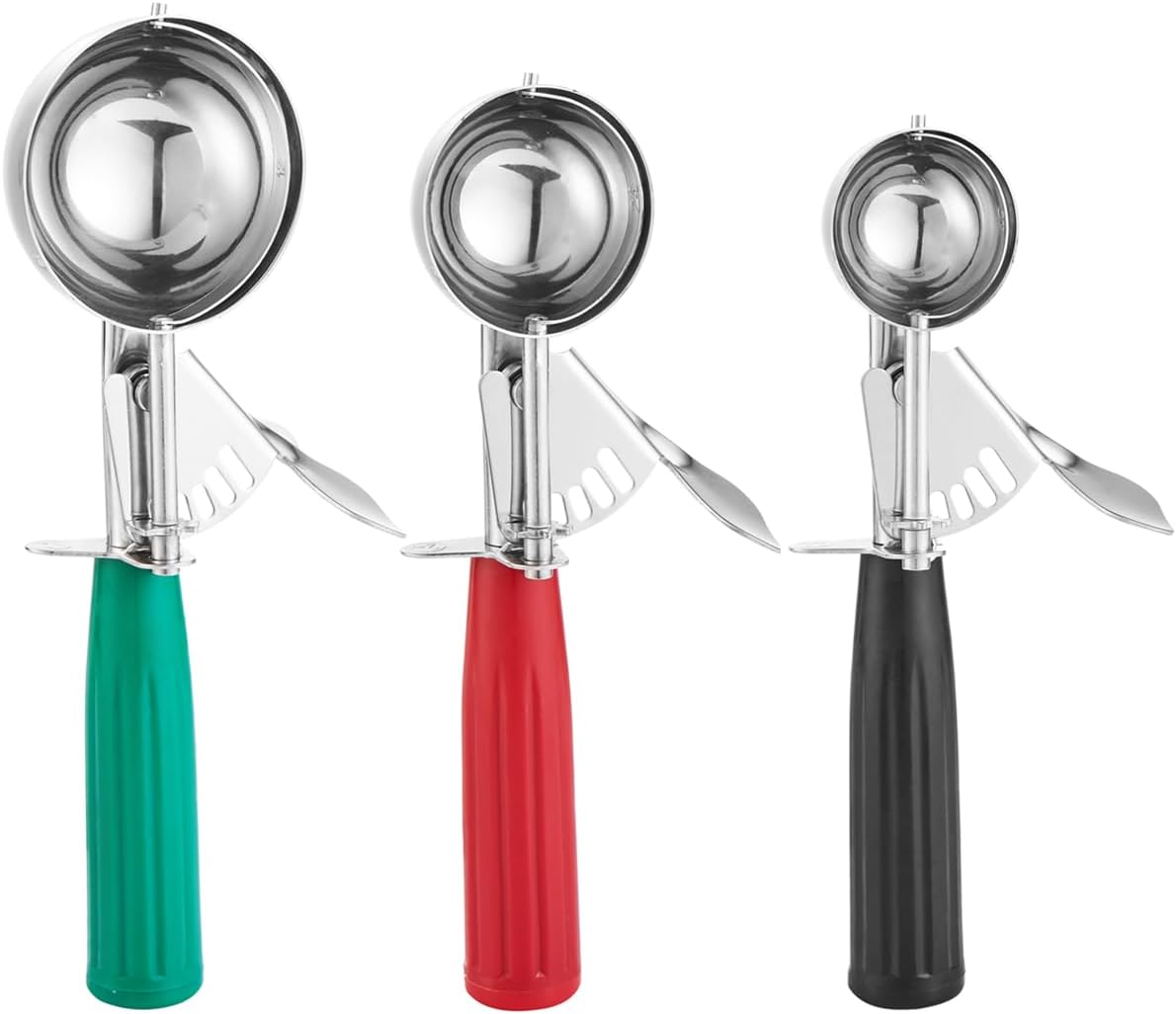
Consistency is the secret to achieving evenly baked cookies that look professionally prepared in a bakery. Choosing the correct bowl capacity ensures every treat spreads uniformly in the oven, preventing burnt edges or undercooked centers. Small capacities work well for bite-sized morsels, while larger sizes yield impressive bakery style proportions for guests.
Purchasing multi-size sets provides maximum flexibility for switching between different recipes throughout the baking week. Single-size tools focus on a specific measurement, which is ideal if you have a signature recipe you bake constantly. Assessing your typical baking repertoire helps determine whether a comprehensive set or a standalone tool fits your kitchen style.
Cleaning and Maintenance Practicalities
Keeping your baking tools hygienic should be a straightforward part of your post-bake kitchen cleanup routine. Many modern stainless steel utensils are completely dishwasher safe, allowing for effortless cleaning after a busy afternoon of baking. Smooth metallic bowl surfaces resist food stains and prevent lingering odors from transferring between different sweet and savory recipe ingredients.
Hand washing may be recommended for models featuring specialized rubber or silicone handle attachments to preserve their exterior finish over extended time periods. Checking manufacturer cleaning guidelines ensures your equipment stays in top condition through years of repeated wash cycles. Selecting low maintenance materials saves valuable time when clearing away counters after cooking.
Versatility Across Kitchen Tasks
While primarily designed for cookie dough, these versatile utensils excel at handling a wide variety of other kitchen ingredients. You can use them to portion cupcake batter, shape meatballs, scoop ice cream, or dish out evenly sized portions of mashed potatoes. This multi-use capability reduces the need for purchasing multiple specialized gadgets for your pantry.
Choosing a robust tool that handles both frozen desserts and dense dough expands your daily food prep efficiency. A solid scraper blade cleanly releases sticky ingredients like rice pudding or melon balls without leaving messy residue behind. Evaluating how many different foods you plan to portion helps justify your investment in a quality tool.
Frequently asked questions
Are stainless steel cookie scoops dishwasher safe?
Most stainless steel models are designed to be completely dishwasher safe, allowing for convenient and fast cleanup after a long baking session. However, reviewing specific manufacturer guidelines is always wise, especially for versions featuring specialized rubberized or silicone handle grips. Hand washing certain models can help preserve the exterior finish and prevent premature wear on soft grip components over years of frequent kitchen use. Ensuring proper drying after washing also prevents water spots on polished metallic bowls.
How do I choose the right size scoop for my cookies?
Choosing the correct size depends entirely on the type of treats you want to bake and your preferred portion styling. Smaller capacities around one tablespoon work wonderfully for bite-sized cookies or miniature muffins, while medium sizes around two tablespoons yield standard three-inch treats. Extra large capacities holding five tablespoons or more create massive bakery style gourmet cookies that spread widely in the oven during baking. Evaluating your favorite household recipes will guide your selection process effectively.
What is the advantage of a cog-and-ratchet release system?
A cog-and-ratchet release mechanism offers a significant mechanical advantage by reducing the amount of hand pressure required to eject dough from the bowl. Traditional spring models can cause hand fatigue during long baking sessions involving dense or chilled dough. The innovative gear action moves the scraper blade smoothly and effortlessly with a gentle squeeze. This design is particularly beneficial for home bakers who prepare large batches of cookies frequently for family gatherings or bake sales.
Can these tools be used for foods other than cookie dough?
These versatile kitchen utensils are engineered to handle a broad range of food preparation tasks beyond standard cookie dough. You can easily use them to portion cupcake and muffin batter, scoop hard frozen ice cream, shape homemade meatballs, dish out rice pudding, or portion mashed potatoes evenly. The sturdy stainless steel construction ensures they will not bend when encountering dense ingredients, making them true multi-purpose helpers for everyday meal and dessert preparation.
Why does my cookie scoop stick or leave behind batter?
Sticking usually occurs when working with particularly sticky doughs or batters, or when the internal scraper blade is not clearing the bowl effectively. Models featuring built-in wiper blades or sturdy spring-action triggers are designed to sweep the interior surface cleanly with every press. Ensuring the utensil is clean and dry before use can also improve performance. If dough remains stubborn, lightly dipping the bowl in water or flour before scooping can prevent sticking.