Appliances · Buying Guide
Best Homemade Pizza Baking Temp Gear for Your Kitchen
Achieving the ideal homemade pizza baking temp in a standard kitchen often requires specialized equipment. Standard kitchen ovens frequently struggle to replicate the intense, direct heat of traditional brick ovens, leaving homemade pies with pale, rubbery crusts and unevenly melted toppings. Elevating your baking setup bridges this performance gap, transforming everyday appliances into high-heat cooking stations.
To solve this common baking hurdle, home cooks turn to specialized carbon steel pans, high-capacity cordierite stones, thick steel plates, and dedicated countertop electric ovens designed to reach extreme thermal thresholds. Selecting the right tool helps manage heat transfer, moisture control, and cooking times for consistently crisp results.
As an Amazon Associate, StacyLaughs earns from qualifying purchases.
Buying guide
Understanding Thermal Conductivity and Materials
The material you choose fundamentally dictates how heat transfers to your homemade pizza dough during baking. Carbon steel plates and perforated pans heat up rapidly and conduct thermal energy efficiently, creating deeply browned crusts in minimal time. Cordierite stones, by contrast, offer exceptional thermal mass, absorbing and radiating steady heat to mimic traditional brick oven environments for consistent results.
Selecting between metal and stone depends entirely on your preferred baking style and patience level. Steel plates excel at speed and durability, resisting cracking under extreme temperature shifts. Stones excel at moisture absorption through microscopic pores, yielding authentic textures. Weighing these material traits ensures your chosen surface matches your home oven capabilities.
Evaluating Maximum Temperature Ratings
Temperature thresholds dictate the upper limits of what your baking equipment can safely handle during intense cooking sessions. Standard carbon steel pans often support moderate heat around five hundred degrees Fahrenheit, fitting standard oven settings. In contrast, heavy-duty cordierite stones and dedicated electric units reach thresholds exceeding one thousand degrees, unlocking aggressive baking environments for specialized pizza styles.
Matching equipment ratings to your baking goals prevents warping, cracking, or surface degradation over time. If you plan to crank your kitchen oven or outdoor grill to extreme levels, selecting high-tolerance cordierite or thick steel is essential. Reviewing these manufacturer specifications before purchasing guarantees safe operation and reliable thermal performance across your favorite recipes.
Balancing Size and Oven Compatibility
Physical dimensions play a critical role in determining whether a baking tool fits inside your kitchen appliance. Measuring your interior oven rack width and depth prevents purchasing oversized stones or steel plates that block proper door closure. Standard ovens comfortably accommodate sixteen-inch pans or squares, while compact or European-style kitchen layouts require smaller fourteen-inch options for safe clearance.
Beyond oven racks, consider storage space and everyday handling convenience when choosing your equipment. Larger surfaces provide more cooking area for family-sized pies but add substantial weight and bulk to your kitchen cabinets. Balancing your desired pizza diameter with your available appliance space ensures smooth day-to-day baking operations without frustrating spatial conflicts.
Managing Maintenance and Cleanup Needs
Different baking materials require distinct cleaning routines to maintain their structural integrity and cooking performance over years of use. Carbon steel pans with nonstick coatings often allow for quick washing or dishwasher cycles, simplifying post-meal cleanup. Conversely, natural cordierite stones and unseasoned steel plates strictly mandate hand washing without soap, relying on warm water and scrubbing brushes.
Understanding these upkeep commitments helps you choose bakeware that aligns with your household cleaning preferences. While stones develop harmless surface discoloration from natural oils and cheese over time, seasoning steel builds a protective non-stick patina. Embracing these required maintenance steps preserves your investment and keeps your baking surfaces ready for your next homemade pizza night.
Selecting Essential Baking Accessories
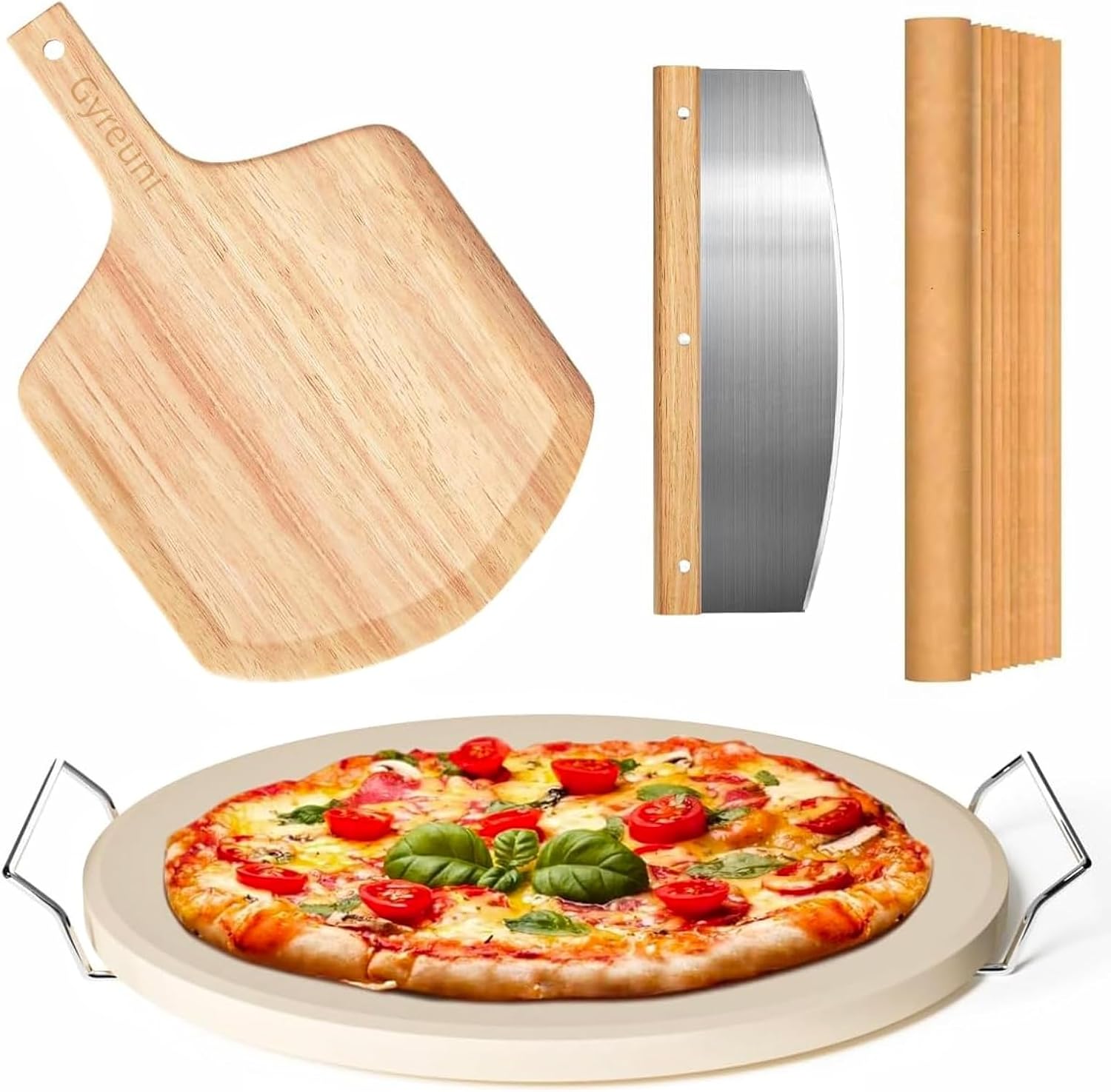
Having the right supporting tools makes launching, rotating, and serving homemade pizzas significantly easier and safer. Wooden pizza peels provide a sturdy, permeable surface designed to slide smoothly under prepared dough without sticking. Kitchen parchment paper offers a helpful barrier for transferring sticky dough onto hot stones or pans without tearing your culinary creation.
Stainless steel pizza cutters with ergonomic handles ensure clean, effortless slicing of finished pies right on your serving surface. Protective racks keep extremely hot stones elevated off dining tables and countertops, preventing thermal scorching. Bundled accessory kits provide these valuable companion items together, streamlining your preparation workflow from counter to table.
Assessing Countertop Versus Oven Equipment
Choosing between a dedicated countertop electric oven and traditional oven inserts depends on your kitchen layout and cooking frequency. Countertop electric units provide independent high-heat environments up to eight hundred degrees without heating your entire main kitchen. This setup proves ideal for apartment living or quick weeknight baking sessions where convenience and speed take top priority.
Traditional oven inserts like stones and steel plates leverage your existing range, utilizing your main oven's heating elements to bake large family-sized pizzas. While they require preheating your primary appliance, they free up valuable counter space and accommodate larger diameters. Evaluating your kitchen footprint helps determine the optimal baking format.
Frequently asked questions
How long should I preheat a pizza stone or steel before baking?
Preheating your pizza stone or steel is essential for achieving a crispy crust, as it allows the material to build up sufficient thermal energy. For most heavy-duty stones and steel plates, a preheating time of forty-five to sixty minutes inside an oven set to high temperatures is recommended. This extended heating period ensures the entire surface reaches thermal equilibrium, preventing soggy dough and promoting rapid bottom baking. Always follow specific manufacturer guidelines for your particular baking accessory to ensure optimal results and prevent potential thermal shock damage during use.
Can I use soap to clean my cordierite pizza stone?
You should never use soap or detergents when cleaning a natural cordierite pizza stone. Cordierite features microscopic pores that easily absorb liquids, meaning soap residue can become trapped inside the material and leach into future batches of food, causing unpleasant tastes. Instead, let the stone cool down completely, scrape off any excess baked-on food with a spatula, and scrub it under warm water using a brush. Normal discoloration and dark stains from oils and cheese are completely expected over time and do not affect the performance or functionality of the stone.
What is the difference between using a pizza stone and a pizza steel?
Pizza stones and pizza steels differ primarily in their material composition and thermal conductivity properties. Ceramic and cordierite stones offer high thermal mass, absorbing moisture through micro-pores to create an authentic brick-oven texture with a crisp base. In contrast, heavy-duty carbon steel plates conduct heat up to twenty times faster than ceramic stones, transferring intense thermal energy rapidly into the dough for swift cooking times. While stones require protection from sudden thermal shock, steel plates are virtually indestructible and handle direct flame on grills or stovetops effortlessly.
Do carbon steel pizza pans require seasoning?
Carbon steel pans and plates often arrive with different surface treatments depending on the specific product design. Some carbon steel pans feature a factory-applied nonstick coating that simplifies immediate use and cleanup without requiring initial seasoning. However, heavy-duty unseasoned steel plates typically require a simple initial seasoning process involving washing, applying a thin coat of oil, and baking at a moderate temperature for an hour. This initial step builds a natural non-stick patina that improves with every subsequent use, preventing rust and enhancing food release naturally over time.
Can I use these pizza baking tools on an outdoor grill?
Many baking stones, steel plates, and specialized pans are versatile enough to transition seamlessly from indoor kitchen ovens to outdoor charcoal or gas grills. Cordierite stones and low-carbon steel plates with high temperature thresholds withstand direct grill flames and elevated outdoor cooking environments effectively, transforming your barbecue into a high-heat pizza oven. However, you should always verify the manufacturer temperature ratings and size specifications before placing any bakeware on an open flame. Proper handling and gradual preheating ensure your equipment performs reliably across both indoor and outdoor settings.