Appliances · Buying Guide
Best Tools for Managing Hooch in Your Sourdough Starter
Managing hooch in a sourdough starter is a common challenge for home bakers. When a clear or dark liquid gathers on top of your fermenting culture, it typically signals that the yeast has consumed its available nutrients and requires a fresh feeding. Addressing this accumulation promptly prevents unwanted acidity spikes and keeps your bread-making routine on track.
Selecting the right equipment helps regulate feeding schedules and maintain optimal fermentation conditions. Whether you need a dedicated warming base to keep your culture active or a transparent jar set with tracking bands, having the proper tools simplifies starter maintenance. Evaluating physical features, container capacities, and temperature controls ensures you find a reliable setup for your kitchen counter.
As an Amazon Associate, StacyLaughs earns from qualifying purchases.
Buying guide
Container Capacity and Shape
Selecting the right container capacity and shape is essential for maintaining a healthy sourdough culture over time. Jars typically range from 34 to 40 fluid ounces, providing ample room for active expansion during peak fermentation phases. Wide-mouth designs significantly simplify the process of adding fresh flour and water while preventing sticky build-up around the rim during regular maintenance routines.
Spherical or funnel-shaped interiors further assist bakers by allowing silicone spatulas to reach every corner smoothly during daily feedings. Evaluating these physical dimensions ensures your container comfortably accommodates rising dough without overflowing or trapping stagnant liquid layers at the bottom. Proper sizing also prevents premature overcrowding and supports consistent yeast activity across every baking cycle.
Temperature Control and Probes
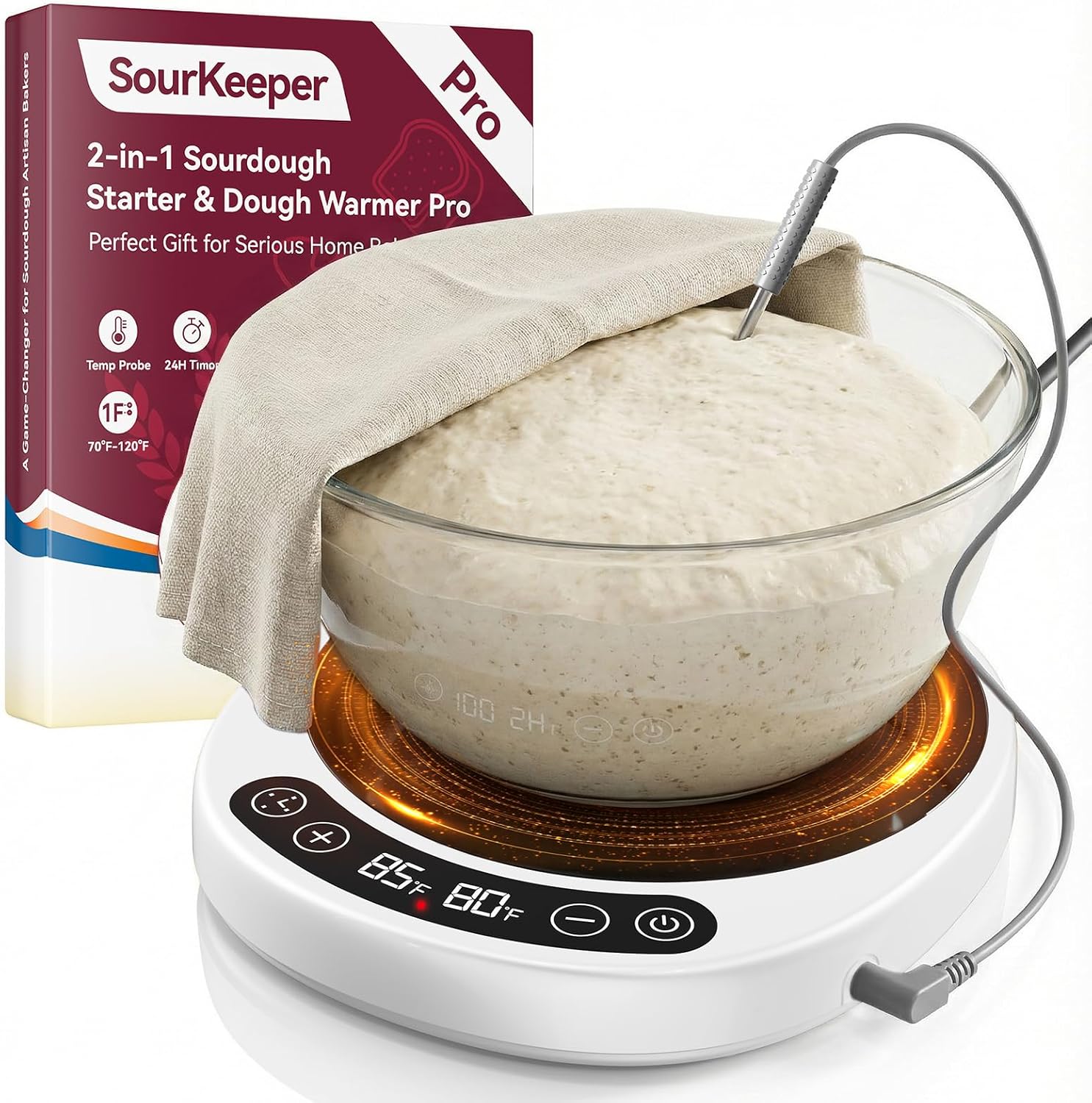
Maintaining stable ambient temperatures is critical for preventing sluggish yeast performance and unwanted liquid separation in your sourdough starter jar. Electric warming bases offer controlled heat settings that keep your container securely within optimal fermentation ranges. Units equipped with stainless-steel core probes measure internal temperatures directly inside the fermenting mixture, removing guesswork from daily checks.
Adjustable thermostats and integrated 24-hour timers let bakers adapt to fluctuating kitchen conditions easily throughout the changing seasons. When working in colder environments, these specialized warming devices sustain steady warmth, ensuring your culture remains active, bubbly, and balanced without requiring constant manual monitoring during long fermentation cycles or overnight resting periods.
Lids and Airflow Options
Managing proper airflow during the fermentation process requires versatile lid options to support both active growth phases and secure refrigerator storage. Breathable cloth covers promote necessary air exchange, helping wild yeast thrive and preventing excessive pressure buildup inside the glass vessel during peak rise cycles on your busy kitchen counter.
Conversely, tight-fitting bamboo or silicone lids provide secure closures for storing your established starter safely in the refrigerator between frequent weekend baking sessions. Having access to both cover types ensures you can easily transition from active counter feeding to passive cold storage without ever needing to transfer your delicate culture into alternative secondary storage containers.
Tracking Bands and Markings
Keeping accurate track of regular feeding intervals helps prevent yeast starvation and the subsequent appearance of undesirable liquid hooch layers on your active sourdough starter. Elastic tracking bands marked with the days of the week allow busy bakers to note the exact time of their last feeding at a single glance without any confusion.
Combined with clear volume measurement markings and adhesive thermometer strips attached directly to the exterior glass surface, these helpful visual aids provide instant feedback on starter expansion and ambient temperature stability throughout the day. This complete transparency removes daily guesswork and supports disciplined maintenance habits for consistently successful artisan bread baking outcomes.
Material Durability and Care
Choosing durable materials ensures your fermentation equipment successfully withstands frequent washing cycles and recurring thermal shifts without cracking or degrading over extended periods of heavy kitchen use. High-quality soda-lime glass and thermal-shock-resistant glass designs handle the rapid transition from cold refrigerators to warm countertops safely during daily baking preparations and routine feeding schedules.
Many components feature convenient dishwasher-safe construction, significantly simplifying cleanup after sticky dough and starter remnants dry firmly on the smooth glass surfaces. Reviewing specific manufacturer care instructions helps you select a kit that seamlessly fits your preferred kitchen maintenance routine and long-term cleaning preferences while protecting your financial investment in reliable artisan baking tools, jars, and accessories.
Dual-Jar Rotation Systems
Managing multiple sourdough starter types or maintaining an uninterrupted baking supply benefits greatly from convenient dual-jar rotation systems in the kitchen. Having two complete containers allows you to experiment with different flours like dark rye and whole wheat simultaneously without ever mixing cultures up on your busy kitchen counter space during weekly baking tasks.
One jar can remain active and fermenting on the kitchen counter while the other rests safely in the refrigerator, eliminating frustrating downtime between baking batches and ensuring you always have a reliable, ready-to-use active culture on hand for your next successful weekend bread baking recipe without experiencing any unnecessary preparation delays.
Frequently asked questions
What does liquid hooch on a sourdough starter indicate?
Liquid hooch on a sourdough starter typically indicates that the yeast has consumed all available sugars and nutrients from the previous feeding, resulting in a state of starvation. This clear or dark alcoholic liquid accumulates as the culture becomes hungry and enters a resting phase. To resolve this issue, pour off the accumulated liquid or stir it back in depending on your preference, then discard a portion of the starter and feed it with fresh flour and water. Maintaining a regular feeding schedule prevents this liquid from forming frequently.
How do temperature warming bases help prevent starter starvation?
Temperature warming bases help prevent starter starvation by providing controlled, consistent heat that keeps wild yeast active and metabolizing at an optimal rate. In colder kitchens, unheated starters can experience sluggish fermentation, leading to prolonged dormancy and the rapid appearance of hooch. Using a heating base with a built-in core temperature probe ensures the mixture remains within the ideal 70 to 110 degree Fahrenheit range. This steady warmth maintains consistent yeast activity, supporting regular feeding intervals and preventing premature starvation cycles.
Why are wide-mouth jars recommended for sourdough starter maintenance?
Wide-mouth jars are recommended for sourdough starter maintenance because their generous openings significantly simplify the process of adding fresh flour and water without making a mess on your counter. The wider access point also allows silicone spatulas to easily reach the bottom and sides for thorough mixing and scraping. This prevents sticky flour pockets and residue accumulation, making it much easier to inspect your starter for layer separation, bubble formation, and liquid hooch accumulation during your daily maintenance routine.
Can I use multiple jars to manage different sourdough starters?
Yes, using multiple jars is an excellent strategy for managing different sourdough starters, especially if you bake with various flours like rye, whole wheat, or unbleached all-purpose flour. Bundles that include two complete jars allow you to maintain separate feeding schedules and experiment side-by-side without mixing up your cultures. This setup lets you keep one active starter on the counter while storing a backup culture in the refrigerator, ensuring an uninterrupted supply for your ongoing baking projects and recipes.
How do tracking bands and thermometer strips assist in starter care?
Tracking bands and adhesive thermometer strips assist in starter care by providing clear, visual indicators that take the guesswork out of daily maintenance. Elastic bands marked with the days of the week let you easily note the exact time of your last feeding, helping you avoid missed schedules that lead to hooch formation. Meanwhile, thermometer strips display the container temperature in real time, allowing you to monitor thermal conditions and ensure your yeast culture stays within the ideal fermentation range for optimal bread rising.