Appliances · Buying Guide
Best Italian Bread Baking Pans for Crispy Crusts at Home
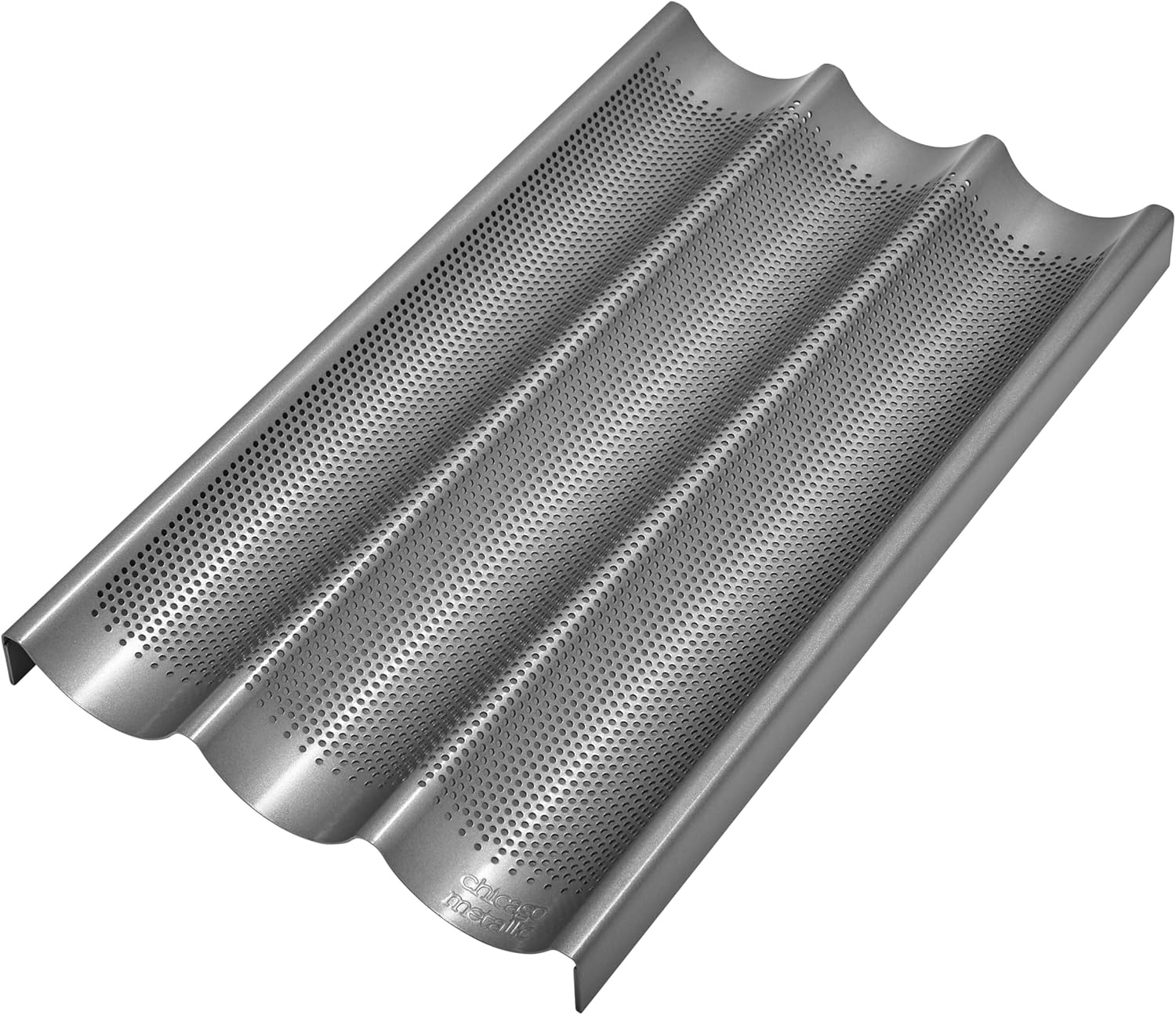
Baking artisan loaves at home requires specialized equipment to achieve that coveted bakery-style texture and crust. Italian bread baking pans feature specialized perforated designs that encourage airflow directly around the dough during the baking process, ensuring your homemade bread develops an evenly browned and crackly exterior with minimal effort.
Whether you are preparing traditional baguettes, sub rolls, or rustic Italian loaves, selecting the right tray ensures even heat distribution and reliable crust formation. Exploring various configurations, materials, and loaf capacities helps home bakers choose the ideal tool for their kitchen setup, matching oven interior dimensions and family batch size requirements perfectly throughout the week.
As an Amazon Associate, StacyLaughs earns from qualifying purchases.
Buying guide
Material Composition and Thermal Performance
Choosing the right material for your Italian bread baking pan directly impacts heat distribution, thermal conductivity, and overall long-term durability in the kitchen. Heavy-weight aluminum pans offer exceptional thermal conduction to prevent hot spots across your bread dough, ensuring even baking performance from edge to edge during every single baking session you undertake at home for family meals.
Alternative carbon steel options provide robust structural rigidity and reliable resistance to high oven temperatures without warping under heavy use. Each metal type interacts with your home oven differently, so carefully evaluating your baking frequency, preferred dough hydration levels, and thermal preferences helps determine the ideal foundation for your specific kitchen requirements and recipes.
Loaf Capacity and Batch Size
Evaluating your typical baking volume helps determine whether a two-loaf or three-loaf pan best suits your daily kitchen routine and household size. Multi-slot trays allow home bakers to prepare multiple baguettes, artisan loaves, or sub rolls simultaneously, saving valuable time when entertaining guests or preparing weekly meal components for the household members.
Smaller configurations fit easily inside compact residential ovens while still delivering traditional artisan shapes and proper crust development across every batch. Matching your batch size requirements to the physical slot count ensures efficient baking execution without overcrowding your oven interior space during active baking sessions throughout the week and weekend mornings.
Surface Coatings and Food Release
Nonstick surface coatings play a critical role in ensuring your freshly baked artisan bread releases cleanly from the metal molds without tearing the delicate crust. Dual-layer coatings and food-grade silicone alternatives prevent sticky dough from clinging to the metal channels, making the transition from baking tray to cooling rack completely seamless and frustration-free.
While these coatings simplify post-baking cleanup significantly, many pan designs benefit from a light application of cooking oil or butter before the initial use. Proper coating maintenance protects the nonstick properties over years of regular home baking while preserving the structural integrity and exterior appearance of your homemade baguettes and savory rolls.
Perforation and Airflow Design
The presence of evenly distributed perforations fundamentally changes how heat and moisture interact with your bread dough during the active baking cycle. These strategic holes allow hot oven air to circulate freely around every side of the loaf, promoting uniform browning and encouraging the development of a classic crunchy crust on artisan breads and rolls.
Moisture escapes easily through the ventilated base, preventing sogginess and helping the interior crumb maintain a light, airy texture throughout every loaf. When working with extremely high-hydration doughs, lining the tray with parchment paper provides a helpful barrier while still taking advantage of the surrounding thermal airflow dynamics inside the hot oven space.
Oven Compatibility and Dimensions
Before selecting a bread baking pan, measuring your oven interior dimensions carefully ensures the tray fits comfortably without striking the interior side walls or heating elements. Length and width specifications vary significantly between two-loaf and multi-slot models, requiring careful attention to rack placement and door clearance in standard residential kitchen environments.
Ensuring adequate space around the perimeter of the pan also allows proper heat circulation, which is essential for achieving professional baking results at home. Checking these physical measurements ahead of time prevents storage issues and guarantees smooth handling during busy meal preparation times throughout the week and weekend baking sessions for your family.
Cleaning and Maintenance Guidelines
Maintaining your baking pans properly extends the lifespan of nonstick coatings and keeps metal surfaces performing reliably over years of regular use at home. While some manufacturers designate their pans as dishwasher safe, following recommended handwashing guidelines with mild dish soap helps preserve delicate surface finishes against harsh automatic dishwasher detergents over extended time periods.
Using soft sponges rather than abrasive metal scrubbers prevents scratching, protecting the specialized coatings that ensure effortless bread release every single time you bake. Proper drying after washing also prevents moisture accumulation, keeping carbon steel and aluminum trays in top condition between home baking projects and family weekend gatherings without unexpected surface wear.
Frequently asked questions
Do I need to grease a nonstick baguette pan before baking?
Many manufacturers equip their baguette pans with advanced nonstick coatings or food-grade silicone surfaces to ensure easy food release. However, applying a very light coating of cooking oil, melted butter, or lining the channels with parchment paper is often recommended by makers for initial uses or when working with high-hydration doughs. This extra step helps prevent sticky dough from clinging to the perforated metal surfaces, guarantees clean bread release without tearing the delicate crust, and simplifies your post-baking cleanup routine significantly after every single baking session.
Can I proof dough directly inside a perforated bread baking pan?
Certain rigid carbon steel and aluminum bread pans feature sturdy construction that supports proofing dough directly within the slotted channels. This design benefit helps shaped loaves maintain their distinct arc and structural form from the final rise straight into the hot oven. If your chosen pan includes perforations, you must consider whether your dough hydration level requires a light dusting of flour, oil, or parchment paper to prevent dough from pressing into the ventilation holes during the proofing stage.
Are perforated Italian bread pans safe for the dishwasher?
Dishwasher safety ratings vary depending on the specific model and manufacturer guidelines. While several aluminum and carbon steel pans list dishwasher compatibility in their specifications, many brands explicitly recommend handwashing with mild soap and soft sponges. Handwashing helps protect dual-layer nonstick coatings and food-grade silicone layers from harsh dishwasher detergents and high water temperatures, extending the functional lifespan of your baking tray so it continues releasing bread smoothly over years of regular home kitchen use.
Why are holes included in the bottom of French and Italian bread pans?
The perforations found along the base and channels of these specialty baking trays serve a crucial culinary function during the baking process. These evenly spaced holes allow hot air from your oven to circulate freely around the entire surface of the dough. This unobstructed airflow promotes uniform heat distribution and helps moisture escape rapidly, resulting in the signature crackly, golden-brown crust and light, airy interior crumb that defines authentic artisan baguettes and French or Italian breads.
How do I choose the right size baguette pan for my oven?
Selecting the correct size requires measuring your oven interior dimensions, including depth, width, and rack clearance, before making a purchase. Standard baguette pans typically range from fifteen to sixteen inches in length, accommodating two or three loaves at once. Make sure to account for perimeter space around the tray to ensure proper heat circulation and easy insertion or removal. Choosing a model that matches your oven capacity prevents fitting issues and ensures even baking across every batch.