Appliances · Buying Guide
Best Tools for King Arthur Baking Sourdough Bread
Baking delicious sourdough bread at home requires specialized equipment designed to handle active starters, sticky doughs, and precise fermentation stages safely. Whether you are maintaining a bubbly culture on your kitchen counter or shaping rustic artisan loaves, having the right gear simplifies the entire baking process from start to finish without unnecessary kitchen complications or messy cleanup routines.
Exploring reliable storage crocks, durable mixing tools, and comprehensive starter kits helps home bakers achieve consistent and predictable results every single bake. This careful selection examines dedicated sourdough accessories crafted from quality materials like borosilicate glass, stainless steel, and natural ceramic to support your daily baking routine efficiently and reliably every day.
As an Amazon Associate, StacyLaughs earns from qualifying purchases.
Buying guide
Selecting Storage Capacity
Choosing the right container size depends heavily on how much sourdough starter you plan to maintain for your weekly baking routine. Smaller one-pint crocks suit bakers who make single loaves occasionally, while larger one-quart or 50-ounce options accommodate frequent baking and multiple loaves at once. Carefully consider your typical recipe requirements before purchasing any storage container.
Storage volume also impacts how frequently you must feed your culture to keep it active and healthy. Larger vessels provide extra head room for active, bubbly starters to expand safely without overflowing during peak fermentation periods. Matching the container capacity to your specific baking volume ensures efficient and clean starter maintenance.
Evaluating Material Types for Fermentation
Materials play a vital role in sourdough storage durability, safety, and temperature stability during active fermentation. Borosilicate glass offers transparent visibility, allowing you to monitor rise and gas bubbles directly from the outside without opening the lid. Ceramic alternatives provide traditional aesthetics, non-reactive glazed surfaces, and solid thermal properties that support safe food storage.
Selecting between fine glass and ceramic comes down to personal preference and your daily kitchen environment. Glass requires cautious physical handling to prevent accidental breakage, whereas ceramic provides robust weight and dishwasher safety in many cases. Reviewing these distinct material characteristics helps ensure long-term satisfaction with your daily baking accessories and storage choices.
Essential Mixing Tools for Sticky Dough
Mixing sticky sourdough and stiff bread dough by hand can quickly become tiring without the proper kitchen utensil. Specialized dough whisks feature open-loop wire designs that glide smoothly through dense batters without clogging or trapping large amounts of flour. This mechanical advantage significantly reduces arm fatigue during early mixing stages and everyday baking sessions.
Comfortable handles made from sealed wood or durable materials provide a secure grip when applying leverage to heavy baking mixtures. Choosing a dedicated whisk prevents overmixing delicate recipes while ensuring thorough ingredient incorporation. Proper tools make the initial mixing process clean, efficient, and much easier to manage across various recipes.
Monitoring Fermentation Progress
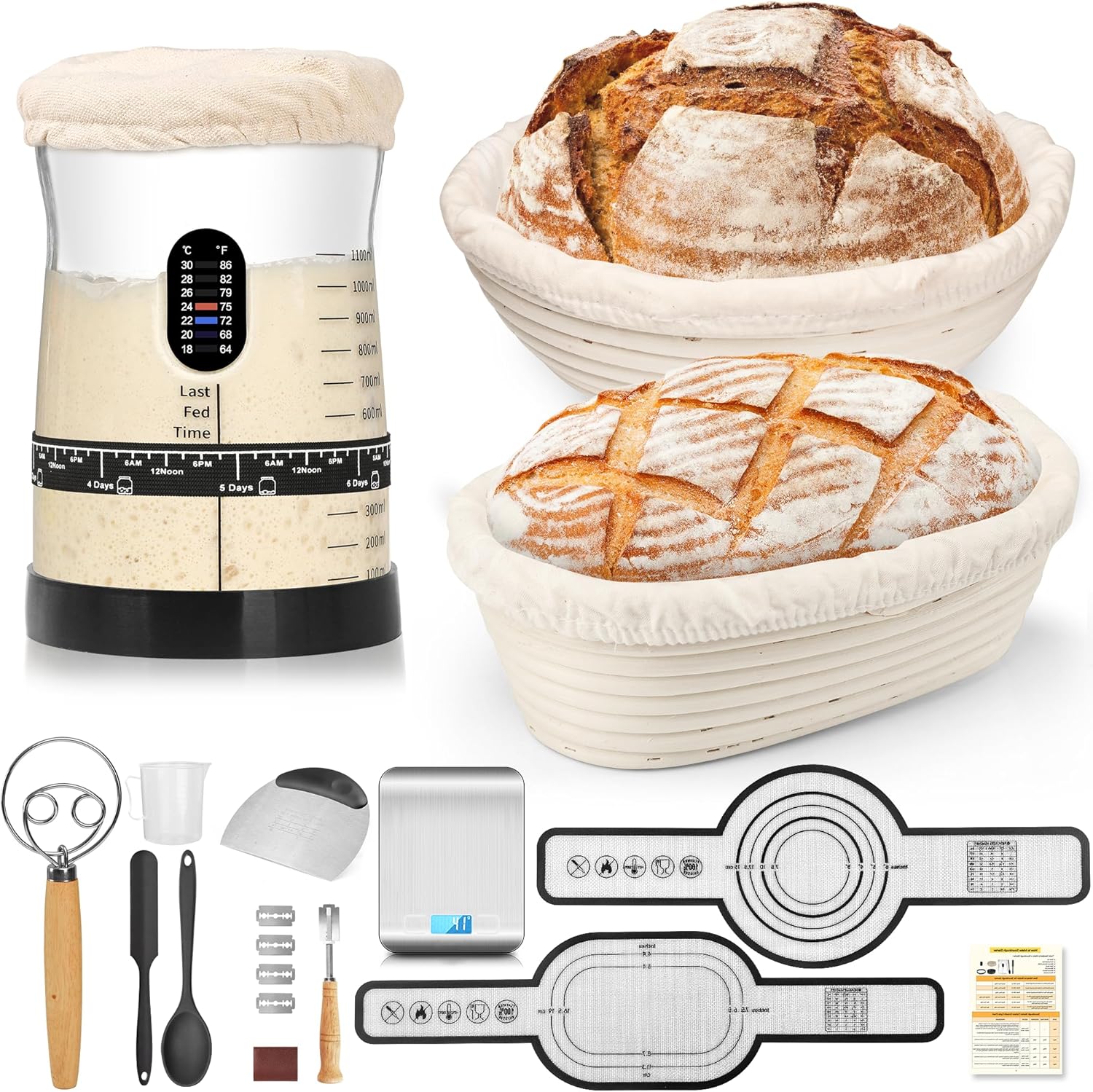
Tracking your starter's activity is crucial for timing your bakes accurately when the culture reaches peak fermentation. Containers featuring vertical measurement markings take the guesswork out of regular feeding schedules. You can easily visually verify when the starter has doubled in volume and is fully ready for bread making without opening containers.
Transparent walls or included thermometer strips provide additional data points for managing your sourdough environment effectively at home. Monitoring temperature and rise ensures consistent dough performance from batch to batch. Paying careful attention to these visual cues helps prevent failed loaves and wasted ingredients over time during your baking projects.
Proofing and Shaping Accessories
Shaping artisan sourdough loaves requires supportive proofing baskets that wick excess moisture and impart classic patterns onto the crust. Natural rattan baskets are a popular choice for home bakers because they provide breathable structure. This helps dough maintain its desired shape during the final rise before oven transfer in your home kitchen.
Using both round and oval proofing baskets gives you great flexibility depending on the style of loaf you want to create. Proper flour dusting prevents sticking, ensuring the dough releases smoothly onto your baking surface. Accessories like bench scrapers and sharp lames complete the shaping stage successfully.
Maintenance and Cleaning Considerations
Proper maintenance ensures your sourdough tools remain hygienic and functional for years of frequent baking adventures. Glass crocks and sealed wooden handles typically require gentle hand washing in warm soapy water to preserve their structural integrity. Following manufacturer cleaning guidance prevents material degradation and maintains product longevity over time across all accessories.
Certain items, such as glazed ceramic crocks and specific stainless steel components, offer convenient dishwasher-safe cleaning for busy kitchens. Knowing which items require manual care versus automated washing helps streamline your post-baking cleanup routine efficiently. Always check specific manufacturer product care instructions before washing any baking accessory or tool.
Frequently asked questions
How do I choose between a glass or ceramic sourdough starter crock?
Choosing between glass and ceramic depends primarily on your monitoring preferences and kitchen style. Borosilicate glass crocks provide transparent walls with vertical measurement markings, allowing you to track your starter rise and gas bubbles easily without opening the lid. Ceramic crocks feature a traditional opaque design with non-reactive glazes, offering excellent thermal properties and often dishwasher-safe cleanup. If you value visual monitoring, glass is ideal. If you prefer classic opaque kitchenware with simple dishwasher maintenance, ceramic is a strong choice.
Why should I use a dough whisk instead of a regular spoon?
A dedicated dough whisk features an open-loop stainless steel design that moves smoothly through dense mixtures without bogging down or trapping heavy flour pockets. Regular spoons often bend, clog, or overmix stiff sourdough and bread doughs. The wire loop design allows ingredients to flow through the tool effortlessly, ensuring thorough incorporation while minimizing arm fatigue. This makes mixing sticky no-knead batters, artisan bread doughs, and pizza bases much faster and cleaner compared to traditional wooden spoons or standard kitchen utensils.
What size sourdough starter crock do I need for regular baking?
The ideal starter crock size depends on how much bread you bake and how often you feed your culture. A 1-pint petite crock works well for single-loaf bakers and tight counter spaces. A 1-quart or 1.5-quart crock provides ample capacity for bakers who make multiple loaves or maintain larger starter reserves. Larger vessels also offer essential headroom, preventing active, bubbly starters from overflowing during peak fermentation periods. Assess your typical baking volume before selecting a container capacity.
How do I maintain and clean my sourdough baking accessories?
Proper maintenance depends heavily on the specific materials of each tool. Borosilicate glass crocks and wooden-handled dough whisks generally require careful hand washing in warm soapy water to protect their structural integrity and sealed surfaces. Conversely, glazed ceramic crocks and certain stainless steel items often support dishwasher-safe cleaning for added convenience. Always follow the manufacturer product care instructions to prevent material damage, ensure kitchen hygiene, and maintain long-term product performance across your baking equipment collection.
What items are included in a complete sourdough starter kit?
A comprehensive sourdough starter kit typically includes a wide-mouth glass jar for easy feeding, a digital kitchen scale for precise ingredient measurements, and natural rattan proofing baskets in round or oval shapes for shaping artisan loaves. Additionally, these kits often feature professional dough handling tools such as stainless steel dough whisks, bench scrapers, bread lames for scoring, and silicone bread slings. This all-in-one approach equips home bakers with everything needed from initial starter maintenance to final oven transfer.