Appliances · Buying Guide
Best King Arthur Sourdough Baguette Gear for Home Bakers
Baking a crusty, well-shaped sourdough baguette at home requires specific tools designed to handle high hydration doughs, maintain proper humidity, and store the finished loaf correctly. From specialized ceramic bakers to breathable natural storage bags and rattan proofing baskets, having the right equipment transforms a standard baking routine into a reliable process for achieving authentic bakery-quality results in your own kitchen.
Whether you are shaping slender loaves for the first time or looking for sustainable ways to keep your artisanal bread fresh for days, selecting appropriate accessories ensures consistent textures. This overview examines several practical baking aids tailored for sourdough enthusiasts, highlighting their specific designs, materials, and functional features so you can choose the right additions for your baking setup.
As an Amazon Associate, StacyLaughs earns from qualifying purchases.
Buying guide
Understanding Baguette Dimensions
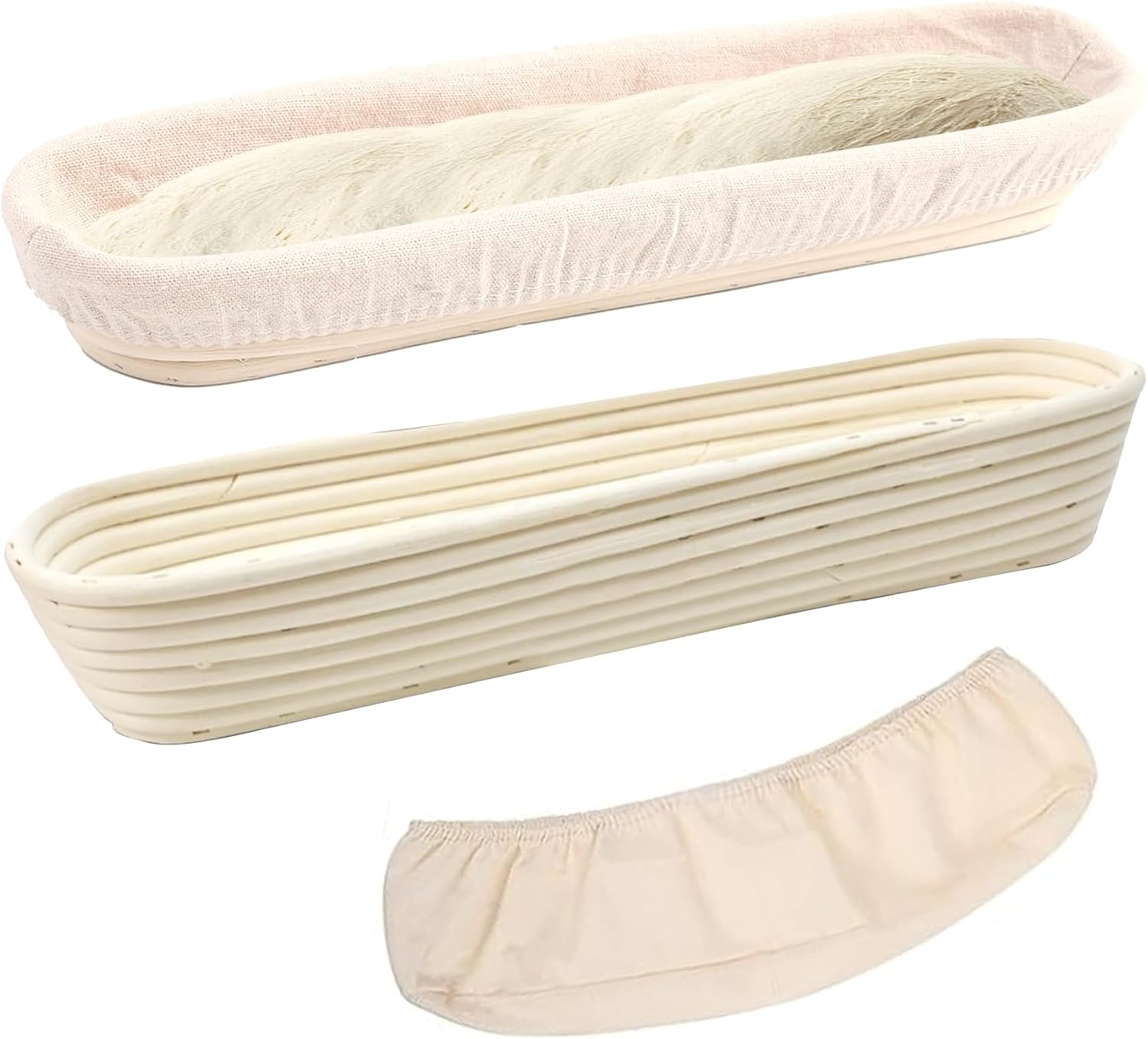
Selecting equipment for slender loaves requires paying close attention to length and width measurements. Baskets and bakers measuring around fifteen inches match standard baguette dimensions, ensuring the dough maintains its elongated form during rising without curling awkwardly against container walls.
Consider your oven interior dimensions alongside your baking tools. A baker stretching past fifteen inches needs sufficient clearance on the oven racks to fit comfortably alongside heating elements, preventing uneven baking results.
Material Selection for Proofing
Proofing baskets crafted from natural rattan offer superior moisture-wicking properties compared to solid plastic or metal alternatives. The breathable plant fibers draw excess water away from the outer skin of high-hydration sourdough, forming a dry skin that bakes into a blistered crust.
Liners made from cotton or linen provide an alternative contact surface that prevents sticky dough from gripping the raw rattan weave. Using rice flour on these liners further enhances dough release for smooth transfers.
Managing Baking Humidity
Achieving a crisp, crackling crust on a French-style baguette relies heavily on controlling moisture during the initial baking phase. Covered ceramic bakers trap steam released by the dough, simulating the environment of a professional steam-injected hearth oven.
Vessels featuring vented lids allow excess steam to escape gradually while maintaining enough internal humidity to prevent the crust from setting prematurely, resulting in optimal expansion and golden color development.
Storage and Freshness Control
Protecting baked sourdough from rapid staling requires materials that balance airflow rather than trapping total moisture. Natural fabric bags lined with beeswax or plant resins slow down dehydration while preventing mold growth by allowing minimal ventilation.
Choosing reusable storage options reduces reliance on single-use plastic wrappers. Evaluating how often you bake helps determine whether flexible fabric bags or rigid countertop containers best suit your household consumption rate.
Cleaning and Maintenance Needs
Different materials demand specific cleaning protocols to ensure longevity in your kitchen. Ceramic bakers generally tolerate dishwasher cycles, whereas natural rattan proofing baskets require gentle dry brushing or minimal wiping to preserve their structural integrity.
Fabric storage bags featuring beeswax or laminated linings usually require cool hand washing rather than machine agitation. Following manufacturer maintenance guidelines prevents premature degradation of natural coatings and fabrics.
Batch Size and Capacity Planning
Evaluating your typical dough volume guides whether you need single or multi-piece accessory sets. Proofing basket sets containing two units allow you to shape multiple baguettes simultaneously from a single mixing bowl.
Capacity ratings on bakers and baskets indicate the recommended dough weight they can handle comfortably. Matching your standard recipe measurements to these limits prevents overcrowding and maintains proper loaf geometry.
Frequently asked questions
What makes a banneton basket suitable for sourdough baguettes?
Banneton baskets designed for baguettes feature an elongated, slim profile typically around fifteen inches long. This shape supports high-hydration sourdough dough during its final rise, preventing it from spreading outward. The natural rattan material also wicks surface moisture away from the dough, creating a drier skin that results in a crispier crust and distinct textural patterns once baked.
How do beeswax bread bags keep artisan loaves fresh?
Beeswax bread bags combine a breathable organic cotton exterior with an interior lining made of beeswax, plant oils, and tree resin. This combination allows a controlled amount of airflow, which helps prevent the loaf from drying out too quickly or accumulating excess moisture that leads to mold. The natural materials offer a sustainable alternative to plastic wraps while maintaining crumb softness.
Can ceramic baguette bakers go directly into a hot oven?
Ceramic baguette bakers are engineered from natural heat-resistant materials designed to handle high oven temperatures, often up to five hundred degrees Fahrenheit. However, it is essential to follow specific manufacturer instructions regarding preheating and thermal shock. Placing cold ceramic into an extremely hot oven can cause cracking, so proper temperature acclimation is necessary for safe use.
Why is rice flour recommended when using proofing basket liners?
Rice flour lacks the gluten proteins found in wheat flour, which prevents it from becoming sticky when in contact with high-hydration sourdough dough. When dusted onto cotton proofing liners, rice flour acts as a reliable non-stick barrier. This ensures that the delicate shaped dough releases cleanly from the fabric without tearing or losing its form before baking.
How should natural rattan proofing baskets be cleaned after use?
Natural rattan proofing baskets require minimal water exposure to prevent mold growth and fiber degradation. After use, allow any residual flour to dry completely, then gently tap the basket or use a soft-bristled brush to remove excess particles. If a cotton liner is included, it can typically be washed according to the manufacturer instructions while the basket remains dry.