Appliances · Buying Guide
Best Large Bread Loaf Pans For Family Baking And Perfect Sandwiches
Baking large loaves of bread at home requires reliable equipment that accommodates generous family-sized portions, whether you are crafting traditional sandwich bread, rich brioche, or sweet loaf cakes. Choosing the right oversized baking pan depends heavily on your preferred materials, oven space, and whether you want a covered pullman style or an open top design for your weekly baking routine.
Different materials offer distinct advantages for heat distribution, structural support, and cleanup, ranging from heavy-duty carbon steel and aluminized steel to flexible food-grade silicone molds. Evaluating these options helps home bakers select a durable tool that matches their specific recipes and routine maintenance preferences without guesswork.
As an Amazon Associate, StacyLaughs earns from qualifying purchases.
Buying guide
Material Selection
Choosing the right material for your large loaf pan directly impacts heat distribution, crust development, and long-term durability. Traditional steel and heavy-gauge carbon steel options heat up rapidly and promote a dark, crisp crust, making them exceptionally popular choices for artisan and sandwich breads. Aluminized steel combines commercial-grade structural strength with reliable corrosion resistance for frequent bakers.
Alternatively, flexible food-grade silicone molds supported by rigid metal frames offer effortless food release and eliminate rust concerns entirely. Each material responds differently to oven temperatures and requires specific maintenance routines, so carefully consider your daily cleaning habits and preferred bread styles before making a final purchasing decision for your kitchen.
Capacity and Sizing
Large bread pans generally accommodate generous dough weights ranging from two to two-and-a-half pounds, producing substantial loaves suitable for large families or weekly meal prep sessions. Checking your specific oven interior dimensions before purchasing is essential to ensure that extra-long pans measuring twelve to thirteen inches fit comfortably on your oven racks without causing overcrowding issues.
Additionally, carefully consider how slice dimensions affect your intended daily use, such as cutting oversized sandwich slices or sharing portions during family gatherings and holidays. Matching the pan capacity to your typical recipe batch size prevents overflowing dough and guarantees consistent baking results across every single loaf you produce at home.
Lidded Versus Open Pans
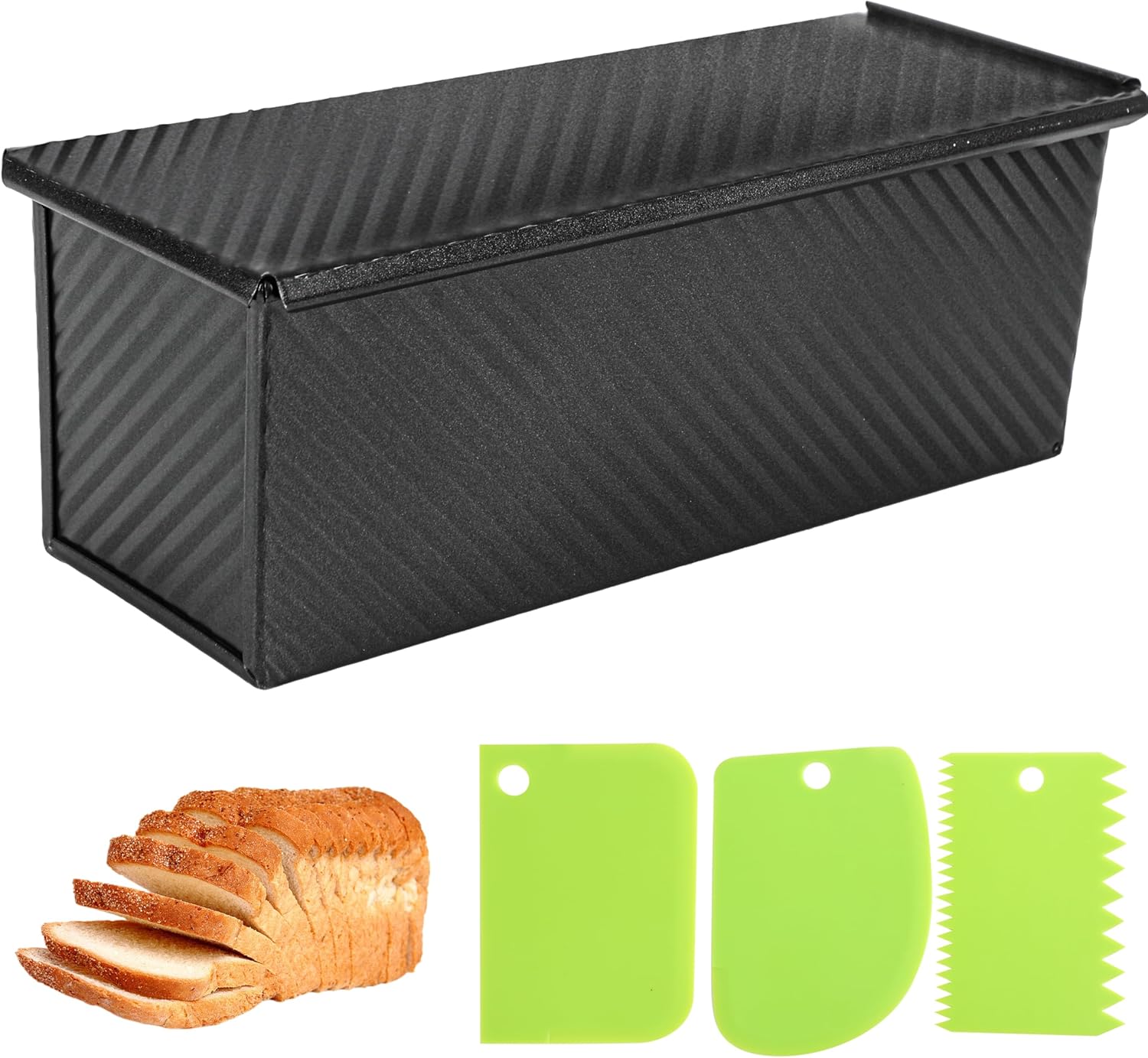
Deciding between a lidded pullman pan and an open-top loaf pan depends heavily on the specific type of bread you plan to bake most frequently. Lidded pans trap internal moisture and constrain the rising dough against the cover, resulting in distinct square sandwich slices featuring a soft, tender crumb structure throughout the loaf.
Open-top pans allow dough to rise freely into a traditional domed crust, which works wonderfully for sweet quick breads, rich pound cakes, and rustic artisan loaves. Some lidded models even offer removable covers, giving you the dual flexibility to bake both square sandwich bread and standard rounded loaves in a single versatile tool.
Nonstick Coatings and Release
Achieving a clean, effortless release is essential when baking sticky bread doughs, rich cakes, or dense meatloaves in your home kitchen. Many metal pans feature specialized nonstick coatings, such as silicone-based Americoat or PTFE-free formulas, which prevent baked goods from adhering to the interior walls and simplify post-baking cleanup tasks significantly for home bakers.
While nonstick surfaces reduce cleanup friction, they often require careful daily handling, such as avoiding sharp metal utensils or abrasive scrubbing pads to prevent premature coating degradation over time. Silicone molds offer an alternative nonstick experience through natural material flexibility, allowing bakers to pop out loaves easily without relying on chemical surface treatments.
Cleaning and Maintenance
Proper cleaning and maintenance routines extend the functional lifespan of your large bread loaf pans significantly over many years of daily home use. Although certain metal pans carry official dishwasher-safe ratings, manufacturers frequently recommend hand-washing with mild soap, warm water, and soft sponges to protect delicate nonstick surfaces from harsh detergent degradation and intense dishwasher heat cycles.
Carbon steel and aluminized steel pans often require thorough manual drying immediately after washing to prevent unwanted rust formation on exposed metal edges or corners. Following specific manufacturer care instructions ensures that your bakeware maintains its nonstick performance, attractive appearance, and structural reliability through years of regular family baking sessions.
Heat Distribution and Design
Even heat distribution is a critical factor for achieving a thorough bake and avoiding burnt crusts or undercooked centers in your homemade loaves. Heavy-gauge steel, aluminized steel, and carbon steel conduct thermal energy efficiently throughout the entire baking chamber, ensuring uniform baking results across large loaf sizes without unexpected hot spots.
Additionally, specialized design features like bottom ventilation holes or corrugated surface patterns enhance internal airflow and moisture management during the active baking cycle. Evaluating these structural design elements carefully helps you choose a pan that promotes optimal thermal performance and prevents common baking defects in your daily homemade breads, cakes, and desserts.
Frequently asked questions
What is the advantage of using a pullman pan with a lid?
A pullman pan with a sliding lid provides distinct advantages for bakers who want to create traditional square sandwich bread with a uniform shape and tender crumb. When the lid is closed during baking, it traps internal moisture and constrains the rising dough, forcing it to fill the rectangular corners completely. This process prevents the formation of a standard rounded dome top, resulting in even, sliceable square bread that works wonderfully for sandwiches, French toast, and consistent daily meal preparation at home.
Can silicone bread loaf pans be used without a baking sheet?
Many silicone bread loaf pans feature reinforced metal frames designed to provide stable structural support, allowing them to hold heavy batches of dough securely without requiring a separate metal baking sheet underneath. These built-in frames help prevent the flexible silicone walls from bowing outward when filled with wet batter or dense dough. However, bakers should always check the specific product design features to confirm whether a metal frame is included before attempting to transport heavy filled molds into a hot oven.
How do I prevent my bread from sticking to a metal loaf pan?
Preventing bread from sticking to a metal loaf pan involves utilizing pans with quality nonstick coatings, applying a light layer of oil or butter before filling, or lining the interior with parchment paper for liquid-heavy recipes. Many modern metal pans feature advanced silicone-based nonstick coatings that facilitate easy food release. Additionally, allowing baked goods to cool slightly inside the pan before attempting to turn them out helps maintain structural integrity and prevents crumbly tearing along the bottom and sides.
Are large bread loaf pans dishwasher safe or do they require hand-washing?
Cleaning requirements vary depending on the specific material and manufacturer instructions for each loaf pan. While some metal and silicone pans carry official dishwasher-safe ratings, manufacturers frequently recommend hand-washing with mild soap, warm water, and soft sponges to protect delicate nonstick coatings from harsh detergents and high heat cycles. Carbon steel and aluminized steel pans also benefit from manual washing and thorough drying to prevent rust formation on exposed edges, ensuring your bakeware remains durable and functional over many years.
What size dough fits into an extra-large 13-inch loaf pan?
Extra-large loaf pans measuring twelve to thirteen inches in length typically accommodate dough weights ranging from 2.2 to 2.5 pounds. This generous capacity is roughly double the volume of standard nine by five-inch baking pans, making these oversized options ideal for baking family-sized sandwich loaves, large meatloaves, or batches meant to serve four to seven people. Bakers should always verify their specific recipe scaling to ensure the dough volume matches the pan capacity without overflowing during the rising and baking process.