Appliances · Buying Guide
Best Large Pyrex Mixing Bowl Options for Baking and Food Storage
Selecting a large pyrex mixing bowl for your home kitchen involves carefully balancing overall capacity, material build, and everyday food storage needs. Pyrex glassware remains a trusted staple for home cooks because it handles diverse food preparation tasks reliably without absorbing unwanted food odors, staining from ingredients, or lingering flavors over years of regular use.
Whether you require a standalone four-quart bowl featuring a built-in pour spout for smooth batters or a multi-piece bundled set complete with secure plastic lids for daily leftovers, understanding specific dimensions, glass types, and thermal properties ensures you choose the ideal tool for mixing, baking, and storing food efficiently and safely.
As an Amazon Associate, StacyLaughs earns from qualifying purchases.
Buying guide
Evaluating Bowl Capacity and Dimensions
When choosing a large glass mixing bowl, evaluating the stated capacity and physical dimensions is essential for your cooking workflow. A four-quart bowl provides ample room for whipping heavy cream, tossing large salads, or mixing dense bread dough without splashing ingredients over the rim. Checking the width and height specifications helps determine whether the bowl fits comfortably on your countertop and stores easily inside your kitchen cabinets.
Larger models often exceed twelve inches in width, which requires a stable workspace. Keep in mind that total capacity does not automatically reveal external dimensions or handle comfort. Matching your typical batch sizes to the appropriate quart measurement ensures you avoid overcrowding your workspace while still achieving efficient mixing results during daily food preparation tasks.
Understanding Glass Material Quality
Glass composition plays a vital role in the longevity and thermal performance of your mixing bowls. Many traditional and modern mixing vessels utilize tempered or borosilicate glass. These specialized glass types offer strong resistance to thermal shock, allowing them to transition between freezing environments and microwave heating safely. Non-porous surfaces ensure that food colors, oils, and strong odors will not absorb into the material over time.
Unlike plastic alternatives, glass maintains its clear appearance and structural integrity through years of heavy use. You can monitor food consistency easily through transparent walls while mixing or melting ingredients. Selecting high-grade glass construction gives you peace of mind when scrubbing away baked-on residue or washing bowls in an automatic dishwasher after preparing messy meals.
Assessing Lid Compatibility and Storage
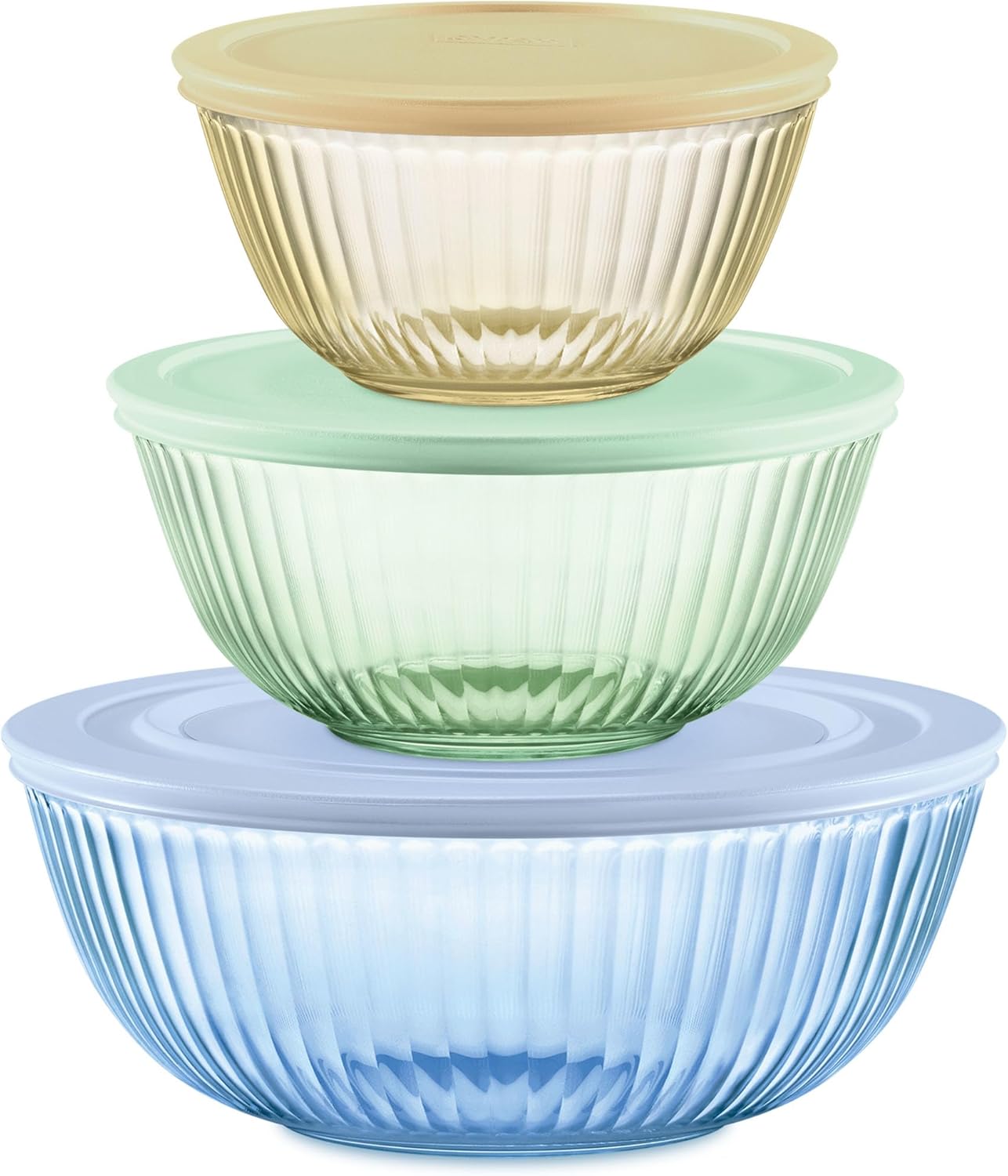
Storage convenience often depends on whether your mixing bowl comes with a matched lid or requires separate accessories. Many multi-piece sets include BPA-free plastic covers designed to snap tightly onto the rims. These tight seals help keep leftover ingredients, doughs, and prepared salads fresh inside the refrigerator or freezer. If you select an open bowl without an included lid, check for compatible aftermarket covers.
Plastic lids usually require top-rack dishwasher placement to prevent warping, separating their cleaning routine from the glass base. Consider your storage habits when evaluating covered versus open bowls. Having a secure lid eliminates the need for plastic wrap, streamlining your food preservation process while stacking efficiently inside crowded refrigerators.
Cleaning and Maintenance Practices
Maintaining your glass mixing bowls requires following straightforward cleaning guidelines to preserve their condition. Most glass mixing vessels are fully dishwasher safe, allowing for effortless cleanup after heavy baking sessions. The non-porous nature of tempered and borosilicate glass means that sticky dough, stubborn grease, and dried sauces wash away easily without demanding aggressive scrubbing or specialized cleaning solutions.
For sets that include plastic lids, pay close attention to manufacturer care instructions regarding top-rack dishwasher placement. Proper maintenance prevents premature warping and keeps the seals functioning correctly. Storing clean bowls carefully by nesting smaller sizes inside larger ones prevents chipping and keeps your kitchen cabinets orderly and accessible.
Standalone Bowls Versus Multi-Piece Sets
Deciding between a single standalone mixing bowl and a comprehensive multi-piece set depends heavily on your daily cooking habits. A large standalone four-quart bowl suits bakers who frequently whip large batches of batter, knead bread, or toss big salads. These individual bowls often feature specialized pouring spouts or wider rims designed specifically for intensive hand mixing tasks.
On the other hand, multi-piece sets provide graduated sizes ranging from one quart up to 4.5 quarts. These collections accommodate diverse preparation needs, from measuring small spices to storing leftovers. Assess your available cabinet space and typical recipe volumes to determine whether a versatile multi-bowl set or a dedicated large basin serves you better.
Thermal Shock and Versatility
Thermal shock resistance is a crucial attribute when using glass cookware for baking, microwaving, and chilling. High-quality tempered and borosilicate glass formulations handle rapid temperature shifts safely. You can warm ingredients in the microwave, store them in the refrigerator, or transfer them to a freezer without compromising structural integrity. This high versatility reduces the number of dishes you need during meal preparation.
Always review manufacturer guidelines regarding temperature limits to prevent accidental breakage. Avoiding extreme thermal transitions, such as placing a freezing bowl directly onto a scorching burner, protects your glassware. Enjoying multi-environment compatibility makes glass mixing bowls a flexible addition to any modern kitchen setup.
Frequently asked questions
Can I put my large glass mixing bowl directly into the microwave?
Yes, the glass mixing bowls featured in this guide are rated safe for microwave use. You can warm ingredients, melt butter, or heat liquids directly inside the bowl without transferring them to another dish. However, you must always remove any plastic lids before placing the glass bowl into the microwave unless the specific lid is explicitly marked as microwave safe. Always exercise caution when handling hot glass after heating to avoid burns, and use appropriate mitts.
Are these glass mixing bowls safe for the freezer and refrigerator?
These glass mixing bowls are fully compatible with refrigerator and freezer storage environments. You can prepare food ahead of time, cover the bowl with a matching lid or protective wrap, and chill or freeze your ingredients reliably. The non-porous glass material successfully resists absorbing food odors, stains, or lingering flavors during extended storage periods. When transferring frozen bowls into warmer environments, avoid sudden extreme heat shifts to protect the glass structure from thermal shock.
Do these mixing bowls absorb food odors or stains over time?
High-quality tempered and borosilicate glass materials feature a completely non-porous surface. This means that mixing tomato-based sauces, strong spices, or garlic-heavy dressings will not stain the glass or leave behind stubborn odors. Unlike plastic bowls that frequently retain discoloration and smells after repeated use, glass cleaning is straightforward. A standard cycle in your automatic dishwasher restores the bowl to a pristine, neutral condition ready for your next baking project or food prep task.
How should I store a multi-piece mixing bowl set to save space?
Storing a multi-piece glass mixing bowl set efficiently involves nesting the smaller bowls inside the larger basins. Because these sets typically include graduated sizes ranging from one quart up to 4.5 quarts, they fit neatly inside one another to minimize their footprint on your shelf. If your set includes plastic lids, you can store the lids flat underneath the stacked bowls or in an adjacent organizer drawer to keep your kitchen cabinets tidy and clutter free.
Do standalone large mixing bowls include pour spouts?
Pour spout inclusion varies depending on the specific model and manufacturing line you select. Some standalone large four-quart glass mixing bowls feature an integrated easy-pour rim designed specifically to help you transfer liquid batters, pancake mixes, or thin sauces smoothly into baking pans without creating excessive mess. Multi-piece bowl sets often feature standard rounded rims rather than specialized pouring spouts. Reviewing the individual product specifications ensures you choose a bowl design that matches your preferred mixing style.