Appliances · Buying Guide
Best Liquid Measuring Cups for Every Baking and Cooking Task
Finding the right liquid measuring cups transforms how you handle recipes, baking projects, and everyday kitchen tasks with confidence. Whether you prefer classic glass vessels that transition seamlessly from the microwave to the countertop or lightweight plastic options designed for effortless handling, selecting the correct set depends entirely on your specific cooking style, ingredient types, and available kitchen storage space.
Different materials and design configurations offer distinct advantages, ranging from angled interior markings that let you read quantities from directly above to protective lids and multi-capacity nesting sets. Reviewing the specific physical traits of these options helps you choose a dependable measuring tool that fits your daily food preparation routine without creating unnecessary cabinet clutter or cleanup friction.
As an Amazon Associate, StacyLaughs earns from qualifying purchases.
Buying guide
Material Selection and Thermal Limits
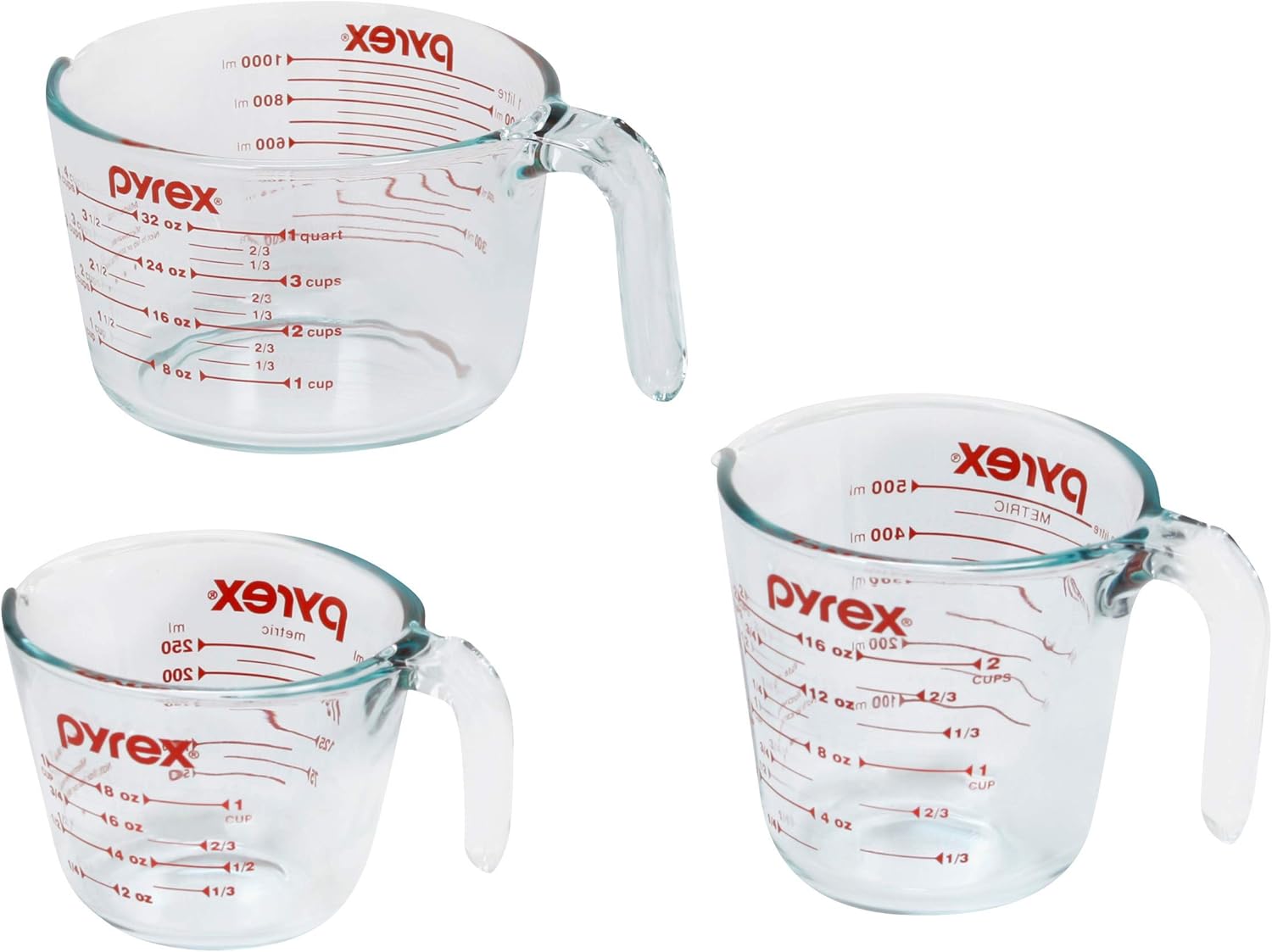
Choosing between glass and plastic measuring cups depends heavily on your cooking habits, preferred ingredient types, and daily cleanup preferences. Glass models, including tempered and borosilicate variations, offer exceptional resistance to food stains and lingering odors while safely supporting microwave, freezer, and preheated oven heating. They provide a sturdy physical weight that stays securely anchored on countertops during vigorous mixing and stirring tasks.
Plastic alternatives, such as Tritan Renew and polycarbonate, deliver lightweight handling and drop resistance for fast-paced kitchens. While plastic options cannot enter preheated ovens or withstand direct heat sources, they reduce hand fatigue during large baking projects and survive accidental drops on hard kitchen floors much better than traditional glass materials, making them practical for busy households.
Capacity Range and Batch Sizes
Evaluating the range of capacities in a measuring set ensures you are prepared for everything from small splashes of vanilla extract to large batches of soup broth. Sets featuring mini two-ounce or single-cup vessels handle minor liquid additions accurately, while four-cup and expansive eight-cup jugs accommodate family-sized mixing bowls without requiring multiple frustrating refills during complex baking procedures.
Matching your typical recipe volumes to the available container sizes prevents kitchen preparation bottlenecks. If you frequently bake large quantities, having a high-capacity jug saves significant time compared to repeatedly filling a smaller cup. Conversely, smaller households or single-serving cooks benefit most from sets focused primarily on compact one and two-cup measurements.
Measurement Visibility and Angled Markings
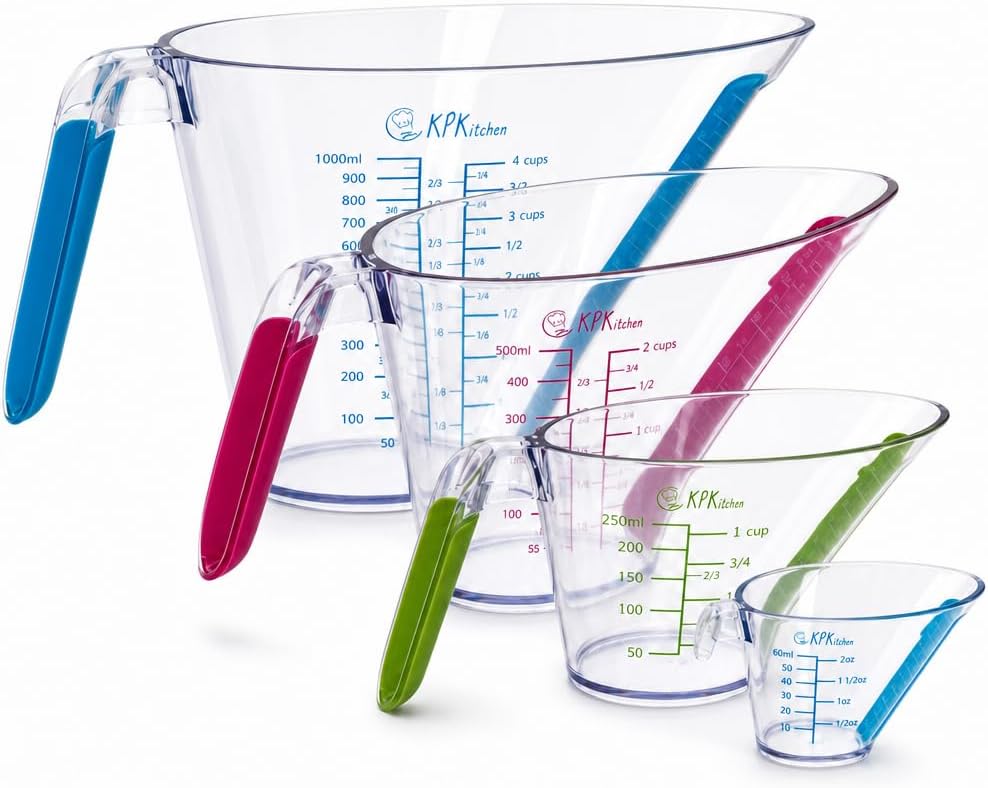
Reading measurement lines accurately reduces baking errors and keeps your favorite recipes tasting consistent over time. Traditional side-marked cups require you to bend down, squat, or lift vessels to eye level, checking fluid depths manually. Newer angled designs feature internal sloped surfaces with printed scales, letting you look straight down from above to see exact liquid amounts immediately without unnecessary physical strain.
Embossed markings on plastic jugs offer long-term durability because raised numbers will not wash or rub off over extended periods of use. Printed markings on glass provide stark contrast against transparent backgrounds, though you should observe manufacturer maintenance guidelines regarding dishwasher detergent wear to maintain clear legibility through years of frequent cleaning cycles.
Storage Solutions and Nesting Design
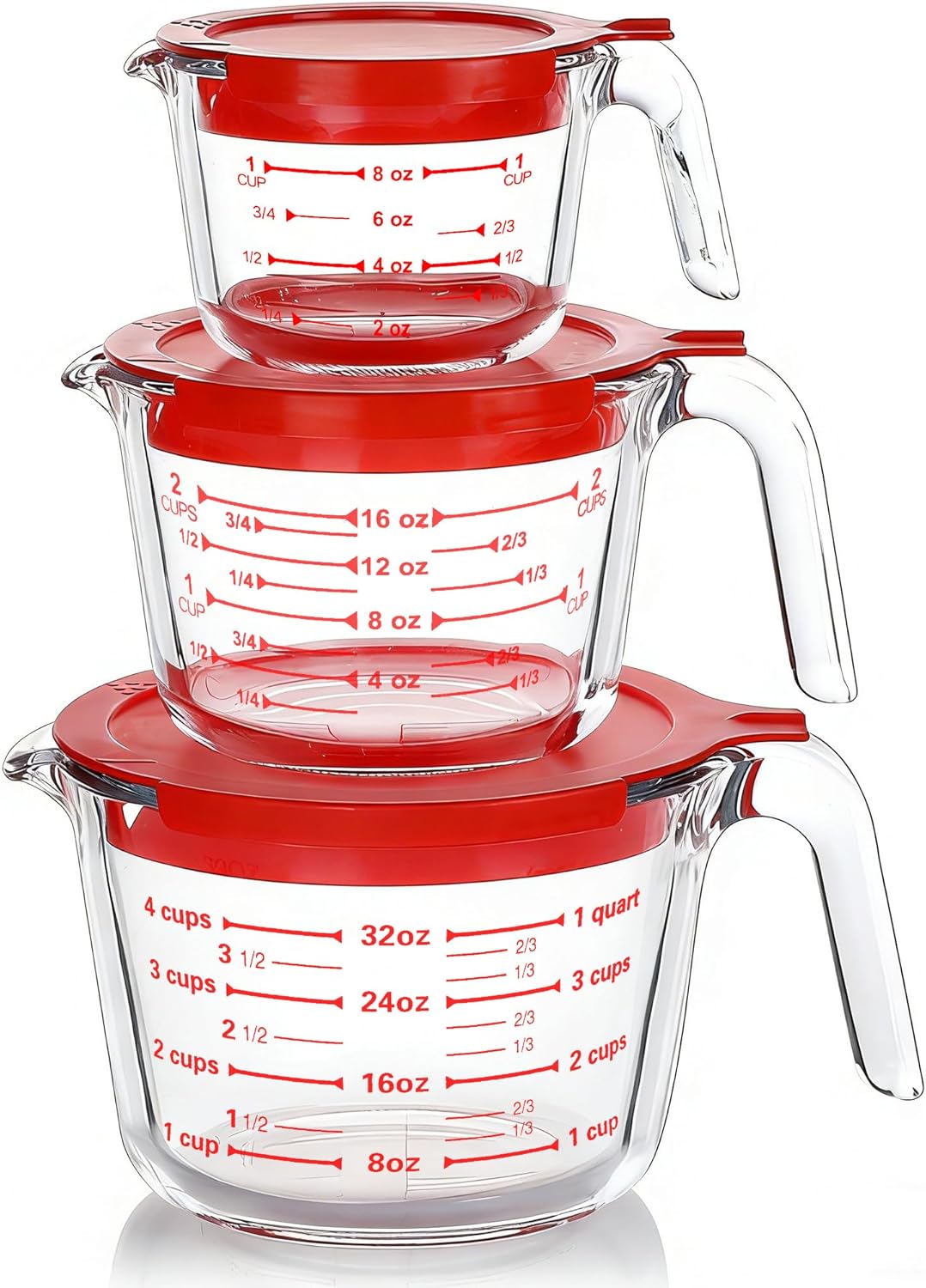
Kitchen cabinet space is frequently at a premium, making storage efficiency a vital factor when choosing new measuring cups. Nesting sets designed to stack inside one another take up a minimal footprint, slipping easily into crowded drawers or lower shelves. Some multi-piece options also include stackable lids for added kitchen versatility and temporary food containment.
Lidded glass sets allow you to measure liquids and temporarily store them in the refrigerator without transferring contents to another container. However, managing extra lids requires dedicated organizational space, whereas open nesting cups slide together instantly, prioritizing speed and compact simplicity over covered storage utility for everyday bakers.
Pour Control and Handle Ergonomics
Pouring thin liquids like milk, oil, or water smoothly prevents messy countertop spills and wasted ingredients during food preparation. Measuring cups featuring generous spouts and curved pouring edges guide liquids cleanly into narrow mixing bowls or pans. Ergonomic handles with non-slip grips ensure you maintain firm control even when your hands become wet or greasy.
Heavy glass handles offer a solid traditional grip but can feel tiring during repetitive pouring tasks if the vessel holds a large volume of liquid. Lightweight plastic handles equipped with textured grips reduce hand strain, though balancing a full four-cup or eight-cup polycarbonate jug still requires steady wrist strength and proper handling technique.
Cleaning and Maintenance Protocols
Keeping your measuring cups sanitary requires understanding their material compatibility with modern dishwashers and standard hand-washing routines. Most quality glass and plastic cups are designated as top-rack or full dishwasher safe, significantly simplifying cleanup after messy baking sessions involving sticky butter, melted chocolate, or dusty flour. Following these guidelines preserves the lifespan of your kitchen tools.
Non-porous glass materials naturally resist absorbing stubborn food odors, lingering flavors, or colored fruit stains, keeping vessels looking pristine over years of use. Plastic variants offer convenient shatter resistance during sink washing but require strict adherence to manufacturer care instructions to prevent surface scratching from abrasive scouring pads or harsh chemical detergents over time.
Frequently asked questions
Can glass measuring cups go straight into a preheated oven?
Borosilicate and high-quality tempered glass measuring cups are explicitly engineered to withstand preheated oven environments, microwaves, freezers, and top-rack dishwashers safely. However, you must always check the specific manufacturer guidelines associated with your exact product model before exposing glassware to extreme thermal shock conditions. Plastic measuring cups completely lack this thermal resilience and will melt, warp, or severely deform if placed inside an oven, toaster oven, or over direct stovetop heat sources during food preparation tasks.
What are the benefits of angled liquid measuring cups?
Angled liquid measuring cups feature a patented internal sloped surface marked with clear measurement scales. This innovative design lets you look straight down from above to see exact fluid quantities instantly without guesswork. Traditional side-marked cups require you to bend down, squat, or constantly lift heavy vessels to eye level to check liquid depths. Angled cups eliminate this physical adjustment, making multi-ingredient cooking faster and much more comfortable for everyday home cooks.
Are plastic measuring cups safe for the dishwasher?
Most plastic measuring cups made from food-grade materials like Tritan Renew or durable polycarbonate are designated as top-rack or standard dishwasher safe. They significantly simplify kitchen cleanup after mixing oily liquids, dressings, or sticky batters. However, you should always follow the specific manufacturer maintenance instructions to ensure long-term product longevity and prevent potential surface damage or clouding caused by harsh automatic dishwasher detergents or high-heat drying elements.
How do I store multi-piece measuring cup sets efficiently?
Multi-piece measuring cup sets are typically designed with intelligent nesting capabilities, allowing smaller cups to fit neatly inside larger ones for exceptionally compact cabinet or drawer storage. Some specialized glass sets also include stackable lids that snap securely in place over each vessel. Nesting keeps your kitchen drawers and shelves organized, minimizing clutter while ensuring every required size remains instantly accessible for your next baking recipe or cooking project.
Why choose glass measuring cups over plastic alternatives?
Glass measuring cups offer superior resistance to food staining, surface scratching, and odor absorption, ensuring they remain crystal clear and neutral over years of heavy use. They also provide exceptional thermal versatility, handling microwaves, preheated ovens, freezers, and dishwashers with ease. While glass is noticeably heavier and requires careful handling to avoid accidental breakage, it provides a stable, durable prep vessel that many traditional bakers prefer over lightweight plastic options.